As a trusted supplier of plastic raw materials for global supplier, we often get asked: “Which filament should I use for my 3D printing project—PETG or PLA?“ With the rise of desktop 3D printing, understanding the differences between these two widely used thermoplastics has become essential for both hobbyists and professionals alike.
In this guide, we’ll draw on our material expertise to break down the key distinctions between PETG (Polyethylene Terephthalate Glycol-modified) and PLA (Polylactic Acid)—from mechanical properties and printability to durability and ideal use cases—so you can make the right choice for your next 3D printing endeavor.
PETG Overview: The Durable All-Rounder
PETG is a modified version of PET (the same material used in water bottles), enhanced with glycol to improve its 3D printing characteristics. This thermoplastic combines excellent durability with good printability, making it a versatile choice for many applications.
Material Properties
Durability and Flexibility
PETG offers an impressive balance of strength and flexibility. Unlike more brittle materials, it can bend under pressure without breaking, making it ideal for functional parts that may experience stress or impact. With a tensile strength of 40-50 MPa, PETG provides reliable performance for mechanical components.
Temperature Resistance
With a heat deflection temperature of approximately 70°C (158°F), PETG maintains its structural integrity in moderately warm environments. This makes it suitable for parts that might be exposed to heat, though it’s not appropriate for high-temperature applications exceeding its glass transition point.
PETG Advantages
- Excellent layer adhesion creates strong, durable prints
- Good chemical resistance to many acids, alcohols, and oils
- Superior UV stability makes it suitable for outdoor use
- Semi-flexible nature provides impact resistance
- Water-resistant properties protect against moisture
- Recyclable material (recycling code #1)
- Available in transparent and translucent options
PETG Disadvantages
- Prone to stringing and oozing during printing
- Requires higher printing temperatures (230-250°C)
- Can be challenging to achieve good bed adhesion
- More susceptible to scratches than some alternatives
- Absorbs moisture from air, requiring proper storage
- Typically costs more than standard PLA
- Can be difficult to post-process (sanding, painting)
Ready to bulk source PETG filament?
Get consistent quality and global shipping from a trusted raw material supplier.
PLA Overview: The Beginner-Friendly Biodegradable

PLA is derived from renewable resources like cornstarch or sugarcane, making it one of the most environmentally friendly 3D printing materials available. Its low printing temperature and minimal warping make it the go-to choice for beginners and those without high-end printing equipment.
Material Properties
Biodegradability and Rigidity
PLA’s plant-based origin gives it biodegradable properties under industrial composting conditions. It offers high rigidity with a tensile strength of 50-60 MPa, making it surprisingly strong for a bioplastic. However, this rigidity comes with brittleness, making it less suitable for parts that need to withstand impact.
Ease of Use
With a lower printing temperature range of 190-220°C and minimal warping, PLA is forgiving for beginners. It adheres well to print beds, even without heating, and produces less odor during printing compared to petroleum-based alternatives. These characteristics make it ideal for home and educational environments.
PLA Advantages
- Biodegradable under industrial composting conditions
- Low warping makes it easy to print without a heated bed
- Beginner-friendly with forgiving printing parameters
- Available in a wide range of vibrant colors and finishes
- Produces less odor during printing
- Lower printing temperature (190-220°C)
- Generally more affordable than specialty filaments
PLA Disadvantages
- Brittle nature makes it prone to breaking under stress
- Low heat resistance (begins to deform around 55-60°C)
- Poor UV resistance limits outdoor applications
- Absorbs moisture, affecting print quality over time
- Limited chemical resistance
- Not suitable for functional mechanical parts
- Biodegradation requires industrial composting facilities
Looking for premium PLA filament at scale?
We offer premium-grade PLA in multiple specifications and colors—ideal for both visual and functional 3D prints.
Head-to-Head Comparison: PETG vs PLA

Printability Comparison
| Factor | PLA | PETG | Winner |
| Printing Temperature | 190-220°C | 230-250°C | PLA (Lower energy consumption) |
| Bed Temperature | Optional (20-60°C) | Required (70-90°C) | PLA (Works without heated bed) |
| Bed Adhesion | Excellent on most surfaces | Moderate, may require adhesives | PLA (Easier adhesion) |
| Warping | Minimal | Low to moderate | PLA (Less warping) |
| Stringing | Low | High (requires retraction tuning) | PLA (Less stringing) |
| Cooling Needs | High (100% fan recommended) | Low to moderate (30-50% fan) | PETG (Less cooling sensitivity) |
| Print Speed | Fast (40-100 mm/s) | Moderate (30-60 mm/s) | PLA (Faster printing) |
Mechanical Strength Comparison
| Property | PLA | PETG | Better For |
| Tensile Strength | 50-60 MPa | 40-50 MPa | PLA for pure pulling strength |
| Impact Resistance | Low (brittle) | Medium to high | PETG for parts that may be dropped |
| Flexibility | Low (rigid) | Medium (semi-flexible) | PETG for parts needing some give |
| Layer Adhesion | Good | Excellent | PETG for stronger layer bonding |
| Fatigue Resistance | Poor | Good | PETG for repeated stress |
Temperature Resistance

Temperature resistance is one of the most significant differences between these materials. PLA begins to soften at around 55-60°C (131-140°F), making it unsuitable for applications exposed to heat, such as car interiors on hot days or near heat sources. PETG maintains its structural integrity up to approximately 70-75°C (158-167°F), providing better performance in warmer environments.
Important note: Neither material is suitable for high-temperature applications like parts near hot ends, heating elements, or outdoor use in extremely hot climates. For those applications, consider high-temperature filaments like ABS, ASA, or polycarbonate.
Post-Processing Comparison
PLA Post-Processing
- Sands easily but can melt if overheated
- Takes paint well with minimal preparation
- Can be smoothed with epoxy coatings
- Glues effectively with cyanoacrylate adhesives
- Can be threaded but threads may strip easily
PETG Post-Processing
- More difficult to sand due to flexibility
- Requires primer for good paint adhesion
- Chemical smoothing is challenging
- Bonds well with appropriate adhesives
- Holds threads better than PLA
Ready to compare wholesale prices?
Get a custom quote on PLA and PETG filaments from verified suppliers.
Use Case Scenarios: Choosing the Right Material

When to Choose PLA

Prototyping & Concept Models
PLA’s ease of printing and dimensional accuracy make it perfect for rapid prototyping and concept visualization. Its low warping allows for printing complex geometries with fine details.
- Architectural models
- Product prototypes
- Design iterations

Decorative Items
PLA’s wide color range and ability to produce vibrant, glossy finishes make it ideal for decorative objects. Its fine detail reproduction creates visually appealing items.
- Figurines and sculptures
- Vases and planters
- Home decor items

Educational Projects
PLA’s safety, low odor, and ease of use make it perfect for educational environments. It doesn’t require advanced equipment, making it accessible for schools and beginners.
- Classroom projects
- Educational models
- STEM learning tools
When to Choose PETG

Functional Parts
PETG’s durability and impact resistance make it ideal for functional parts under stress or repeated use. Its flexibility helps prevent sudden breakage under load.
- Mechanical components
- Brackets and mounts
- Tool holders and organizers

Outdoor Applications
PETG resists UV and moisture, making it well-suited for outdoor use. It holds its shape and strength across changing weather conditions better than PLA.
- Garden accessories
- Outdoor enclosures
- Weather-resistant components
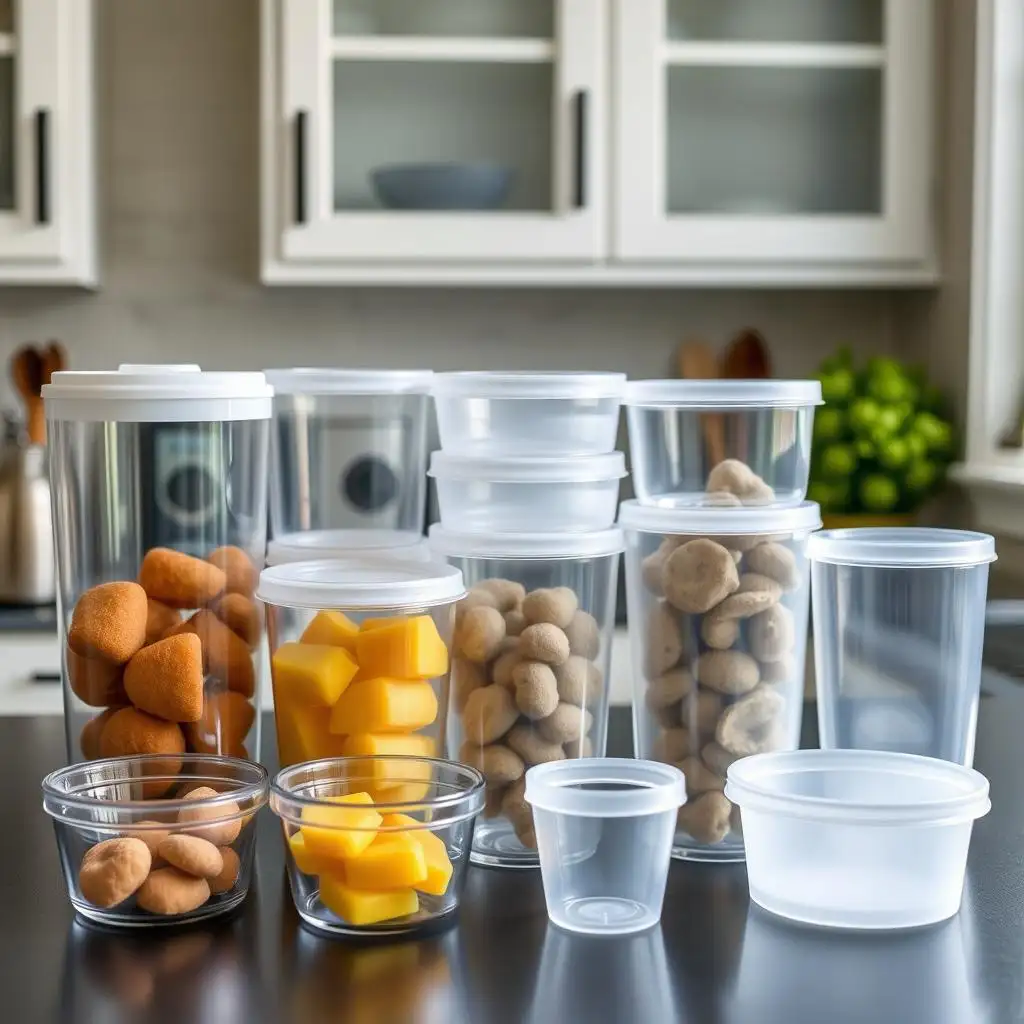
Food-Adjacent Items
PETG offers good chemical resistance and, when certified, is food-safe. Its transparency options also make it a smart choice for clear containers.
- Kitchen organizers
- Food storage solutions
- Hydroponic components
Important note on food safety: While PETG is generally considered more food-safe than many other filaments, 3D printed objects have microscopic gaps that can harbor bacteria. For true food safety, consider additional treatments like food-safe epoxy coatings and proper cleaning procedures. Always use filament specifically labeled as food-safe.
Decision Guide: Finding Your Perfect Filament
Not sure whether to choose PLA or PETG for your 3D printing project? Answer the questions below to find the best fit based on your needs.
1. Is this your first 3D printing project?
✅ Yes: Choose PLA – easy to print and beginner-friendly.
➡️ No: Continue to the next question.
2. Will the part face temperatures over 50°C (122°F)?
✅ Yes: Choose PETG – excellent heat resistance.
➡️ No: Both are suitable, continue.
3. Does the part need to handle stress or impact?
✅ Yes: Choose PETG – durable and impact-resistant.
➡️ No: Both work well, keep going.
4. Is high detail or surface finish your priority?
✅ Yes: Choose PLA – better detail and smoother finish.
➡️ No: Either is viable.
5. Will the print be used outdoors or in humid areas?
✅ Yes: Choose PETG – great UV and water resistance.
➡️ No: PLA may still work.
6. Do you need transparency or translucency?
✅ Yes: Choose PETG – clearer visual properties.
➡️ No: Both are acceptable.
7. Is environmental sustainability a concern?
✅ Yes: Choose PLA – biodegradable and plant-based.
➡️ No: Move to the next.
8. Are you printing without a heated bed?
✅ Yes: Choose PLA – no heated bed required.
➡️ No: Both materials are fine.
Still not sure which material to choose?
Try our starter pack with both PLA and PETG samples to test which works best for your specific projects.
Frequently Asked Questions
Can you mix PETG and PLA in the same print?
No, you cannot mix PETG and PLA in the same print. They have different melting temperatures and expansion properties, which would cause adhesion problems and print failures. However, you can use them for different parts of a multi-part project that will be assembled after printing.
Which has better bed adhesion, PETG or PLA?
PLA generally has better bed adhesion on most surfaces. PETG can sometimes adhere too strongly to glass beds, potentially causing damage when removing prints. For PETG, it’s recommended to use a release agent or specialized surface like BuildTak or PEI sheets to achieve the right level of adhesion.
Is PETG harder to print than PLA?
Yes, PETG is generally considered more challenging to print than PLA. It requires higher temperatures, more careful cooling management, and can be prone to stringing. However, once you’ve dialed in your settings, PETG can produce very reliable results. For beginners, PLA is recommended as a starting point before moving to PETG.
Can PLA or PETG be used for food-safe applications?
Both PLA and PETG can be food-safe if using certified food-safe filament, but there are important caveats. The layer lines in 3D prints can harbor bacteria, and additives in colored filaments may not be food-safe. For true food safety, additional treatments like food-safe epoxy coatings are recommended. PETG is generally considered more suitable for food-adjacent items due to its better chemical resistance.
How should I store PLA and PETG filaments?
Both PLA and PETG are hygroscopic, meaning they absorb moisture from the air. Store them in airtight containers with desiccant packets. PETG is slightly more moisture-resistant than PLA, but both will print poorly if they absorb too much moisture. Signs of wet filament include popping or hissing during printing and poor surface quality.
Can I paint PLA and PETG prints?
Yes, both PLA and PETG can be painted, but PLA generally accepts paint more readily. For best results with either material, lightly sand the surface first, apply a primer designed for plastics, and then apply your chosen paint. Acrylic paints work well for both materials. PETG may require more surface preparation for good paint adhesion.
Conclusion: Making Your Final Decision
| Characteristic | PLA | PETG |
| Ease of Printing | ★★★★★ | ★★★☆☆ |
| Strength | ★★★☆☆ | ★★★★☆ |
| Flexibility | ★☆☆☆☆ | ★★★☆☆ |
| Impact Resistance | ★★☆☆☆ | ★★★★☆ |
| Temperature Resistance | ★★☆☆☆ | ★★★☆☆ |
| Visual Quality | ★★★★★ | ★★★★☆ |
| Environmental Impact | ★★★★☆ | ★★★☆☆ |
| Cost-Effectiveness | ★★★★★ | ★★★★☆ |
For Hobbyists
If you’re primarily creating decorative items, prototypes, or learning 3D printing, PLA is likely your best choice. Its forgiving nature, low cost, and excellent visual properties make it perfect for hobbyists and beginners. Keep in mind its limitations regarding heat resistance and durability for functional parts.
For Engineers & Makers
If you’re creating functional parts, outdoor items, or components that need to withstand stress, PETG offers the durability and resilience you need. The extra effort in printing setup is rewarded with stronger, more versatile prints that can handle real-world applications.
Both PLA and PETG have earned their place in the 3D printing world for good reason. By understanding their unique properties and appropriate applications, you can select the right material for each project and achieve the best possible results. Remember that experimentation is part of the 3D printing journey—don’t be afraid to try both materials to discover your preferences and expand your printing capabilities.
If you have questions about polypropylene or our products, get in touch. You can email us at jerry@salesplastics.com or call +8618657312116. We’re here to help.