High-index and polycarbonate plastics enable eyeglass lenses that optimize optical clarity, durability, and wearer comfort while addressing diverse industry needs. High-index materials (refractive indices 1.60–1.74) offer thin, lightweight designs ideal for high-prescription lenses, whereas polycarbonate (refractive index 1.59) excels in impact resistance, suiting safety eyewear and active lifestyles. This guide compares their properties—refractive indices, Abbe values, weight, and impact resistance—alongside production considerations like cost and processing challenges. These insights empower engineers, manufacturers, and technical professionals to align material properties with consumer demands and manufacturing goals.
Polycarbonate Lenses: Materials and Characteristics
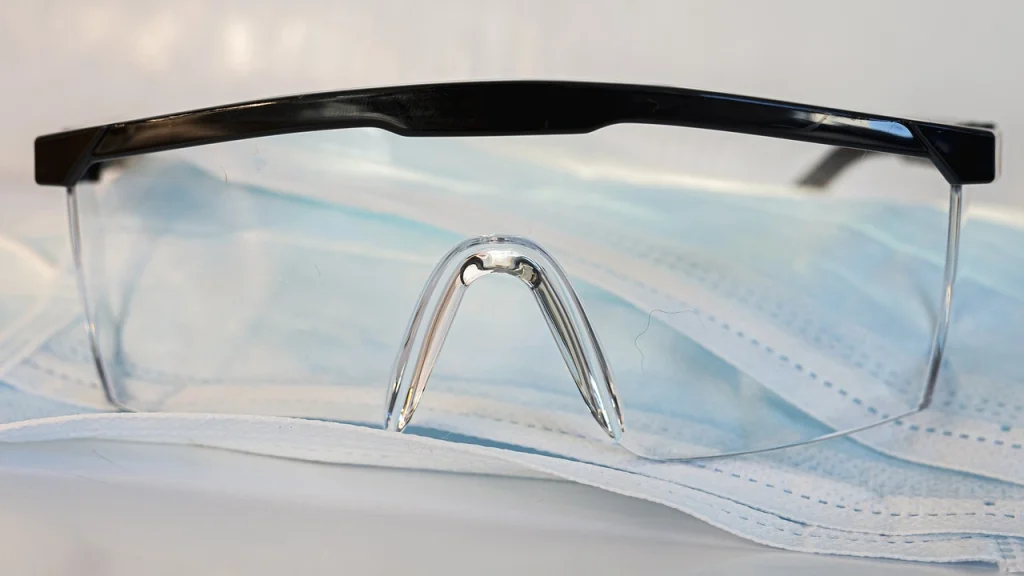
Following the comparison of high-index and polycarbonate materials, polycarbonate stands out for its lightweight and durable properties, making it a key material in eyeglass lens production. Composed of a thermoplastic polymer with carbonate groups, it offers a refractive index of 1.59, suitable for moderate prescriptions (up to ±4.00 diopters), and a density of ~1.2 g/cm³, approximately 10–15% lighter than CR-39 plastic. Its Abbe number of ~30 may introduce minor chromatic aberration, noticeable in peripheral vision. Polycarbonate’s impact resistance, up to 10 times stronger than standard plastic lenses, supports applications in safety glasses, sports eyewear, and children’s lenses. It inherently blocks 100% UVA and UVB rays, ensuring robust UV protection. Produced via injection molding, polycarbonate enables precise shaping and cost-effective scalability, though its lower surface hardness requires scratch-resistant coatings. While ideal for durability-driven designs, its moderate refractive index limits its use in high-prescription lenses, where thinner profiles are prioritized. These attributes position polycarbonate as a versatile solution for lightweight, impact-resistant eyewear.
| Property | Value/Description |
|---|---|
| Refractive Index | 1.59 – suitable for moderate prescriptions (up to ±4.00 D) |
| Density | ~1.2 g/cm³ – about 10–15% lighter than CR-39 plastic |
| Abbe Number | ~30 – may cause minor peripheral chromatic aberration |
| UV Protection | Blocks 100% UVA & UVB rays |
| Impact Resistance | Up to 10× stronger than standard plastic lenses |
| Manufacturing Process | Injection molding – enables precise shaping and cost-effective mass production |
Pros and Cons of Polycarbonate Lenses
Building on the detailed properties of polycarbonate, this section evaluates its advantages and limitations compared to high-index materials and standard plastics like CR-39. By analyzing these trade-offs, engineers and manufacturers can better align material properties with specific lens requirements, such as durability for safety applications or lightweight designs for daily wear. This comparison highlights practical considerations for optimizing lens performance and production efficiency.
Advantages:
- Impact Resistance: Up to 10 times stronger than standard plastic lenses, polycarbonate ensures durability in high-risk environments, such as industrial settings or sports.
- Lightweight Design: Approximately 10–15% lighter than CR-39, it reduces wearer strain during extended use.
- UV Protection: Inherently blocks 100% UVA and UVB rays, eliminating the need for additional coatings.
- Cost Efficiency: Competitive production costs via injection molding make it viable for high-volume manufacturing of moderate-prescription lenses.
Limitations:
- Chromatic Aberration: An Abbe number of ~30 may cause slight color fringing, particularly noticeable in peripheral vision for higher prescriptions.
- Scratch Susceptibility: Lower surface hardness requires scratch-resistant coatings, increasing production costs.
- Thicker Profiles: Compared to high-index materials (refractive indices 1.60–1.74), polycarbonate’s refractive index of 1.59 results in thicker lenses for prescriptions above ±4.00 diopters.
These trade-offs make polycarbonate ideal for durability-focused applications but less suitable for high-prescription lenses prioritizing thinness and optical clarity.
High-Index Lenses: Materials and Characteristics

Following the analysis of polycarbonate, high-index plastics offer distinct advantages for thin, aesthetically pleasing eyeglass lenses, particularly for high prescriptions. Composed of specialized polymers, such as polyurethane or thiourethane, these materials achieve refractive indices of 1.60–1.74, enabling thinner profiles compared to polycarbonate (1.59) and CR-39 (1.50). With a density of 1.3–1.4 g/cm³, high-index lenses are slightly heavier than polycarbonate but lighter than glass. Their Abbe numbers of 32–42 reduce chromatic aberration, enhancing optical clarity, especially for prescriptions above ±4.00 diopters. Unlike polycarbonate, high-index materials often require UV-blocking coatings for full UVA/UVB protection. Produced via precision molding, these lenses demand high-quality plastic granules and advanced equipment, increasing production costs but supporting customizable designs for fashion-forward eyewear. While less impact-resistant than polycarbonate, high-index plastics excel in applications prioritizing thinness and visual clarity, aligning with industry trends toward lightweight, stylish lenses.
| Property | Value/Description |
|---|---|
| Refractive Index | 1.60–1.74 – produces thinner lenses vs. polycarbonate (1.59) & CR-39 (1.50) |
| Density | 1.3–1.4 g/cm³ – slightly heavier than polycarbonate, lighter than glass |
| Abbe Number | 32–42 – reduces chromatic aberration for clearer vision |
| UV Protection | Often needs added UV coatings (not inherent like polycarbonate) |
| Impact Resistance | Lower than polycarbonate |
| Manufacturing Process | Precision molding – requires advanced machinery & high-quality plastic granules |
Pros and Cons of High-Index Lenses
Following the detailed properties of high-index plastics, this section evaluates their advantages and limitations compared to polycarbonate and standard plastics like CR-39. By analyzing these trade-offs, engineers and manufacturers can optimize lens designs for high-prescription eyewear and aesthetic preferences, aligning with industry demands for thin, stylish lenses. This comparison highlights practical considerations for balancing performance and production costs.
Advantages:
- Thinner Profiles: Refractive indices of 1.60–1.74 enable significantly thinner lenses than polycarbonate (1.59) or CR-39 (1.50), ideal for prescriptions above ±4.00 diopters.
- Enhanced Optical Clarity: Abbe numbers of 32–42 reduce chromatic aberration, minimizing color fringing in peripheral vision.
- Aesthetic Appeal: Slim profiles minimize the “coke-bottle” effect, supporting fashion-forward and rimless frame designs.
- Customizable Indices: Multiple refractive index options allow tailored solutions for diverse prescription strengths.
Limitations:
- Lower Impact Resistance: Less durable than polycarbonate, requiring careful handling in high-risk environments.
- Higher Production Costs: Precision molding and specialized polymers increase costs compared to polycarbonate’s injection molding.
- Coating Dependency: Requires UV-blocking and anti-scratch coatings for full protection and durability, adding to production expenses.
- Potential Glare: Higher refractive indices may increase light reflection, necessitating anti-reflective coatings to reduce glare.
These trade-offs position high-index plastics as the preferred choice for high-prescription lenses prioritizing thinness and clarity, but less suitable for applications requiring robust impact resistance.
Comparing High-Index and Polycarbonate Lenses
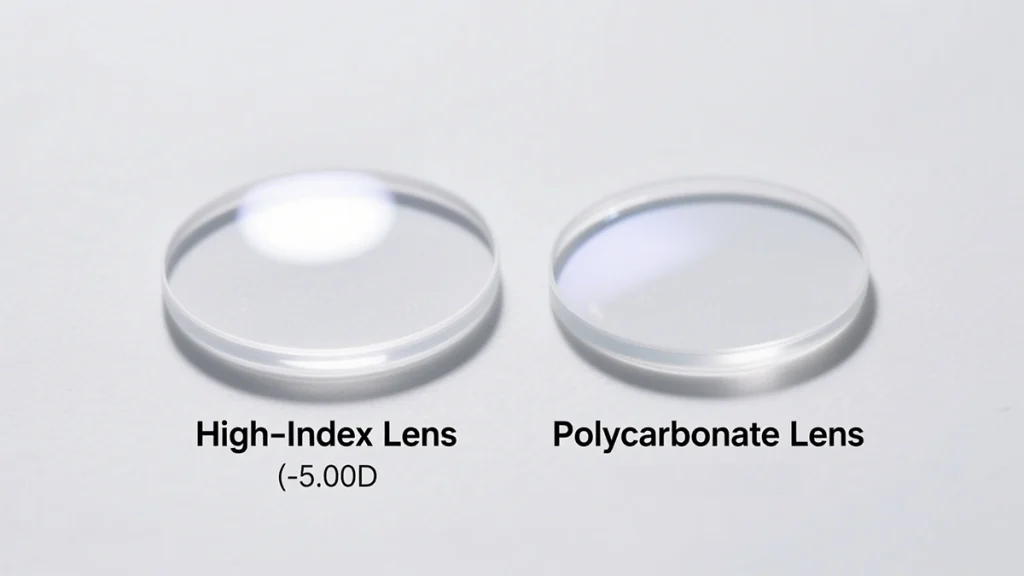
Building on the advantages and limitations of polycarbonate and high-index plastics, this section provides a concise comparison to guide engineers and manufacturers in aligning material properties with specific lens requirements. The table below summarizes key differences, followed by practical considerations for optimizing lens design and production.
| Property | Polycarbonate | High-Index |
|---|---|---|
| Refractive Index | 1.59 | 1.60–1.74 |
| Weight | ~1.2 g/cm³ (10–15% lighter than CR-39) | ~1.3–1.4 g/cm³ (heavier than polycarbonate) |
| Impact Resistance | 10 times stronger than standard plastic | Lower, requires careful handling |
| Abbe Number | ~30 (minor chromatic aberration) | 32–42 (reduced chromatic aberration) |
| UV Protection | Inherent 100% UVA/UVB blocking | Requires UV-blocking coatings |
| Cost | Cost-effective via injection molding | Higher due to precision molding |
| Best Applications | Safety glasses, sports eyewear, children’s lenses | High-prescription lenses, rimless frames |
Key Considerations:
Production Costs: Polycarbonate benefits from cost-effective injection molding, ideal for high-volume production. High-index lenses require precision molding and coatings (UV, anti-scratch, anti-reflective), increasing costs but enabling customizable, high-performance designs.
These insights help balance durability, aesthetics, and cost to meet industry demands for lightweight, stylish, and functional lenses.
Prescription Strength: High-index plastics, with refractive indices of 1.60–1.74, produce thinner lenses for prescriptions above ±4.00 diopters, enhancing comfort and aesthetics. Polycarbonate (1.59) suits moderate prescriptions but results in thicker profiles.
Lifestyle Needs: Polycarbonate’s superior impact resistance supports high-risk environments, such as industrial or sports settings, while high-index plastics prioritize optical clarity and slim designs for fashion-focused eyewear.
Plastic Granules in Lens Production
Following the comparison of polycarbonate and high-index lenses, this section examines the role of plastic granules as the foundational raw materials in lens manufacturing. These polymer resin pellets are critical for achieving consistent lens properties and meeting industry demands for performance and sustainability.
Polycarbonate Granules: Derived from high-purity polycarbonate resin, these granules ensure uniform impact resistance and optical clarity through precise formulations. Their consistent size and composition support injection molding, enabling cost-effective, high-volume production of durable lenses for safety and active-use applications.

High-Index Granules: Composed of specialized polymer blends, such as polyurethane or thiourethane, these granules achieve higher refractive indices (1.60–1.74) for thinner, aesthetically pleasing lenses. Their precise formulations minimize optical distortions, supporting precision molding for high-prescription eyewear.
Production Considerations:
- Purity: Impurities in granules can lead to defects like bubbles or haze, compromising lens clarity and coating adhesion (e.g., UV or anti-scratch coatings).
- Consistency: Uniform granule size and composition ensure repeatable lens quality in large-scale production, reducing manufacturing variability.
- Sustainability: Polycarbonate granules are recyclable, supporting eco-friendly production, while high-index granules face recycling challenges due to complex polymer blends. Emerging bio-based granule options align with industry trends toward sustainable materials.
- Cost and Supply: High-purity granules, especially for high-index lenses, require advanced synthesis, increasing costs compared to polycarbonate’s simpler production process.
These factors underscore the importance of granule quality in optimizing lens performance, durability, and environmental impact, guiding manufacturers in achieving reliable, high-quality production outcomes.
Partner with us for consistent, sustainable granules tailored to your lens specifications. Get a quote.
Lens Material Decisions
Following the comparison of polycarbonate and high-index lenses and their production from plastic granules, this section outlines key factors to guide engineers and manufacturers in aligning material properties with lens requirements. The choice of material significantly impacts lens performance, user comfort, and production efficiency, particularly as industry trends emphasize thinner, sustainable eyewear. High-quality granules ensure consistent outcomes, enabling manufacturers to meet diverse consumer and environmental demands.
Key Factors:
- Prescription Strength: High-index lenses suit prescriptions above ±4.00 diopters for thinner profiles; polycarbonate fits moderate prescriptions.
- Lifestyle and Use: Polycarbonate excels in safety or active settings; high-index prioritizes clarity and style for fashion-focused designs.
- Budget: Polycarbonate offers cost-effective production; high-index incurs higher costs but suits specific needs.
- Aesthetics: High-index lenses reduce thickness for high prescriptions; polycarbonate may appear bulkier.
- Coatings: Both require anti-scratch and anti-reflective coatings; high-index needs UV coatings, increasing costs.
- Manufacturing Goals: Polycarbonate granules support scalable, recyclable production; high-index granules face supply and sustainability challenges.
Decision Framework:
- Assess prescription strength for thickness needs.
- Evaluate user lifestyle for durability or style priorities.
- Balance cost against performance and aesthetics.
- Plan for necessary coatings.
- Consider production scalability and sustainability.
These factors ensure lens materials meet performance, cost, and environmental goals, aligning with industry trends toward sustainable, stylish eyewear.
Supplier Support for Lens Manufacturing
Following the material selection guidelines and plastic granule insights, this section highlights how partnerships with plastic granule suppliers enhance lens production. Reliable suppliers ensure consistent material quality and provide technical expertise, aligning with industry demands for high-performance, sustainable eyewear.
Supplier Benefits:
- Material Consistency: Uniform granule composition ensures stable refractive indices and optical clarity, minimizing defects like haze or bubbles.
- Technical Expertise: Suppliers offer guidance on granule formulations and processing (e.g., injection molding for polycarbonate, precision molding for high-index), optimizing production efficiency.
- Custom Formulations: Tailored granules meet specific needs, such as enhanced coating adhesion or higher refractive indices for thin lenses.
- Supply Chain Reliability: Stable supply chains prevent production delays, supporting scalable manufacturing.
- Sustainability: Polycarbonate granules are recyclable, while high-index granules face recycling challenges, with bio-based options emerging to meet environmental standards.
Industry Trends:
- Smart Lenses: High-index granules support thin, clear lenses for augmented reality (AR) and virtual reality (VR) applications.
- Sustainable Materials: Bio-based polycarbonate granules address growing demand for eco-friendly production.
- Market Growth: Rising demand for lightweight, high-prescription lenses drives need for specialized granules, particularly for aging populations.
These partnerships enable manufacturers to optimize lens quality, reduce costs, and align with trends toward sustainable, innovative eyewear.Discover our granule catalog for high-performance lens production. Request a consultation.
Conclusion: Lens Material Decisions
Building on the material selection guidelines and supplier partnerships, lens material decisions balance performance, cost, and user needs. Polycarbonate lenses prioritize durability and affordability, ideal for safety and active applications. High-index lenses offer thinner profiles and enhanced clarity for high prescriptions, supporting fashion-forward designs.
Action Guidelines:
- Assess Requirements: Evaluate prescription strength (±4.00 diopters threshold) and user lifestyle for durability or aesthetic priorities.
- Optimize Production: Leverage supplier expertise for tailored granules and cost-efficient processes.
- Embrace Trends: Incorporate bio-based granules and high-index materials for AR/VR applications to meet market demands.
What’s your next step? Evaluate your production goals, consider your target market, and connect with us to explore how our plastic granules can elevate your lens manufacturing process. Contact us at jerry@salesplastics.com or call +8618657312116 for personalized support and tailored solutions.
FAQs
A:Both offer high impact resistance, but key differences exist: Polycarbonate (refractive index 1.59, density ~1.2 g/cm³, Abbe number ~30) is cost-effective with minor chromatic aberration. Trivex (refractive index 1.53, density ~1.11 g/cm³, Abbe number 43–45) provides sharper clarity and suits mid-range prescriptions or rimless frames. Polycarbonate uses injection molding; Trivex requires similar processes but is pricier due to complex production. Suppliers can provide tailored granules for both.
A:No. High-index lenses use specialized polymers (e.g., polyurethane, refractive index 1.60–1.74) for thinner profiles, unlike polycarbonate (1.59), which prioritizes durability.
A:Polycarbonate excels in safety, sports, or children’s eyewear due to its durability and affordability. High-index lenses support high prescriptions and stylish designs with thinner profiles and enhanced clarity.
A:Higher costs, lower impact resistance than polycarbonate, and dependency on UV, anti-scratch, and anti-reflective coatings to reduce glare.
A:Minor chromatic aberration, scratch susceptibility without coatings, and thicker profiles for high prescriptions compared to high-index lenses.