Polystyrene, a thermoplastic polymer with the chemical structure (C8H8)n, is a cornerstone material in modern manufacturing. Derived from the styrene monomer, its lightweight and rigid properties make it integral to countless applications, from protective packaging to electronic components. For engineers and manufacturers, understanding the melting point of polystyrene isn’t merely a technical detail; it’s a critical factor that dictates everything from thermal processing efficiency to the ultimate performance of a final product. This guide delves into how a precise understanding of its melting point characteristics, which vary by polymer grade, directly influences material selection, optimizes product design, and unlocks new avenues for innovation in a wide range of thermal environments.
Introduction: The Basics of Polystyrene

Polystyrene is a synthetic aromatic polymer engineered into several distinct grades, each possessing unique properties for specialized applications. The fundamental polymer structure, with its repeating styrene units, provides the foundation for these variants, while modifications introduce different thermal and mechanical characteristics.
General Purpose Polystyrene (GPPS)
GPPS is a transparent and rigid polymer, prized for its clarity and hardness. With a density of approximately 1.05 g/cm³, its excellent dimensional stability and electrical insulation make it a go-to material for applications where clarity and a stable form are critical, such as disposable cutlery and display cases.
High Impact Polystyrene (HIPS)
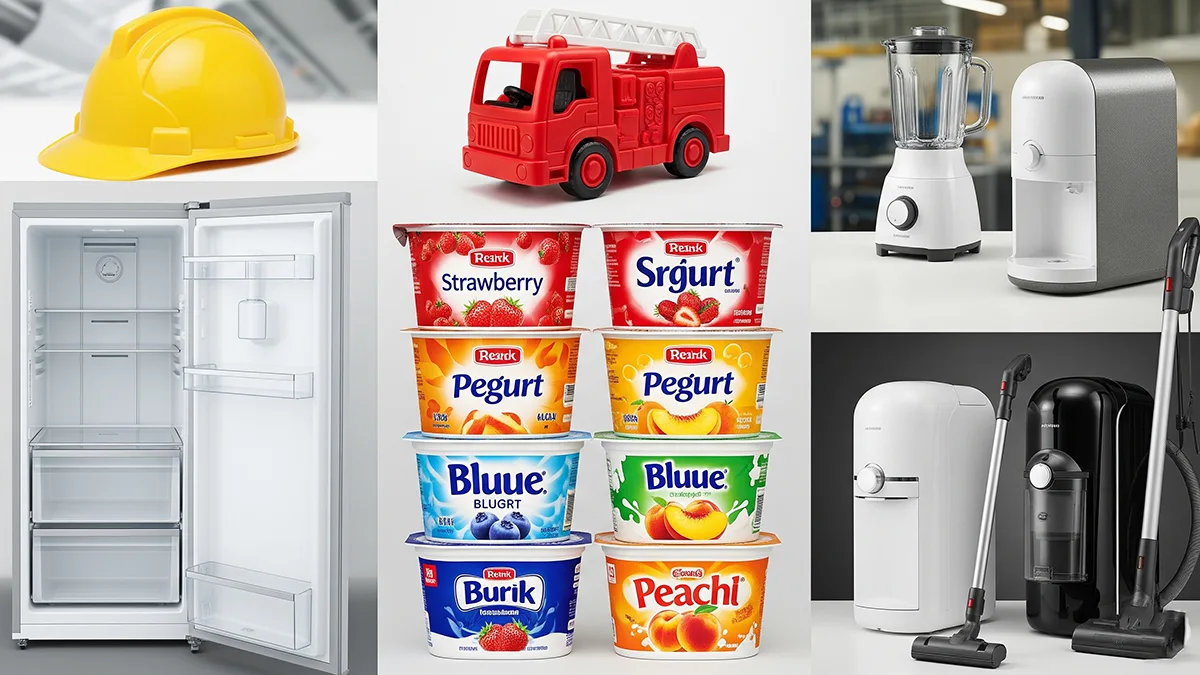
To enhance toughness, HIPS is created by incorporating polybutadiene rubber into the polystyrene matrix. This results in a two-phase system that sacrifices some transparency for significantly improved impact resistance. Its durability and processability make it a preferred material for refrigerator liners, consumer electronics casings, and toy components.
Beyond the rigid forms, polystyrene is also engineered into foam structures. Expanded Polystyrene (EPS), or “styrofoam,” is composed of 95-98% air, making it an excellent lightweight insulator and protective packaging material. Extruded Polystyrene (XPS) offers a closed-cell structure with superior moisture resistance and insulation properties, commonly used in building and construction. Each of these variants, while sharing the same chemical backbone, exhibits a distinct thermal profile that dictates its optimal processing and performance range.
Understanding the Melting Point of Polystyrene

The thermal behavior of polystyrene is defined by its unique molecular structure, which results in a distinct set of thermal properties rather than a single melting point. For this reason, it’s essential to differentiate between its glass transition temperature (Tg) and its actual melting point range.
At its glass transition temperature (Tg) of approximately 100°C (212°F), polystyrene transitions from a rigid, glassy state to a more flexible, rubbery state. This is a crucial softening point for applications involving heat-forming but does not involve a phase change to a liquid.
The actual transition to a fully liquid state occurs at a much higher temperature, and the specific range depends on the polymer’s molecular arrangement:
Amorphous Polystyrene (Atactic PS): The most common commercial form, this non-crystalline polystyrene does not have a sharp melting point. Instead, it gradually softens over a temperature range of 240-260°C (464-500°F) as it transitions to a viscous liquid. This behavior is key for processes like injection molding and extrusion.
Crystalline Polystyrene (Syndiotactic PS): Due to its highly regular and ordered molecular structure, this less common form exhibits a more defined melting point, which can reach up to 270°C (518°F).
The table below summarizes these critical thermal benchmarks:
| Thermal Property | Temperature Range (°C) | Temperature Range (°F) | Physical State Change |
| Glass Transition Temperature (Tg) | ~100°C | ~212°F | Rigid to rubbery transition |
| Softening Point | ~80-100°C | ~176-212°F | Begins to deform under load |
| Melting Point Range | 240-260°C | 464-500°F | Transitions to a viscous liquid |
| Decomposition Temperature | >270°C | >518°F | Chemical breakdown begins |
Factors Affecting Melting Point

The melting point of polystyrene is not a fixed value but a dynamic property influenced by a combination of intrinsic and extrinsic factors, which are critical for manufacturers to consider during product development.
Molecular Weight
The molecular weight of a polymer directly correlates with its thermal properties. Polystyrene with a higher molecular weight typically exhibits an elevated melting point due to increased chain entanglement and stronger intermolecular forces. Furthermore, the molecular weight distribution of a polymer batch (known as polydispersity) directly affects its melt flow characteristics and can broaden the overall melting range.
Additives
Additives are formulated into polystyrene to achieve specific performance goals, and they can profoundly alter its thermal behavior. For example, flame retardants and certain fillers can increase the material’s thermal stability, effectively raising its processing and melting temperatures. In contrast, plasticizers are designed to reduce intermolecular forces, which lowers the melting point and enhances flexibility for certain applications.
Copolymerization
By incorporating different monomers into the polystyrene backbone, engineers can create copolymers with tailored thermal properties. The copolymerization of styrene with acrylonitrile creates SAN, which has a significantly higher glass transition temperature and improved heat resistance compared to pure polystyrene. Similarly, the ABS copolymer (Acrylonitrile Butadiene Styrene) is known for its high toughness and thermal stability, making it suitable for high-demand applications.
Crystallinity and Structure
The most fundamental factor affecting a polymer’s thermal behavior is its molecular structure. Atactic polystyrene, the most common commercial grade, has a random structure that prevents the formation of crystalline regions. As a result, it is an amorphous polymer that lacks a true melting point, instead transitioning from a rigid state to a soft, viscous liquid over a broad temperature range. In contrast, the highly ordered, regular structure of syndiotactic polystyrene allows it to form crystalline regions and thus possess a more defined, higher melting point. The processing history and cooling rate during manufacturing can further influence the degree of crystallinity, thereby affecting its overall thermal profile.
Melting Point and Heat Resistance: Direct Impact on Product Performance

Understanding the melting point of polystyrene is critical, but the true measure of its performance is its ability to withstand thermal stress during both processing and end-use. For this reason, material specialists rely on more than just the melting point when validating a material’s suitability for a given application.
Thermal Stability Under Load
While pure polystyrene has a melting point range of 240-260°C, its Heat Deflection Temperature (HDT)—the temperature at which it deforms under a specified load—is considerably lower, typically ranging from 75-100°C. This means a product can begin to lose its dimensional stability and fail under mechanical stress long before it ever melts. For engineers, the HDT is a more practical benchmark for ensuring a product will perform reliably without deforming under thermal load.
Performance Boundaries
The gap between glass transition temperature and melting point defines the operational temperature range for polystyrene products. For applications requiring dimensional stability at elevated temperatures, manufacturers often modify polystyrene through copolymerization or additives to raise the glass transition temperature, effectively extending the usable temperature range.
| Polystyrene Type | Glass Transition (°C) | Melting Point (°C) | Heat Deflection Temp. (°C) | Recommended Max. Service Temp. (°C) |
| General Purpose PS (GPPS) | ~100 | 240-260 | 75-90 | 70 |
| High Impact PS (HIPS) | ~90 | 220-260 | 85-95 | 75 |
| Syndiotactic PS | ~100 | 270 | 95-105 | 85 |
| Expanded PS (EPS) | ~100 | 240 | 75-80 | 80 |
The impact of this thermal behavior is evident across different industries. For example, a GPPS food container must retain its shape and integrity when filled with hot food, a function governed by its HDT. Likewise, HIPS is the material of choice for the casings of consumer electronics, where it must maintain consistent dimensional stability despite the heat generated by internal components. In these cases, the ability of the material to resist deformation under load is what ultimately unlocks reliable product performance.
Polystyrene Applications: A Melting Point Perspective

The melting point of polystyrene is not merely a technical specification; it is a fundamental property that drives its utility and performance across diverse industries. By tailoring the polymer’s thermal characteristics, manufacturers can meet the specific demands of each sector.
Building & Construction
Expanded Polystyrene (EPS) and Extruded Polystyrene (XPS) are cornerstone materials for thermal insulation. While their low thermal conductivity is their primary asset, a melting point exceeding 240°C ensures they maintain structural integrity during normal temperature fluctuations. This high thermal threshold is also critical for fire safety, particularly when the foams are compounded with flame retardants.
Food Packaging
The food industry leverages polystyrene’s thermal properties for both hot and cold food containers. With a glass transition temperature (Tg) of approximately 100°C, the material remains rigid when holding hot beverages and foods, preventing structural deformation. Its high melting point ensures the material’s safety and stability, while its low thermal conductivity helps maintain desired food temperatures.
Automotive Components
High-impact polystyrene (HIPS) is a preferred material for automotive interiors due to its balance of impact resistance and thermal stability. With a melting point in the range of 220-260°C, HIPS components such as instrument panels and trim can withstand the elevated temperatures of a vehicle interior during summer months (which can exceed 80°C) without warping.
Electronics
The electronics sector utilizes polystyrene’s superior electrical insulation and thermal stability. The material’s high melting point, which is well above the operating temperatures of most devices, ensures that components like coil bobbins and circuit board spacers maintain their dimensional and electrical integrity, providing consistent and reliable performance.
Medical & Laboratory
In medical and laboratory settings, polystyrene’s thermal properties are essential for applications requiring sterilization. The material’s high melting point allows for methods like gamma irradiation and autoclaving without compromising its optical clarity or dimensional stability, making it ideal for Petri dishes, test tubes, and other single-use sterile equipment.
Request Industry-Specific Solutions
Need Custom Polystyrene Solutions?
Our technical team can help you select the optimal polystyrene grade for your specific thermal requirements.
Our Commitment to Quality and Your Success

In a competitive market, finding the right material solution is paramount for product success. We believe that your product’s performance is directly tied to a precise understanding of its thermal properties. This is why we go beyond simply supplying pellets; we offer a partnership built on technical expertise to ensure your success.
Our commitment is reflected in a hands-on approach to material solutions:
Expert Consultation: Our specialists provide in-depth analysis to match your application’s unique thermal profile with the optimal polystyrene grade, ensuring peak performance and efficiency.
Tailored Solutions: We deliver a range of specialized polystyrene formulations and can provide customized products to meet your specific needs for heat resistance, impact strength, or processing efficiency.
Quality Assurance: We guarantee consistent, high-quality materials, ensuring your production runs smoothly and your final products meet the highest standards.
If you are interested in polystyrene particles or have any questions about other particles, please feel free to contact us. We look forward to working with you to explore new possibilities together. Contact our experts
FAQs About Polystyrene Melting Point

At what temperature does polystyrene melt?
Polystyrene typically melts between 240°C and 260°C (464°F to 500°F). However, this is more accurately described as a melting range, particularly for common amorphous grades. The melting point is determined by its molecular structure; syndiotactic polystyrene, with its highly regular structure, has a higher, more defined melting point of around 270°C (518°F).
Is polystyrene and styrofoam the same thing?
No, while all Styrofoam is a form of polystyrene, not all polystyrene is Styrofoam. Styrofoam is a registered trademark for a specific type of extruded polystyrene foam (XPS). The term is often used colloquially to refer to expanded polystyrene (EPS), the material in disposable coffee cups and protective packaging. Polystyrene exists in many forms, including solid GPPS and high-impact HIPS, which have very different properties from their foam counterparts.
Does heat melt polystyrene?
Yes, heat will melt polystyrene once it reaches its melting range of 240-260°C. However, the material undergoes a critical transition at a much lower temperature. At its glass transition temperature of 100°C, it transforms from a rigid, glassy state to a flexible, rubbery one. This key property enables heat-forming processes without causing the material to melt into a liquid.
At what temperature does polystyrene deform?
Polystyrene begins to soften and deform at temperatures significantly lower than its melting point. This occurs around its glass transition temperature (Tg) of approximately 100°C (212°F). For a more practical measure, the Heat Deflection Temperature (HDT), which measures deformation under load, typically ranges from 75-95°C, depending on the specific grade and composition.
What are the common polystyrene uses?
Polystyrene’s unique properties make it suitable for a wide range of products. Foamed versions are used for thermal insulation in construction and protective packaging. Rigid forms are used in disposable food containers, electronics housings, automotive components, and medical labware like petri dishes. Its thermal characteristics are the primary driver behind its application in these diverse markets.
What are the main polystyrene properties?
Polystyrene is known for its low thermal conductivity, making it an excellent insulator. In its solid form, it has a density of 1.05 g/cm³, good chemical resistance to acids and bases, and provides excellent electrical insulation. Its optical clarity in the GPPS grade and high impact resistance in the HIPS grade make it a versatile material.
What is the polystyrene structure?
Polystyrene has a chemical structure of (C8H8)n, composed of a carbon backbone with a repeating phenyl group (benzene ring). The precise arrangement of these rings, known as tacticity (atactic, syndiotactic, or isotactic), determines the polymer’s crystallinity and, as a result, its melting point and overall thermal behavior.
What is the polystyrene glass transition temperature?
The glass transition temperature (Tg) of polystyrene is approximately 100°C (212°F). At this temperature, polystyrene transitions from a rigid, glassy state to a more flexible, rubbery state without fully melting. This property is critical for thermoforming processes and determines the upper temperature limit for many applications. Need help selecting the right polystyrene grade for your temperature requirements? Contact our experts