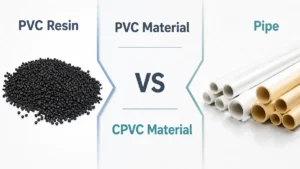
High-density polyethylene (HDPE) is a foundational polymer for the food packaging sector, yet its status as a safe, food-contact material remains a point of contention for both consumers and manufacturers. This guide serves as a definitive resource on the food-grade properties of HDPE. We will analyze its chemical stability, explore the stringent requirements of FDA regulations, and detail the best practices for its use in food applications. Ultimately, this article aims to equip you with the knowledge to distinguish between different HDPE grades and ensure full compliance and consumer trust throughout the supply chain.
What Is HDPE Plastic? Key Properties and Characteristics
High-density polyethylene (HDPE) is a cornerstone in the polymer industry, a thermoplastic valued for its minimal branching and strong intermolecular forces. These structural attributes give rise to a suite of properties that make it a material of choice for demanding applications, particularly in food-contact packaging.
Key Properties of HDPE
- Strength and Durability: HDPE offers a high strength-to-density ratio, making it possible to create lightweight yet incredibly durable containers that can withstand significant stress.
- Chemical and Stress Resistance: It is highly resistant to a variety of chemicals, including acids and bases. Its excellent environmental stress crack resistance (ESCR) is particularly vital for packaging oily or acidic foods.
- Moisture and Temperature Stability: HDPE provides an effective moisture barrier and can handle a wide temperature range, ensuring product freshness and integrity under different storage conditions.
- Non-Leaching and Inert: When manufactured as virgin resin, HDPE is chemically stable, non-leaching, and biologically inert, which is essential for its use in food-contact applications.
- Recyclability: As a widely recyclable polymer with the #2 code, HDPE is a preferred choice for sustainable packaging.

Technical Specifications & Manufacturing
The properties of HDPE are fine-tuned during its polymerization from ethylene gas. Density and Melt Flow Index (MFI) are two of the most critical parameters that determine an HDPE resin’s suitability for a specific process, such as blow molding (for bottles) or injection molding (for caps and containers). Understanding these technical specifications is key to matching the right resin to the desired end product.
Common Non-Food Applications
While a staple in food packaging, HDPE’s robust nature makes it a go-to material for a range of demanding industrial applications, including:
- Pipes and fittings for water and gas distribution
- Automotive fuel tanks
- Chemical storage drums
- Geomembranes for environmental lining
- Durable goods like outdoor furniture and toys
HDPE Food Safety: FDA Standards and Influencing Factors
The safety of HDPE for food contact is not a general property but is strictly governed by regulatory compliance. The U.S. Food and Drug Administration (FDA) plays a decisive role by setting the standards that distinguish food-grade HDPE from its industrial counterparts.
FDA Regulations for Food-Grade HDPE
The FDA regulates the use of polymers in food contact applications under 21 CFR 177.1520. This specific regulation serves as the benchmark for a plastic resin to be deemed food-safe. It goes beyond the polymer itself to scrutinize the entire formulation, including:
- Resin Purity: Only virgin HDPE resin is approved for direct food contact.
- Approved Additives: Specific limits and approvals are placed on all additives, colorants, and stabilizers to prevent migration into food.
- Migration Testing: The regulation requires testing to simulate real-world conditions, ensuring that no harmful substances leach from the plastic.
- Supplier Documentation: For a resin to be certified as food-grade, it must be accompanied by a Supplier’s Declaration of Conformity (DoC), which guarantees that the material’s composition meets all regulatory requirements.
This strict framework provides a clear chain of custody, from resin producer to the final product manufacturer, and is the foundation of food packaging compliance.

Factors Affecting HDPE Food Safety
Safety Factors
- HDPE does not leach harmful chemicals like BPA or phthalates into food.
- It is resistant to a wide range of chemicals, ensuring no reaction with food contents.
- It maintains integrity across a broad temperature range.
- Its non-porous surface resists bacterial growth.
Risk Factors
- Using uncertified, non-food-grade resin may introduce unauthorized additives.
- HDPE is not safe for extreme heat exposure, such as in a microwave, which can cause degradation.
- Repurposing a container that previously held non-food chemicals can lead to contamination.
- Certain post-manufacturing processes, like fluorination, can introduce chemicals such as PFAS.
Ensure Your Product’s Safety and Compliance.
Connect with our plastics experts to learn how to source FDA-compliant HDPE resins tailored to your specific application, ensuring your products meet the highest industry standards.
Comparing HDPE with Other Food-Safe Plastics
Understanding the unique properties of HDPE requires comparing it with other polymers to determine the optimal material for a specific application. While each resin is food-safe under proper conditions, their performance profiles vary significantly.
| Polymer | Recycling Code | Key Properties | Typical Applications | Limitations vs. HDPE |
| HDPE (High-Density Polyethylene) | #2 | Excellent Chemical & ESCR; High Stiffness | Milk jugs, food containers, closures | Lower transparency and service temperature than PP. |
| PET (Polyethylene Terephthalate) | #1 | Superior Transparency & Gas Barrier | Water/soda bottles, single-serve containers | Lower temperature resistance (not hot-fill friendly); less durable for repeated use. |
| LDPE (Low-Density Polyethylene) | #4 | High Flexibility & Impact Strength | Squeeze bottles, plastic bags, films | Lower stiffness and moisture barrier; less durable for rigid containers. |
| PP (Polypropylene) | #5 | High Heat Resistance & Low Density | Microwave containers, yogurt cups, bottle caps | Lower chemical resistance, less durable at low temperatures. |
| PS (Polystyrene) | #6 | Rigid, Transparent, Easy to Form | Single-use cutlery, foam trays | Low chemical resistance, brittleness, and concerns over styrene leaching. |

Key Differences Between HDPE and Other Plastics
For manufacturers, the choice between these resins hinges on specific performance requirements:
- HDPE vs. PP: While Polypropylene (PP) is the clear winner for heat resistance, making it ideal for microwaveable containers and hot-fill applications, HDPE excels in chemical resistance and environmental stress crack resistance (ESCR). This makes HDPE the superior choice for durable containers that hold aggressive substances like detergents, oils, or acidic juices.
- HDPE vs. PET: Polyethylene Terephthalate (PET) is prized for its glass-like clarity and excellent gas barrier properties, which is crucial for carbonated beverages. However, HDPE offers far greater durability and a higher Melt Flow Index (MFI) for applications that require robust blow molding or injection molding.
- HDPE vs. LDPE: The primary distinction is density and stiffness. LDPE provides flexibility for items like squeeze bottles, but HDPE is the go-to for rigid, self-supporting containers that require structural integrity and a stronger moisture barrier.
The right material choice is fundamental to a product’s safety, efficiency, and cost-effectiveness. Our deep expertise in polymer resins allows us to do more than just supply pellets; we partner with you to navigate complex material decisions and provide a tailored solution that meets your exact production and compliance needs.
Applications of Food-Grade HDPE in Food Packaging and Containers
The versatility of food-grade HDPE is best demonstrated through its wide range of applications, each leveraging specific material properties and processing methods. For manufacturers, selecting the correct resin grade is crucial for optimizing production and ensuring product integrity.
Primary Applications by Processing Method
Blow Molding

This process capitalizes on HDPE’s high melt strength and durability. It is the go-to method for manufacturing containers like milk jugs, juice bottles, and household liquid containers, where high stiffness and excellent environmental stress crack resistance (ESCR) are essential for preventing leaks and breaks.
Injection Molding

The high stiffness and low warpage of specific HDPE grades make them ideal for creating caps, closures, and reusable food storage containers. These applications demand precision and durability for secure sealing and repeated use.
Extrusion
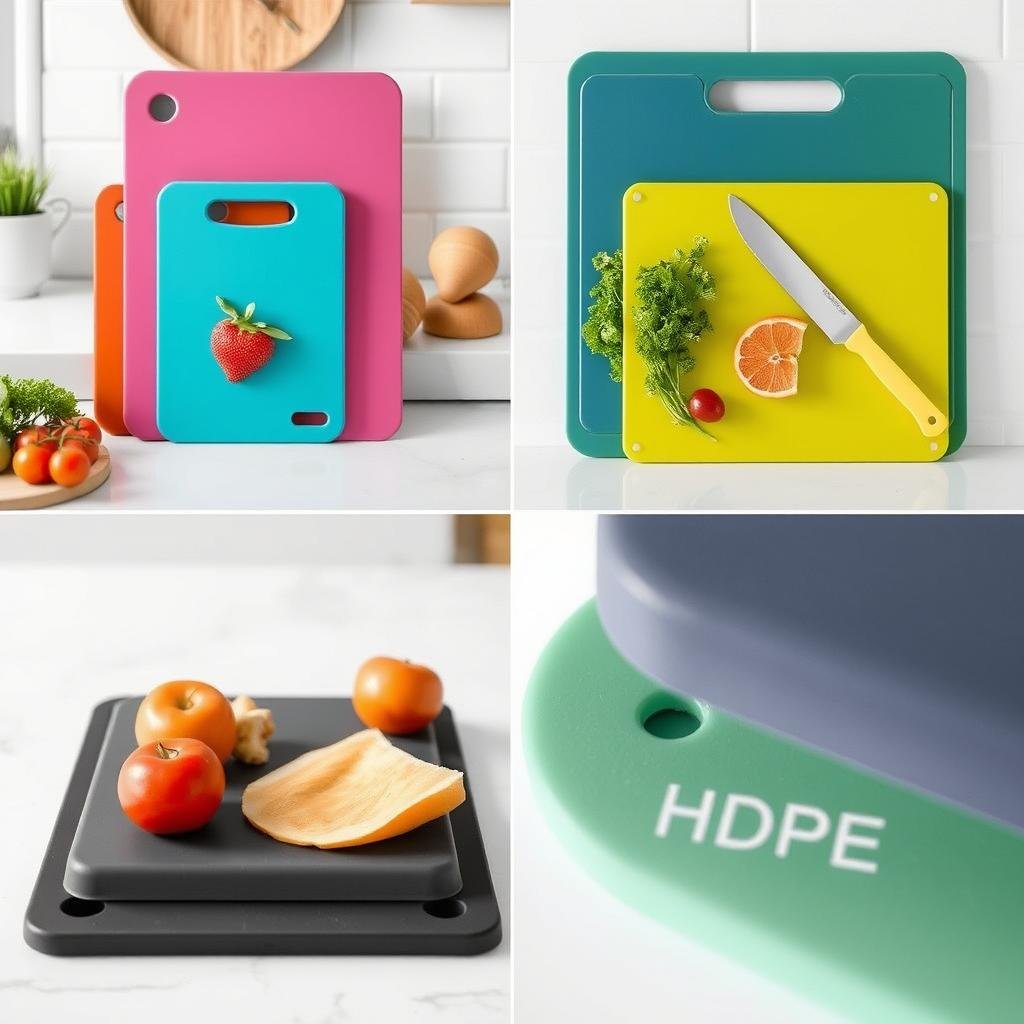
HDPE’s melt strength allows it to be extruded into films and sheets. Extruded films are used for flexible food packaging, while extruded sheets are utilized for items like cutting boards, which require a rigid, non-porous, and hygienic surface.
Industrial Food Packaging Applications
Beyond consumer-facing products, food-grade HDPE is an integral part of the food manufacturing supply chain due to its robust performance and compliance with sanitation standards.
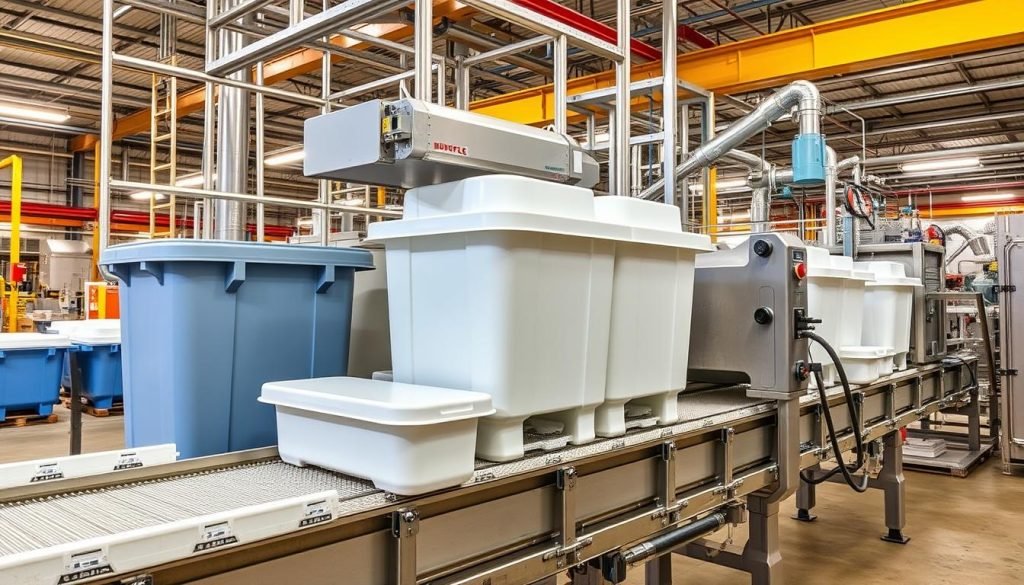
- Bulk Storage & Transport: Large drums and IBCs are made from HDPE, providing hygienic and impact-resistant containers for the safe transport of bulk ingredients.
- Food Processing Equipment: Components like conveyor parts and chutes leverage HDPE‘s wear resistance and low friction, helping meet strict sanitary requirements.
- Logistics Solutions: Reusable pallets and trays from HDPE offer a durable, long-lasting alternative to traditional materials, streamlining the supply chain and reducing waste.
Ensure Your Products Meet the Highest Standards
Speak with our material experts to find the right food-grade HDPE resin that meets your exact specifications for compliance, performance, and cost-effectiveness.
Sustainability and Recycling of Food-Grade HDPE
High-density polyethylene(HDPE), identified by the #2 recycling code, is a key material for sustainable packaging initiatives. Its robust properties make it an excellent candidate for both open-loop and closed-loop recycling systems.
Core Advantages for Sustainability
- Energy Efficiency: Producing HDPE requires less energy than alternatives like glass or metal, reducing its manufacturing footprint.
- Logistics & Emissions: Its lightweight nature significantly lowers transportation costs and associated carbon emissions throughout the supply chain.
- High Recyclability: The established recycling infrastructure for HDPE makes it one of the most commercially viable recycled polymers.
The Recycling Process and Post-Consumer Recycled (PCR) HDPE
Recycling HDPE is an industrial process that transforms waste into a valuable resource, creating Post-Consumer Recycled (PCR) HDPE pellets for new product manufacturing.
Recycling Flow
The process involves several stages:
- Sorting & Baling: Separating HDPE from other plastics and baling for transport.
- Washing & Grinding: Cleaning and shredding the material into uniform flakes.
- Melting & Pelletizing: Extruding the flakes into consistent PCR pellets, the final product for new manufacturing.

Key Considerations for PCR HDPE
The commercial viability of PCR HDPE hinges on a few critical factors:
- Quality & Purity: Food contamination, labels, and mixed materials can compromise the quality of recycled resin, requiring advanced sorting and washing technologies.
- Regulatory Compliance: The FDA has strict regulations for food-grade PCR HDPE, often requiring special processing or a functional barrier for food contact approval. This is a crucial distinction, as most PCR HDPE is currently downcycled for non-food applications like drainage pipes, lumber alternatives, and plastic furniture.
- Material Properties: The properties of PCR HDPE, such as color and mechanical strength, can vary based on the original material stream. Understanding these variations is vital for determining the suitable end-use application.
Choosing Food-Grade HDPE: Tips for Manufacturers
Sourcing the right material is a pivotal decision that directly impacts product safety, brand reputation, and regulatory compliance. For manufacturers, a strategic approach to HDPE resin procurement is essential to mitigating risk and ensuring quality.
Key Considerations for Resin Procurement
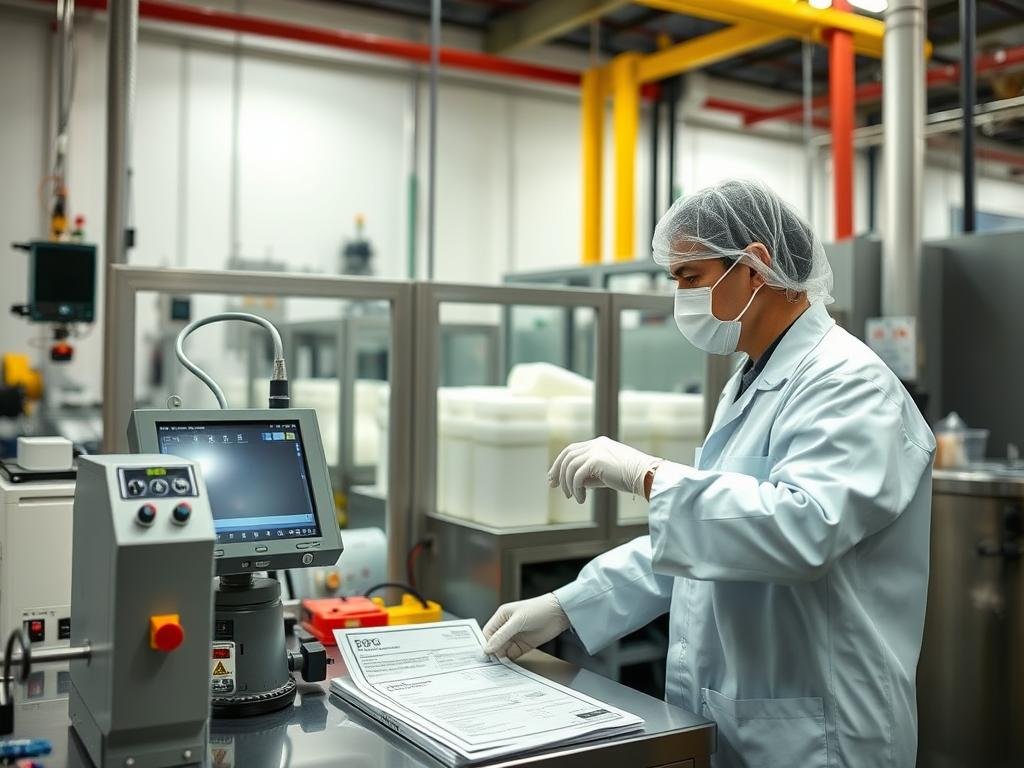
- Source with Confidence: Partner with reputable resin suppliers who can provide a comprehensive Supplier’s Declaration of Conformity for their food-grade HDPE. This documentation serves as a direct link to the resin’s compliance with regulations like 21 CFR 177.1520.
- Verify Material Purity: Demand access to technical data sheets (TDS) and Certificates of Analysis (CoA) for each resin batch. These documents verify the material’s composition, ensuring it is pure virgin resin with approved additives.
- Establish Traceability: Implement a robust traceability system from the resin source to the finished product. Proper documentation of material batches is crucial for a streamlined quality control process and for swiftly addressing any potential issues.
- Leverage Expert Consultation: Collaborate with your resin supplier’s technical team to ensure the selected HDPE grade is not only compliant but also optimized for your specific manufacturing process, whether it’s blow molding, injection molding, or extrusion.
The right supplier is more than a vendor; they are a partner in compliance. A reliable resin distributor provides the necessary documentation and technical support, simplifying the complex process of FDA compliance and helping you focus on manufacturing safe, high-quality products.
– The Role of Your Resin Supplier
Conclusion
HDPE’s reputation as a reliable and versatile polymer is well-earned. When sourced as certified food-grade resin, its durability, chemical inertness, and compliance with strict FDA standards make it an indispensable material for food packaging and processing.
The safety of a finished product begins with the integrity of its raw materials. As a trusted resin distributor, our expertise extends beyond simply supplying pellets. We provide the technical knowledge and material documentation necessary to ensure your products meet the highest standards for safety, quality, and regulatory compliance.
We invite you to partner with us to navigate the complexities of material procurement. Contact our experts today to explore how our FDA-compliant HDPE resins can provide a foundation of safety and reliability for your product line.
Ready to Optimize Your Material Selection?
Connect with our plastics experts to discuss your specific needs for HDPE, PE, or other polymer resins. We’ll provide the technical guidance and material solutions to ensure your products meet the highest standards of safety and performance.
FAQs
What is the fundamental difference between Food-Grade and Non-Food-Grade HDPE resins?
The distinction lies in the manufacturing process and additives. Food-grade HDPE is produced from virgin resin with a strict formulation of only FDA-approved additives (e.g., stabilizers, colorants) at regulated levels. Non-food-grade HDPE may contain a variety of additives, stabilizers, or recycled content that are not approved for food contact, making it unsuitable for food packaging.
Does HDPE Contain BPA?
No, HDPE is not manufactured with BPA (Bisphenol A). It is a polymer composed of ethylene monomers, making it a reliable choice for manufacturers seeking to produce BPA-free food containers.
Can Recycled HDPE be Used for Food Packaging?
The use of Post-Consumer Recycled (PCR) HDPE for food contact is highly regulated by the FDA. It is not automatically approved and generally requires a special recycling process and often a functional barrier layer to prevent potential contamination. For most applications, recycled HDPE is currently downcycled for non-food uses like drainage pipes or industrial products.
Which HDPE grade is right for my application?
Selecting the correct HDPE grade depends on your specific product requirements and manufacturing process. For blow molding (e.g., milk jugs), you need a high molecular weight resin with high Environmental Stress Crack Resistance (ESCR). For injection molding (e.g., caps, containers), a specific Melt Flow Index (MFI) is required for optimal processing. Our team can provide a technical consultation to match the ideal resin grade to your application.