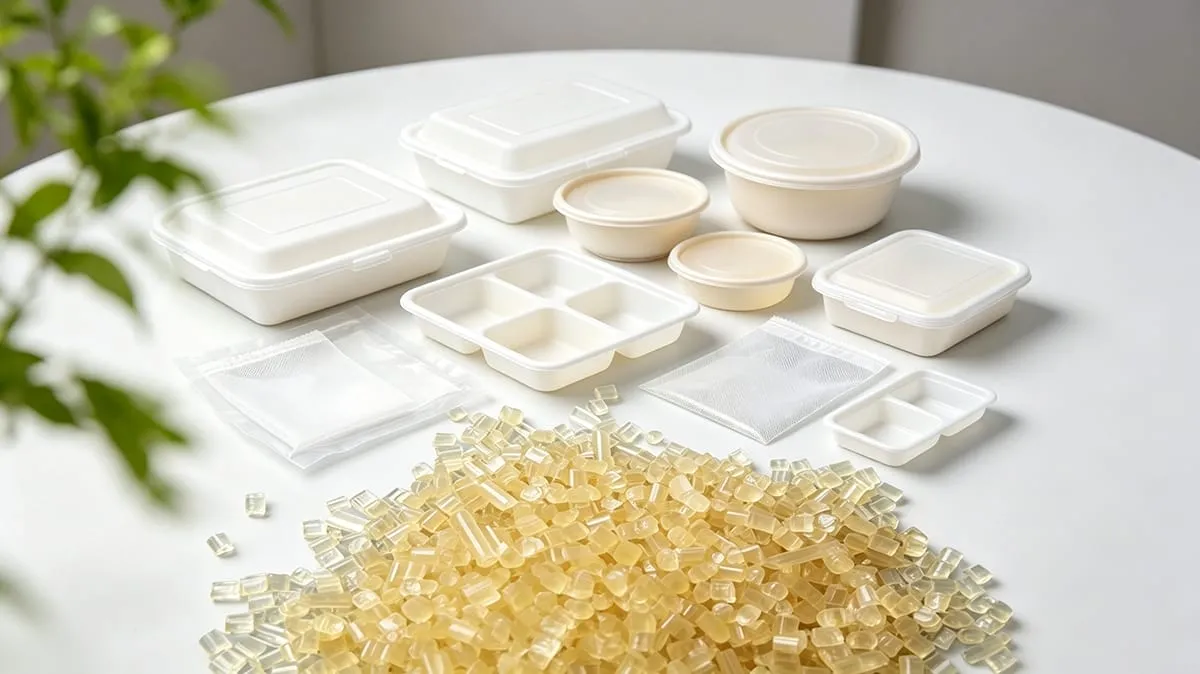
High-Performance Polyoxymethylene reinforced with 25% Glass Beads, engineered for superior dimensional stability and minimal warpage in demanding, precision applications.
Unrivaled Stability for Precision Parts
Polyoxymethylene reinforced with 25% glass beads (POM GB-25) is an engineering thermoplastic prized for its near-isotropic shrinkage, low warpage, excellent mechanical properties, and superior dimensional stability compared to glass-fiber (GF) reinforced grades.For a complete overview of the performance, applications, and market availability of POM GB-25, please refer to our "POM GB-25: From Properties to Supply – Comprehensive Technical Guide".
Minimizes directional variation, crucial for complex molds.
Reliable performance under varying mechanical and thermal loads.
Performance Snapshot
Visual representation of POM GB-25's balanced profile across key metrics like Dimensional Stability, Mechanical Strength, and Low Warpage.
Processing POM GB-25: Critical Parameters for Precision Parts
Optimal processing requires adherence to specific guidelines addressing its hygroscopic nature, thermal limits, and high-temperature mold requirements.
Recommended Processing Parameters for POM GB-25
| Parameter | Recommended Range | Critical Notes |
|---|---|---|
| Pre-Drying | 110–120 ℃ for 3-4 hours | Target moisture content <0.02%. Insufficient drying (e.g., at 80–90℃ risks hydrolytic degradation, resulting in silver streaks or internal voids. |
| Barrel Profile |
Rear: 170–180℃ Middle: 180–195℃ Front/Nozzle: 190–205℃ |
Maintain a gradual increase. Do not exceed 210℃ . Excessive heat causes thermal decomposition of POM, releasing formaldehyde gas and degrading material properties. |
| Mold Temperature | 90–140℃ | High mold temperature is critical. It promotes higher crystallinity, minimizes internal stress, improves surface finish, and reduces the risk of warpage and sink marks. |
| Typical Cycle Time | 20–50℃ | Dependent on part wall thickness and thermal stability in the barrel. |
Isotropic Shrinkage Advantage
The spherical geometry of glass beads (GB-25) imparts a near-isotropic shrinkage profile (typically ≈ 0.9–1.1%), dramatically minimizing differential shrinkage—a key advantage over anisotropic glass-fiber (GF) reinforced grades.
Ready to Elevate Your Precision Parts?
Connect directly with our materials engineers to optimize your mold design, troubleshoot complex processing issues, or discuss specialized applications.
Preventing Common Defects
While GB-25 minimizes differential shrinkage, warpage, sink marks, and internal stress may still arise in thick sections or from complex geometries.
Part Design
Design components for uniform wall thickness. Utilize generous fillet radii at corners to ease material flow and prevent stress concentrations.
Holding Pressure & Packing
Apply sufficient holding pressure (specific pressure: 800–1200 bar) with extended packing time. This forces material into the cavity to compensate for shrinkage, preventing sink marks.
Gating Strategy
Employ hot-runner systems for optimal material delivery. For cold runners, large gates such as fan or submarine gates should be used to facilitate flow and delay gate freeze-off.
Mold and Screw Wear Management
POM GB-25 exhibits relatively low abrasiveness. The spherical nature of the glass microspheres makes them significantly less abrasive than high-aspect-ratio glass fibers (≈ 20–30% of the wear caused by standard GF grades).
Wear Reduction Best Practices:
- Tool Steel: For high-volume production, through-hardened tool steels are required. Recommended grades include 1.2083 ESR (corrosion resistant) or 1.2379 (high wear resistance).
- Screw and Barrel: Specify bimetallic barrels and screws manufactured from highly wear-resistant powdered metallurgy steels like CPM-9V.
- Coatings: Applying advanced surface coatings such as PVD (Physical Vapor Deposition) or CrN (Chromium Nitride) to critical surfaces can extend component life by a factor of $3–5\times$.
Applications and Quality Assurance
Ideal Application Scenarios
- Precision components requiring tight tolerances.
- Gears, bearings, and sliding elements with low friction.
- Electrical and electronic parts needing high stiffness.
- Automotive components demanding superior creep resistance.
Certified Quality
Material certified to meet global standards.
Conclusion
POM GB-25, when processed with mandatory pre-drying, strictly controlled moderate melt temperatures (<210℃ , and high mold temperatures (90–140℃ , delivers excellent melt flow, genuinely low warpage, and acceptable tool wear. These combined characteristics establish it as a highly reliable grade for the production of demanding, precision-engineered components.