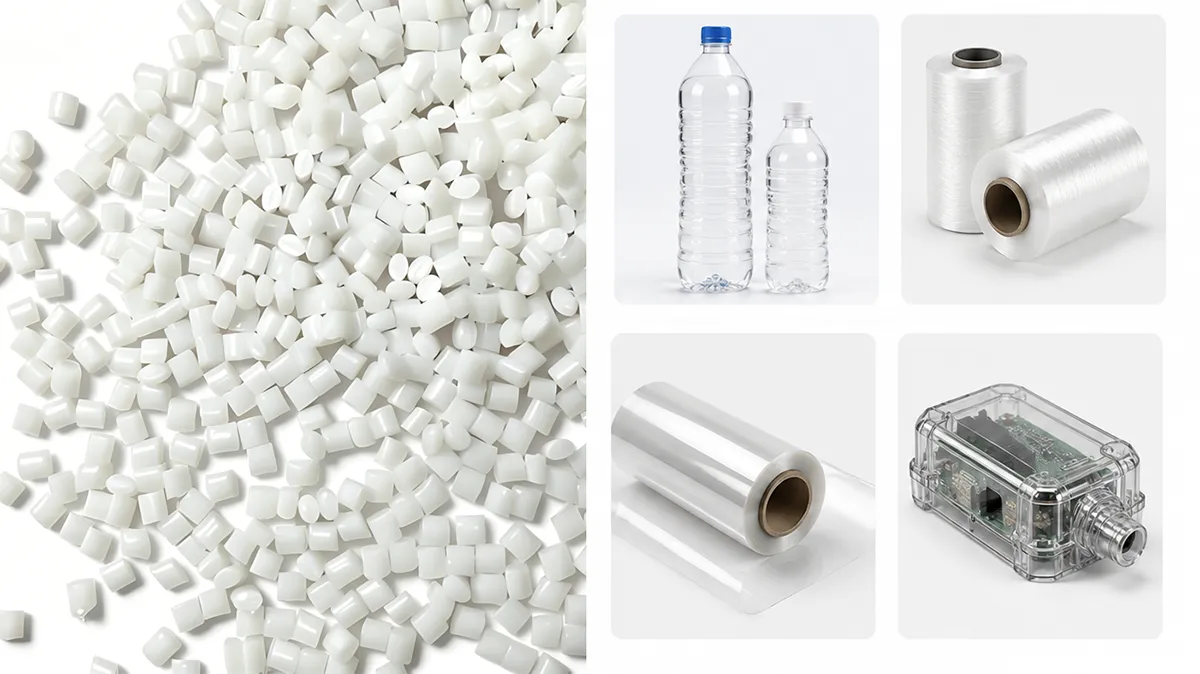
Polylactic acid (PLA) is a thermoplastic polymer synthesized from lactic acid monomers, typically sourced from renewable feedstocks such as corn starch or sugarcane. Its chemical structure consists of ester-linked chains, resulting in physical properties that suit downhole conditions: a density of approximately 1.25 g/cm³, a glass transition temperature between 55°C and 60°C, and tensile strength reaching up to 70 MPa, with compressive strength adequate for high-pressure environments.
Biodegradability Advantage
Biodegradability distinguishes PLA in fracturing applications. It degrades through hydrolysis, where water breaks the ester bonds, producing lactic acid, carbon dioxide (CO₂), and water (H₂O). These byproducts occur naturally in biological systems and pose minimal environmental risk, as lactic acid integrates harmlessly into ecosystems. This process eliminates persistent residues in reservoirs, aligning with regulatory standards for reduced formation impact.
Adjustability of performance further enhances PLA's utility. Degradation rates can be tailored by modifying molecular weight, incorporating copolymers, or altering crystallinity. Under reservoir conditions, factors like temperature and pressure influence the timeline; for example, at 150°C, breakdown may occur within 1-2 weeks, while formulations can extend this for lower-temperature zones. Such control allows adaptation to specific operational needs, improving stimulation outcomes.
Diversion Mechanism in Practice
Building on these properties, PLA diverters function by redirecting fracturing fluids to untreated reservoir sections. Particles migrate suspended in the fluid, with densities near 1.0-1.3 g/cm³ enabling uniform transport to target areas without early settling.
Bridging and Sealing Process
Bridging and sealing rely on a multi-modal particle size distribution:
- Larger particles (1-5 mm) initiate bridges across fractures or perforations
- Smaller particles (100-500 μm) occupy voids for a comprehensive seal
PLA's moderate deformability under pressure aids conformity to irregular surfaces, strengthening the barrier through this combined effect.
This setup achieves isolation, diverting fluids to lower-permeability zones and increasing pressure to create new fractures. Consequently, stimulation becomes more uniform, often leading to production increases of 20-30% in multi-stage wells. After the job, natural degradation restores permeability without additional interventions.
Comparison with Alternative Materials
PLA vs. Polyglycolic Acid (PGA)
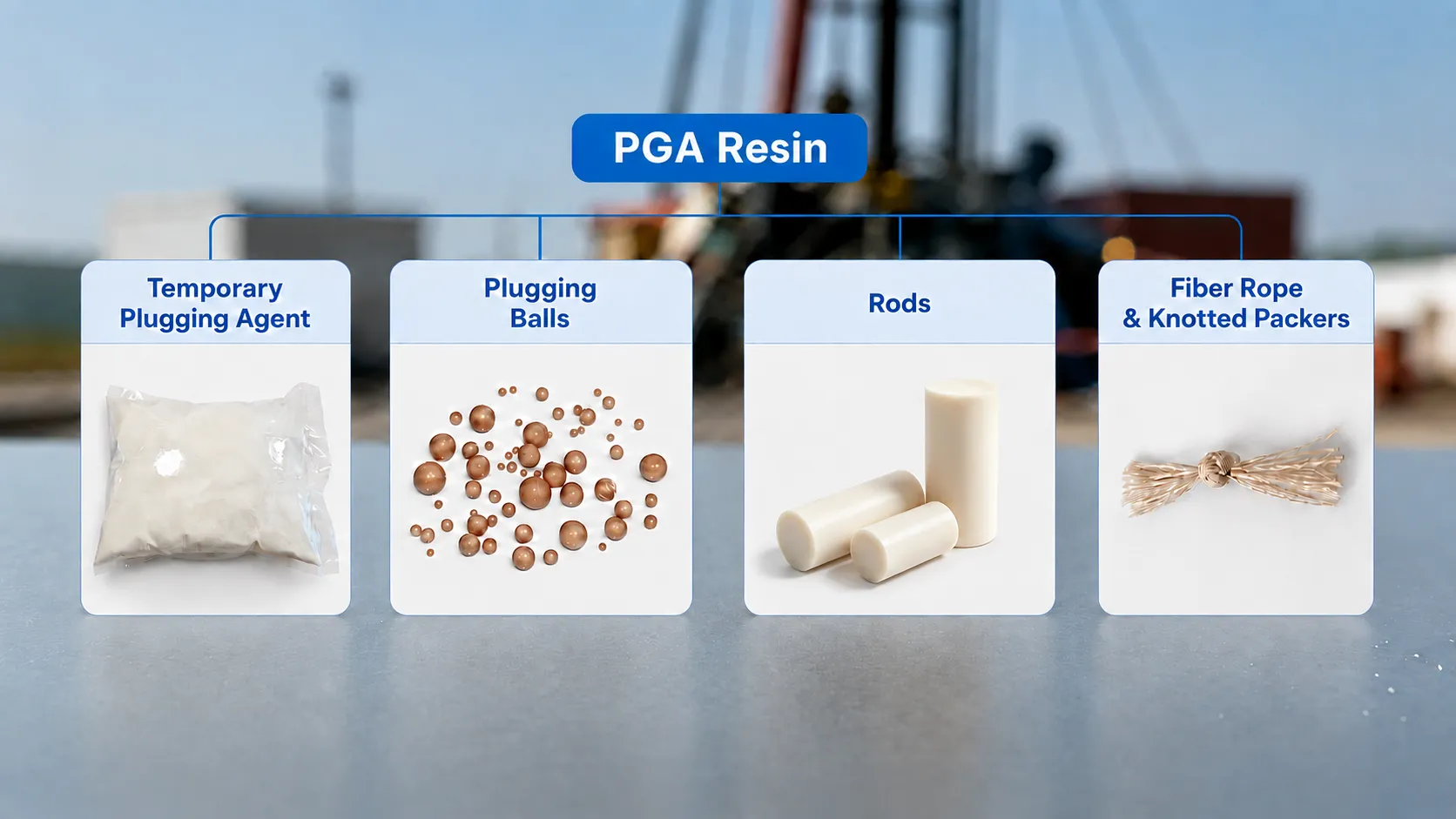
When evaluated against polyglycolic acid (PGA), another biodegradable polyester, PLA offers distinct advantages. PGA provides higher tensile strength, up to 100 MPa, and degrades more rapidly in acidic settings, suiting short-duration tasks. However, its byproducts include glycolic acid, which may corrode equipment more than PLA's lactic acid. Production costs for PLA are generally 20-40% lower due to accessible raw materials and straightforward synthesis.
PLA vs. Non-Biodegradable Options
Relative to non-biodegradable options like benzoic acid or rock salt, PLA avoids long-term formation damage despite higher initial costs. Its environmental profile and tunable degradation make it preferable for operations requiring temporary yet reliable diversion, particularly in sensitive reservoirs.
Conclusion
PLA fracturing diverters integrate material science with practical engineering, offering biodegradable solutions that optimize hydraulic fracturing. Their controlled degradation, effective sealing, and favorable comparisons underscore technical reliability. Readers seeking a deeper exploration—from particle morphology and far-field strategies to detailed field application guidelines—may refer to our comprehensive article: The Complete Guide to PLA Fracturing Diverters.For professionals in the field, these principles highlight opportunities to refine stimulation strategies and address operational challenges.