Polyhydroxyalkanoates (PHA) serve as a key material in biodegradable plastics, addressing environmental concerns through natural decomposition. Sales Plastics provides PHA formulations that balance performance with sustainability. This post examines PHA's role in packaging, covering its properties, applications, certifications, and comparisons with other materials. Based on extensive experience in the plastics sector, the discussion highlights PHA's practical benefits for industries aiming to minimize waste.
PHA consists of biopolymers synthesized by bacteria from renewable resources like vegetable oils or sugars. These polymers degrade into water, carbon dioxide, and organic matter in various environments. PHA production has reached approximately 67,000 tons globally in 2025, with annual growth rates between 15% and 20%.
Sales Plastics employs refined methods to produce PHA variants with tensile strength ranging from 20 to 40 MPa and elongation at break over 300% in flexible types.
This section also notes PHA's bio-based origin, which supports circular economy principles by reducing reliance on fossil fuels.
Key Applications in Biodegradable Packaging
Packaging represents a major segment for PHA use, comprising about 60% of its commercial volume due to compatibility with food safety regulations and effective barrier properties against moisture and gases.
Sales Plastics applies PHA in specific formats, such as:
Food Contact Films
Wrapping produce and proteins, delivering clarity and reliable sealing.
Trays
For prepared foods, ensuring stability during handling.
Coffee Capsules
Preserve taste while allowing natural breakdown.
Straws
With flexibility and heat tolerance for beverage use.
Shopping Bags
Capable of supporting loads in retail settings.
These uses illustrate PHA's adaptability in replacing conventional plastics without sacrificing functionality. Transitioning to applications, the material's versatility extends to sectors where end-of-life disposal aligns with environmental standards.
These examples highlight PHA's role in applications requiring both functionality and compliance with disposal regulations. While packaging remains the primary commercial focus, PHA also shows strong potential in agriculture, marine protection, and biomedical fields. For a broader overview of PHA's biological characteristics, emerging applications, and future outlook, read our related article: Polyhydroxyalkanoates (PHA): The Future and Applications of Green Plastics.
Certifications and Environmental Benefits
Sales Plastics verifies PHA compliance through established standards. Products hold OK Compost HOME and INDUSTRIAL certifications from TÜV Austria, confirming breakdown in home systems within 180 days and industrial ones within 90 days, leaving no harmful remnants.
TÜV OK Biodegradable MARINE
90% degradation in marine conditions within 6 months
TÜV OK Biodegradable WATER
Complete degradation in water environments
TÜV OK Biodegradable SOIL
Validates complete degradation in soil settings
Research from organizations like the European Bioplastics Association supports these rates, showing PHA outperforms many alternatives in preventing persistent pollution. This broad compatibility aids compliance with regulations like the EU Single-Use Plastics Directive, enhancing PHA's appeal for international operations.
PHA vs. Alternatives: A Comparative Analysis
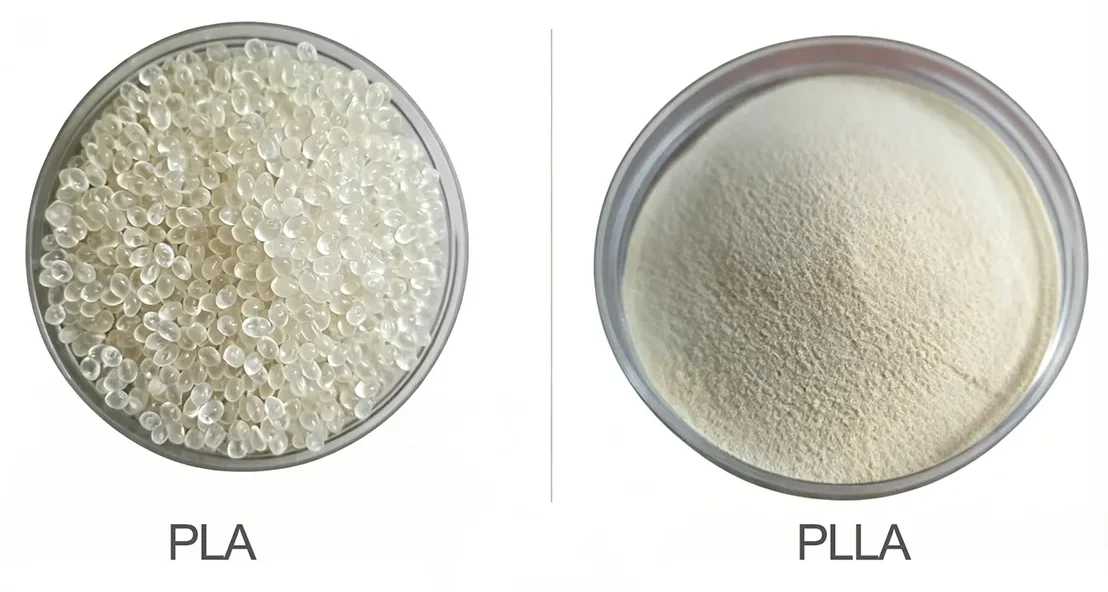
PHA distinguishes itself from materials like PLA, PBAT, and pulp molding through detailed evaluations of properties, costs, and environmental impact.
PHA vs. PLA
- PHA degrades more readily in natural environments, including oceans
- Withstands higher temperatures: up to 120°C (PHA) vs. 60°C (PLA)
- Cost: $4-6 per kg (PHA) vs. $2-3 per kg (PLA)
- Enhanced biodegradability justifies the price difference
PHA vs. PBAT
- Fully bio-based option achieving carbon neutrality
- Quicker soil degradation: 3-6 months (PHA) vs. 6-12 months (PBAT)
- PBAT integrates easily with other compounds
- PHA offers superior environmental credentials
PHA vs. Pulp Molding
- Superior water resistance and impact strength (30-50% greater)
- Suited for moist or oily contents
- Pulp cost: $1-2 per kg (lower cost but limited applications)
- Pulp falters in humid conditions
Environmental Impact: Lifecycle studies from sources like the Ellen MacArthur Foundation indicate PHA cuts greenhouse gas emissions by 50-70% relative to these options, underscoring its contribution to sustainable practices. Despite higher upfront costs, PHA's durability often lowers long-term expenses.
Industrial-Grade Resins (Sales Plastics IG Series)
Sales Plastics supplies the IG-3000 Series as general-purpose PHA resins suitable for packaging and related industrial applications. This series includes:
IG-V3000:
Versatile grade with balanced flexibility and strength
- Ideal for films and bags
- Applications in food packaging and retail sectors
IG-3000:
Standard rigid variant offering high stiffness and heat resistance
- Applied in trays, capsules, and cutlery
- Applications in food service and beverage industries
IG-3430:
Enhanced durability option with improved impact resistance
- Suited for straws, shopping bags, and disposable items
- Applications in catering and consumer goods
These grades support processes like extrusion, injection molding, and film blowing. Key features include marine biodegradability, food contact compliance, and mechanical properties comparable to conventional plastics. Factors influencing grade selection encompass end-product requirements, fabrication methods, and performance needs such as barrier properties or thermal stability.Sales Plastics conducts assessments to match resins with specific projects.
- IM Series: Engineered for high-performance injection molding applications, providing enhanced processability and mechanical properties for demanding molded products.
- Coating and Dispersion Grades: Including water-based PHA dispersions for paper/board coating and extrusion coating resins for barrier layers on substrates.
Conclusion
PHA advances packaging sustainability by integrating effective performance with natural degradation. Sales Plastics continues to innovate in PHA formulations, providing industries with reliable, eco-friendly alternatives that meet both functional and environmental standards. By choosing PHA, businesses can reduce their ecological footprint while maintaining product quality and consumer satisfaction.