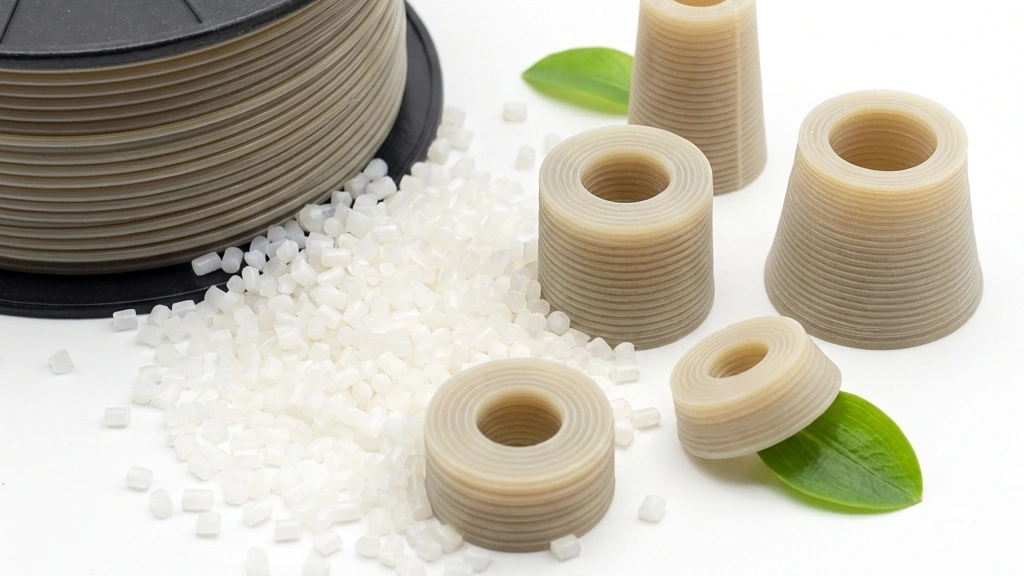
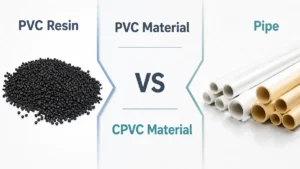
PBT-GF30, a 30% glass fiber-reinforced polybutylene terephthalate, delivers reliable performance in electrical insulation, dimensional stability, and chemical resistance.
Related Resource: For a more detailed overview including fundamental properties and manufacturing variants, refer to our comprehensive guide: A Comprehensive Guide to PBT-GF30: Properties, Applications, and More.
Comparison with PA6 GF30 & PA66 GF30
Engineers frequently evaluate PBT-GF30 against nylon-based alternatives in automotive and electrical applications.
| Property | PBT-GF30 | PA6 GF30 | PA66 GF30 | Notes |
|---|---|---|---|---|
| Mechanical Strength (Tensile Strength, Flexural Modulus) |
High ~140-160 MPa |
Higher ~170-190 MPa |
Highest Optimal fatigue resistance |
PA excels in dry conditions/high-load; PBT maintains stability in humid environments. |
| Moisture Absorption | Very Low 0.2-0.3% |
High 2-3% |
Moderate 1.5-2.5% |
PBT ensures consistent dimensions & electrical properties in moist settings. |
| Heat Resistance (HDT) |
Moderate ~210°C |
Moderate ~200°C |
Higher ~240-250°C |
PA66 performs best at elevated temperatures. |
| Cost | Moderate | Lowest | Highest | PA6 is most economical; PBT is mid-range based on material fluctuations. |
| Key Advantages | Electrical insulation, Chemical resistance |
Impact & wear resistance | Balanced strength & heat | PBT suits humid/electrical contexts; PA fits mechanical loads. |
Summary: PBT-GF30 proves particularly valuable in moisture-sensitive applications like connectors, where its stability provides long-term reliability.
Versus Other Plastics
vs. PET Polyethylene Terephthalate
- PBT-GF30 wins on: Impact toughness (low temps), thermal stability, and chemical resistance.
- Faster crystallization allows for easier processing.
- PET is better for: Extreme rigidity scenarios and potentially lower cost.
vs. PC Polycarbonate
- PBT-GF30 wins on: Chemical resistance (oils/solvents) and dimensional stability.
- Lower moisture absorption and often lower cost.
- PC is better for: Transparency and high impact toughness.
Special Applications: Flame-Retardant (V0)
Flame-retardant PBT-GF30 (typically halogen-free or brominated) provides strong self-extinguishing properties for safety-critical uses.
Electrical
Connectors, switches, circuit breakers, and LED housings.
Appliances
Coffee makers, toasters, and blenders for fire-safe durability.
Automotive
Under-hood components, sensor housings, and ignition coils.
Compliance
V0 grades meet RoHS standards for regulated sectors.