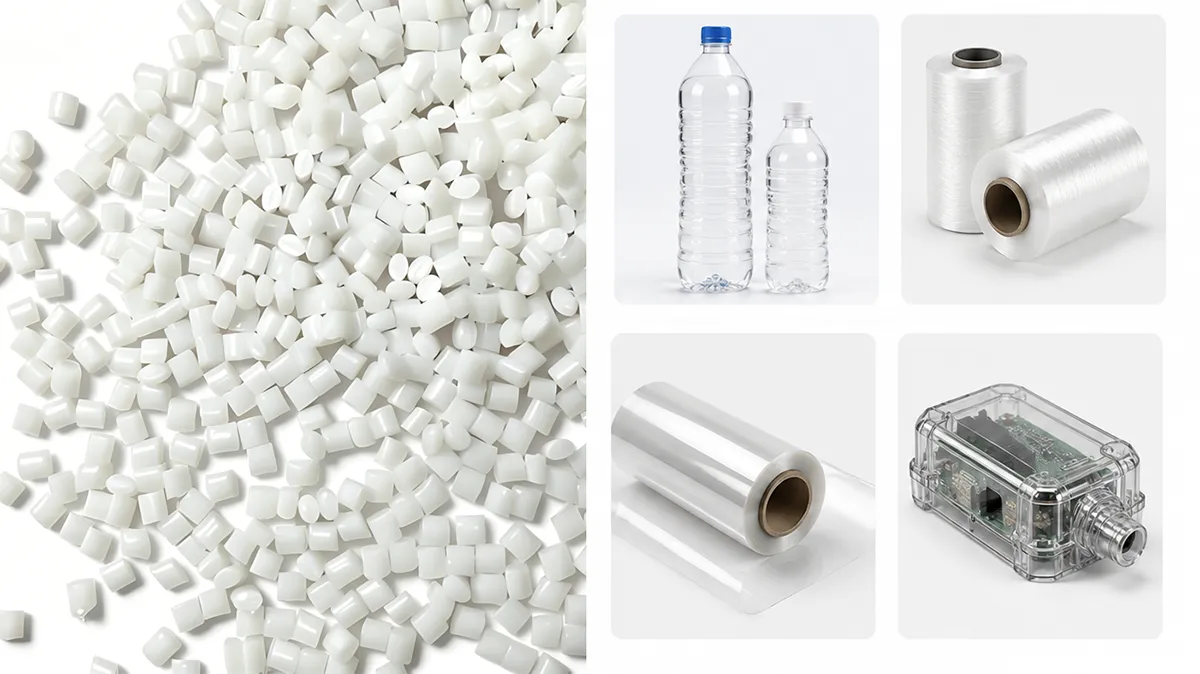
Polybutylene terephthalate (PBT) serves as a semi-crystalline engineering thermoplastic known for its dimensional stability, low moisture absorption, electrical properties, and ease of processing. The following sections compare PBT with common engineering plastics: polyethylene terephthalate (PET), polyamide (nylon, such as PA66/PA6), polycarbonate (PC), acrylonitrile butadiene styrene (ABS), and polypropylene (PP).
These comparisons focus on mechanical performance, thermal characteristics, moisture absorption, chemical resistance, and typical applications. For a detailed overview of PBT material grades and their specific modifications, refer to the related article: PBT Material Grades: Types and Key Differences.
Need More Information About PBT Materials?
Contact our technical team for detailed specifications, custom solutions, and application guidance.
PBT vs PET Polyester Family Comparison
Similarities
Comparable chemical structures, offering mechanical strength, chemical resistance, and electrical insulation.
Key Differences
- PBT crystallizes faster and processes more easily.
- Melting Point: PBT (225°C) vs PET (260°C).
- Better impact toughness and lower moisture absorption in PBT.
Applications: PBT (Electrical connectors, auto components); PET (Fibers, bottles, high-wear parts).
PBT vs PA Nylon (PA66/PA6)
Dimensional Stability: PBT features very low moisture absorption (<0.1%), ensuring excellent stability, while PA absorbs up to 2-8%, leading to performance variations.
Applications: PBT (Precision electrical parts); PA (High-load mechanical like gears/bearings).
PBT vs PC Polycarbonate
Chemical resistance to oils/solvents, lower cost, excellent electrical properties, low warpage.
Exceptional impact toughness, transparency, and higher heat resistance (130-150°C).
PBT vs ABS
PBT surpasses ABS in heat resistance, chemical stability, and aging. ABS excels in low-temperature impact and cost.
PBT vs PP
PBT exceeds PP in strength and rigidity. PP offers lowest density and cost for low-temperature/disposable uses.
Performance Comparison Table
Typical Unreinforced Values (Reference Ranges)
| Property | PBT | PET | PA66 | PC | ABS | PP |
|---|---|---|---|---|---|---|
| Density (g/cm³) | 1.3-1.4 | 1.3-1.4 | 1.1-1.15 | 1.2 | 1.0-1.1 | 0.9 |
| Tensile Strength (MPa) | 50-60 | 60-80 | 80-90 | 60-70 | 40-50 | 30-40 |
| Impact Toughness | Medium-Good | Medium | Excellent | Outstanding | Good | Medium |
| Cont. Heat (°C) | 120-140 | 100-150 | 150-200 | 130-150 | 80-100 | 100-120 |
| Moisture Abs (%) | <0.1 | 0.1-0.2 | 2-3 | <0.2 | <0.3 | <0.01 |
| Processability | Excellent | Good | Medium | Good | Excellent | Excellent |
| Relative Cost | Medium | Medium | Medium | High | Low | Lowest |
While this matrix provides a broad overview across different polymer families, the most frequent decision engineers face is the technical trade-off between PBT and Nylon.
Technical Deep Dive: For a granular analysis of why PBT outperforms Nylon 66 in high-humidity electrical environments despite their similar data sheets, read our focused comparison: PBT vs PA66: Making the Right Choice for E&E and Automotive Components .
Key Takeaway
In summary, PBT offers a unique equilibrium for engineers who cannot compromise on dimensional stability in harsh environments.
Strategic Outlook: Moving beyond traditional petroleum-based polymers is no longer a niche requirement but a mandatory "entry ticket" for global supply chains. If your road-map includes GRS or ISCC PLUS certification targets, explore how the latest eco-friendly PBT resin solutions maintain 95% tensile strength retention while meeting ESG goals: The Future of Engineering Plastics: Eco-Friendly and Recycled PBT Resin Solutions .
PBT stands out for its balanced properties, particularly in electrical and automotive sectors requiring low moisture uptake and high precision. For specific brand data, such as BASF Ultradur or DuPont Crastin, additional details can be explored upon request.