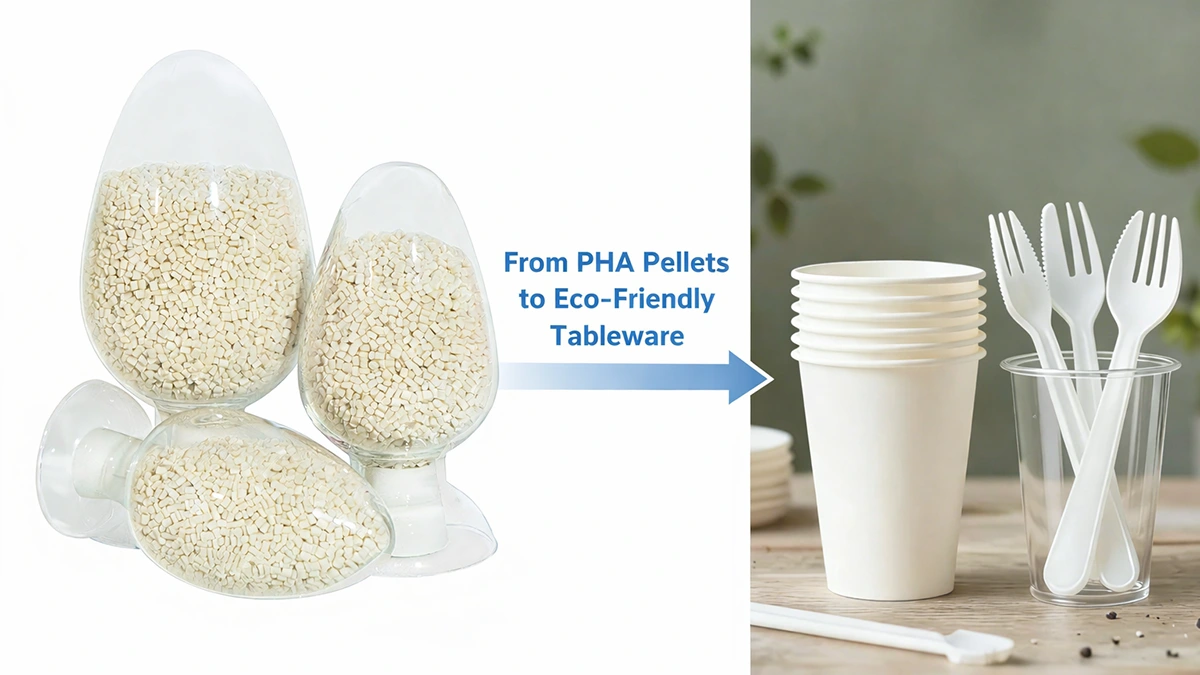
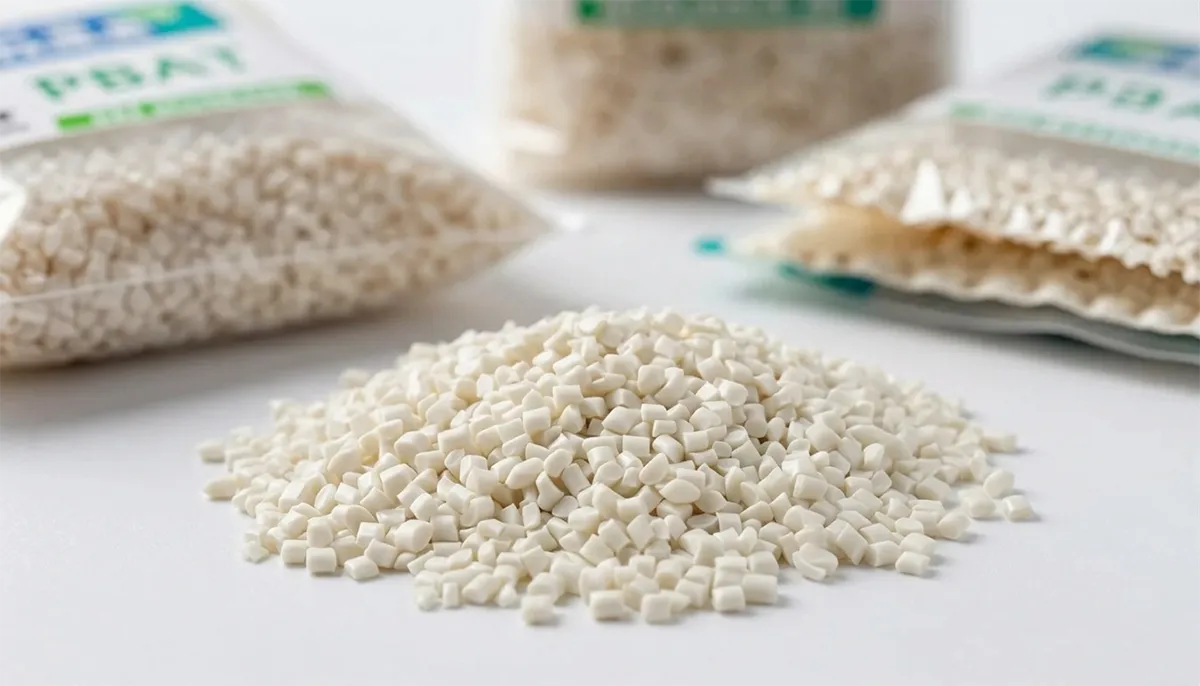
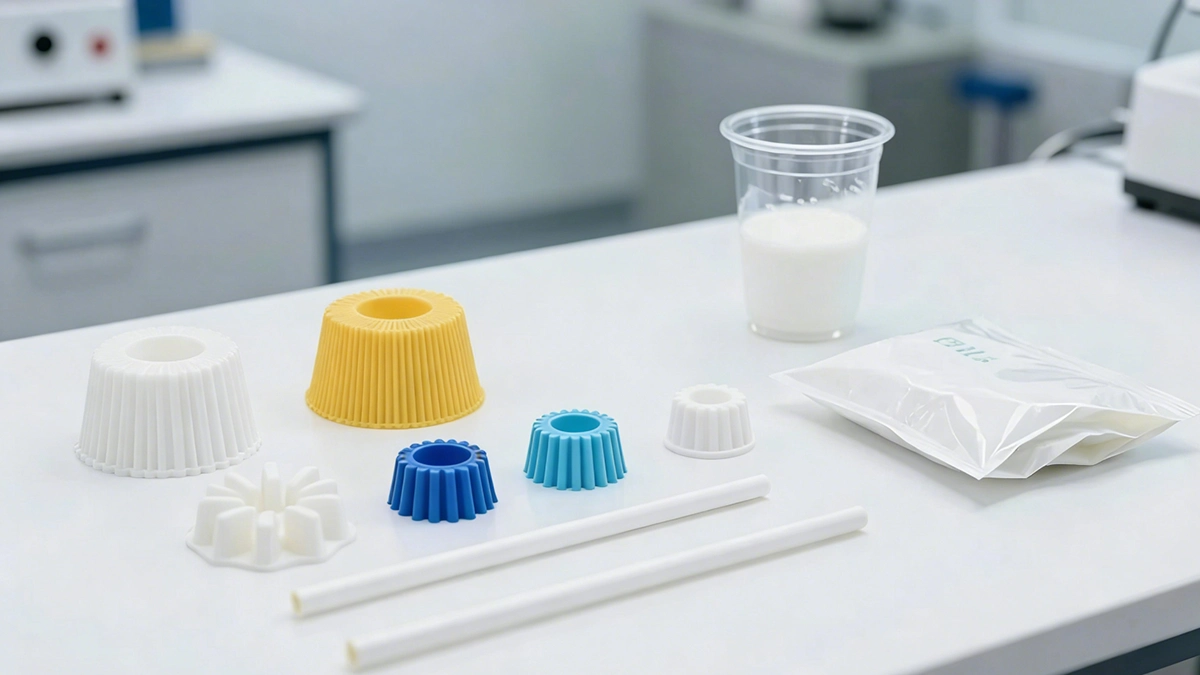
PLA is a thermoplastic polyester polymer derived principally from renewable resources. It appears as transparent or semi-transparent granules with excellent gloss and rigidity.
The Production Process
Extraction
Corn starch, sugarcane, or cassava harvested from renewable plants.
Saccharification
Enzymatic hydrolysis converts starch into fermentable glucose.
Fermentation
Microorganisms convert glucose into Lactic Acid.
Purification
Isolation and purification of the lactic acid monomers.
Polymerization
Ring-opening polymerization yields high-molecular-weight PLA.
Ready to switch to sustainable materials?
Explore our catalog of PLA-based products designed for a circular economy.
View Our CatalogWhat are Traditional Plastics?
Traditional plastics are petroleum-based polymers derived almost entirely from crude oil or natural gas. While durable, their persistence in the environment poses significant long-term pollution challenges.
-
Non-renewable: Derived from fossil fuels via cracking.
-
Persistence: Can take centuries to degrade.
-
Microplastics: Often break down into harmful microscopic particles rather than returning to nature.
Polyethylene
Bags, bottles, pipes (LDPE, HDPE).
Polypropylene
Food containers, automotive parts.
Polyethylene Terephthalate
Beverage bottles, fibers.
Key Definitions Explained
Understanding the difference between Origin and End-of-Life.
Bio-based
Focus: The Origin
Made from biomass (plants) rather than fossil fuels.
Note: Does not guarantee biodegradability (e.g., Bio-PE).
Biodegradable
Focus: End-of-Life
Breaks down into CO₂, water, and biomass via microorganisms. Time varies from months to decades.
Note: Can be bio-based or petroleum-based (e.g., PBAT).
Compostable
Focus: Time & Conditions
Strict subset of biodegradable. Must degrade fully within specific timeframes (e.g., 180 days) leaving no toxicity.
Standard: EN 13432 / ASTM D6400.
Where does PLA fit?
PLA is unique because it bridges the gap between performance and sustainability.
Bio-based Plastic
Derived from corn starch or sugarcane with bio-content typically >90%.
Industrially Compostable
Certified (BPI, OK Compost) to degrade in high-heat industrial facilities (~58°C).
Important Limitations
- ● Not Home Compostable: Requires higher temperatures than typical home compost piles provide.
- ● Natural Environments: Will not rapidly degrade if thrown in the ocean or roadside.
- ● Recycling Streams: Cannot be mixed with traditional PET/PE recycling.
This foundational overview of definitions, production, and classifications provides the necessary background. For a complete analysis — including how PLA and traditional plastics behave in the environment, direct performance comparisons, key limitations and challenges, optimal use cases, avoiding greenwashing, and the future outlook — read the full guide: PLA vs Traditional Plastic: Why Choose Biodegradable Materials?