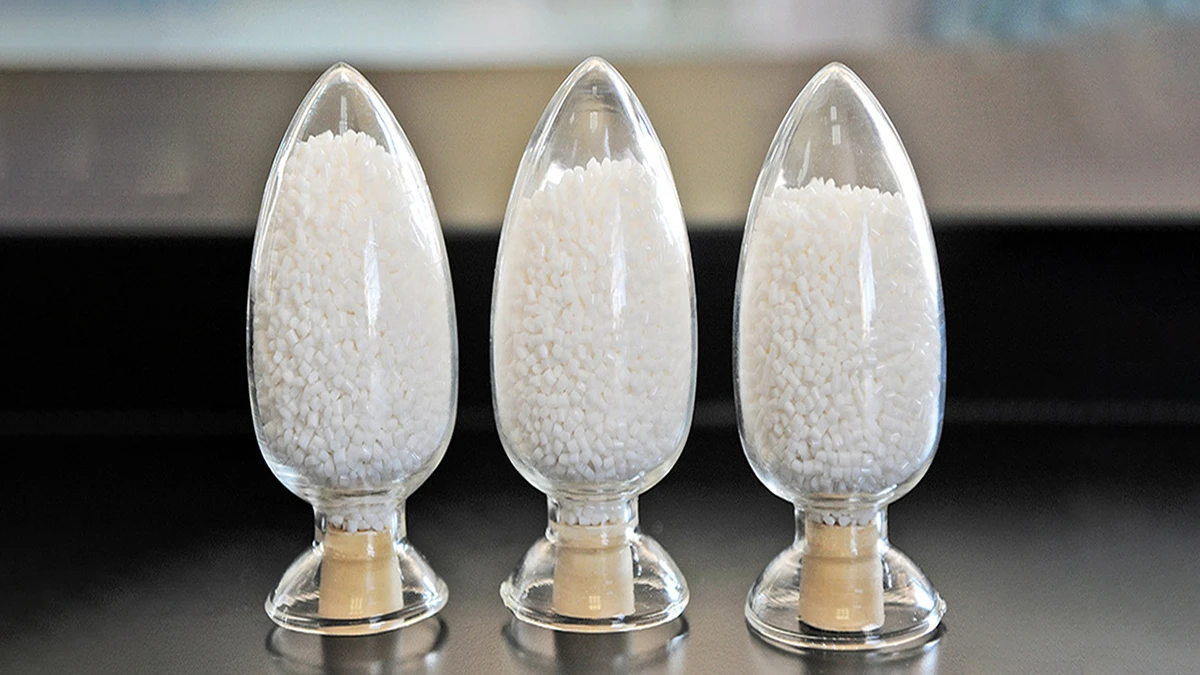
Achieving high-quality results with Nylon requires a significantly more controlled environment than the forgiving nature of PLA. The divergence begins at the thermal interface.
Polylactic Acid (PLA)
ForgivingNozzle Temperature
190–220℃
Cooling Requirements
Aggressive fan cooling required for fine detail sharpness.
Nylon (Polyamide)
IndustrialNozzle Temperature
240–300℃
Chamber Control
Mandatory heated enclosure. Active cooling is detrimental.
Deep Dive into Material Chemistry
Explore our comprehensive guide to Nylon vs PLA chemical origins and sustainability profiles.
Active cooling is often detrimental to Nylon, as rapid temperature drops trigger premature crystallization and severe layer delamination. Bed adhesion also presents a challenge; while PLA adheres reliably to PEI sheets, Nylon necessitates specialized adhesives like Magigoo PA.
Engineering Tip
Use glass-fiber reinforced build plates for Nylon to counteract its natural tendency to lift during long print cycles.
Warping Dynamics & Interlayer Adhesion
The primary technical hurdle in Nylon printing is its high shrinkage coefficient. As a semi-crystalline polymer, Nylon undergoes a volumetric contraction of approximately 1.5% during cooling.
5-Step Warping Mitigation Protocol
Oversized Brims
Reduced Infill Density
Chamber Temperature
Industrial Adhesives
Post-print Annealing
Post-Processing & Customization
Nylon: Chemical Versatility
Leveraging its inherent hydroscopy, white Nylon parts can be deeply tinted using acid-based fabric dyes (e.g., RIT Dye). The dye penetrates the polymer matrix ensuring permanent color.
Structural Bonus
Epoxy encapsulation bonds more effectively to Nylon's polar surface, boosting durability significantly.
PLA: Mechanical Limitations
Low melting points make power sanding difficult; friction heat quickly gums up abrasives. Finishers often rely on chemical smoothing or filler primers.
Typical Finish
Manual hand-sanding with wet paper is recommended to prevent localized thermal softening.
FDM vs. SLS: Production Scaling
The transition from desktop FDM to industrial SLS (Selective Laser Sintering) marks a shift in geometric freedom and batch scalability.
| Feature | FDM Nylon | SLS Nylon |
|---|---|---|
| Supports | Required (Manual Removal) | Self-supporting (Powder Bed) |
| Geometry | Simple to Moderate | Complex, Interlocking |
| PLA Availability | Standard | Virtually Absent |
| Isotropic Properties | Layer Dependent | Consistent Across Units |
"The crossover point from FDM to SLS typically occurs when part complexity exceeds support-removal feasibility or when batch production requires consistent isotropic properties across hundreds of units."