The global plastic crisis has pushed “biodegradable” alternatives to the forefront of sustainable business. However, for many distributors and consumers, the term remains a source of confusion. The reality is that not all biodegradable plastics are created equal. While they promise to return to nature, most require specific, controlled environments to do so—a crucial detail often lost in marketing claims.
Biodegradable vs Compostable: The Critical Difference
To truly address waste management, we must first answer a fundamental question: Is plastic biodegradable in the way most people assume? The answer lies in the distinction between simple breakdown and certified composting.
- Biodegradable: A broad term indicating a material can break down via biological activity. Crucially, it does not specify a timeframe or environment, meaning some “biodegradable” plastics may still persist for years in the ocean or landfills.
- Compostable (Industrial): A subset of biodegradation that is strictly regulated. These materials are engineered to decompose fully within 180 days, but only under industrial composting conditions (high heat, specific moisture, and microbial density).
Expert Note: Most high-performance bioplastics (like PLA) will not disappear if simply tossed into a backyard garden or the sea. They are designed for a circular economy that relies on industrial composting facilities to turn waste into nutrient-rich biomass.
What Are Biodegradable Plastics Made Of?
Not all plastics are biodegradable in the same way. The performance of a bioplastic product depends entirely on its molecular “recipe.” Rather than a single material, Current compostable solutions are typically precision blends of Natural Polymers and Synthetic Bioplastics, engineered to balance durability with degradability.
1. Natural Polymers: The Bio-Based Foundation
These materials are derived directly from renewable biological sources. They form the “green” heart of most biodegradable products.
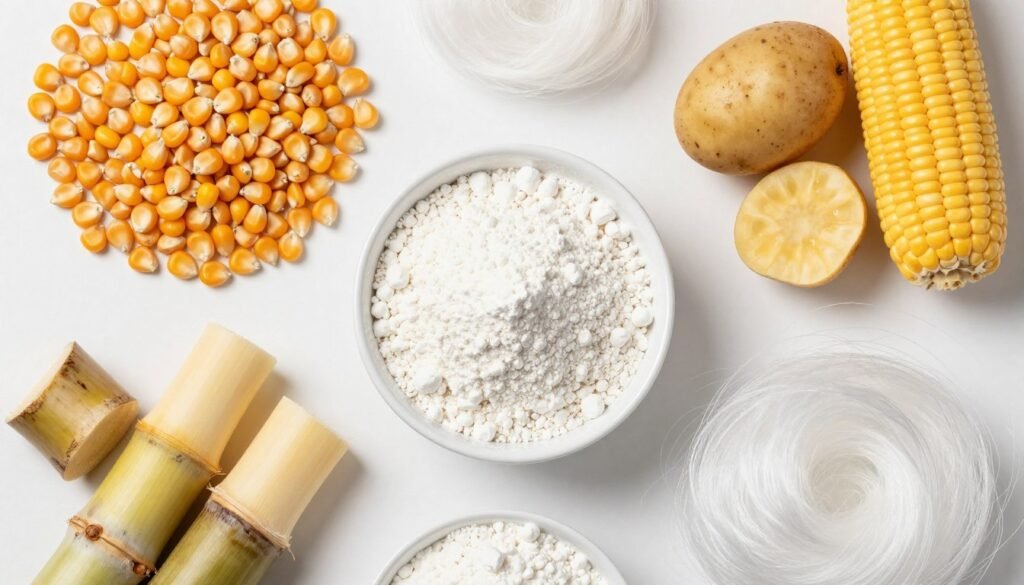
Starch & Cellulose
Extracted from corn, potatoes, or wood pulp. While starch is the most cost-effective biodegradable component, it is usually modified or blended to improve water resistance.
PLA (Polylactic Acid)
The most recognizable bioplastic, fermented from plant sugars (corn or sugarcane). It provides the clarity and rigidity required for food packaging and cold-drink cups.
2. Synthetic Bioplastics: Engineering Performance
These polymers are synthesized—either through chemical processes or bacterial fermentation—to provide the mechanical strength that natural polymers lack.
PBAT (Polybutylene adipate terephthalate)
Though often petroleum-derived, PBAT is fully certified for industrial composting. It is the “toughening agent” of the industry, adding the flexibility and tear resistance necessary for carrier bags and mulch films.
PHA (Polyhydroxyalkanoates)
A premium class of bioplastics produced by microorganisms. PHA is unique because it offers marine biodegradability, though its higher complexity currently positions it as a specialized alternative to PLA.
PCL (Polycaprolactone)
A synthetic polymer known for its low melting point and excellent compatibility in blends, often used in medical and specialized technical applications.
For a deeper dive into the industrial specifications and processing performance of these resins, explore our comprehensive guide: High-Performance Bioplastics: A Strategic Technical Guide.
3. The Power of the Blend (Formulations)
In commercial applications, “pure” materials are rare. As a specialist distributor, we focus on Hybrid Formulations that combine these two categories:
- Starch + PBAT: For flexible, high-strength compostable bags.
- PLA + PBAT: For durable packaging that requires a balance of stiffness and impact resistance.
Technical Insight: The presence of synthetic bioplastics like PBAT does not compromise the “eco-friendly” status. Instead, these materials ensure that the final product performs exactly like conventional plastic during its useful life, while still meeting EN 13432 standards for full decomposition in composting facilities.
Pros and Cons of Biodegradable Plastic
Transitioning to biodegradable plastics is a strategic decision. While these materials offer a path toward decarbonization, they also present technical and economic challenges that require expert navigation.
Advantages
- Decouples production from volatile fossil fuel markets by utilizing renewable agricultural feedstocks.
- Significantly lowers the overall carbon footprint through the absorption of CO₂ during the plant growth phase.
- Strengthens brand equity and market positioning by aligning with global ESG standards and consumer demand for sustainability.
- Redirects organic waste from landfills when integrated into circular food-packaging systems and industrial composting.
- Future-proofs businesses against tightening “single-use plastic” regulations and environmental tax frameworks.
Disadvantages
- Commands a higher market price due to the current scale of bio-refining compared to decades-old petroleum infrastructure.
- Exhibits lower heat deflection temperatures, which may limit use in high-temperature food or industrial applications.
- Displays variable physical toughness, often requiring specific chemical blends to match the tear resistance of conventional PE or PP.
- Relies on specialized industrial composting infrastructure to achieve full biological decomposition within a standard timeframe.
- Introduces potential risks to conventional recycling streams if sorting and collection labeling are not clearly communicated to the end-user.
| Feature | Conventional Plastics | Biodegradable / Compostable |
| Carbon Impact | High (Fossil-based emissions) | Low (Biogenic carbon cycle) |
| Material Origin | Finite Petroleum | Renewable Biomass |
| Cost | Economical / Optimized | Premium / Developing Scale |
| Physical Integrity | Exceptional / Long-lasting | Functional / Designed to Break Down |
| Brand Perception | Increasing Regulatory Risk | Eco-Friendly / Future-Proof |
Critical Consideration: Biodegradable plastic sent to landfills may produce methane, a potent greenhouse gas, as it breaks down without oxygen. Proper composting infrastructure is essential to realize environmental benefits and avoid unintended negative consequences.
Applications of Biodegradable Plastic
Biodegradable plastics are not universal replacements for all polymers; rather, they are high-performance solutions for specific industries where traditional plastic recovery is difficult or impossible.
High-Value Medical Engineering
In the healthcare sector, biodegradability is a functional necessity rather than just an eco-friendly choice.
- Absorbable Sutures: Modern surgical threads utilize PLA or PCL to ensure they dissolve safely within the body after the healing process, eliminating the need for secondary removal procedures.
- Bio-resorbable Implants: From bone pins to vascular scaffolds (stents), these devices provide temporary structural support and are gradually replaced by the body’s natural tissue, significantly improving patient recovery outcomes.
Agriculture: The "Tilled-In" Solution
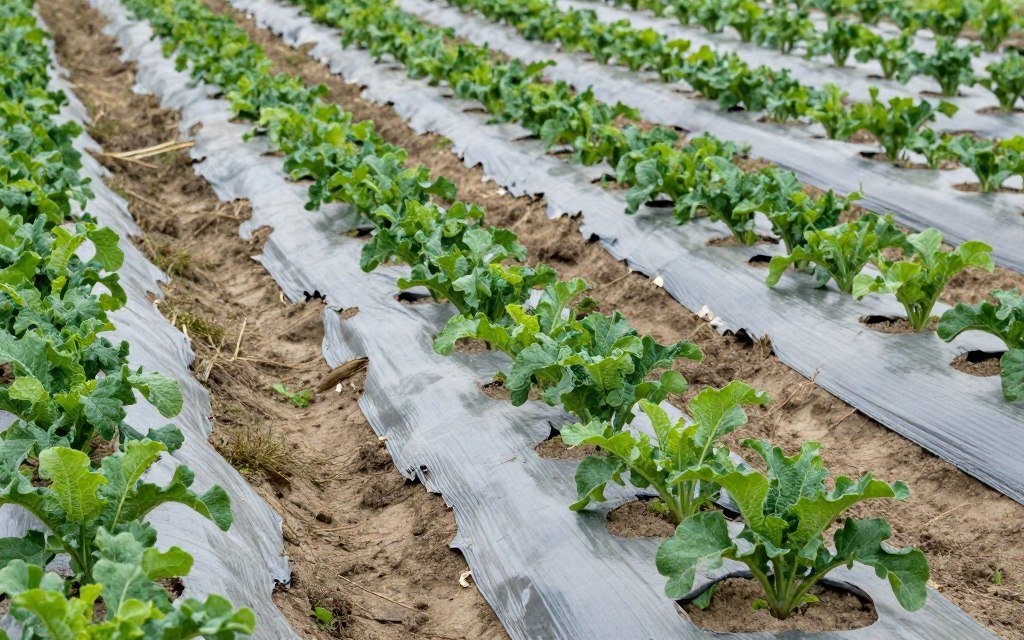
Agriculture is perhaps the most practical application for compostable technology, specifically regarding Mulch Films.
- Eco-Efficiency: Traditional PE mulch films require labor-intensive removal and often leave toxic microplastics in the soil.
- The Biodegradable Advantage: High-quality biodegradable mulch films can be tilled directly into the earth after harvest. They are engineered to maintain integrity during the growing season and fully decompose into water and CO₂ thereafter, preserving soil health and saving significant labor costs.
Advanced Packaging & E-commerce
Packaging accounts for the largest volume of bioplastic use, focusing on sectors where contamination makes mechanical recycling unfeasible.
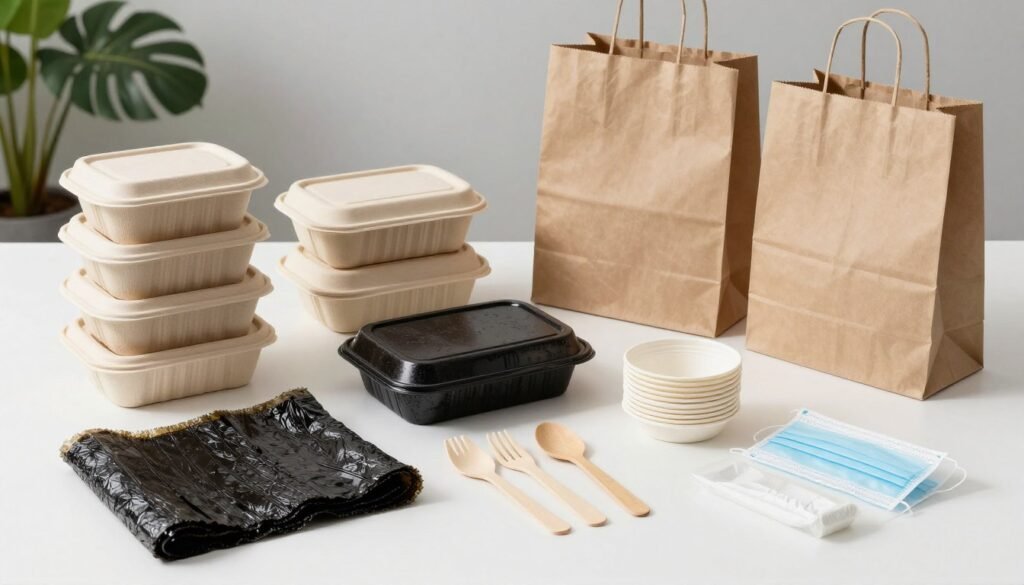
- Food Packaging: Items like coffee capsules, tea bags, and grease-stained takeout containers are often “locked” out of traditional recycling. Using compostable materials allows the entire package to be processed alongside organic food waste.
- Logistics & Express Delivery: With the explosion of e-commerce, compostable mailers and “void-fill” (cushioning) materials provide a scalable way to reduce the environmental footprint of global shipping without sacrificing protection.
Specialized Consumer Goods
For products that are naturally prone to environmental leakage, biodegradable materials offer a vital safety net:
- Single-use Service-ware: Cutlery, straws, and lids used in high-traffic events.
- 3D Printing Filaments: PLA remains the industry standard for desktop 3D printing due to its ease of use, low odor, and bio-based origins.
Application Selection Principle: Biodegradable plastics work best in applications with short lifespans, access to proper disposal infrastructure, and performance requirements matching material capabilities. Forcing biodegradable materials into unsuitable applications wastes resources and undermines environmental benefits.
Exploring Sustainable Packaging for Your Business?
Our team helps businesses evaluate and implement appropriate biodegradable packaging solutions. We provide objective guidance on material selection, cost analysis, and disposal infrastructure requirements.
What Is the Problem with Biodegradable Plastics?
While biodegradable plastics are a cornerstone of a circular economy, they are not a “magic bullet.” Understanding the actual biodegradable of plastic materials requires looking beyond the label and examining the specific environments they need to break down. Misunderstanding these limitations can lead to unintended environmental consequences…
The Paradox of "Natural" Degradation (Greenwashing Risks)
One of the most significant challenges is the misconception that these materials will simply vanish in any environment. This is the root of most Greenwashing claims.
- The “Condition-Specific” Rule: Biodegradability is not an inherent property of the material alone, but a result of its interaction with a specific environment.
- Industrial vs Natural: Most certified bioplastics (such as PLA) require Industrial Composting conditions—specifically temperatures of 55–60°C and high microbial density—to break down.
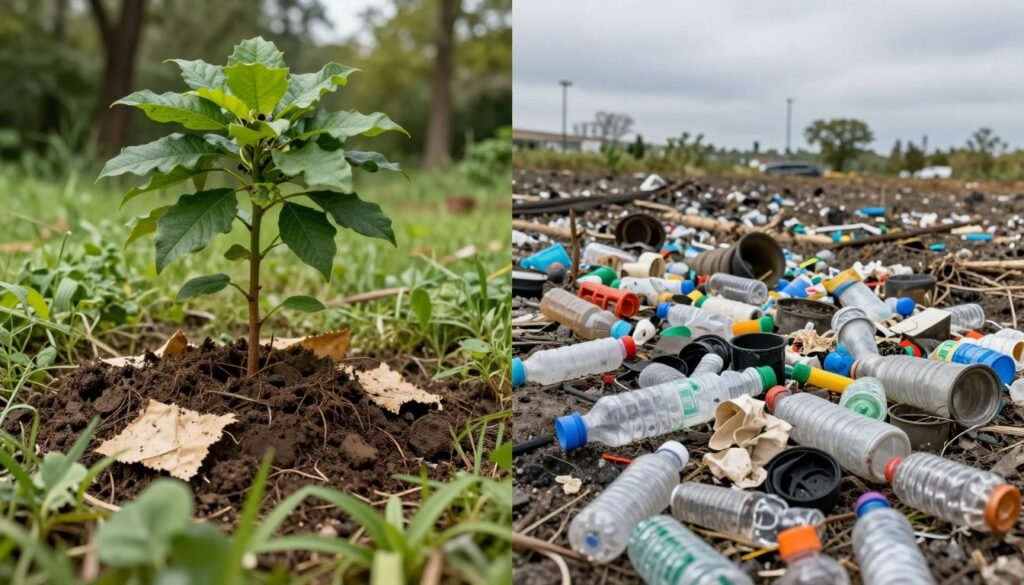
- The Marine Myth: If a compostable bag is discarded in the ocean or a cold forest, it may persist for years, fragmenting into microplastics just like conventional polymers. Without the right temperature and moisture, the biological clock never starts.
Contamination of Conventional Recycling Streams
A critical problem for waste management is the visual similarity between biodegradable and traditional plastics.
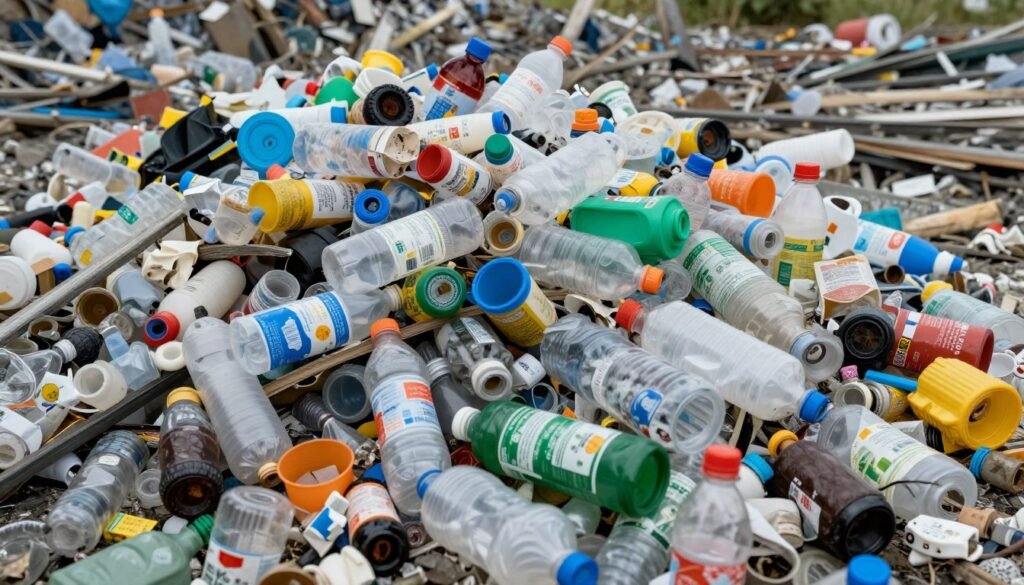
- Process Disruption: If compostable plastics enter the standard recycling bin (e.g., mixing PLA with PET), they act as a contaminant. Because they have different melting points and chemical structures, even a small percentage can ruin the structural integrity and quality of the entire batch of recycled resin.
- Sorting Hurdles: Current infrared sorting infrastructure often struggles to distinguish between “bio” and “fossil” versions of similar-looking items, leading to economic losses for recyclers.
The Infrastructure Gap & Methane Risks
The environmental benefit of biodegradable plastic is only realized if it reaches the correct facility.
- Infrastructure Shortfall: In many regions, the lack of dedicated collection systems means these materials end up in landfills.
- The Methane Problem: In the anaerobic (oxygen-free) environment of a landfill, biodegradable materials may break down to produce Methane—a greenhouse gas significantly more potent than CO₂. Without proper composting infrastructure, the “green” alternative can ironically have a higher carbon footprint than conventional plastic.
Conclusion
Biodegradable and compostable plastics represent a pivotal shift in material science, offering a tangible path toward reducing our reliance on fossil fuels. However, as we have explored, their environmental success is not automatic. It requires a synergy between advanced material engineering, transparent labeling, and robust industrial infrastructure.
Choosing the right bioplastic is no longer just about the “biodegradable” tag—it is about understanding the specific “end-of-life” scenario for your product. Whether it is high-durability PLA blends for packaging or bio-resorbable polymers for medical use, the goal remains the same: ensuring that the material serves its purpose without leaving a permanent scar on our planet.
Ready to Make an Informed Transition?
The transition to sustainable packaging is complex, and making the wrong choice can lead to high costs and “greenwashing” risks. As specialized distributors, we are here to help you bridge the gap between environmental goals and technical reality.
- Consult Our Experts: Let us help you select the ideal polymer blend (PLA, PBAT, or Starch-based) for your specific application.
- Verify Compliance: Ensure your products meet international standards like EN 13432 or ASTM D6400.
- Optimize Your Supply Chain: Discover how to balance performance requirements with your sustainability budget.