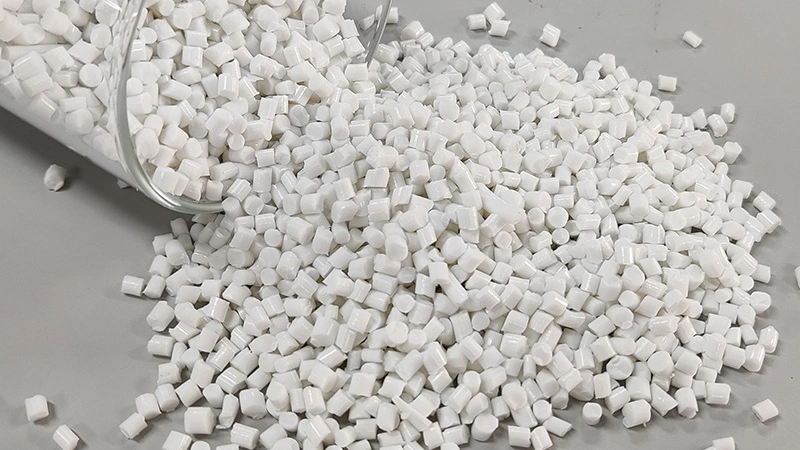
A white air conditioner panel ships without issue, then generates color complaints three months into the field. A router housing takes two days of process adjustment and still won't fill consistently at 1.0mm wall thickness. In both cases, the problem was set at material selection — not on the production floor.
Home appliance and 3C product enclosures represent the highest-volume application segment for ABS, and the pressure on material performance has been increasing steadily. Walls are getting thinner, surface appearance expectations are rising, and painting costs are harder to justify. All three pressures converge on the same decision: which grade of ABS.
Two Markets, One Shared Challenge
The starting question differs by segment, but the underlying tension is the same.
Appliance Engineers
Typically ask: will this white grade stay stable after three years in the field, and can we ship without a paint step?
3C Engineers
Typically ask: can we fill a 0.8–1.2mm wall reliably, and can we hold color consistency across production batches?
The Shared Objective
The shared question is whether surface quality is good enough to skip the painting process entirely — a goal that is increasingly within reach with the right grade selection, but only if the material is matched to the application from the start.
Three Properties That Drive Grade Selection
To successfully bypass paint and assure yield rates, technical leads must evaluate the trade-offs across these three primary axes of material performance.
Melt Flow Rate (MFR)
MFR is the first filter for thin-wall applications. Standard-flow grades handle most appliance parts at 2mm wall thickness and above. For walls below 1.5mm, mid-to-high flow grades in the 25–40 g/10min range are a more reliable starting point. For 3C ultra-thin walls under 1.0mm, purpose-built high-flow grades are needed.
The Engineering Trade-off: Higher MFR typically comes with some reduction in impact strength. Select the highest-flow grade that still meets drop-test requirements.
Surface Quality and Paint-Free Finishing
The shift toward paint-free enclosures is being driven by two factors: tightening VOC regulations and the real cost of a painting step, which typically accounts for 15–25% of total enclosure cost. High-gloss paint-free ABS performs best at mold temperatures in the 60–80°C range and is sensitive to process variation.
Process Insight: Inconsistent mold temperature is one of the most common causes of gloss variation across a production run. For matte finishes, both compatible material chemistry and appropriate mold texture are required.
Color Stability
For white appliance grades, yellowing is the primary long-term risk. It's crucial to differentiate between two major color degradation pathways:
Processing Yellowing
Caused by thermal degradation of the butadiene phase at elevated melt temperatures during injection moulding.
In-Service Yellowing
Driven by UV exposure over months or years in the field. Resolving this requires proper additive UV-stabilization chemistry.
Grade Selection by Product Type
Click on different application types below to explore recommended grade dynamics and flow trade-offs.
Achieving the delicate balance between structural integrity and premium surface finish demands rigorous validation prior to mold build-out. System-level optimizations involving both physical tooling specifications and specific additive package implementations are critical path variables for high-volume consumer goods. Choosing a trusted, single-source ABS partner helps establish consistent baseline material performance across international processing lines.
Request Material Datasheet
Please enter your work email below to request the latest POLYLAC® series property sheets, application guides, and environmental compliance documents.