Sustainability is no longer a peripheral marketing trend; it is the core of modern industrial survival. For manufacturers and procurement experts, transitioning to bioplastic pellets is the most direct route to decarbonizing supply chains while maintaining high-performance standards. Navigating this transition requires a deep dive into the lifecycle, end-of-life versatility, and the regulatory frameworks that define the new plastic economy.
Quantifying Impact through Life Cycle Assessment (LCA)
Data-driven transparency is the only antidote to "greenwashing" allegations. Life Cycle Assessment (LCA) provides the rigorous framework needed to prove environmental claims. Unlike traditional petroleum-based plastics like PP or PE, bioplastics offer a distinct negative carbon advantage during the raw material acquisition phase, as the source plants sequester CO₂ during growth.
Professional buyers should focus on the Cradle-to-Gate analysis. This evaluates the energy intensity of every step—from crop cultivation and fermentation to the final polymerization into pellets. Furthermore, high-performance resins are now balancing the "food vs. fuel" debate by utilizing second-generation non-food feedstocks, ensuring that land and water usage remain ethically sustainable without compromising resin quality.
Carbon Footprint Comparison (Cradle-to-Gate)
Navigating Diverse End-of-Life Pathways
The true circularity of a bioplastic pellet is determined by its final destination. Understanding these pathways allows manufacturers to align their product design with local waste infrastructure:
Industrial Composting
The standard for most PLA-based resins, requiring controlled environments above 58°C to achieve complete degradation.
Home Composting
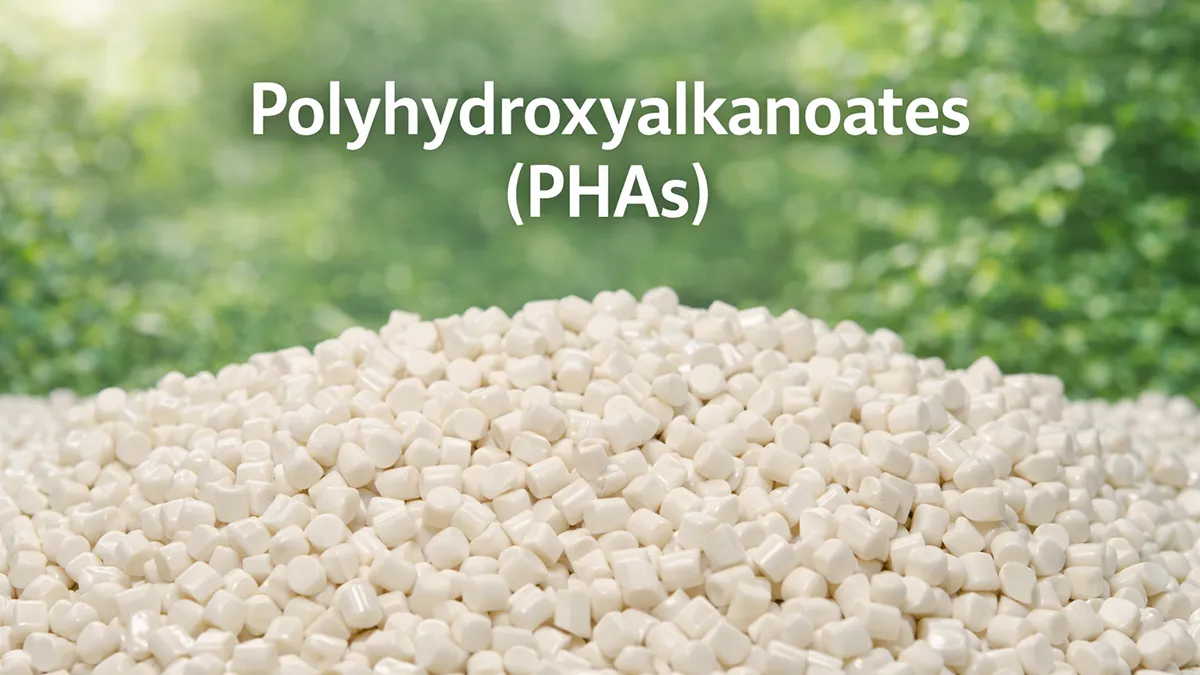
A premium selling point for PHA or specialized modified resins. These materials break down at ambient soil temperatures, making them ideal for high-end retail packaging.
The Circularity Frontier
While mechanical recycling remains a challenge due to potential contamination of traditional streams, chemical recycling is the emerging gold standard. By depolymerizing resins back into their original monomers, we enable an infinite closed-loop system that preserves material virginity.
Deep Dive
For a comprehensive analysis of the technical profiles and mechanical properties of these materials, read our technical guide: Bioplastic Pellets: High-Performance Resins for Sustainable Manufacturing.
The Mass Balance Approach: Seamless Integration
Transitioning to sustainable materials does not have to mean overhauling your entire production line. Leading chemical giants now utilize the Mass Balance Approach, a transition strategy certified by standards like ISCC PLUS.
By mixing bio-feedstocks with fossil fuels in existing production networks, the "bio-attribute" is mathematically assigned to specific end products. This allows downstream manufacturers to claim "sustainable resin" usage without the need to modify injection molds or recalibrate complex processing parameters. It is the most cost-effective way to achieve immediate carbon reduction.
Compliance and Global Market Access
High-performance resin R&D must stay ahead of the legislative curve to protect your export markets.
Regulatory Pressure
The EU’s SUP Directive has fundamentally shifted demand toward heat-resistant bioplastics for cutlery and food service items.
The Cost of Carbon
With the Carbon Border Adjustment Mechanism (CBAM) looming, low-carbon-intensity pellets are becoming essential tax-mitigation tools for exporters.
Safety First
Sustainability is void without safety. Our resins meet strict FDA and EFSA food-contact certifications, ensuring that even recycled or bio-based formats maintain the highest purity for consumer protection.