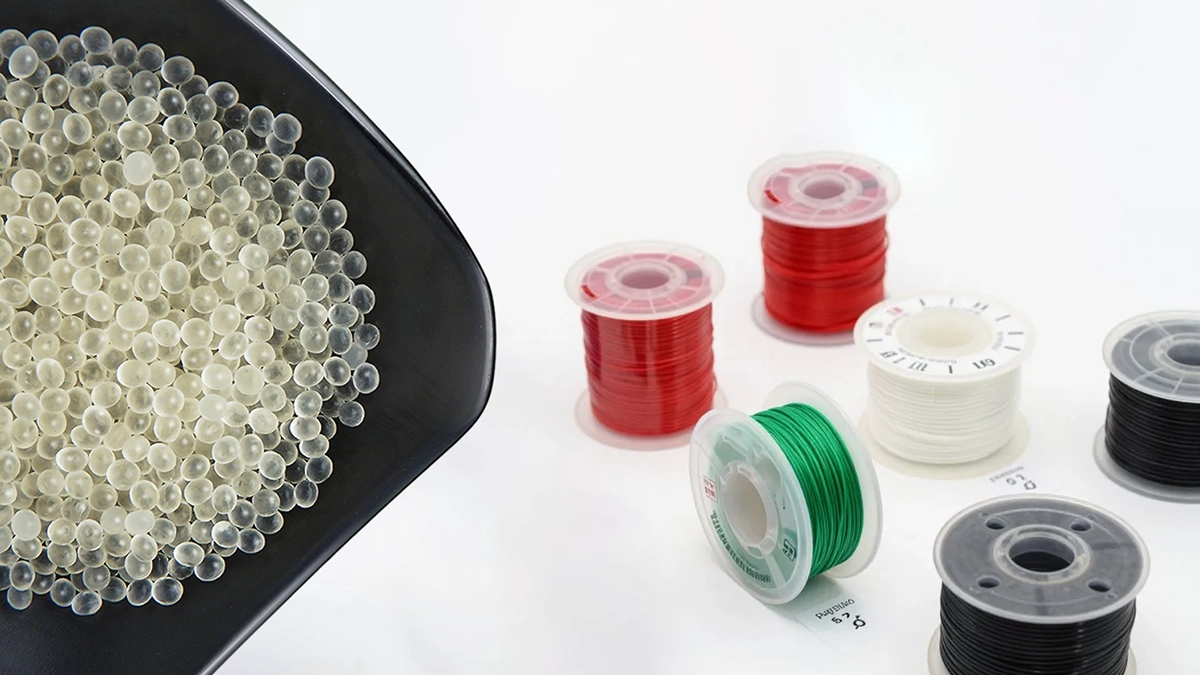
This article examines the specific modifications and technical limitations of Polylactic Acid (PLA) fibers in textile applications, focusing on thermal stability, durability, and processing optimizations.
Key Improvement Directions
Standard PLA faces constraints like low heat resistance (Tg 55-60°C) and brittleness. Current efforts focus on molecular engineering to expand its industrial utility.
Thermal Stability
Combining PLLA and PDLA creates stereocomplex structures, raising melting points from 170°C to 220-230°C, significantly improving heat distortion thresholds.
Anti-Brittleness
While strength is high (4-5 cN/dtex), elongation is low. We optimize draw ratios and add tougheners to maintain durability without losing bio-integrity.
Hydrolysis Resistance
Use of carbodiimides or silane agents increases water repellency, elevating contact angles from 70° to >80° to prevent molecular breakdown.
Advanced Copolymers
Integrating nucleating agents allows PLA to achieve melting points between 175-190°C, providing incremental gains for standard production lines.
Optimizing Your Bio-Textile Strategy?
Discover how advanced processing techniques and custom blending strategies can overcome PLA's traditional limitations.
Blending with Other Biopolymers
Strategic combinations balance mechanical properties, thermal endurance, and cost-efficiency.
| Polymer Blend | Inclusion Rate | Primary Benefit | Ideal Application |
|---|---|---|---|
| PBAT | 20–50% | Enhanced elongation and melt flow | Apparel & Nonwovens |
| PHA / PHBV | 10–40% | Refined crystal formation & biocompatibility | Medical & High-end Textiles |
| Natural Fibers (Sisal/Bamboo) | 10–30% | Increased rigidity & cost reduction | Sustainable Industrial Fabrics |
| PBS / PCL | Variable | Tailored flexibility / biodegradation speed | Specialized Packaging/Filters |
Processing Techniques & Challenges
Melt spinning is the industry standard for PLA, but the material's thermal sensitivity requires rigorous parameter control.
Strict Moisture Control
Drying to below 0.02% water content is mandatory before extrusion to prevent hydrolysis during melting.
Temperature Windows
Extrusion held strictly at 190–220°C. Stereocomplex variants increase viscosity, narrowing operational ranges.
Crystallization Management
Slow crystal growth can lead to fiber adhesion. Nucleators and adjusted cooling are essential for consistency.
Critical Production Hurdles
-
Molecular Breakdown Excessive heat causes rapid decline in molecular weight, reducing fiber tenacity.
-
Dyeing Limitations Processes must be limited to under 110°C to avoid irreversible fiber deformation.
-
Viscosity Variations Stereocomplex PLA's higher viscosity requires specialized screw designs for uniform extrusion.
Future Outlook & Market Maturity
While basic PLA short fibers are commercially mature, the next frontier lies in the production scale of heat-resistant stereocomplex prototypes. By integrating crystallizers and reinforcers, we are moving toward cost parity with polyester while maintaining 100% bio-based integrity.
Targeting sectors: Activewear, Undergarments, Household Fabrics, and Childrenswear.