
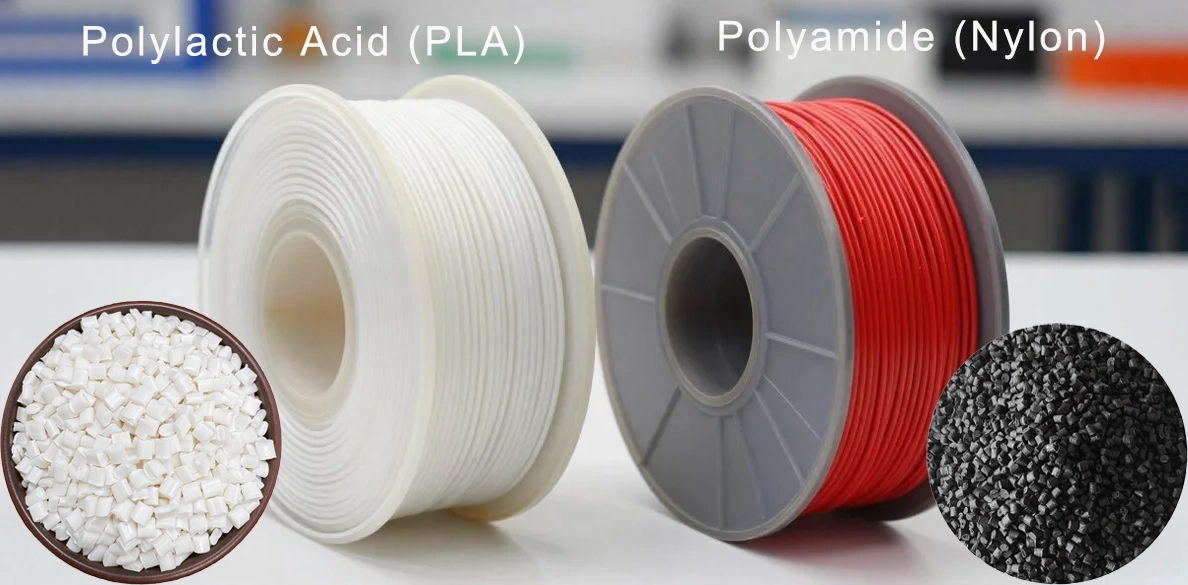
Polyamide (Nylon), a synthetic thermoplastic characterized by its repeating amide linkages, provides exceptional impact resistance and thermal stability for heavy-duty industrial components. In contrast, Polylactic Acid (PLA) serves as a high-modulus, bio-based polyester derived from renewable resources like corn starch, offering superior dimensional accuracy.
The frequent comparison between these two polymers in additive manufacturing and rapid prototyping stems from their opposing crystalline behaviors and moisture sensitivities. While PLA allows for rapid production cycles due to minimal warping and a lower melting point, Polyamide is indispensable for functional end-use parts that must endure mechanical stress.
Selecting the appropriate resin requires a calculated trade-off between the high-performance toughness of Nylon and the sustainable, user-friendly profile of PLA. Understanding these technical benchmarks ensures that procurement decisions align with both engineering specifications and long-term cost-to-part ratios.
Not sure which polymer material meets your requirements?
Speak with a Material Specialist for a detailed application analysis.
Material Fundamentals: Origin and Chemistry
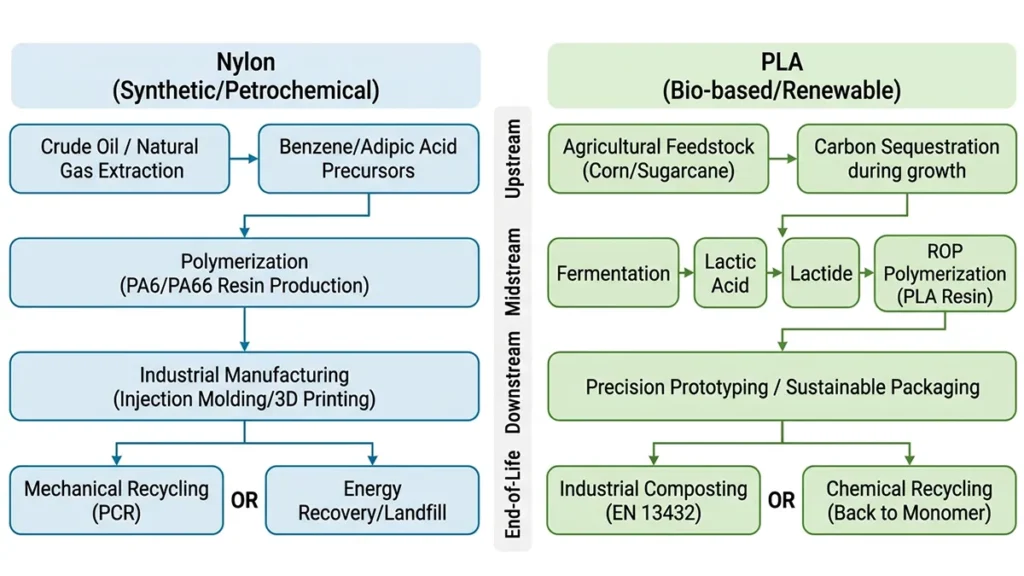
| Feature | Polyamides (Nylon) | Polylactic Acid (PLA) |
| Precursor | Benzene-based petrochemicals | Renewable carbohydrates (Corn/Sugarcane) |
| Chemical Class | Synthetic Polyamide (PA) | Aliphatic Polyester |
| Polymerization | Condensation Reaction | Ring-Opening Polymerization (ROP) |
| Molecular Key | Intense Hydrogen Bonding | High-Modulus Aliphatic Chain |
Nylon: Synthetic Polymer Engineering
Polyamides (Nylon) represent a pinnacle of synthetic polymer engineering. The material’s performance is governed by repeating amide groups that facilitate intense hydrogen bonding between molecular chains, resulting in a semi-crystalline structure known for exceptional toughness.
Procurement Insight: > The distinction between variants like PA6, PA66, and PA12 is critical for high-stakes industrial applications. Each grade offers a specific balance of moisture absorption and thermal deflection, directly impacting the dimensional stability of the final component.
PLA: Bioplastic Innovation
Polylactic Acid (PLA) offers a radical departure from petroleum-based feedstocks, synthesized through the fermentation of renewable carbohydrates. This aliphatic polyester achieves its rigid properties through controlled molecular alignment.
- Strategic Advantage: Beyond rapid prototyping, PLA is a key asset for ESG-compliant supply chains.
- Carbon Footprint: Cultivates a significantly lower lifecycle impact compared to traditional plastics.
- End-of-Life: True biodegradable potential is harnessed through managed industrial composting or advanced chemical recycling protocols.
Key Property Showdown: The Data-Driven Comparison
Material properties determine application suitability and part performance. This section examines the measurable differences between nylon and PLA across critical engineering parameters.
Mechanical Integrity: Resilience vs. Rigidity
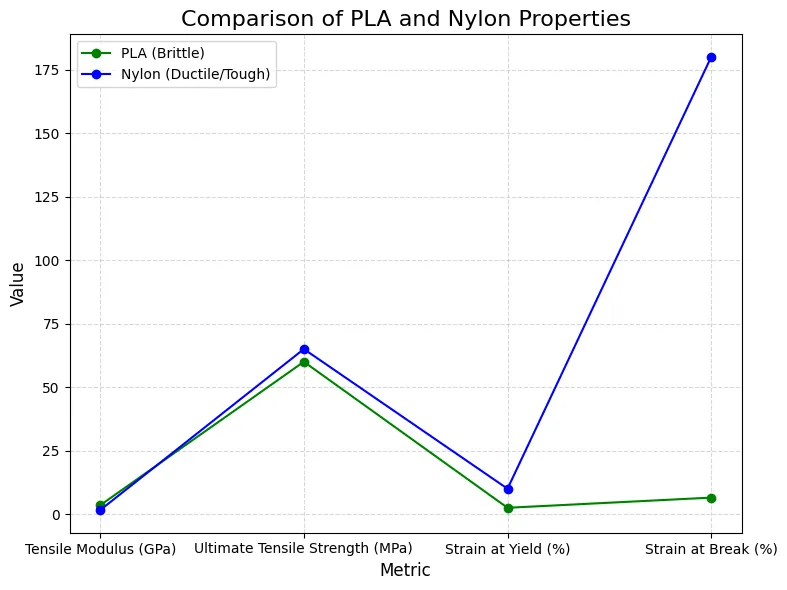
Polyamides (Nylon) are engineered for high-tenacity applications where energy absorption is paramount. Their molecular structure allows for significant elongation at break (>100%), providing exceptional impact resistance and fatigue endurance under repetitive cyclic loading.
In contrast, Polylactic Acid (PLA) delivers a higher tensile modulus (~3.5 GPa), offering the structural rigidity required for static housings and precision components. However, this stiffness comes at the cost of ductility; PLA exhibits a brittle failure mode, making it prone to sudden fracturing when subjected to mechanical shock or high-stress concentrations.
Thermal Thresholds: Operational Temperature Range
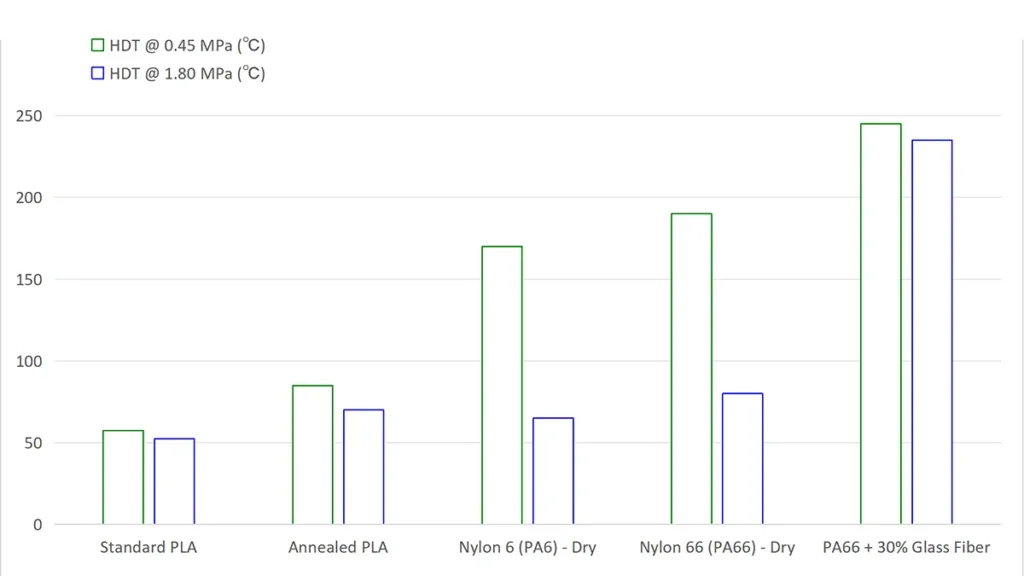
Thermal performance is a primary differentiator for industrial environments. Polyamides maintain their structural profile at elevated temperatures, with Heat Deflection Temperatures (HDT) typically ranging from 160℃ to over 200℃ in glass-reinforced grades.
PLA is governed by a significantly lower glass transition temperature (Tg ≈60℃), which limits its use to ambient-temperature environments. While its melting point is manageable for rapid prototyping, parts made from standard PLA will undergo softening and dimensional deformation in even moderately warm operational settings, such as automotive interiors or proximity to industrial machinery.
Chemical & Environmental Resistance
Nylon is the industry standard for automotive under-the-hood and industrial fluid-handling components due to its robust resistance to hydrocarbons, oils, greases, and common solvents. It withstands harsh chemical exposure that would cause stress-cracking in lesser polymers.
PLA, as an aliphatic polyester, is inherently sensitive to hydrolytic degradation. Prolonged exposure to high humidity, UV radiation, or caustic cleaning agents will compromise its molecular weight, leading to premature embrittlement. For procurement leads, this dictates a preference for Nylon in outdoor or chemically aggressive environments.
The Hygroscopic Challenge: Moisture Management
A critical technical consideration for Polyamides is their inherent hygroscopy. Nylon actively absorbs atmospheric moisture, which acts as a plasticizer—increasing toughness but simultaneously reducing tensile strength and altering part dimensions.
From a distribution and processing standpoint, managing this “conditioned” state is essential for ensuring tight tolerances. PLA is relatively stable regarding moisture-induced dimensional shifts, but it requires dry storage to prevent steam-induced degradation during the melt-processing phase.
| Technical Property | Polyamide (PA6/66) | Polylactic Acid (PLA) |
| Tensile Strength (Yield) | 45 – 85 MPa | 50 – 70 MPa |
| Elongation at Break | 60% – 300% | 2% – 10% |
| Heat Deflection Temp (0.45MPa) | 160℃ – 200℃ | 55℃ – 60℃ |
| Impact Strength (Notched Izod) | 5 – 15 kJ/㎡ | 2 – 5 kJ/㎡ |
| Chemical Resistance | Excellent (Oils/Fuels) | Limited (Acids/Bases) |
Technical Resource for Engineers
For a granular analysis of stress-strain curves, Heat Deflection Temperature (HDT) benchmarks, and moisture-saturation paradoxes, read our full whitepaper: Nylon vs PLA: A Technical Performance Deep Dive
Compare Material Properties for Your Project
Selecting the wrong resin leads to operational failure. Get our Comprehensive Material Selection Guide, featuring lifecycle cost analysis and application-specific recommendations for high-performance polymers.
Manufacturing & Processing: 3D Printing Perspective
Successful 3D printing requires understanding material-specific processing parameters. The printing characteristics of nylon and PLA differ substantially in temperature requirements, bed adhesion, and environmental controls.
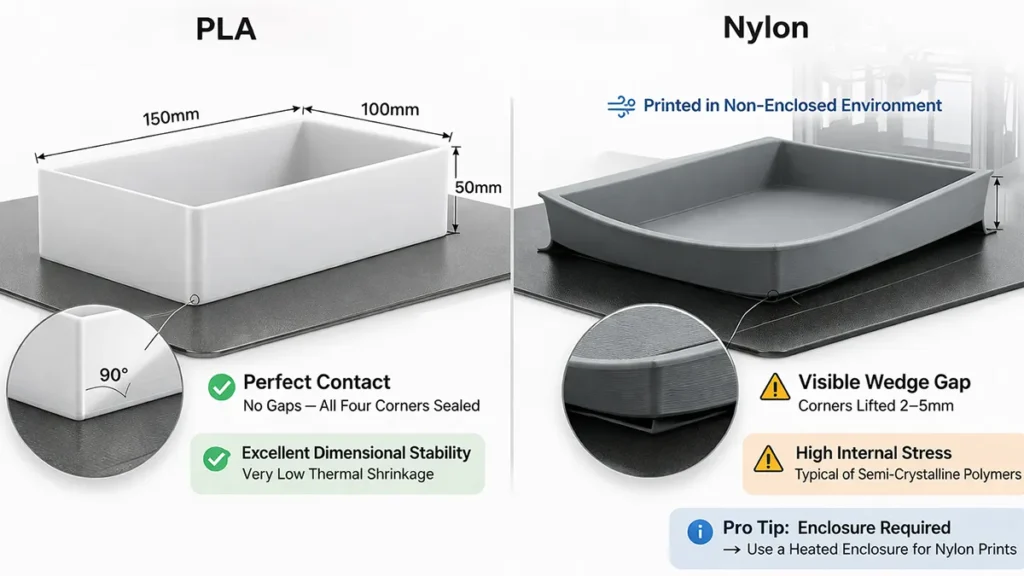
The High-Stability Benchmark: Polylactic Acid (PLA)
PLA represents the most accessible entry point for rapid iterative prototyping, primarily due to its negligible thermal contraction coefficient.
- Dimensional Integrity: Its low-shrinkage profile eliminates the necessity for a heated build chamber, ensuring that complex geometries remain warp-free even on standard industrial hardware.
- Aesthetic Fidelity: For applications where visual clarity and sharp feature definition are paramount, PLA’s high-flow kinetics allow for crisp surface details and superior aesthetic consistency.
- Operational Ease: The wide processing window reduces failed-part rates, directly lowering the Total Cost of Ownership (TCO) for non-functional prototypes.
PLA Printing Advantages
- Low printing temperature requirements
- Minimal warping and excellent bed adhesion
- No heated bed required (recommended but optional)
- Wide compatibility with standard 3D printers
- Fast cooling and reduced print times
- Pleasant sweet smell during printing
- Available in extensive color range
PLA Printing Challenges
- Prone to clogging with moisture exposure
- Limited post-processing options
- Brittle nature requires careful handling
- Heat sensitivity during summer storage
The Engineering Challenge: Polyamide (Nylon)
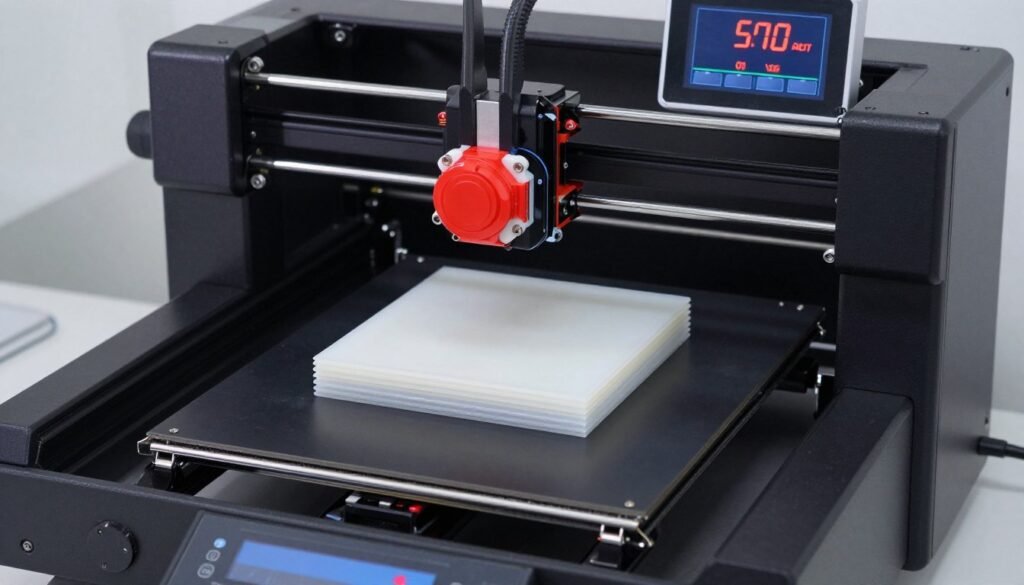
Polyamide demands a sophisticated manufacturing environment to mitigate its inherent semi-crystalline internal stress.
- Thermal Regulation: Successful processing necessitates a thermally regulated enclosure and high-temperature build surfaces—such as Garolite (G10) or specialized adhesives—to counteract its aggressive tendency to warp during the cooling phase.
- Mandatory Moisture Management: Active hydration control is a non-negotiable requirement. Utilizing dedicated filament drying systems prevents hydrolytic degradation, which manifests as surface porosity, bubbling, and structural brittleness.
- Interlayer Adhesion: When processed in a stable thermal environment, Nylon offers superior Z-axis strength compared to PLA, resulting in parts with near-isotropic mechanical properties.
Surface Morphology & Industrial Aesthetics
The visual and tactile outcome of the finished part dictates its suitability for end-use environments.
| Feature | Polylactic Acid (PLA) | Polyamide (Nylon) |
| Surface Finish | High-gloss or deep matte options. | Characteristic satin, slightly granular texture. |
| Layer Definition | Nearly invisible transitions; sharp edges. | “Industrial” feel; softer edge definition. |
| Tactile Quality | Smooth, plastic-like feel. | Waxy, low-friction, professional appearance. |
| Post-Processing | Excellent for sanding/painting. | Exceptional for dying (fabric-like absorption). |
Diverse Applications: When to Use Which?
Material selection depends on matching properties to application requirements. Understanding where each material excels helps optimize design decisions and part performance.
Nylon Applications: Industrial and Functional Parts
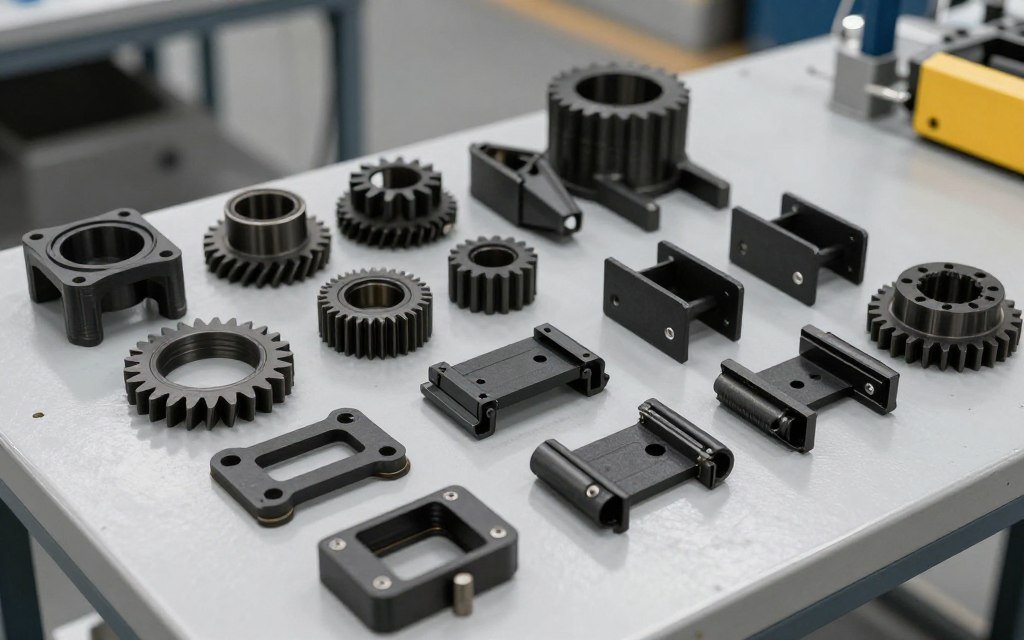
Polyamide (Nylon) Solutions anchor the production of functional, end-use components that endure rigorous mechanical environments. Leveraging superior fatigue resistance and a low coefficient of friction, engineering-grade Nylon excels in the manufacturing of kinematic assemblies, such as high-torque gears, self-lubricating bearings, and living hinges.
Within automotive and aerospace sectors, its tolerance for hydrocarbons and elevated thermal thresholds makes it the definitive choice for under-the-hood fluid handling and structural brackets. For factory-floor optimization, Nylon’s toughness is indispensable for producing impact-resistant jigs, fixtures, and customized end-of-arm tooling (EOAT) that must survive thousands of operational cycles without fracture.
Kinematic Assemblies
- Leveraging superior fatigue resistance and a low coefficient of friction, engineering-grade Nylon excels in high-torque gears, self-lubricating bearings, and living hinges.
Automotive & Aerospace
- Its tolerance for hydrocarbons and elevated thermal thresholds makes it the definitive choice for under-the-hood fluid handling and structural brackets.
Factory-Floor Optimization
- Nylon’s toughness is indispensable for producing impact-resistant jigs, fixtures, and customized end-of-arm tooling (EOAT) designed to survive thousands of operational cycles without fracture.
PLA Applications: Prototypes and Display Models
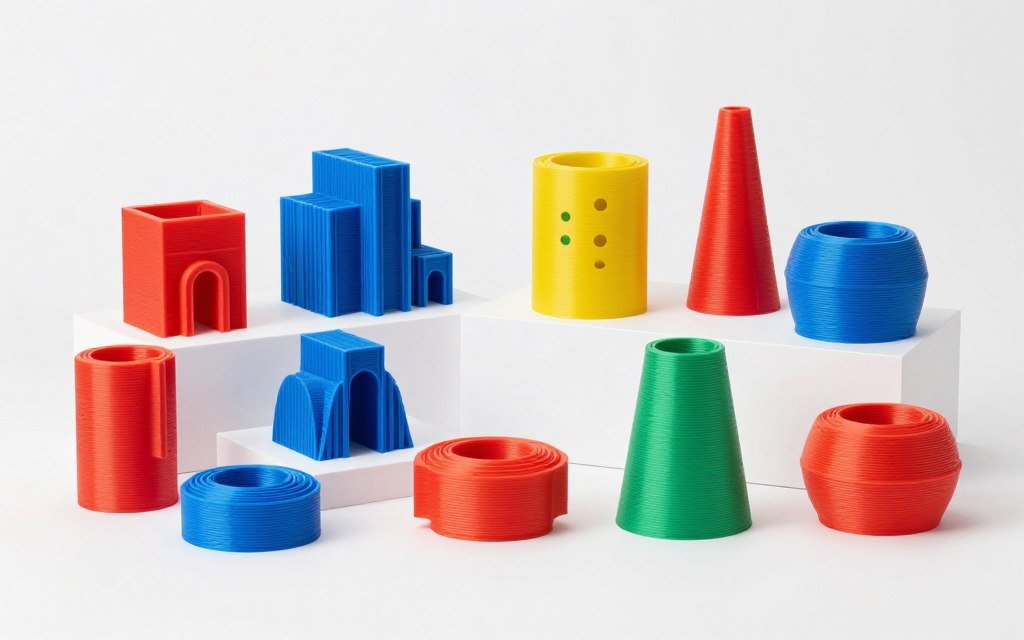
Polylactic Acid (PLA) Formulations provide the optimal balance for projects prioritizing geometric complexity and rapid design verification. Characterized by high tensile stiffness and exceptional dimensional accuracy, PLA remains the preferred resin for architectural topography, conceptual mockups, and high-fidelity display models.
Beyond aesthetics, its bio-based origin aligns with sustainable procurement mandates for low-stress consumer packaging and medical anatomical training aids. While PLA serves the initial phases of product development through high-speed iteration, it remains a strategic asset for marketing-grade prototypes that require superior surface finishes and vibrant chromatic consistency without the post-processing labor associated with technical polymers.
- Design & Architecture: Characterized by high tensile stiffness and dimensional accuracy, PLA remains the preferred resin for architectural topography and high-fidelity conceptual mockups.
- ESG & Sustainability: Its bio-based origin aligns with sustainable procurement mandates for low-stress consumer packaging and medical anatomical training aids.
- Marketing & Display: A strategic asset for marketing-grade prototypes requiring superior surface finishes and vibrant chromatic consistency without the post-processing labor associated with technical polymers.
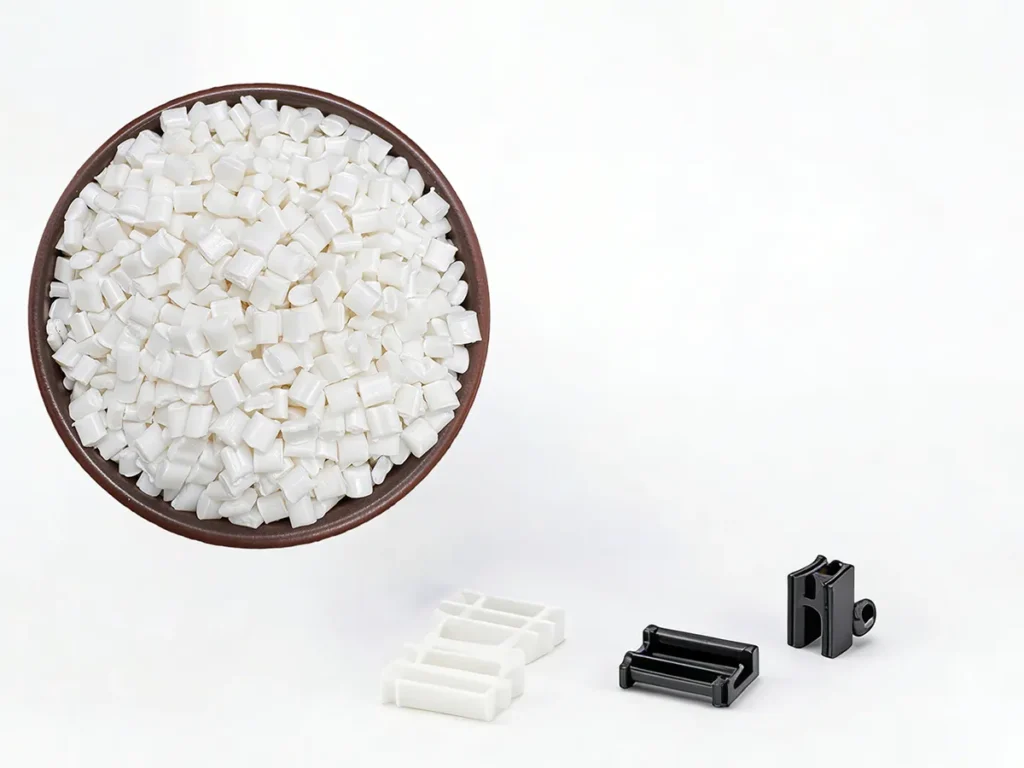
High-Performance PA (Nylon) Products
Functional load-bearing parts, chemically aggressive environments, and components requiring long-term wear resistance.
- PA6 and PA12 formulations
- Glass-filled variants for enhanced stiffness
- Carbon fiber reinforced options
- Technical support and processing guidance
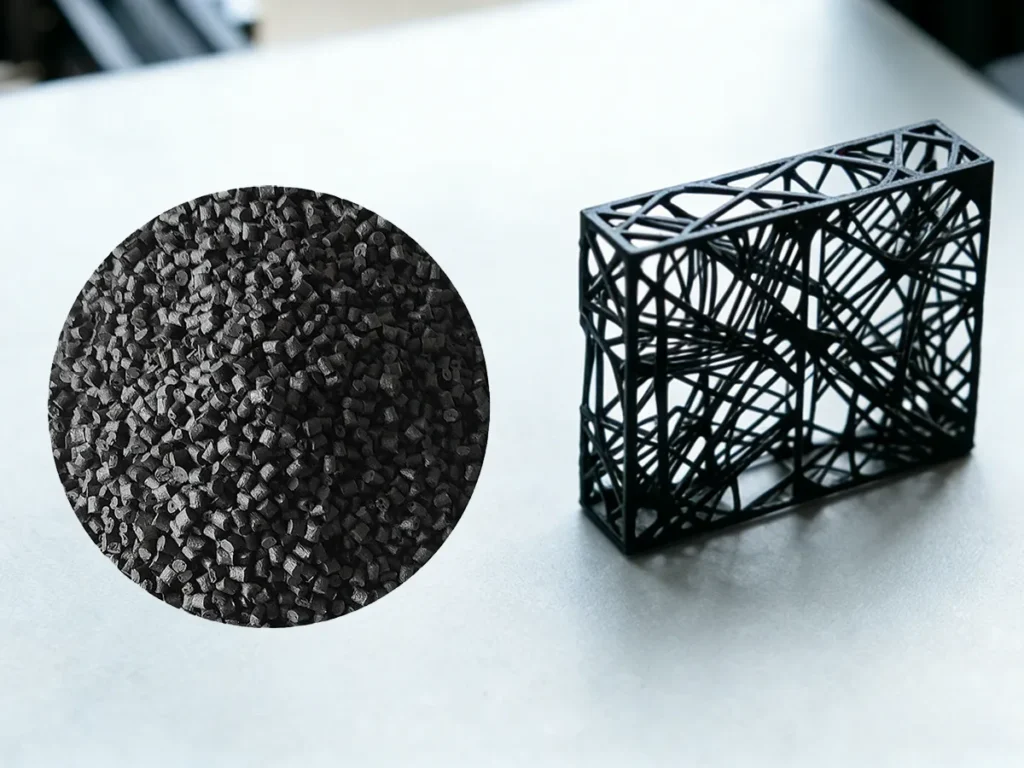
Sustainable Bioplastic (PLA) Range
Concept validation, high-precision aesthetic models, and ESG-driven sustainable initiatives.
- Standard and high-flow PLA variants
- PLA+ enhanced formulations
- Extensive color palette options
- Specialty finishes including silk and matte
If our standard portfolio does not fully align with your specific performance benchmarks or environmental certifications, please contact our technical team directly. Beyond our listed inventory, we provide access to tier-one global brands and offer tailored compounding services—including reinforced or impact-modified grades—to meet the most demanding industrial specifications.
Environmental Impact & Sustainability
Environmental considerations increasingly influence material selection decisions. The sustainability profiles of nylon and PLA differ substantially in production methods, biodegradability, and lifecycle impact.
PLA: The Bioplastic Advantage
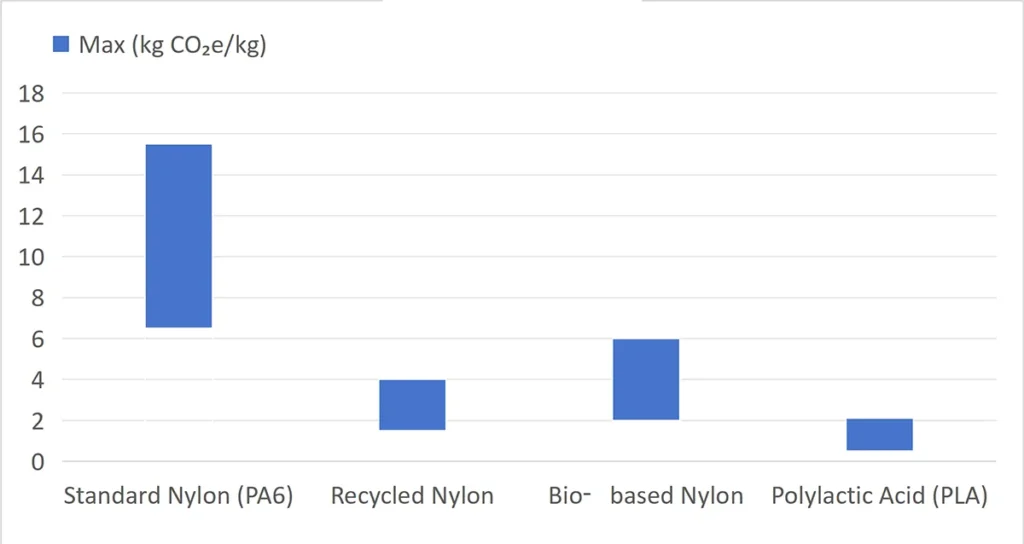
Polylactic Acid (PLA) Formulations represent a strategic shift toward renewable feedstock, derived from fermented plant carbohydrates. From a procurement standpoint, the primary advantage lies in a significantly reduced Cradle-to-Gate carbon footprint, often 50-80% lower than traditional petroleum-based resins.
Beyond its bio-origin, PLA aligns with circular economy mandates through its certified industrial compostability (meeting EN 13432 or ASTM D6400 standards). For consumer-facing applications, this bioplastic profile facilitates compliance with increasingly stringent global plastic-reduction regulations while maintaining high-precision manufacturing standards.
Nylon: Recyclability and Durability Trade-offs
Polyamide (Nylon) Engineering addresses sustainability through extreme durability and localized circularity. While traditional PA6 and PA66 utilize petrochemical precursors, their long-service lifecycle minimizes material turnover, effectively amortizing the initial production energy over years of operational use.
To meet modern ESG requirements, the industry has expanded into Bio-based Polyamides (e.g., PA11 or PA610) and Post-Consumer Recycled (PCR) grades, which reclaim high-value industrial waste into closed-loop supply chains. For high-stress industrial components, the structural longevity of Nylon remains a critical factor in reducing the cumulative environmental impact of frequent part replacements.
Environmental Selection Criteria
- PLA Priorities: Rapid decarbonization, renewable sourcing, and controlled end-of-life composting.
- Nylon Priorities: Long-term resource efficiency, high-performance durability, and mechanical recycling potential.
Selection Guide: Which Plastic Should You Choose?
Material selection requires balancing multiple factors including mechanical requirements, processing capabilities, application environment, and budget constraints. This guide helps you match material properties to your project needs.
Decision Framework
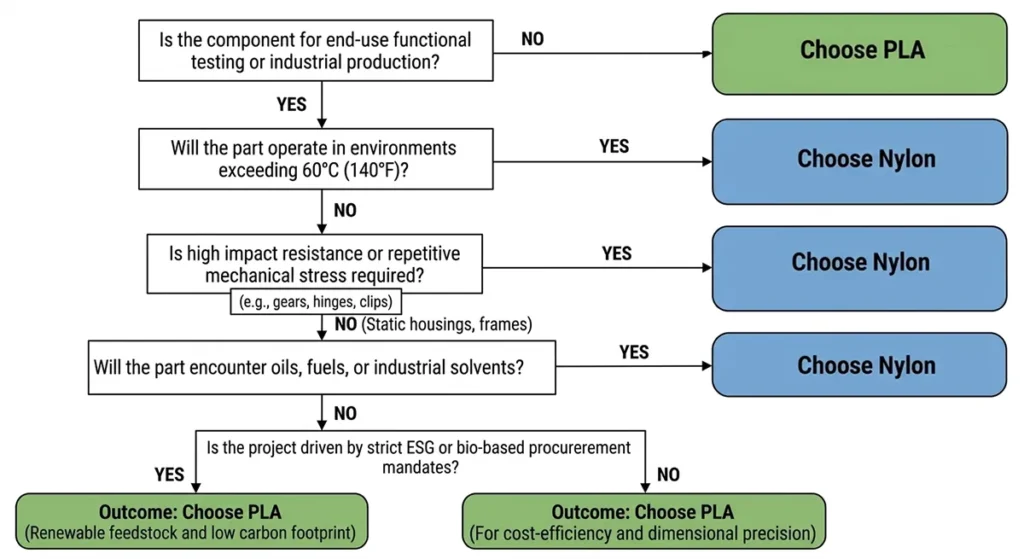
Start by identifying your project’s critical requirements. Temperature exposure, mechanical loads, and environmental conditions determine minimum material specifications. Secondary factors include aesthetics, printing complexity, and cost considerations.
Choose Nylon When You Need:
- Maintains the industrial standard for functional components requiring extreme toughness.
- Withstands dynamic stress and high-frequency friction without catastrophic failure.
- Resists aggressive chemical exposure, including lubricants and industrial solvents.
- Delivers superior thermal stability in high-temperature operational environments.
- Offsets higher initial resin investment through extended part longevity.
- Reduces maintenance overhead by minimizing replacement cycles in heavy-duty use.
Choose PLA When You Need:
- Prioritizes geometric precision with a negligible material shrinkage rate.
- Ensures high-fidelity visual aesthetics for complex architectural and concept models.
- Provides a wide processing window for rapid, low-risk design iteration.
- Supports stringent ESG mandates through renewable, plant-based feedstocks.
- Achieves significant carbon footprint reduction without compromising surface quality.
- Minimizes production energy requirements for non-functional prototyping.
👉 While standard PLA is ideal for basic prototyping, industrial-grade applications demand precise resin matching. Achieving peak performance requires understanding the nuances between Medical-grade PLLA, Heat-Resistant Injection grades, and High-Speed Textile fibers.Read Our Full Guide: Selecting the Right Polylactic Acid Plastic for Your Application.
Quick Comparison
| Performance Metric | Polyamide (Nylon) | Polylactic Acid (PLA) |
| Mechanical Integrity | High Tenacity & Impact Strength | High Rigidity & Brittle Failure |
| Thermal Deflection | 160°C – 200°C (Reinforced) | 55°C – 60°C |
| Processing Complexity | High (Requires Moisture Control) | Low (User-Friendly) |
| Economic Profile | Higher CapEx / Lower TCO over time | Lower Initial Cost / High Iteration Speed |
| Sustainability | Durable/Recyclable | Bio-based/Industrial Compostable |
Get a Tailored Material Recommendation
Not sure which material best fits your specific project requirements? Our material specialists can analyze your application needs and provide customized recommendations with detailed specifications.
Conclusion
The decision between Polyamide (Nylon) and Polylactic Acid (PLA) is a strategic trade-off between mechanical endurance and processing efficiency. Neither resin holds a universal advantage; instead, their value is unlocked when matched precisely to the operational lifecycle of the component.
PLA Grades represent the benchmark for rapid iteration and ESG-compliant manufacturing. By prioritizing dimensional stability and renewable sourcing, PLA minimizes the cost of design verification and aesthetic prototyping. For projects where thermal resistance is secondary to geometric precision and carbon footprint reduction, PLA remains the most resource-efficient solution.
Polyamide (Nylon) Resins are the definitive choice for high-integrity functional parts. While demanding a higher initial investment in processing infrastructure and material cost, Nylon delivers a superior ROI through exceptional fatigue resistance, chemical shielding, and structural longevity. In demanding industrial environments, the transition to Nylon is a transition toward part reliability and reduced maintenance cycles.
Successful material qualification requires a deep understanding of the operating environment, mechanical loads, and regulatory requirements. As your partner, we provide more than just raw material. Our team offers:
- Grade Selection: Matching specific PA6 vs PA66 or PLA vs PLA+ to your mold specs.
- Custom Compounding: Glass-fiber, Carbon-fiber, or Flame-retardant (UL94-V0) modifications.
- Global Compliance: Full documentation for EN 13432, FDA, and REACH standards.
FAQs about PLA vs Nylon
Is nylon filament better than PLA?
Performance suitability depends on the application environment. Polyamide (Nylon) is superior for functional end-use parts requiring impact resistance, fatigue endurance, and thermal stability up to 180℃ (in reinforced grades). Polylactic Acid (PLA) remains the benchmark for high-precision aesthetic prototypes and ESG-compliant models where dimensional accuracy (±0.1mm) and low-cost rapid iteration are the primary KPIs.
What are the disadvantages of nylon filament?
Hygroscopic sensitivity is the primary technical challenge. Polyamides absorb atmospheric moisture, necessitating active drying systems to prevent surface porosity and structural brittleness. Furthermore, its semi-crystalline nature requires a thermally regulated environment (240℃ – 270℃ nozzle and enclosed chamber) to mitigate warping, resulting in a higher initial processing cost and technical threshold compared to PLA.
Is nylon the strongest filament?
Fracture toughness defines Nylon’s strength. While materials like Polycarbonate (PC) offer higher raw tensile strength (70 – 80MPa), they are often prone to brittle failure under shock. Nylon’s high elongation at break allows it to absorb significant energy and resist cyclic loading without fracturing. For extreme rigidity, we recommend Carbon-Fiber Reinforced Polyamides (PA-CF) to bridge the gap between polymer flexibility and metallic-level stiffness.

