Mechanical Integrity: Rigidity vs. Toughness
The debate between Nylon (Polyamide) and PLA often suffers from a vague definition of "strength." To provide engineering clarity, one must distinguish between tensile modulus and impact resistance.
PLA Profile
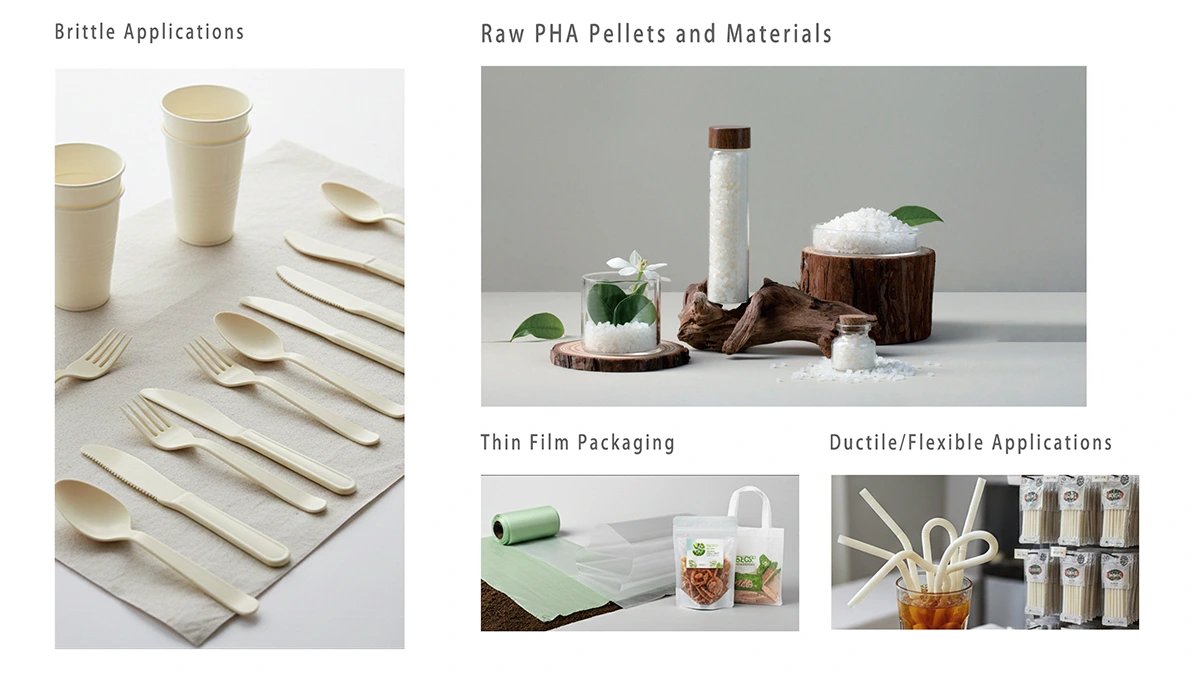
PLA is characterized by an exceptionally high elastic modulus, often exceeding 3,500 MPa, resulting in a stress-strain curve that peaks early with a brittle failure mode. While PLA offers superior dimensional stability under static loads, its fracture toughness is minimal.
In contrast, Nylon exhibits a lower initial modulus but a significantly higher elongation at break. This ductility allows Nylon to undergo plastic deformation rather than catastrophic failure.
Notched Izod Impact Testing (Relative)
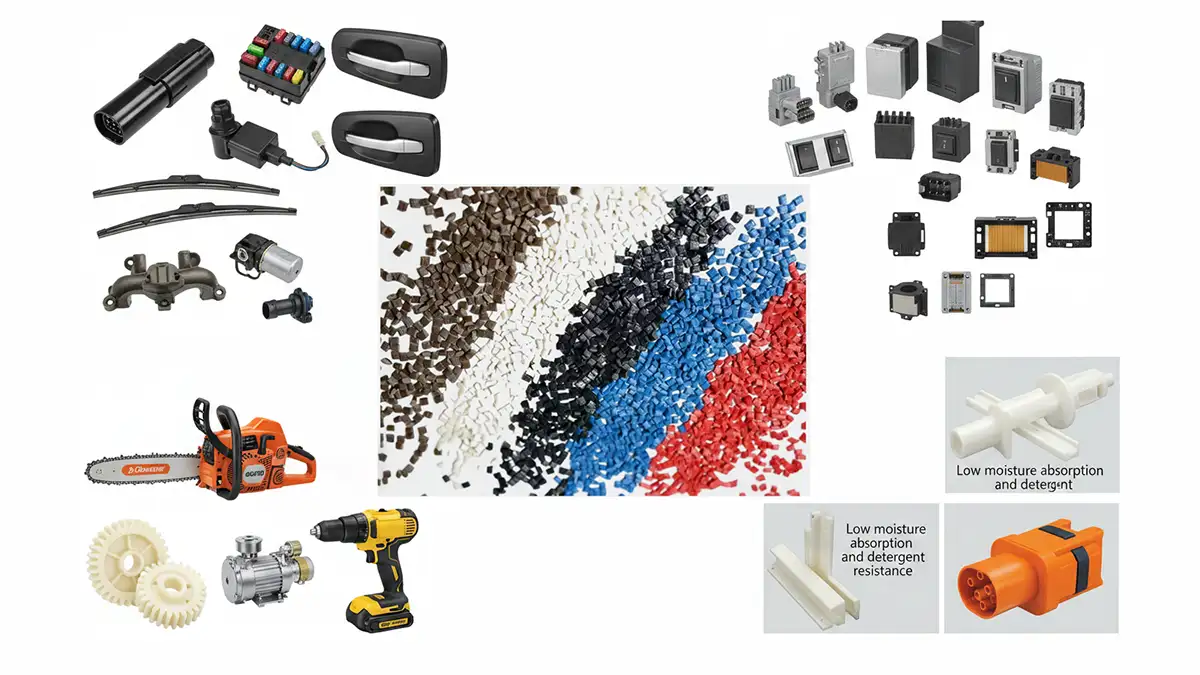
Nylon consistently outperforms PLA, making it the requisite choice for functional components subject to dynamic loading or repetitive vibration.
Thermal Thresholds and HDT
Temperature remains the primary filter in material selection. The fundamental limitation of PLA lies in its low glass transition temperature (Tg), typically ranging from 55℃ - 60℃ . Beyond this threshold, the polymer chains regain mobility, leading to rapid structural softening even under negligible stress.
| Property (Unreinforced) | PLA | Nylon 6 (Dry) |
|---|---|---|
| Glass Transition (Tg) | 55℃ - 60℃ | 50℃ - 67℃ |
| Melting Point (Tm) | 150℃ - 180 | 220℃ - 260℃ |
| HDT at 0.45 MPa | ≈ 52℃ | ≈ 160℃ - 190℃ |
"Nylon retains mechanical integrity far beyond its Tg due to its semi-crystalline structure. In 'under-the-hood' simulations or high-friction environments, Nylon maintains a high percentage of its tensile strength at temperatures where PLA would have completely succumbed to thermal deformation."
Hydroscopy: The Dimensional Stability Challenge
Nylon’s amide groups are inherently polar, leading to significant moisture absorption from the environment. This hydroscopic nature acts as a secondary plasticization process; as water molecules penetrate the polymer matrix, they disrupt inter-chain hydrogen bonding.
Critical Paradox
As moisture increases: Tensile strength decreases while impact toughness increases. Procurement specialists must account for a linear dimensional expansion of up to 0.5%–1.5% in saturated Nylon parts.
Processing SOP
- • Desiccant drying required
- • Dew point: -40°C
- • Duration: 4 to 6 hours
Prevents hydrolytic degradation during melt processing.
Chemical Resistance and ESC
Nylon Compatibility
Demonstrates exceptional resistance to non-polar solvents, including hydrocarbons, engine oils, and most fuels.
Vulnerability: Strong mineral acids and oxidizing agents. Primary chemical risk is limited to specific salts (like calcium chloride) which cause stress corrosion.
PLA Compatibility
Susceptible to alkaline degradation and can undergo accelerated hydrolysis in the presence of alcohols or concentrated acids.
Risk: Prone to micro-cracking (ESC) when exposed to certain surfactants under load.
FDA Compliance & Food Contact
Regarding FDA compliance, both materials offer GRAS (Generally Recognized as Safe) grades, yet Nylon’s higher thermal ceiling makes it more suitable for repeated-use food contact applications involving high temperatures.