Choosing between Polyamide (PA6/PA66) and Polyester (PBT/PET) is one of the most critical material selection decisions in injection molding. A wrong choice directly impacts tooling wear, molding cycle times, and the dimensional integrity of the final part.
While both are top-tier engineering plastics, their performance in the injection mold varies significantly. This guide breaks down the critical differences to help you source the exact resin grade your project demands.
What is Nylon?
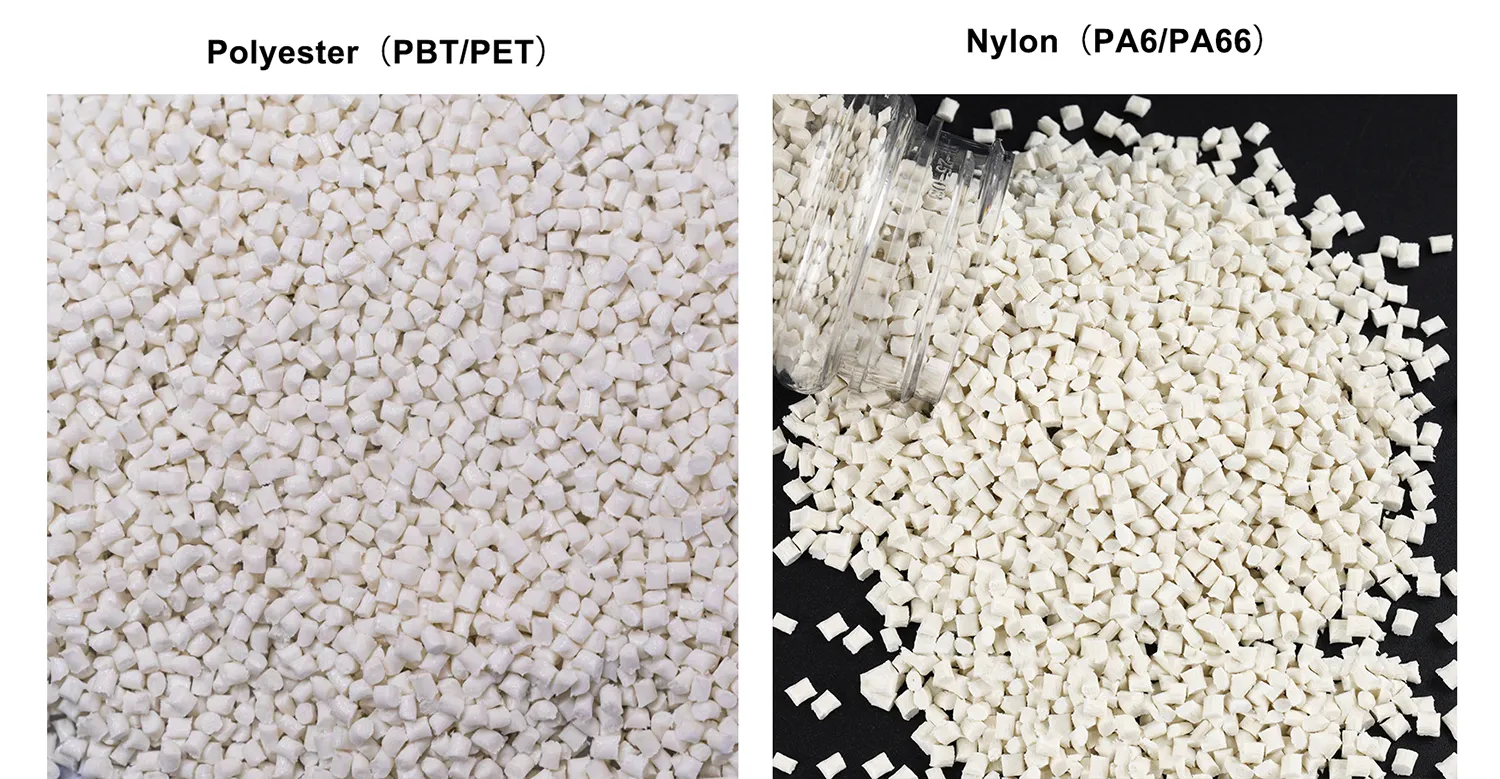
Polyamides, commonly represented by semi-crystalline PA6 and PA66 grades, rely on polar amide groups (-CO-NH-) within their molecular backbone to form strong intermolecular hydrogen bonds. This chemical structure yields high tensile strength, exceptional wear resistance, and low-friction, self-lubricating surface properties.
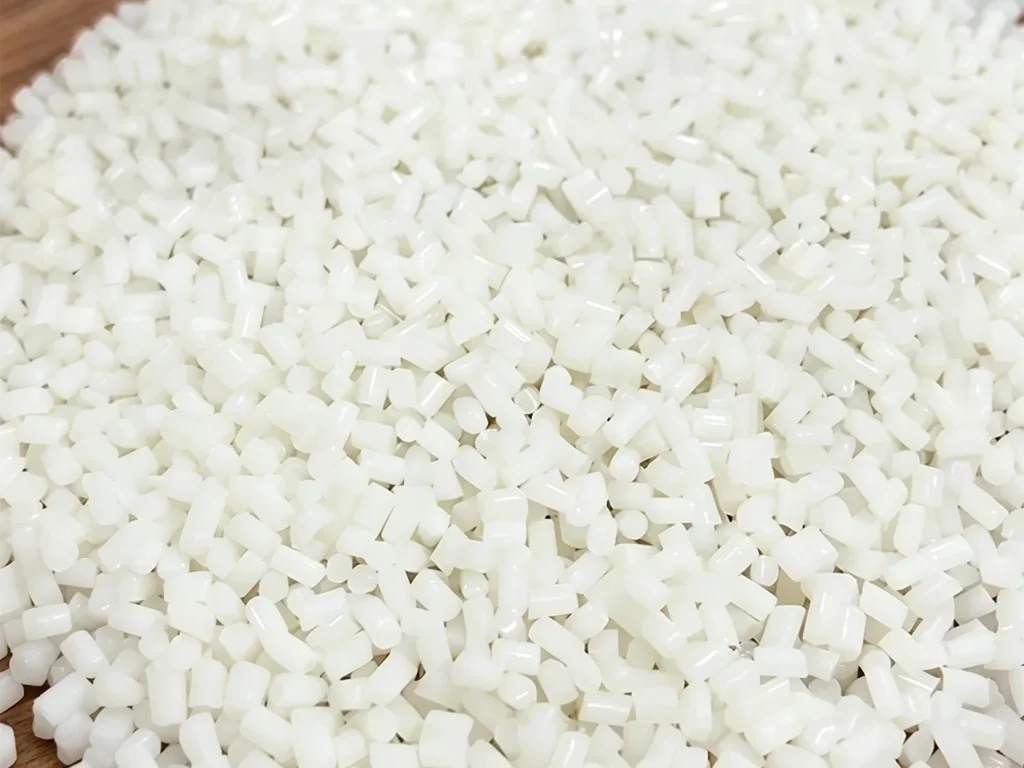
- PA6 (Polyamide 6): Features a more flexible molecular chain with a melting point of approximately 220℃. It offers superior impact strength (especially at low temperatures) and better surface aesthetics.
- PA66 (Polyamide 66): Possesses a highly symmetrical polymer structure, raising its melting point to 262℃. This translates to higher stiffness, lower creep under load, and superior continuous-use temperature resistance.
Note for Molders: Due to their polar structure, both PA6 and PA66 are highly hygroscopic, requiring strict desiccant drying down to <0.1% moisture levels prior to injection molding to prevent hydrolytic degradation.
What is Polyester (PBT/PET)?
Thermoplastic polyesters, primarily PBT (Polybutylene Terephthalate) and PET (Polyethylene Terephthalate), feature hydrophobic aromatic rings and ester linkages in their molecular chain, resulting in negligible moisture absorption (<0.2% at saturation).
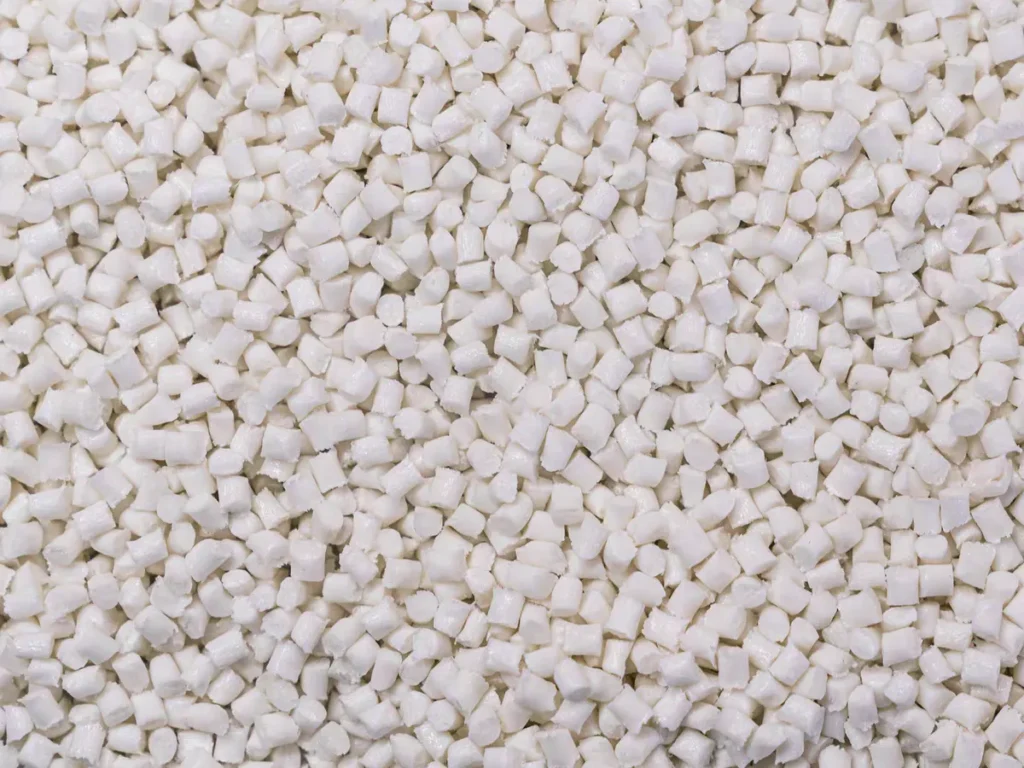
- PBT (Polybutylene Terephthalate): Celebrated for its exceptionally rapid crystallization rate. It crystallizes almost instantly within the mold, allowing for short cooling cycles and high-efficiency injection molding of thin-walled electronic components.
- PET (Polyethylene Terephthalate): Highly rigid with a melting point of 255℃. When glass-fiber reinforced, engineering-grade PET provides higher heat deflection temperatures (HDT) and structural stiffness than PBT, making it ideal for heavy-duty structural parts.
Note for Molders: The lack of polar groups gives PBT/PET superb dimensional stability and dielectric strength, making them the industry standard for high-voltage automotive connectors and precision electrical housings.
Nylon or Polyester: Key Material Performance Comparison
For manufacturers using engineering plastics in injection molding or extrusion, understanding the core differences between nylon (PA6, PA66) and polyester (mainly PBT) is essential. Both materials are widely used, but their mechanical behavior, processing traits, and environmental resistance vary significantly.
Key Performance Comparison
| Property | Nylon (PA6/PA66) | Polyester (PBT/PET) | Selection Strategy |
| Moisture Absorption | 3% – 4% (Swells) | <0.5% (Stable) | Polyester: Best for high-humidity precision parts. |
| Rigidity & Strength | High Toughness | High Stiffness | Nylon: For impact. PET: For maximum rigidity. |
| Heat Resistance | Up to 140°C (PA66) | Up to 200°C (Reinforced PET) | PA66/PET: Best for high thermal loads. |
| Dimensional Stability | Moderate | Excellent | PBT/PET: For high-tolerance electrical connectors. |
Quick Selection Guide:
- Go with Nylon (PA6/PA66) if: Your application requires maximum energy absorption, fatigue resistance, and toughness (e.g., gears, engine covers, structural brackets).
- Go with Polyester (PBT/PET) if: Your application demands low water absorption, reliable electrical insulation, and high rigidity (e.g., electronic housings, high-voltage automotive connectors, fuel system sensors).
Mechanical and Processing Characteristics
To expand on the comparison table above, here is how the physical and processing properties of these two material families behave under actual production and end-use conditions:
1. Strength & Wear Resistance
- PA6/PA66: Higher tensile strength (70 to 100 MPa unfilled). Superior self-lubricating behavior makes it the benchmark for dynamic sliding parts (gears, bushings).
- PBT/PET: Moderate tensile strength (50 to 75 MPa). More prone to abrasive wear under high-load friction.
2. Impact Resistance and Flexural Toughness
- PA6/PA66: Outstanding toughness (Izod notch impact: 50 to 100 J/m). Absorbs high dynamic shock without cracking.
- PBT/PET: Inherently rigid and notch-sensitive; lower impact strength unless modified with elastomers.
3. Thermal Performance (HDT)
- PA66: Melting point (Tm) of 262℃; excels in high continuous-use temperatures.
- PBT/PET: PBT melts lower (223℃), but 30% glass-fiber reinforced PET achieves an HDT of 220℃, matching reinforced PA66.
4. Moisture Absorption and Hydrolytic Stability
- PA6/PA66: Highly hygroscopic (3% to 8% saturation uptake), which plasticizes the part, lowering strength and causing up to 2% swelling.
PBT/PET: Negligible moisture absorption (<0.5% saturation); ensures parts maintain absolute dimensional tolerances.
5. Chemical and UV Resistance
- PA6/PA66: Excellent against hydrocarbons and bases; vulnerable to strong acids, glycols, and calcium chloride (road salt).
- PBT/PET: Outstanding resistance to organic solvents, automotive fuels, oils, and mild acids.
6. Molding Behavior and Shrinkage
- PA6/PA66: High and anisotropic mold shrinkage (1.5% to 2.2% unfilled); requires strict tooling and moisture control.
- PBT/PET: Low, uniform shrinkage (0.5% to 1.5%) paired with high melt flow (MFR: 20 to 40 g/10 min). Ideal for high-speed, thin-walled connectors.
Sourcing the Right Grade: Brand-Name Solutions
Mold design and end-use environments dictate the exact polymer grade required for production. Generic material categories are insufficient for high-tolerance applications:
- Polyamide (PA6/PA66) Selection: Under-the-hood automotive brackets and high-load industrial gears require structural-grade resins like BASF Ultramid® A3EG6 (30% glass-fiber reinforced PA66) or Celanese Zytel® 70G33L to withstand high dynamic stress and continuous thermal loads.
- Thermoplastic Polyester (PBT/PET) Selection: Multi-pin electrical connectors and automotive sensor housings exposed to moisture require hydrolytically stable grades like Celanese Crastin® HR5330 or flame-retardant, glass-filled formulations such as Sabic Valox® 420SEO to prevent dimensional swelling and electrical leakage.
Available material shipments include full regulatory documentation, including technical data sheets (TDS), safety data sheets (SDS), and compliance certifications for UL94, RoHS, and REACH.
Applications and Uses of Nylon and Polyester
Nylon and polyester resins serve diverse markets due to their strong mechanical properties and versatility. Nylon (PA6 and PA66) is widely used in automotive parts, consumer goods, and technical fibers where strength, heat resistance, and durability are critical. PPolyester pellets, primarily PBT, are used in precision electrical and automotive components due to their dimensional consistency and chemical resistance.
Nylon Applications (e.g., PA6, PA66 Grades)
Automotive Under-the-Hood: High-stress brackets, engine covers, and cooling reservoirs. These parts benefit from nylon’s high mechanical strength and thermal resistance.
- Recommended Grade: BASF Ultramid® A3EG6 (30% glass-fiber reinforced PA66) or Celanese Zytel® 70G33L to withstand high dynamic stress and continuous thermal loads.
Consumer Products: High-durability tool handles, fasteners, and gears requiring a balance of toughness, wear resistance, and surface finish.
Filaments & Technical Fibers: Industrial ropes, fishing lines, and bristles where abrasion resistance and flexibility are critical.

Polyester Applications (PBT/PET)
Precision Electrical & Electronics: Multi-pin terminal housings, relay bases, and sensor covers. PBT offers consistent moldability, chemical resistance, and heat tolerance.
- Recommended Grade: Celanese Crastin® HR5330 (hydrolytically stable PBT) or flame-retardant, glass-filled formulations such as Sabic Valox® 420SEO to prevent dimensional swelling and electrical leakage.
Automotive Sensors: Precision housings exposed to moisture and mild chemical solvents where dimensional tolerances are critical.
💡 Explore our engineering roadmap: PBT Material Grades: Types and Key Differences to match the exact mechanical, thermal, and flame-retardant specifications your project demands.

Summary of Use Focus
- Nylon (PA6/PA66): Preferred for automotive, industrial, and consumer parts that require high strength, thermal stability, and impact resistance.
- PBT: Suitable for precision-molded parts in electrical and automotive systems that require dimensional accuracy and chemical resistance.
Sourcing Options: Brand-Name Resins & Custom Compounds
Maintaining consistent batch-to-batch quality requires strict control over raw material sourcing. Supply chain reliability is managed through two distinct material channels:
- Direct Brand-Name Sourcing: Prime-grade, authentic resins sourced directly from global petrochemical manufacturers. Available inventories include certified materials such as BASF Ultramid®, Celanese Zytel® / Crastin®, and Sabic Valox®, complete with full batch traceability and Certificates of Analysis (COA).
- Custom Compounding & Modification: Tailored specifications compounding-certified to strict quality thresholds. This includes custom glass-fiber reinforcement (20% to 40%) to increase structural stiffness, flame retardancy (UL94 V-0), or elastomer impact modification to improve resistance under continuous shock. Production standards enforce precise pellet geometry to eliminate hopper bridging, multi-stage melt filtration to prevent mold wear, and uniform fiber dispersion to avoid surface glass-fiber blooming.
Environmental Impact and Recyclability

For manufacturers aiming to reduce their carbon footprint or when standard homopolymer grades cannot fully meet application demands, alternative formulations provide optimized performance pathways:
PA/PBT Blends (Alloys)
- Combining both resins into customized alloys yields materials that balance the strength of polyamides with the dimensional stability and chemical resistance of polyesters.
Bio-Based & Recycled Options
- For carbon-reduction goals, options include Recycled Polyester (rPET) and Bio-based Polyamides (Bio-PA). While Bio-based PLA (Polylactic Acid) is ideal for packaging and non-structural components due to lower heat resistance, bio-based polyamides deliver identical mechanical strength to petroleum-based resins with a significantly lower carbon footprint.
Environmental Impact & Recycling Infrastructure
- Polyester (PET) benefits from highly mature global recycling infrastructures. Nylon recycling exists but is traditionally more limited, primarily sourced from industrial scrap. Additionally, nylon production typically requires more energy (~250 MJ/kg) and generates higher emissions due to its complex chemical synthesis compared to polyester (~200 MJ/kg).
FAQs: Nylon or Polyester for Material Use and Processing
A: Nylon (polyamide) has higher tensile strength (70–100 MPa) and better stretch recovery, making it ideal for impact-resistant parts. Polyester (PET) absorbs less moisture (0.4%) and handles UV exposure better, making it suitable for outdoor applications.
A: Both come from fossil-based sources and are not biodegradable. However, PET has mature recycling systems (like rPET pellets), while nylon recycling is less common and more energy-intensive.
A: Nylon requires more complex production and consumes more energy (around 250 MJ/kg vs. 200 MJ/kg for PET). This leads to higher raw material and processing costs.
A: Nylon (PA6/PA66) has higher tensile strength (~80–95 MPa unfilled) and better impact resistance, making it more suitable for structural parts.Polyester offers lower moisture absorption (<0.2%) and better dimensional stability, which is ideal for electrical components.
If strength and wear resistance are priorities, nylon is often better. For precision molding and moisture-sensitive parts, polyester may be the preferred choice.
Technical Support and Sourcing Options
Unstable resin quality or long lead times can disrupt molding schedules. Supply chain support includes direct access to global prime-grade resins and technical assistance for demanding production runs:
- Material Matching & Equivalency: Technical support can identify cost-effective, fully certified alternative grades that match the exact mold shrinkage rates of specified brand-name resins.
- Regulatory and Technical Documentation: Every shipment is backed by complete Certificates of Analysis (COA) to satisfy quality control protocols.
- Trial Batches: Sample quantities of PA6/PA66 and PBT/PET grades (including glass-filled and modified resins) are available for trial injection molding runs.
Conclusion
Nylon (PA6, PA66) pellets deliver superior mechanical strength and impact resistance for structural automotive and industrial components, while polyester pellets provide excellent chemical resistance and stable processing for high-volume, thin-walled parts like electrical connectors and housings. Reach out to source premium nylon pellets or polyester pellets tailored to your injection molding needs. Contact us at jerry@salesplastics.com or call +8618657312116!