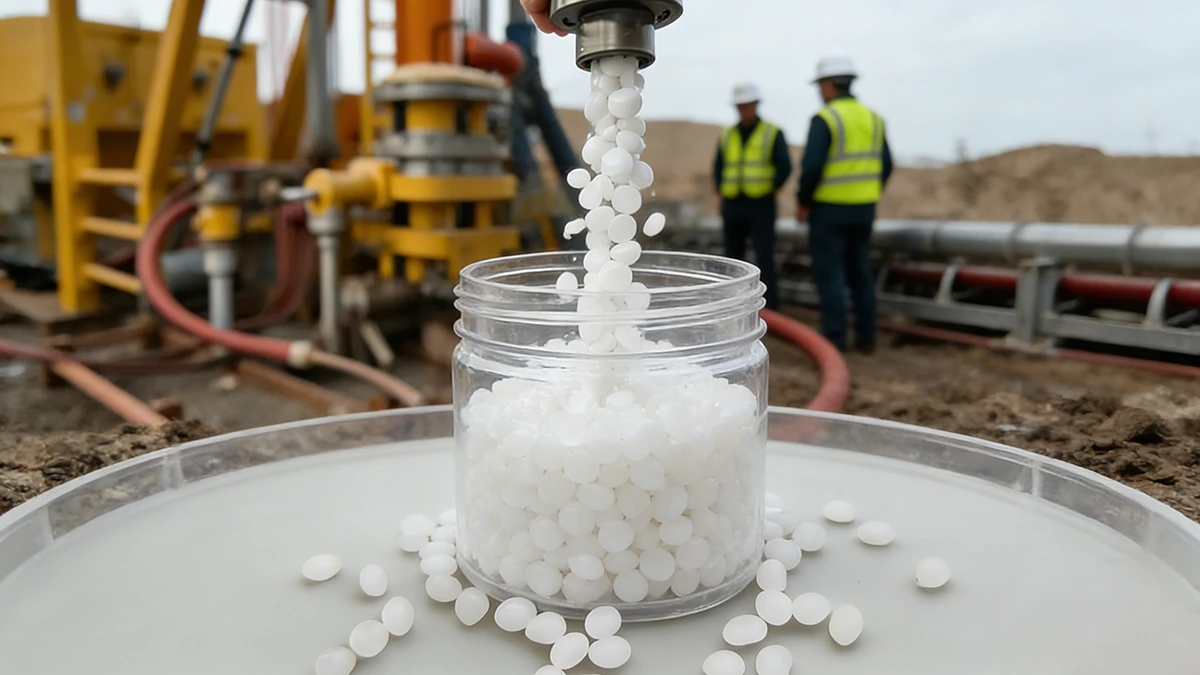
Polyamide 6 (PA6), a foundational engineering polymer, forms the basis of many structural applications. Its utility is significantly elevated in the PA6 GF30 composite, which denotes Polyamide 6 reinforced with 30 weight percent (wt%) E-glass fibers. This specific reinforcement ratio provides an industry-proven balance between mechanical enhancement, reliable processability, and cost efficiency. This analysis examines the essential thermal characteristics of PA6 GF30—specifically its Glass Transition Temperature (Tg), Heat Deflection Temperature (HDT), and long-term thermal stability—critical parameters for engineers designing high-performance components.
Material Introduction
PA6 GF30 is an engineered composite utilizing a Polyamide 6 matrix integrated with E-glass fiber reinforcement. The primary function of the 30 wt% glass fiber load, compared to neat (pure) PA6, is to increase bulk stiffness, reduce the coefficient of thermal expansion (CTE), and dramatically raise the thermal load-bearing capability. These changes ensure enhanced dimensional stability and allow for reliable function under continuous mechanical stress at elevated temperatures.
| Property | Unit | Pure PA6 | PA6 GF30 |
| Tensile Modulus | MPa | ≈ 3,000 | ≈ 5,500 – 9,000 |
| Heat Deflection Temp (HDT @ 1.8 MPa) | °C | ≈ 65 | ≈ 200 – 210 |
| Glass Transition Temp (Tg) | °C | ≈ 45-55 | ≈ 45-55 |
| Density | g/cm³ | ≈ 1.14 | ≈ 1.34 – 1.38 |
Core Material Thermal Properties
Glass Transition Temperature (Tg)
The Glass Transition Temperature (Tg) represents the temperature range where the amorphous segments of the polymer matrix transition from a rigid, glassy state to a more flexible, rubbery state. This transition, which is typically identified through techniques like Differential Scanning Calorimetry (DSC) , is a measure of molecular mobility, not a true phase change.
For the PA6 matrix in GF30, the Tg is generally unaffected by the glass fibers and is around 45-55 °C in a dry state. However, Polyamide 6 is hygroscopic—it absorbs atmospheric moisture. This absorbed water functions as a plasticizer, increasing chain mobility and thereby reducing the effective Tg to a range of 0-20 °C when conditioned (e.g., at 50% relative humidity). This phenomenon, known as hygroscopic plasticization, directly impacts the material’s modulus, leading to decreased stiffness and increased ductility above the conditioned Tg.
Heat Deflection Temperature (HDT)
The Heat Deflection Temperature (HDT) is a macro-mechanical measure of the material’s ability to resist deformation when subjected to a specific flexural stress at increasing temperatures. It is measured according to standards such as ISO 75-1/-2 or ASTM D648.
The primary data points are:
- HDT/A (1.8 MPa): Simulates highly-stressed components. Typical value for PA6 GF30 is ≈ 200-210 °C.
- HDT/B (0.45 MPa): Simulates low-stressed components. Typical value is ≈ 215-220 °C.
The reinforcement effect is profound: the glass fibers significantly inhibit the chain mobility that causes deflection, pushing the HDT well past the melting point of the polymer’s amorphous regions, offering a 140 °C increase over neat PA6 . This effect is directly proportional to the glass fiber content .
Thermal Stability and Aging Studies
Long-term thermal performance is assessed via High-Temperature Aging tests, often following the ISO 2578 protocol, where samples are exposed to service-simulating temperatures (e.g., 150 °C) for periods up to 2000 hours.
The primary thermal degradation mechanisms are thermo-oxidative degradation (reaction with oxygen at high temperatures) and hydrolysis (reaction with residual moisture), both of which cause chain scission and molecular weight reduction.
Degradation is typically quantified by monitoring the Tensile Strength Retention (percentage of initial strength vs. exposure time) , the surface change through Color Difference (△E), and the decline in ductility, which manifests as embrittlement (decreased elongation at break). To ensure acceptable long-term service temperatures (LTST, typically 100-130 °C), thermal stability is ensured by incorporating heat stabilizers, such as CuI/KI systems or specific aromatic amines, which scavenge free radicals and prevent oxidation.
Comparative Analysis
Material selection for thermal applications often involves trade-offs between thermal performance, weight, and cost. PA6 GF30’s thermal properties are best viewed in comparison with other high-performance materials .
| Factor | PA6 GF30 | PA66 GF30 | PPS GF40 | ALU 6061 |
| HDT (1.8 MPa) | 200-210 °C | 220-240 °C | 260-270 °C | N/A (High Melting Point) |
| Cost Efficiency | High | Medium-High | Low | Medium |
| Density | 1.36 g/cm³ | 1.40 g/cm³ | 1.63 g/cm³ | 2.70 g/cm³ |
| Corrosion Resistance | Good (Hydrocarbons) | Good | Excellent (Chemically Inert) | Poor (Susceptible to Pitting/Galvanic) |
PA6 GF30 provides an optimal blend, offering excellent thermal capability for demanding applications without the significant cost or weight penalty associated with ultra-high-performance polymers (PPS) or metals (Aluminum).
Beyond thermal stability, a complete material assessment requires understanding its mechanical, chemical resistance, and market viability. For a detailed examination of PA6 GF30’s full property spectrum, key application sectors, and current market trends, refer to our comprehensive guide: PA6 GF30: Properties, Applications, and Market Trends.
Processing for Optimal Thermal Integrity
Achieving the published thermal properties requires stringent control during processing. As a hygroscopic material, the PA6 GF30 composite must be pre-dried to a moisture content of < 0.1% at approximately 80 °C prior to melt processing (e.g., injection molding). Failure to do so initiates hydrolytic degradation in the melt, reducing the molecular weight and thereby compromising the final part’s mechanical and thermal performance. Furthermore, high mold temperatures (80-120 °C) are utilized to maximize the degree of crystallinity in the PA6 matrix, which directly contributes to achieving the maximum potential HDT.
Conclusion
PA6 GF30 is a highly effective, heat-resistant engineering composite. Its performance profile—characterized by a high HDT, robust thermal stability from heat stabilizers, and predictable behavior above and below the Tg—makes it indispensable for structural components in the automotive and electrical sectors. By carefully controlling moisture content and processing temperatures, engineers can leverage this material to its full thermal potential.
To ensure your specific component meets its thermal-mechanical performance requirements, a detailed analysis of the component geometry and predicted stress profile is essential. Let’s discuss how the crystallinity profile influenced by your target mold temperature might affect the final HDT of your part.