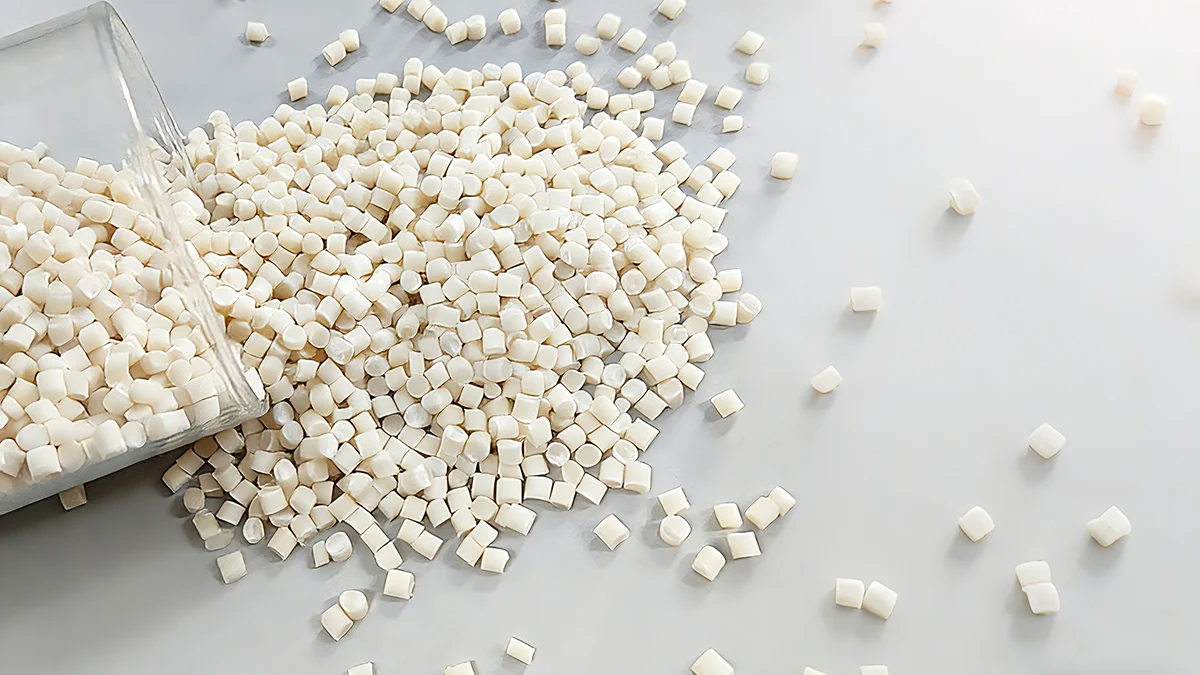
Positioned as cost-effective and renewable alternatives to conventional plastics. Understand their real-world performance for responsible material selection.
Key Performance Characteristics
Renewable Feedstock
Derived from corn, potato, cassava, or other starch sources, supporting bio-based material strategies.
Good Processability
In the form of thermoplastic starch (TPS), starch can be processed using conventional extrusion and injection molding equipment.
Rapid Biodegradation
Particularly effective in industrial composting environments under standard composting conditions.
Core Limitations
-
01
High Moisture Sensitivity
Starch is intrinsically hydrophilic. Exposure to humidity can lead to dimensional instability, loss of mechanical strength, and premature degradation.
-
02
Limited Mechanical Strength
Compared with PLA, PBAT, or PHA, starch-based materials generally exhibit lower tensile strength and poor impact resistance.
-
03
Thermal Instability
Narrow processing windows and low heat resistance restrict use in high-temperature or long-life applications.
-
04
Short Shelf Life
Moisture absorption during storage can result in caking, brittleness, or inconsistent processing behavior.
"In practice, starch-based plastics are rarely used as standalone materials in demanding applications. Instead, they are commonly blended with other biodegradable polymers to balance cost, performance, and biodegradability."
Want to dive deeper?
Explore types of materials, specific applications, and commercial realities in our full guide.
Read Full Article