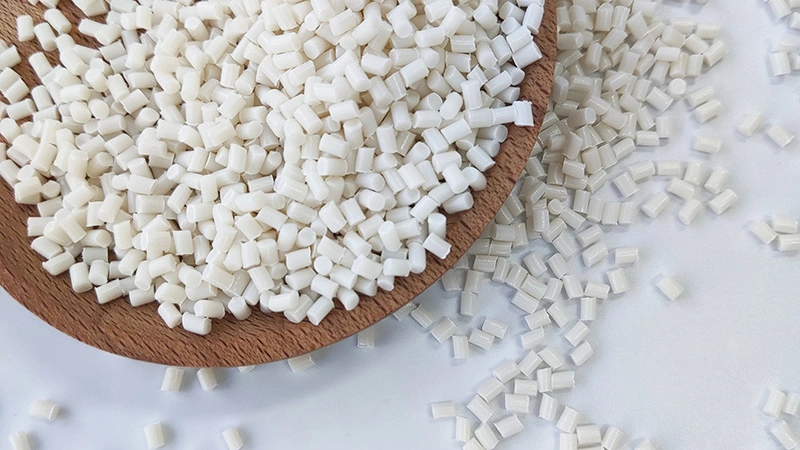
While many bioplastics claim to be 'green,' their performance often falters when removed from the controlled environment of an industrial composter. PHA stands apart by offering a superior degradation profile that aligns with the unpredictable realities of natural ecosystems.
Marine Biodegradability: The "Cold Water" Challenge
Ambient Temperature
PHA degrades efficiently in cold marine waters ranging from 4℃ to 5℃, thriving even in nutrient-poor environments.
Zero Microplastics
PHA undergoes surface erosion. The material thins uniformly until it vanishes, ensuring no persistent secondary microplastics enter the food chain.
180-Day Timeframe
PHA straws achieve significant mass loss within ~180 days, aligning with TÜV OK Marine Biodegradable standards.
Versatility: Home vs. Industrial Composting
Bridging the gap between industrial waste management and domestic reality.
| Feature | Standard Bioplastics (e.g. PLA) | PHA Performance |
|---|---|---|
| Environment Required | Industrial High-Heat | Home & Backyard Compost |
| Decomposition Trigger | Specific Hydrolysis Conditions | Ambient Temperatures |
| Soil Impact | Inert/Needs Extraction | Becomes a Microbial Carbon Source |
Soil Integration
As it decomposes into CO₂, water, and biomass, it enhances soil quality rather than polluting it.
End-of-Life Flexibility
A "fail-safe" material that won't persist if it escapes formal recycling streams.
Ready to Integrate PHA?
Evaluating the transition to PHA is an investment in a future where product performance and planetary health are no longer in conflict.
The Biological Mechanism: Nature’s "Energy Storage"
Intracellular Origin
Bacteria naturally synthesize PHA as a carbon and energy reserve, functioning much like fat storage in humans. Because it's born from biological processes, nature is already equipped to reclaim it.
Enzymatic Breakdown
Recognized by bacteria and fungi that secrete PHA depolymerases. These enzymes break chains into individual monomers that microbes consume as nutrients.
Chemical Simplicity
Resulting byproducts are entirely organic and non-toxic, returning carbon to the atmosphere or soil without chemical residue.