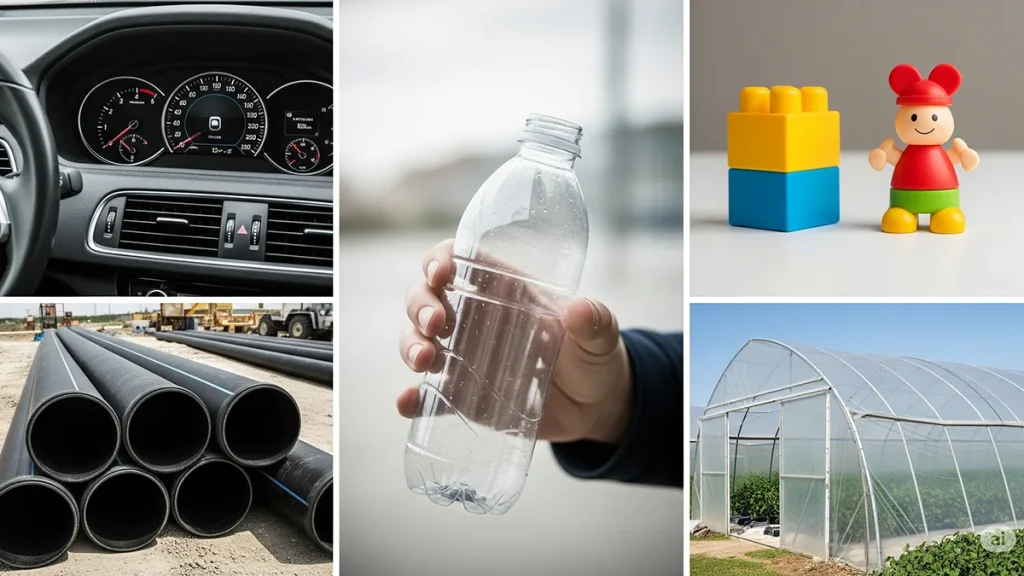
Polyethylene vs Polyurethane:Selecting the Right Plastic Granules

Polyethylene: A Core Material for Everyday Flexible Packaging

The strategic sourcing of raw materials is a cornerstone of modern manufacturing, directly influencing a product’s performance, cost-efficiency, and market viability. At the heart of the plastics industry are the unassuming granules—small, consistent pellets that serve as the foundational building blocks for an immense array of goods, from flexible packaging films to robust automotive components.

The granular form itself offers distinct processing advantages. Uniformity in size and shape ensures consistent melting behavior, predictable flow during molding, and simplified logistics in transportation and storage compared to powders or liquids. This physical consistency is crucial for achieving high-quality, repeatable outcomes in production.

However, the true character of a plastic product is defined not by the granular form, but by the polymer within. Among the vast spectrum of polymers, polyethylene (PE) and polyurethane (PU) represent two fundamentally different families. PE, a versatile and ubiquitous thermoplastic, is known for its chemical resistance and ease of processing. PU, available as both a thermoplastic (TPU) and a thermoset, is prized for its elasticity and durability.

Understanding the core distinctions between their chemical structures, performance attributes, and processing requirements is critical for any manufacturer. This guide provides a detailed comparison to illuminate why polyethylene granules, in many scenarios, present a compelling case in terms of versatility, cost-effectiveness, and sustainability, enabling you to make a well-informed material decision for your specific needs.

Key Takeaway: The efficiency of plastic granules in manufacturing stems from their uniform physical state, but the ultimate product performance is dictated by the intrinsic properties of the chosen polymer. Differentiating between polyethylene (PE) and polyurethane (PU) is essential for optimizing production and product quality.

Understanding Polyethylene

Polyethylene Granules: Foundation of Modern Polymer Products

At its core, polyethylene (PE) is a thermoplastic polymer derived from the polymerization of the ethylene monomer (). As a thermoplastic, one of its most significant industrial advantages is the ability to be melted, molded, and subsequently remelted for recycling or reprocessing with minimal degradation to its structural integrity.

The true versatility of polyethylene, however, lies in its controllable molecular architecture. The properties of different PE grades are determined by the structure of their long polymer chains—specifically, the degree and nature of chain branching. This fundamental characteristic directly influences the material’s density, crystallinity, and ultimately, its physical performance.

Understanding the Main Types of Polyethylene

The relationship between molecular structure and material properties is best illustrated by examining the primary PE classifications:

  • High-Density Polyethylene (HDPE): Characterized by long, linear polymer chains with minimal branching. This linear structure allows the chains to pack together tightly and form a highly crystalline structure, resulting in higher density, rigidity, and excellent chemical resistance.

  • Low-Density Polyethylene (LDPE): Features a highly branched molecular structure with long side chains. These branches prevent the polymer chains from packing closely, leading to a less crystalline (more amorphous) structure. This results in lower density, greater flexibility, and good transparency.

  • Linear Low-Density Polyethylene (LLDPE): Combines a linear chain backbone with numerous short, uniform branches. This hybrid structure delivers a unique profile, offering superior tensile strength and puncture resistance compared to LDPE, while maintaining high flexibility.

The table below summarizes the practical outcomes of these structural differences:

TypeDensity (g/cm³)Key PropertiesCommon Applications
HDPE (High-Density)0.941–0.965Rigid, high tensile strength, moisture & chemical resistantPipes, chemical tanks, blow-molded bottles, toys
LDPE (Low-Density)0.917–0.930Flexible, transparent, tough, easy to processPackaging films, squeeze bottles, flexible lids, bags
LLDPE (Linear Low-Density)0.915–0.940Excellent tensile strength, high puncture resistance, flexibleStretch wrap, agricultural films, heavy-duty sacks
MDPE (Medium-Density)0.926–0.940Good balance of stiffness, stress-crack & impact resistanceGas pipes and fittings, carrier bags, shrink film

The production of PE granules is a precise process where catalysts and reactor conditions are engineered to control the polymer’s chain structure. This ensures the final pellets meet the exact density and melt flow index required for a given application.Need help selecting the perfect PE grade for your project? Contact our technical team today to discuss your specific needs.

Key Takeaway: The versatility of polyethylene is a direct result of its controllable molecular architecture. By manipulating chain branching during polymerization, a predictable spectrum of properties—from high rigidity to excellent flexibility—can be engineered, allowing for precise material matching to specific application demands.

Polyethylene vs Polyurethane: A Focused Comparison

Contrast of PE and PU Raw Material Pellets

A direct comparison between polyethylene and polyurethane reveals two materials occupying distinct positions in the polymer hierarchy. PE stands as a high-volume, versatile commodity plastic, while PU, particularly in its granular form as Thermoplastic Polyurethane (TPU), is classified as a higher-performance engineering polymer. This fundamental difference informs every aspect of their comparison, from cost structure to end-use performance.

The following table provides a detailed breakdown of their key attributes:

PropertyPolyethylene (PE)Thermoplastic Polyurethane (TPU)
Polymer StructureThermoplastic, simple non-polar hydrocarbon chainsThermoplastic, complex block copolymer with urethane links
CostLow-cost commodity polymerHigher-cost engineering polymer
ProcessingEasy, not hygroscopic, suits molding/extrusionHygroscopic, needs pre-drying, more complex processing
DurabilityGood impact and stress-crack resistanceExcellent abrasion, tear, and puncture resistance
FlexibilityRigid (HDPE) to flexible (LDPE/LLDPE)Soft (Shore 60A) to rigid (Shore 80D)
Chemical ResistanceStrong against acids, bases, solventsGood, but weaker against strong acids, ketones, esters
Temperature Range-50°C to 90°C (varies by grade)-40°C to 120°C, better at high temperatures
RecyclabilityHighly recyclable (#2 HDPE, #4 LDPE)Challenging, #7 “Other,” limited recycling streams

Note: Material costs are subject to significant market fluctuations, but the relative difference between PE (commodity) and TPU (engineering) remains consistent.

The choice between PE and PU is a classic engineering trade-off. Polyurethane is the preferred choice for applications where superior durability, elasticity, and abrasion resistance are non-negotiable, and where a higher budget and complex processing are secondary concerns.

Conversely, polyethylene granules deliver an outstanding combination of processability, chemical resistance, and cost-effectiveness. Their well-understood properties and robust supply chain make them the pragmatic and efficient raw material for a vast scope of industrial and consumer products where the extreme performance of PU is not required.

Key Takeaway: The choice hinges on application demands. Polyethylene offers unmatched value and efficiency for mainstream applications, while polyurethane is reserved for specialized roles where its superior toughness and elasticity justify its higher cost and more complex processing requirements.

Industry Applications of Polyethylene Granules

Polyethylene's Role Across Key Industries

Polyethylene’s success across diverse industries is a direct result of its tunable molecular structure. The ability to produce specific grades like HDPE, LLDPE, and LDPE allows manufacturers to precisely match material properties to application-specific demands for rigidity, flexibility, and durability.

Packaging Industry

PE is a dominant material in packaging due to its cost-efficiency, barrier properties, and processability.

  • Flexible Films (LLDPE & LDPE): Used for food wraps and bags, leveraging their high clarity, flexibility, and excellent tensile strength for product protection and display.
  • Rigid Containers (HDPE): Blow-molded into bottles for milk, detergents, and industrial chemicals, chosen for its high rigidity, chemical inertness, and impact strength.
  • Closures and Lids (LDPE & HDPE): Provides sealing solutions that range from flexible (LDPE) to stiff (HDPE), often requiring good stress-crack resistance.
  • Palletization & Bundling (LLDPE): The material of choice for stretch films due to its exceptional puncture resistance and high elongation, ensuring load stability during transit.

Construction and Infrastructure

Polyethylene pipes and construction materials in use

In construction, polyethylene’s durability and long-term resistance to environmental factors are critical.

  • Piping Systems (HDPE): The industry standard for high-pressure water and gas distribution mains, valued for its corrosion immunity, leak-proof fusion-welded joints, and 50+ year service life.
  • Geomembranes (HDPE & LLDPE): Deployed as durable liners in landfills, reservoirs, and mining applications to contain liquids and prevent environmental contamination, thanks to their impermeability and chemical resistance.
  • Wire and Cable Insulation (LDPE & MDPE): Protects electrical and communications cabling with excellent dielectric properties and resistance to moisture.

Automotive Components

The automotive industry utilizes polyethylene to reduce vehicle weight, improve fuel efficiency, and enhance durability.

  • Fuel Tanks (HDPE): Multi-layer blow-molded tanks use HDPE for its strength and low permeability to hydrocarbon fuels, meeting stringent safety and emissions standards.
  • Interior and Exterior Trim: Components like wheel arch liners and dashboard panels benefit from PE’s moldability, impact resistance, and textured surface finishes.

Consumer and Household Goods

PE’s safety, moldability, and low cost make it a staple in products for daily life.

  • Toys and Playground Equipment (HDPE & LDPE): Chosen for its toughness, safety (non-toxic), and vibrant colorability, withstanding rough play and outdoor exposure.
  • Household & Kitchenware (HDPE & LDPE): From rigid food storage containers (HDPE) that are dishwasher-safe to flexible squeeze bottles (LDPE), its versatility is key.

Agricultural Applications

The agricultural sector leverages PE’s weather resistance and light-modifying properties to enhance crop yields.

  • Greenhouse & Tunnel Films (LDPE & LLDPE): Formulated with UV stabilizers to create controlled growing environments that optimize temperature and light for crops.
  • Drip Irrigation Tubing (LDPE): Its flexibility and durability allow for efficient and precise water delivery directly to plant roots, conserving water resources.

Key Takeaway: Polyethylene’s success across these diverse industries is not coincidental; it is a direct result of its tunable molecular structure. The ability to produce specific grades like HDPE, LLDPE, and LDPE allows manufacturers to precisely match material properties to application-specific demands for rigidity, flexibility, and durability.

Strengths, Limitations, and Practical Considerations

Achieving a successful manufacturing outcome relies on a clear understanding of your chosen material’s complete profile. Polyethylene offers a compelling set of strategic advantages, and its limitations can be effectively managed through informed engineering and processing decisions.

Strategic Advantages of Polyethylene

  • Cost-effective performance compared to engineering plastics
  • Versatile processing (injection molding, extrusion, blow molding)
  • Strong chemical resistance to acids, bases, alcohols, detergents
  • Excellent electrical insulation due to non-polar nature
  • High moisture barrier, inherently waterproof
  • FDA and EU-compliant grades for food contact
  • Highly recyclable with established streams (#2 HDPE, #4 LDPE)

Technical Limitations and Mitigations

  • Moderate thermal resistance; select grades for specific temperature needs
  • UV susceptibility; use stabilizers or carbon black for outdoor use
  • Environmental stress cracking; choose high-ESCR grades for harsh conditions
  • Low surface energy; apply corona, flame, or plasma treatment for bonding/printing
  • Flammable; incorporate flame-retardant additives for fire safety compliance

Practical Guidance for Optimal Processing

To harness the full potential of polyethylene granules, manufacturers should focus on the following key areas:

ConsiderationProfessional Recommendation
Grade SelectionSelect based on Melt Flow Index: high MFI for injection molding, low MFI for extrusion/blow molding.
Additive FormulationSpecify UV stabilizers, antioxidants, colorants, or slip/anti-block agents with supplier.
Processing ParametersControl melt temperature, injection speeds, pressures, and cooling to avoid degradation/warpage.
Tooling & Mold DesignDesign for PE grade shrinkage (higher in HDPE), ensure proper venting and cooling channels.
Storage & HandlingStore granules in a dry, cool place away from sunlight to prevent moisture issues.

Key Takeaway: The limitations of polyethylene are well-understood and largely surmountable. Through intelligent grade selection, strategic use of additives, and optimized process control, manufacturers can reliably leverage PE’s significant advantages to produce high-quality, cost-effective products.

Sustainability and Environmental Impact of Polyethylene

From Pellet to Product and Back: A Model for Sustainable PE Recycling

For businesses committed to sustainability, polyethylene granules are a strategic choice. They offer a proven path for resource efficiency and waste reduction, supported by a dynamic industry committed to a more circular and sustainable future.

Superior Recyclability and the Circular Economy

Polyethylene is one of the world’s most recycled plastics, supported by robust global collection and processing infrastructure. Its thermoplastic properties allow it to be melted and remolded multiple times without significant loss of quality, making it a cornerstone of circular economy models.

Modern recycling technologies have matured, enabling highly effective end-of-life solutions:

  • Mechanical recycling processes used polyethylene into new granules
  • Advanced sorting enhances recycled material purity
  • Chemical recycling breaks polyethylene into base components
  • Closed-loop systems recapture and reuse manufacturer waste

Energy Efficiency in Production

The production of polyethylene granules is notably more energy-efficient than that of polyurethane and many other polymers. Polyethylene’s simpler molecular structure and lower processing temperatures result in a reduced carbon footprint throughout the manufacturing lifecycle. This efficiency not only contributes to environmental goals but can also translate into lower overall production costs for end-users.

Innovation for a Sustainable Future

The polyethylene industry is at the forefront of sustainable innovation, continually pushing for more eco-friendly materials:

  • Bio-based polyethylene from renewables matches conventional performance
  • Lightweight formulations reduce material use and emissions
  • Design for recyclability enhances material recovery rates

Key Takeaway: For businesses committed to sustainability, polyethylene granules are a strategic choice. They offer a proven path for resource efficiency and waste reduction, supported by a dynamic industry committed to a more circular and sustainable future.

Choosing Polyethylene Granules for Your Project

Ensuring Polyethylene Granule Quality Through Lab Analysis

Successfully integrating polyethylene granules into your manufacturing process requires a strategic approach. As your material partner, we go beyond simply supplying granules; we help you navigate the critical factors of material selection to ensure optimal performance, cost-efficiency, and consistency.

Key Criteria for Material Specification

Making the right choice involves a comprehensive evaluation of your project’s needs. We assist you in assessing these key criteria:

ConsiderationRecommendation
Performance & ApplicationMatch tensile strength, impact resistance, and flexibility to environmental needs.
Manufacturing CompatibilitySelect resin grade for injection molding, extrusion, blow, or rotational molding.
Regulatory ComplianceProvide documentation for food contact, medical, or industry-specific standards.
Cost & EfficiencyOptimize material cost, processing efficiency, scrap rates, and product durability.

Ensuring Quality and Consistency

As your trusted supplier, our commitment to quality is non-negotiable. We understand that the consistency of the material is paramount to your manufacturing success.

  • Rigorous quality control with trusted factories
  • Batch-specific Certificate of Analysis (CoA) for MFI, density, and color
  • Technical support for troubleshooting and material optimization

Ready to Source Premium Polyethylene Granules?

Our technical team can help you select the optimal polyethylene grade for your specific application requirements. Contact us today for expert guidance, competitive pricing, and reliable supply.

Key Takeaway: Choosing the right polyethylene granules is a collaborative process. We provide the expertise, quality assurance, and technical support you need to confidently specify materials that will drive the success of your manufacturing operations.

Frequently Asked Questions

Contemplative Figure with a Question Mark

What are the key property differences between polyethylene and polyurethane granules?

Polyethylene granules offer superior affordability and versatility compared to polyurethane. While polyethylene provides excellent chemical resistance, moisture barrier properties, and ease of processing at lower temperatures, polyurethane excels in abrasion resistance and elasticity. Polyethylene’s simpler molecular structure results in lower production costs and broader processing options, making it the more economical and adaptable choice for most applications.

Are polyurethane and polyethylene the same?

No, polyurethane (PU) and polyethylene (PE) are fundamentally different types of polymers. Polyethylene is a thermoplastic plastic with a simple molecular structure, making it one of the most common and widely used plastics. Polyurethane, on the other hand, is a complex class of polymers formed by reacting an isocyanate with a polyol. Its properties are highly versatile, allowing it to be produced as an elastomer, foam, or coating.

Which foam is better for a gun case: polyethylene or polyurethane?

Polyethylene foam (PE foam) is typically the better choice for gun case liners.
  • Durability and Water Resistance: PE foam has a closed-cell structure, making it highly resistant to water, oil, and chemicals. It won’t absorb moisture, which is crucial for protecting firearms.
  • Resilience: It offers excellent shock absorption and rebound, providing reliable cushioning and protection against repeated impacts.
  • Customizability: PE foam is easy to cut and shape, allowing for precise, custom-fit liners that securely hold and protect your items.

Are polyethylene granules recyclable, and what are the challenges?

Polyethylene granules are highly recyclable, with recent technological advancements significantly improving recovery rates and output quality. Modern sorting technologies now effectively separate different polyethylene types, while advanced washing processes remove contaminants more efficiently. The primary challenges include collection logistics, contamination management, and maintaining consistent quality in recycled outputs. Despite these challenges, polyethylene’s thermoplastic nature makes it ideal for circular economy models.

Why is polyethylene better suited for applications like packaging or pipes?

Polyethylene excels in packaging and pipe applications due to its unique combination of moisture resistance, chemical stability, and processing versatility. Unlike polyurethane, which serves niche applications requiring exceptional elasticity or abrasion resistance, polyethylene offers the ideal balance of barrier properties, durability, and cost-effectiveness for containment applications. Its food-safe grades, excellent moisture barrier, and ability to be processed into both flexible films and rigid structures make it unmatched for packaging and fluid transport systems.

What are the disadvantages of polyethylene?

While polyethylene is incredibly versatile, it does have some limitations:
  • Low Thermal Resistance: It has a relatively low melting point, making it unsuitable for high-temperature applications.
  • Moderate Mechanical Strength: Compared to engineered plastics, PE has lower rigidity and hardness.
  • UV Degradation: Prolonged exposure to sunlight can cause it to become brittle and degrade. UV stabilizers or carbon black must be added for outdoor use.
  • Low Surface Energy: This property makes it difficult to print on or bond with adhesives without prior surface treatment (e.g., corona or plasma treatment).

Which is better: polyurethane, polyethylene, or polypropylene?

The “better” material depends entirely on the specific application. Each offers distinct advantages:
  • Polyethylene (PE): Best for applications requiring low cost, flexibility, impact resistance, and good chemical resistance, such as packaging, pipes, and films.
  • Polypropylene (PP): Provides higher stiffness, hardness, and better heat resistance than PE. It’s often used for automotive parts, appliance casings, and fibers.
  • Polyurethane (PU): Unmatched for applications needing excellent elasticity, abrasion resistance, and insulation properties, such as foams, coatings, adhesives, and synthetic leather.

Conclusion: Source Premium Polyethylene Granules from Us

Polyethylene granules consistently deliver a strategic advantage over alternatives like polyurethane, providing an unbeatable combination of cost-efficiency, performance, and sustainability. Their streamlined molecular structure enables more efficient processing, and their established recycling infrastructure supports your commitment to a circular economy.

The true value, however, comes from partnering with a supplier who understands your specific needs. We don’t just sell granules; we provide the foundation for your success. Our extensive range of high-quality polyethylene grades is backed by:

  • Expert guidance on material selection for optimal performance
  • Tailored grade recommendations for specific processing needs
  • Consistent batch quality to reduce waste and downtime
  • Reliable supply chain for timely material delivery
  • Cost-effective pricing to enhance operational efficiency

Realize the full potential of polyethylene’s cost-performance benefits and sustainability advantages by choosing a partner dedicated to your success.

Ready to elevate your manufacturing process? Contact us today to discuss your project and receive a customized quote.

Email:jerry@salesplastics.com

Phone:+8618657312116

finding the right polymer supplier?

We’re here to help. Don’t hesitate to reach out—we’re ready to support you in building your dreams. Start today and create a better tomorrow.

Related Posts

get in touch