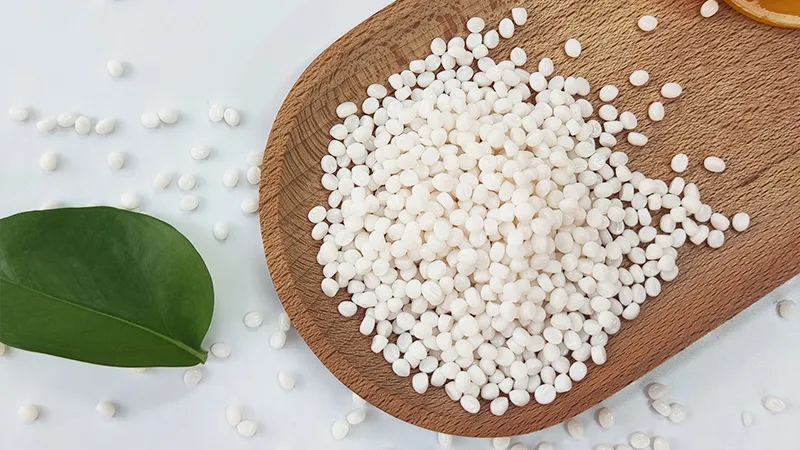
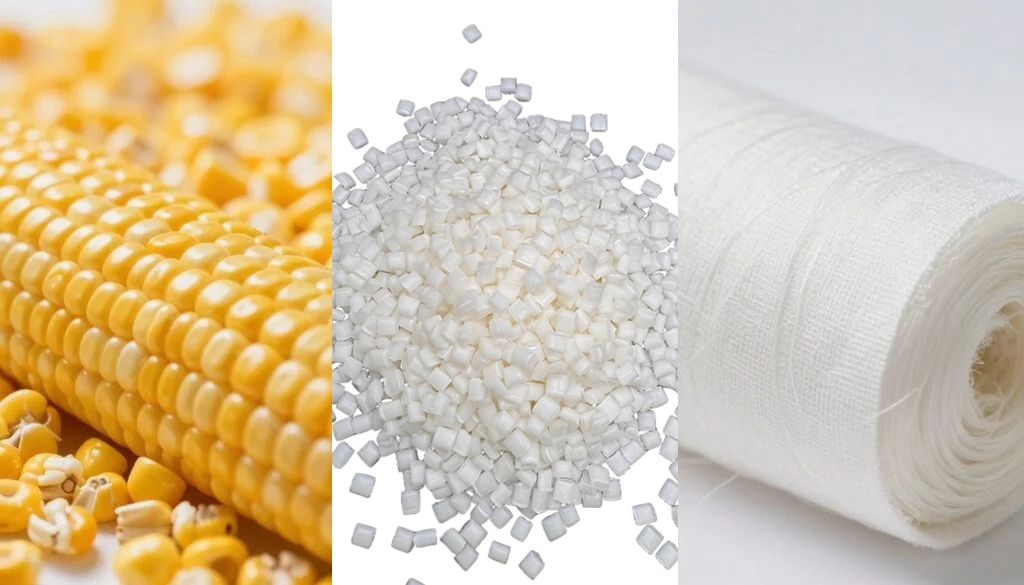
While Nylon (PA6/PA66) remains a traditional industry standard, its inherent moisture absorption presents critical bottlenecks in fuel systems and regulated food contact environments. Polyketone (POK), a revolutionary semi-crystalline engineered polymer, has emerged as a premium alternative. POK delivers an exceptional balance of chemical resistance, barrier properties, and native purity, allowing it to excel where traditional nylons falter. To understand how these materials compare across all mechanical categories, you can review our Polyketone vs Nylon comprehensive comparison.
Polyketone vs Nylon in Fuel Systems: Barrier Performance
Automotive fuel transport demands materials that withstand constant contact with aggressive fuels and alcohol blends without degradation or volumetric expansion.
Material Exposure & Stability Simulator
Drag the slider to simulate exposure time under severe conditions and observe material degradation.
Exceptional Fuel Permeation Resistance
Thanks to its highly crystalline structure, POK exhibits an incredibly low fuel permeation rate. It forms a highly effective barrier against hydrocarbons, helping manufacturers meet increasingly stringent global evaporative emission standards more effectively than standard PA6 or PA66.
Anti-Swelling and Dimensional Stability
Nylon absorbs moisture and automotive fluids, leading to dimensional swelling and mechanical degradation over time. POK maintains a near-zero moisture absorption rate. This ensures that critical components, such as fuel lines and quick connectors, maintain strict dimensional tolerance and zero-leakage reliability throughout their service life.
💡 Technical Insight: The Dual-Swelling Risk While fuel permeation is a surface-to-core chemical challenge, moisture absorption is a matrix-level volumetric expansion risk. In high-humidity environments, these two failure modes often compound, leading to accelerated part degradation. To understand the root cause of these dimensional shifts and how to mitigate them, refer to our comprehensive technical analysis: Polyketone vs Nylon: Moisture Stability & Dimensional Change →
FDA-Approved Polyketone in Food Contact Applications
For food processing machinery and packaging, chemical resistance must be paired with absolute consumer safety.
Global Food Contact Approval
POK is inherently compliant with leading regulatory bodies, securing both US FDA (Food Contact Notification) and EU 10/2011 compliance. Unlike other custom resins, its regulatory profile simplifies immediate cross-border commercial adoption.
Ultra-Low Extractables
Under high temperatures or acidic food media, traditional nylons carry a risk of oligomer extraction. POK features an incredibly stable polymer backbone with a non-toxic catalyst system. This results in exceptionally low levels of extractables, ensuring that taste, odor, and safety remain completely uncompromised.
Performance Breakdown: POK vs. Nylon 66
An objective analysis of direct physical properties showcasing Polyketone's operational resilience over standard Nylon 66.
| Property / Compliance | Polyketone (POK) | Nylon 66 (PA66) | The Advantage |
|---|---|---|---|
| Fuel Permeation Rate |
Extremely Low
|
Moderate to High
|
POK: Superior environmental compliance |
| Moisture Absorption |
< 0.5% (Stable)
|
2.0% – 8.0% (Swells)
|
POK: Predictable dimensional tolerance |
| FDA Purity / Extraction |
Ultra-low risk
|
Potential migration
|
POK: Safer for high-temp food contact |
| Hydrolysis Resistance |
Excellent (None)
|
Poor (Degrades)
|
POK: Longer lifespan in wet environments |
Streamlining Production and Sustainability
From an environmental standpoint, the synthesis of Polyketone directly consumes carbon monoxide (CO), offering an eco-friendly profile that aligns with modern corporate ESG mandates.
Active CO Absorption
Every ton of POK manufactured consumes 0.5 tons of carbon monoxide. It turns dangerous industrial waste gas directly into high-strength, long-life, reusable technical parts, lowering your product's cradle-to-gate carbon footprint.
Simplified Injection Molding
Operationally, POK provides excellent melt mobility and flow rates. Unlike nylon, POK components do not require post-molding conditioning or moisture-baking steps. This slashes cycle times and energy consumption during injection molding, contributing to a lower Total Cost of Ownership (TCO).
Strategic ESG Alignment
Beyond process efficiency, the adoption of Polyketone directly supports corporate decarbonization strategies. Because POK is synthesized using captured carbon monoxide rather than carbon-intensive benzene derivatives, it provides a measurable reduction in Scope 3 emissions.
Conclusion
Whether you are designing low-emission automotive fuel components or high-purity food processing equipment, Polyketone provides a reliable, high-performance upgrade over traditional nylon. It successfully bridges the gap between strict chemical resistance and uncompromising regulatory compliance.
Ready to evaluate POK for your next project? Contact our material specialists today to request a datasheet or technical sample.