
The global shift toward a circular economy is no longer a trend—it’s a regulatory requirement. While conventional plastics still dominate long-life applications, Thermoplastic Starch (TPS) has emerged as the most commercially viable, carbon-neutral alternative for single-use packaging.
This guide provides a head-to-head comparison: TPS vs. Traditional Plastics. We dive deep into mechanical performance, processability on existing machinery, and the real-world cost-benefit analysis that manufacturers need to make the switch.
For manufacturers in Southeast Asia, the advantages are even greater. Leveraging local cassava supplies can drastically stabilize your supply chain against volatile petroleum prices.
Material Composition and Source: Renewable vs Petroleum-Based Origins
Conventional plastics rely on finite fossil fuel extraction, a process tethered to volatile crude oil markets and heavy carbon taxes. In contrast, Thermoplastic Starch (TPS) shifts the foundation of polymer production to renewable plant biomass. By extracting linear amylose and branched amylopectin from abundant regional crops—specifically cassava and corn—manufacturers can decouple their supply chain from petroleum dependency.
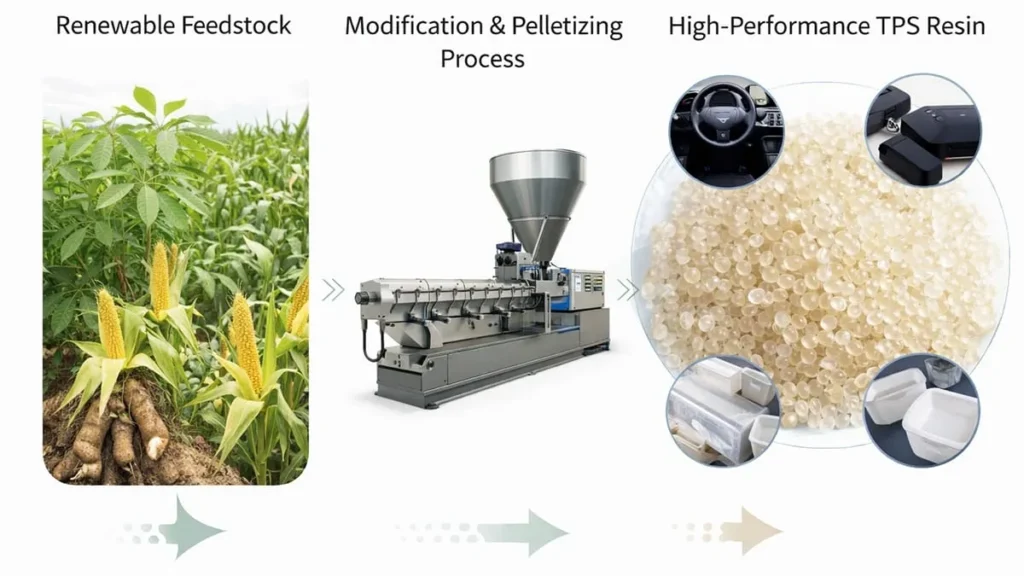
Native starch granules possess a semi-crystalline structure that cannot be molded in its raw state. Transforming these granules into a processable resin requires a precision-controlled plasticization process. We introduce eco-friendly plasticizers, such as glycerol or sorbitol, which disrupt the internal hydrogen bonds under specific thermal and shear conditions. This phase transition converts rigid starch into an amorphous, melt-processable polymer that behaves similarly to traditional polyolefins like PE or PP on standard extrusion lines.
The strategic advantage of transitioning to TPS-based resins extends beyond raw material origin. Data indicates that the production of bio-based TPS generates over 60% fewer carbon emissions compared to traditional fossil-fuel plastics. For exporters targeting global markets with strict environmental mandates, integrating TPS into the packaging portfolio is a direct pathway to achieving “Carbon Neutrality” goals without sacrificing mechanical integrity.
Within Southeast Asia, the availability of high-yield cassava provides a unique logistics edge. Utilizing locally sourced starch minimizes transport-related overheads and offers a price-stable alternative to synthetic hydrocarbons. This regional feedstock advantage ensures that our modified TPS resins remain commercially competitive while delivering superior environmental performance.
| Characteristic | Thermoplastic Starch (TPS) | Traditional Plastics (PE/PP/PET) |
| Primary Source | Renewable Crops (Cassava/Corn) | Non-renewable Petroleum |
| Carbon Footprint | Up to 60% Lower | High (Fossil-based) |
| Feedstock Stability | Stable (Agricultural cycles) | Volatile (Oil market fluctuations) |
| End-of-Life | Fully Compostable & Biodegradable | Permanent/Recyclable only |
Environmental Impact: Sustainability and Biodegradability
Environmental performance is no longer a luxury; it is a fundamental requirement for international market entry. Transitioning from persistent polyolefins to Thermoplastic Starch (TPS) resins allows manufacturers to replace long-term environmental liabilities with a regenerative biological cycle.
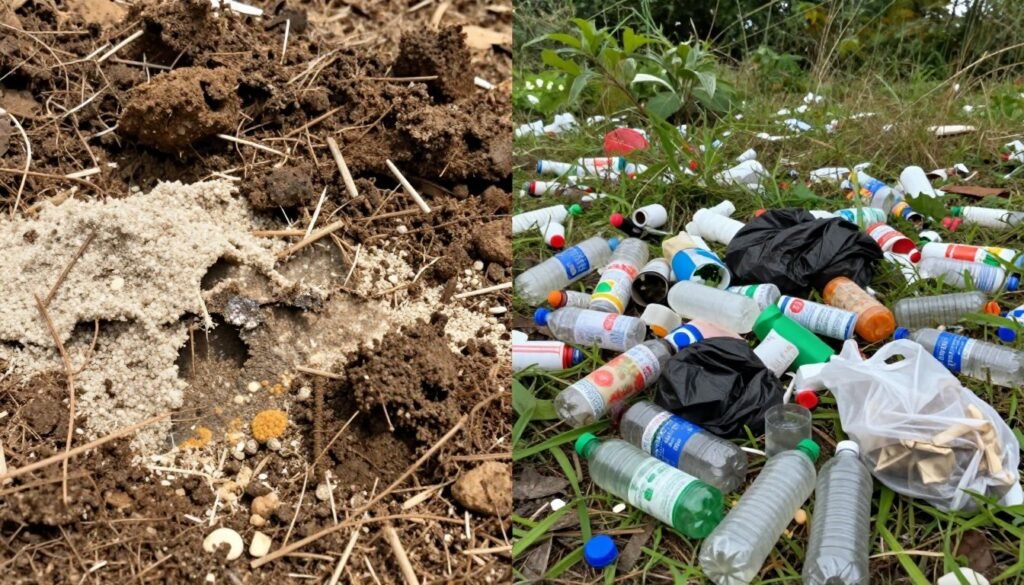
The 180-Day Mineralization Advantage
True biodegradability provides the decisive edge for our modified TPS formulations. Unlike traditional PE or PP, which fragment into persistent microplastics, our TPS resins undergo complete mineralization within 180 days under industrial composting conditions. This process converts the polymer entirely into water, CO₂, and organic biomass.
- Zero Microplastics: Safeguards soil integrity and prevents bioaccumulation.
- Global Compliance: Engineered to meet rigorous EN 13432 and ASTM D6400 standards.
- Future-Proofing: Directly addresses the increasing regulatory bans and “Plastic Taxes” in high-value export markets.
Regenerative Sourcing & Carbon Neutrality
Renewability provides the commercial stability that petroleum-based plastics lack. While fossil-based polymers rely on finite, volatile carbon extraction, TPS utilizes annual crop cycles. This creates a Carbon-Neutral Loop: the carbon dioxide absorbed during crop growth significantly offsets the energy footprint of resin processing. In Southeast Asia, the use of high-yield, rain-fed cassava further optimizes this profile by reducing irrigation demands and minimizing land-use pressure.
Comparative Environmental Performance
| Strategic Factor | Modified TPS Resin | Conventional Plastics (PE/PP) |
| Degradation Timeline | ~180 Days (Industrial Compost) | 400+ Years (Persistent) |
| Microplastic Risk | Zero (Complete breakdown) | High (Permanent pollution) |
| Regulatory Status | Certified Bio-based / Compostable | Facing Bans & Carbon Taxes |
| Resource Base | Annual Regenerative Crops | Finite Fossil Reserves |
Regulatory Framework and Environmental Standards
Key takeaway: Certification (EN 13432, ASTM D6400) and regional waste infrastructure determine whether TPS delivers real environmental benefits. Policy instruments (plastic bans, EPR, carbon pricing) increasingly favor biodegradable options for specific applications, especially in packaging applications and food packaging where contamination rules out recycling.
Ready to de-risk your product line?
Integrating our modified TPS resin does more than lower your carbon footprint—it secures your supply chain against evolving environmental mandates. Contact our technical team today for a comprehensive sustainability assessment and a roadmap to global certification.
Performance Differences: Mechanical Properties and Processability
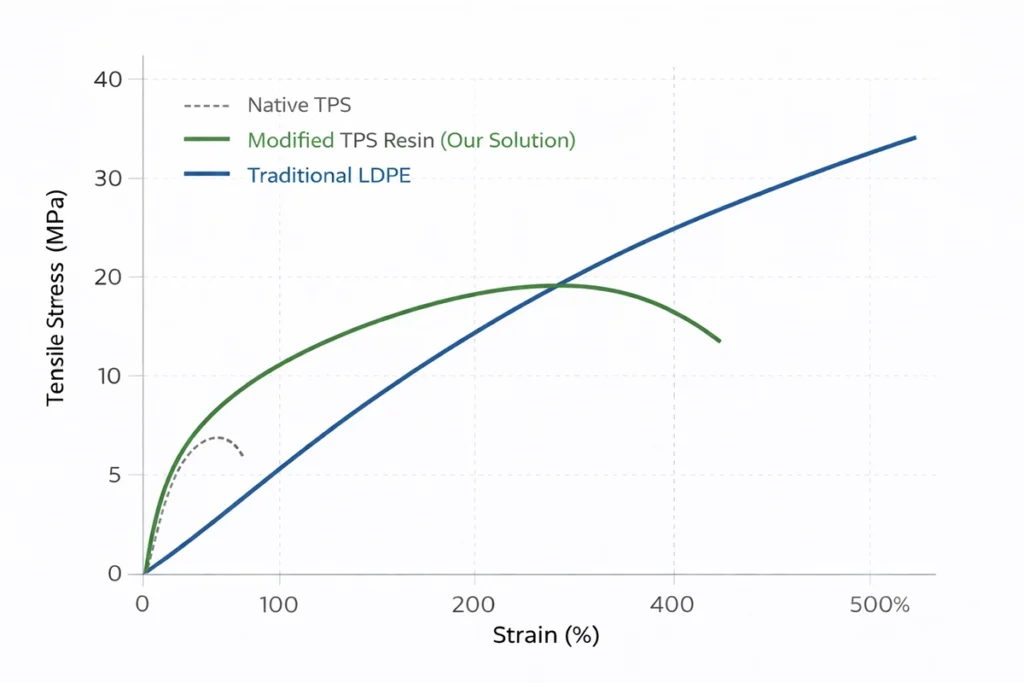
Industrial perception of starch-based materials has long been hindered by their inherent brittleness and sensitivity to moisture. However, next-generation Modified TPS Resins have achieved a technological leap, effectively bridging the performance gap between renewable polymers and fossil-based polyolefins. By restructuring the molecular chains, we have engineered a “drop-in” solution that meets modern manufacturing demands.
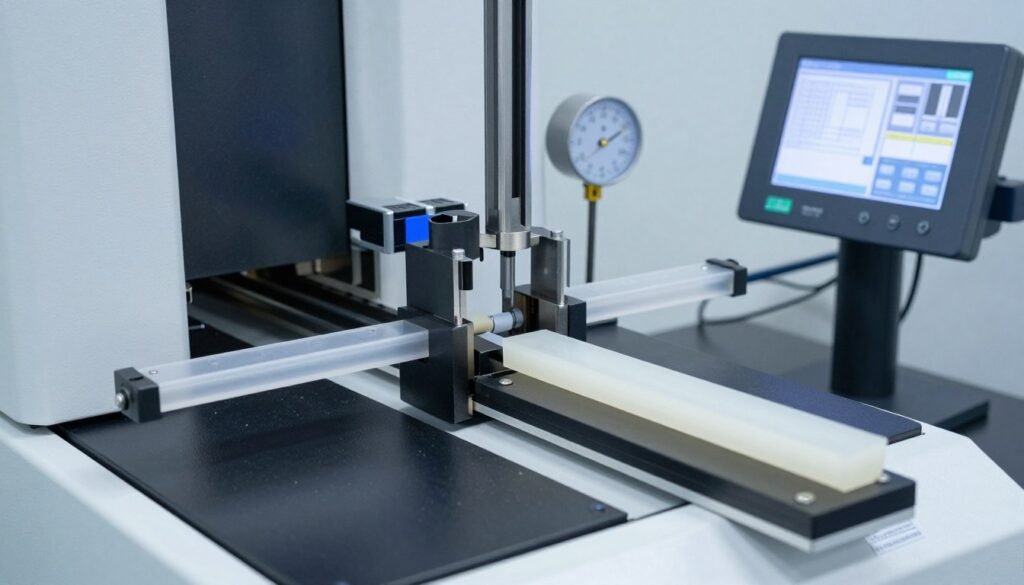
Engineered for Strength and Stability
Mechanical integrity is the baseline for any commercial application. While native starch is naturally fragile, our modified TPS formulations achieve tensile strengths that approach conventional polyethylene (PE). Through precision plasticization and the integration of bio-polyester blends, we have enhanced the elongation-at-break and impact resistance, ensuring the material performs reliably under stress without the premature cracking typical of early-stage bioplastics.
| Characteristic | Traditional Plastics (PE/PP) | Native Starch (Unmodified) | Modified TPS Resin |
| Tensile Strength | High | Extremely Low | Medium to High |
| Water Resistance | Excellent | Poor (Hydrophilic) | Significantly Enhanced |
| Processing Ease | Mature | Difficult | High (Standard Equipment) |
| Carbon Footprint | High | Minimal | Minimal |
Seamless Integration with Existing Machinery
Processing stability remains the most significant factor for plant managers evaluating a material transition. Our resins are designed for high equipment compatibility. You can utilize your existing injection molding, blown film, or sheet extrusion lines with only minor adjustments to temperature profiles and screw speeds. This eliminates the need for massive capital expenditure on specialized machinery.
Furthermore, our proprietary hydrophobic surface treatment mitigates the moisture absorption issues often associated with carbohydrate-based polymers. This stabilization ensures consistent melt flow and prevents bubble formation or streaking during high-speed production cycles.
Is your production line ready for a sustainable upgrade?
Our technical specialists provide comprehensive SOPs and on-site processing guides to ensure a smooth transition from PE/PP to high-performance TPS. Contact us for a Technical Data Sheet (TDS) or to schedule a trial run using your current equipment.
Applications: Comparing Usage in Different Sectors
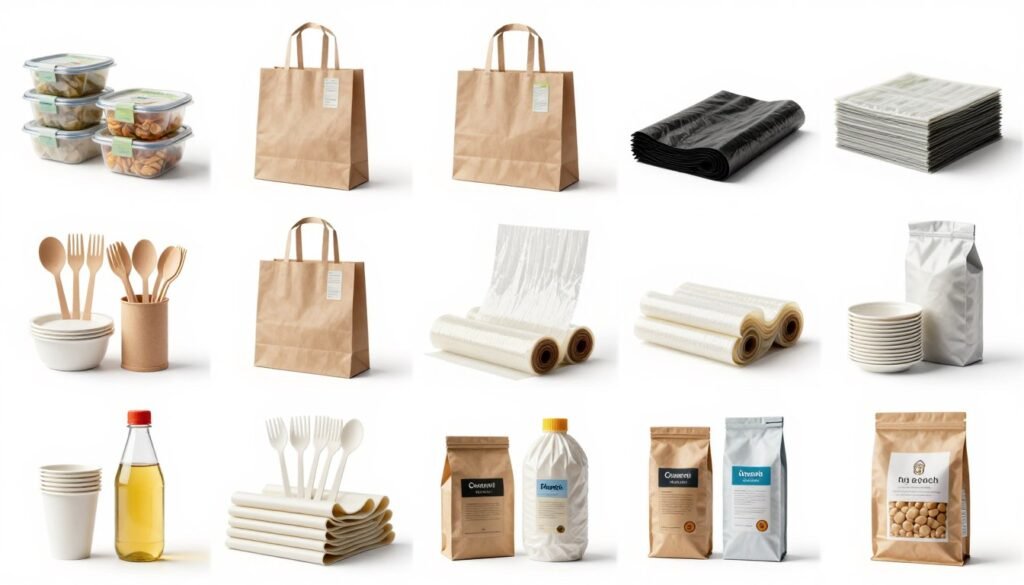
Moving beyond traditional bio-plastic limitations, our modified TPS resins provide the mechanical integrity and processing stability required for high-volume industrial output. Each application is engineered to meet specific regional environmental mandates and export standards.
High-Clarity Packaging & Logistics (Blown Film)
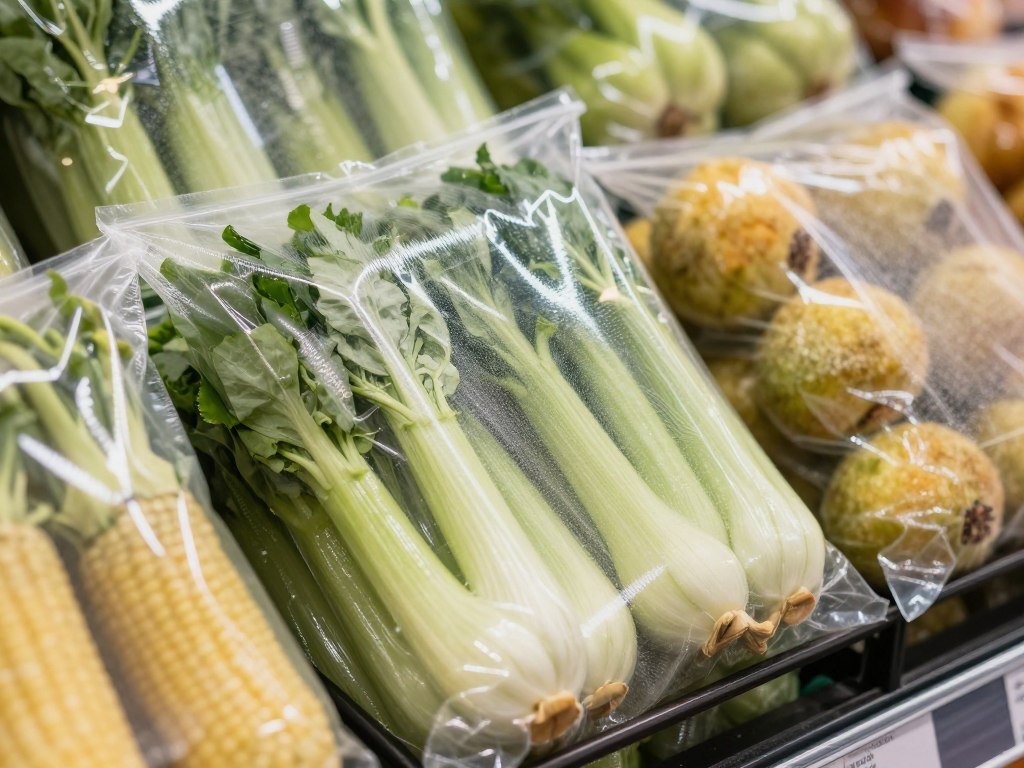
Flexible packaging requires a delicate balance of tear resistance and processability. Unlike standard starch blends that often suffer from excessive gels or brittleness, our film-grade TPS alloys are optimized for stable bubble formation and high melt strength.
- Primary Uses: Express mailers, bubble wraps, and heavy-duty supermarket carrier bags.
- Technical Edge: Achieves high transparency and excellent printability, comparable to conventional LDPE/LLDPE blends.
- The Benefit: Manufacturers can produce 100% compostable bags using existing blown-film towers with minimal torque fluctuations.
Precision Food Service & Hospitality (Injection Molding)
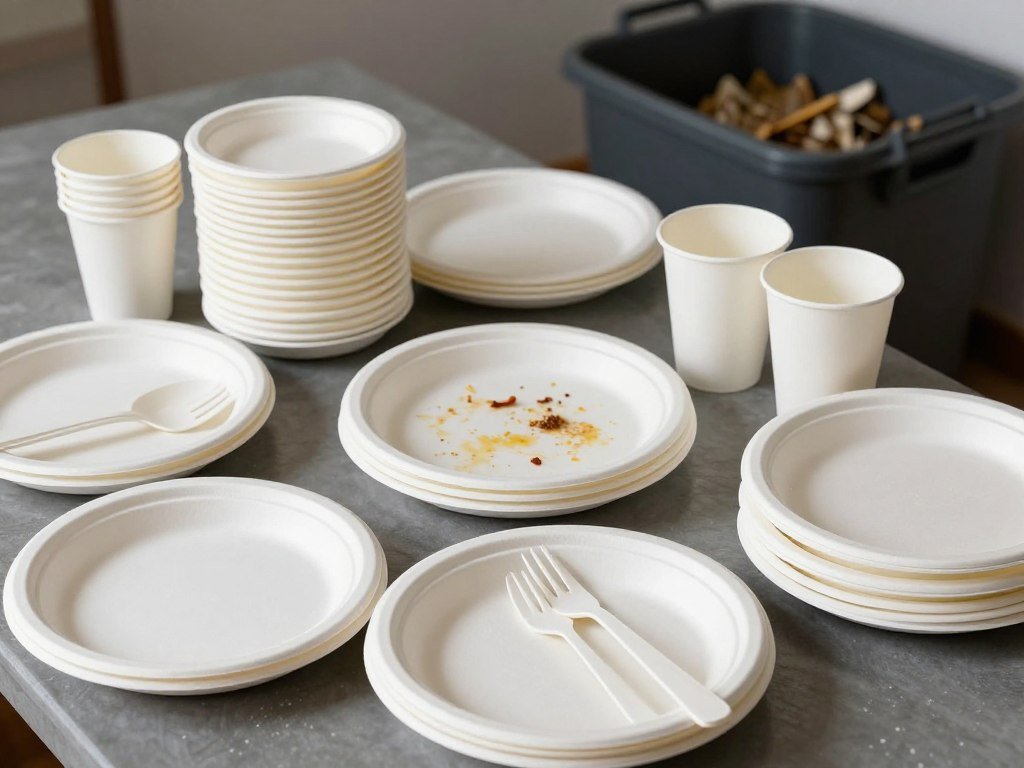
Rigid disposables are the most scrutinized items under global plastic bans. Our injection-molding resins are specially formulated to overcome the low-temperature threshold of native starch, offering enhanced heat distortion temperatures (HDT).
- Primary Uses: Precision-molded cutlery (forks, knives, spoons), high-flow straws, and structural meal containers.
- Technical Edge: Fast crystallization rates lead to shorter cycle times and clean mold release, increasing production efficiency by up to 15% compared to non-modified bioplastics.
- The Benefit: Delivers a premium, “non-plastic” tactile feel that aligns with high-end eco-branding for the hospitality sector.
Smart Agriculture & Soil Health (Mulch Film)
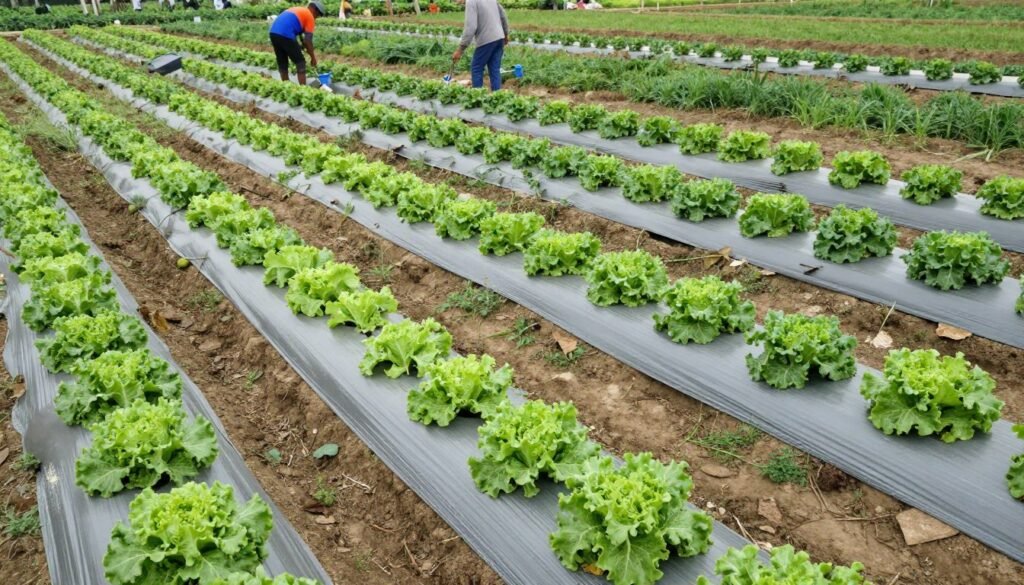
Agricultural efficiency in Southeast Asia relies on managing humidity and labor. Our specialized agricultural TPS resins enable a “set-and-forget” operational model.
- Primary Uses: Biodegradable mulch films and nursery seedling containers.
- Technical Edge: We offer “tuned” biodegradation windows (e.g., 90, 120, or 180 days) to match crop growth cycles. The film maintains mechanical strength during the growing season and mineralizes fully once tilled into the soil.
- The Benefit: Zero recovery labor. Eliminates the traditional $150–$300 per hectare cost associated with manual PE film removal and toxic waste disposal.
Protective Electronics Packaging (Specialized Lining)
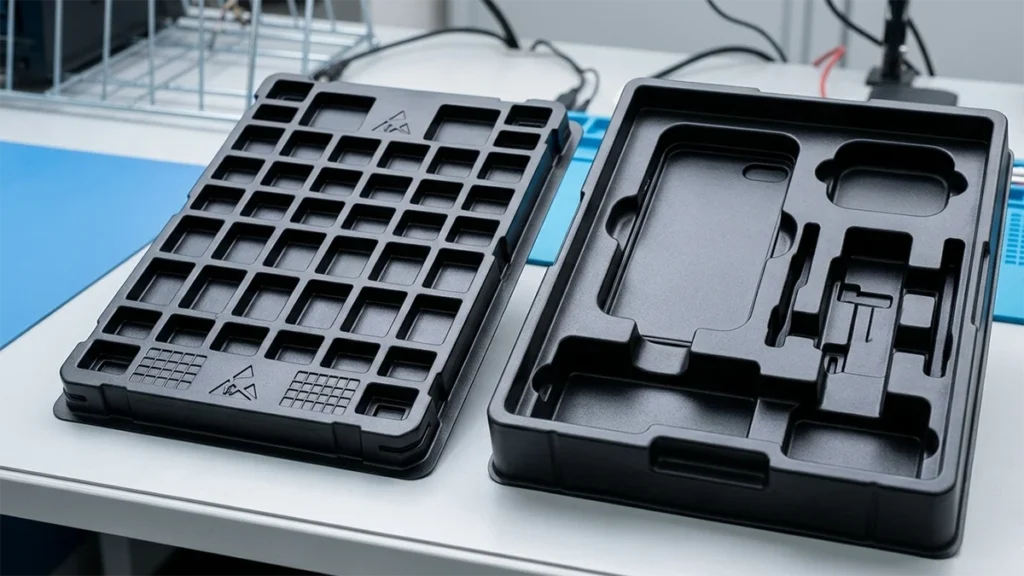
The inherent molecular structure of starch provides a unique advantage for sensitive industrial components.
- Primary Uses: Anti-static component trays, eco-friendly cushioning, and protective liners for consumer electronics.
- Technical Edge: Native anti-static properties ensure a surface resistivity of 10¹⁰ to 10¹² Ω/sq without needing carbon black or chemical additives that might leach into sensitive parts.
- The Benefit: Provides high-value protection for electronics while meeting the “Zero Plastic” requirements of modern ESG-driven supply chains.
Conventional Plastics Optimal Applications
- Long‑life durable goods and structural components
- High barrier, moisture‑sensitive food packaging
- Medical devices and high‑temperature applications
Thermoplastic Starch Optimal Applications
- Single‑use compostable food service items
- Food‑soiled packaging and short shelf‑life food packaging
- Agricultural films and in‑soil applications
- Loose‑fill protective packaging requiring water solubility
Industry Comparison & Selection Guide
| Sector | Core Challenge | Our Modified TPS Solution | Market Compliance |
| Logistics | Puncture & Tear Resistance | High-Molecular Weight Film Grade | GRS / EN 13432 |
| Food Service | Heat Deformation & Odor | High-HDT Injection Molding Grade | FDA / EU Food Contact |
| Agriculture | UV Degradation & Labor | Controlled In-Soil Mineralization | Biodegradable Soil-Safe |
| Electronics | Static Charge & Impact | Natural Anti-Static Formulation | RoHS / REACH |
Ready to pilot TPS in your facility?
We provide more than just raw material; we provide the processing SOPs and technical back-end support to ensure your success. Contact our engineering team today to request a tailored application audit or to order a 25kg trial batch of our industry-leading resin.
Cost and Commercial Viability: Economic Analysis and Market Dynamics
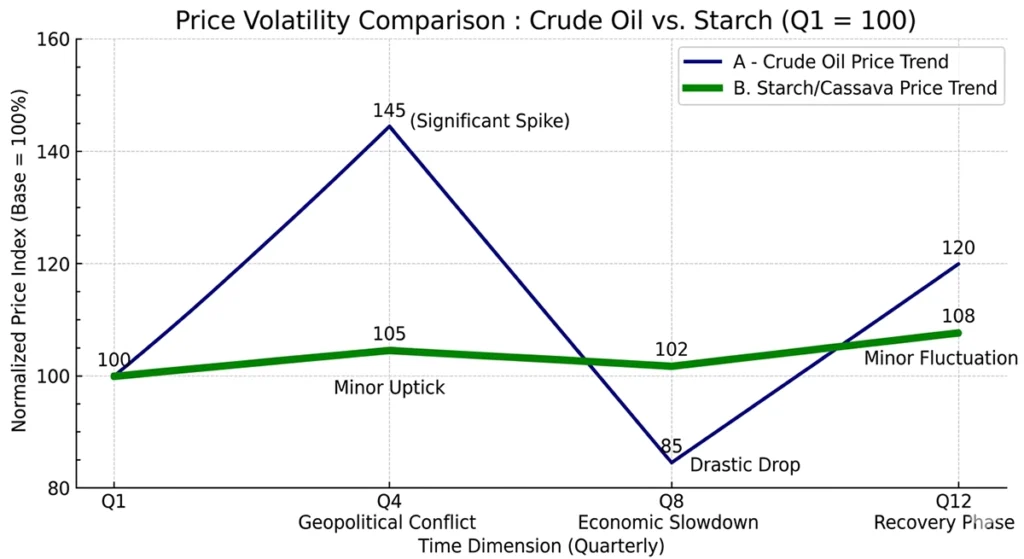
Initial procurement costs for Modified TPS Resins typically carry a premium over commodity petroleum-based plastics. However, a comprehensive Total Cost of Ownership (TCO) analysis reveals that the transition is a strategic investment rather than a simple expense. Forward-thinking manufacturers use TPS to decouple their margins from the volatile crude oil market.
Strategic Value Drivers
- Regulatory Arbitrage: Utilizing TPS-based resins allows brands to bypass the escalating “Plastic Taxes” and carbon border adjustments (CBAM) in major export markets. These avoided penalties often effectively neutralize the raw material price gap.
- Market Penetration: Certified compostable packaging acts as a high-value “passport” to premium retail segments. This green positioning supports higher consumer price points, enabling manufacturers to absorb material premiums while expanding overall margins.
- Supply Chain Resilience: Starch feedstocks—derived from regional crops like cassava—remain significantly more stable than the fossil fuel markets. Scaling production and ongoing refinement in modification technology are currently driving TPS costs down by 10%–15% annually.
Economic Impact Assessment
| Financial Driver | Traditional Polyolefins (PE/PP) | Modified TPS Resins |
| Pricing Stability | Volatile (Energy-linked) | Stable (Agri-linked) |
| Environmental Taxation | Increasing (Direct Liability) | Incentivized (Tax Shield) |
| Brand Equity | Facing Negative Sentiment | High “Green” Premium |
| Disposal Overhead | High (Collection & Tax) | Minimal (Natural Mineralization) |
Conclusion
Thermoplastic Starch (TPS) has evolved beyond being a mere ecological substitute; it represents a fundamental shift toward a circular, regenerative economy. By resolving the performance bottlenecks that once limited bio-based polymers, our modified TPS resins now offer a sophisticated balance between high-speed processability and uncompromising environmental integrity.

The decision to integrate TPS into your manufacturing portfolio is a strategic hedge against the increasing instability of petroleum-linked supply chains. While conventional plastics remain necessary for high-load structural components, the rapid tightening of global environmental mandates—including carbon taxes and single-use bans—makes the transition to starch-based resins an operational necessity for the packaging and agricultural sectors. Our engineered formulations ensure that this transition is “drop-in” ready, requiring no massive capital investment while providing immediate compliance with international standards like EN 13432.
Your 3-Step Transition Roadmap
- Technical Screening: Contact our application specialists for a comprehensive audit of your current material requirements and processing capabilities.
- Performance Validation: Request a 25kg trial batch of our modified TPS resin to verify mechanical strength and cycle times on your existing production lines.
- Strategic Scale-up: Leverage our regional supply chain advantages in Southeast Asia to secure stable, high-volume pricing that protects your margins from global oil volatility.
Regulatory resilience and brand leadership are no longer optional. Embracing modified TPS today ensures your business remains competitive, compliant, and carbon-efficient in the decades to come. Contact our technical desk to request your initial specification sheets and take the first step toward a sustainable industrial future.
FAQs: Common Questions About Thermoplastic Starch and Traditional Plastics
Is thermoplastic better than plastic?
It depends on the lifecycle. Conventional plastics are superior for long-term structural use and high-moisture barriers. However, Modified TPS is the better choice for short-life applications (food packaging, agriculture). It eliminates microplastic risks and provides a direct pathway for brands to meet “Zero Plastic” regulations and avoid carbon taxes.
What are the disadvantages of starch‑based bioplastics?
Native starch is sensitive to moisture and has lower strength. We solve these issues through molecular alloying with biodegradable polyesters (PLA/PBAT). This modification significantly enhances tensile strength and water resistance, ensuring our resins perform reliably on high-speed industrial lines while remaining fully compostable.
What is thermoplastic starch used for?
Applications focusing on the “Biological Cycle.” Major uses include compostable food service items (cutlery, straws), breathable produce bags, and retail carrier bags. In agriculture, TPS mulch films are a high-value solution because they can be tilled directly into the soil, eliminating 100% of the labor costs associated with traditional plastic film recovery.
Why aren't we using bioplastics everywhere?
Cost, scale, and infrastructure. While raw material prices are currently higher than fossil fuels, the Total Cost of Ownership (TCO) is shifting. When you factor in avoided plastic taxes, lower waste disposal fees, and brand premiums, TPS becomes highly competitive. We provide the processing SOPs and financial models to help your factory navigate this transition profitably.
