Plant-Based Renewable Feedstocks
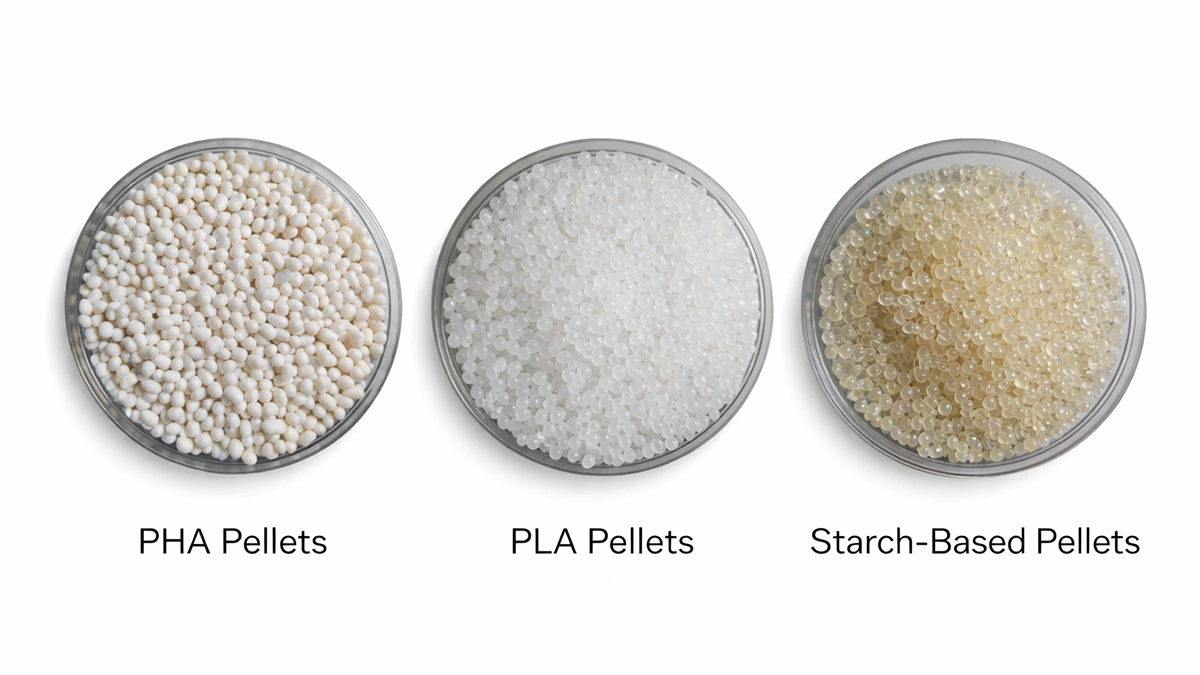
Starch-based PLA begins with annually renewable crops such as corn, sugarcane, and cassava. Starch is extracted from these plants, fermented into lactic acid, and then polymerized into polylactic acid (PLA). Because the raw materials grow each year, PLA relies far less on finite fossil resources than conventional plastics do.
"During the growth of these crops, photosynthesis naturally captures CO₂ from the atmosphere, creating a partial closed-loop cycle."
Renewable
Grown annually
CO₂ Capture
Natural absorption
Biogenic
Lactic acid fermentation
Closed-Loop
Sustainable supply
Industrial Composting Capability
PLA offers a clear advantage at the end of its useful life, breaking down into water, CO₂, and organic matter within controlled environments.
| Feature | PLA (Starch-Based) | Conventional Plastics |
|---|---|---|
| End-of-life | Industrial Compostable | Non-biodegradable |
| Timeframe | 90–180 Days (Industrial) | Centuries |
| By-products | H₂O, CO₂, Organic Matter | Microplastics, Toxins |
| Standards | ASTM D6400, EN 13432 | N/A |
The Condition Requirement: PLA requires controlled industrial conditions (55–60°C, high humidity) to degrade efficiently. In home compost bins, breakdown happens much more slowly.
The Waste Solution: When compared with traditional plastics that remain in the environment for centuries, PLA provides a realistic option for reducing persistent waste.
Significantly Reduced Carbon Footprint
Multiple life-cycle assessment studies show that starch-based PLA has a considerably lower climate impact than most fossil-based plastics. According to data from NatureWorks, replacing conventional plastics with PLA typically reduces the carbon footprint by approximately 73%.
“The result is one of the most effective ways currently available to lower the climate impact of single-use food packaging.”
These reductions come from two main sources: the use of renewable plant feedstocks and the biogenic carbon absorbed during the growth phase.
Deep Dive into Safety & Sustainability
For a deeper look at both the safety aspects (including food-contact compliance) and the full sustainability profile of food-grade PLA, see our detailed technical guide.
Food Grade PLA: The Safe & Sustainable ChoiceGlobal Compliance
Meets tightening restrictions on single-use plastics in the EU and China.
Consumer Preference
Aligns with rising expectations for plant-based and compostable options.
Brand Leadership
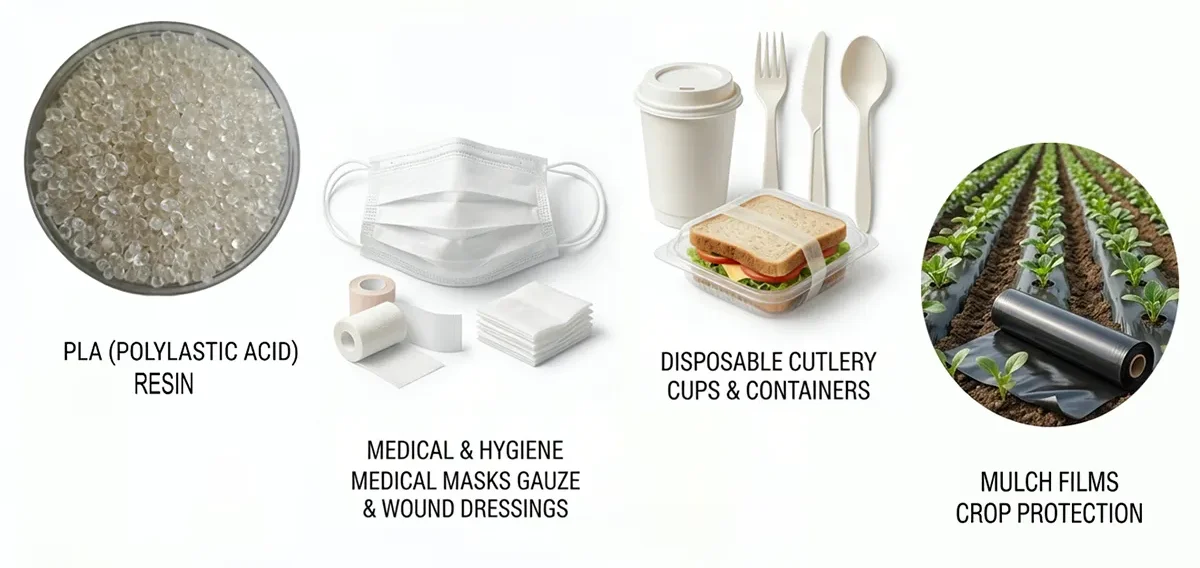
Used by major food-service providers in cups, containers, and films.
Support from Global Policy and Market Trends
Governments around the world continue to tighten restrictions on single-use plastics, while many companies work toward carbon-neutral and net-zero commitments. Starch-based PLA aligns directly with these priorities.
Major food-service providers and consumer brands have already incorporated PLA into cold cups, takeaway containers, trays, and flexible films, demonstrating that the material performs reliably while advancing broader environmental objectives.
Starch-based PLA combines renewable sourcing, industrial compostability, and a substantially reduced carbon footprint. When supported by appropriate waste-management systems, it offers food brands and manufacturers a credible, practical step toward more sustainable packaging.