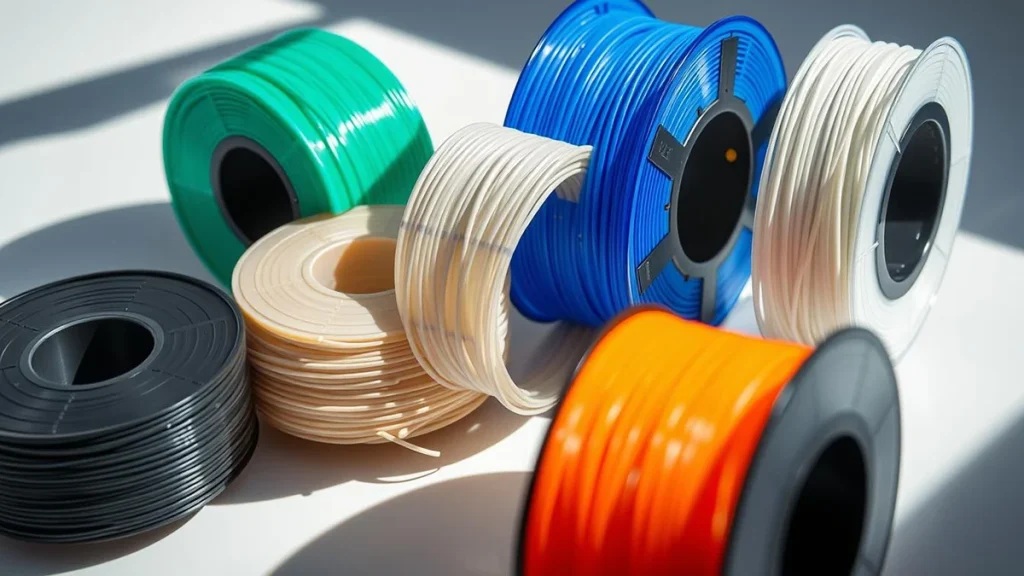
Standing before a vibrant array of filament spools, each promising exceptional results for your 3D printing projects, you may feel overwhelmed by choice. Should you choose PLA or ABS to bring your digital designs to life? This decision is critical, as the filament you select directly impacts the durability, aesthetics, and printability of your creations, as well as the environmental footprint of your work.
The rise of 3D printing has made selecting the right filament a key concern for hobbyists and professionals alike. Your choice influences not only the final product’s quality but also the ease of printing and sustainability. To help you navigate this decision, this guide compares PLA and ABS filaments, highlighting their distinct properties to align with your project’s needs. By exploring their strengths and limitations, we aim to provide clear, tailored guidance to ensure your 3D printing success.
What Are PLA and ABS?
In 3D printing, PLA (Polylactic Acid) and ABS (Acrylonitrile Butadiene Styrene) are two of the most widely used filament materials, each with distinct properties that influence their suitability for different projects.
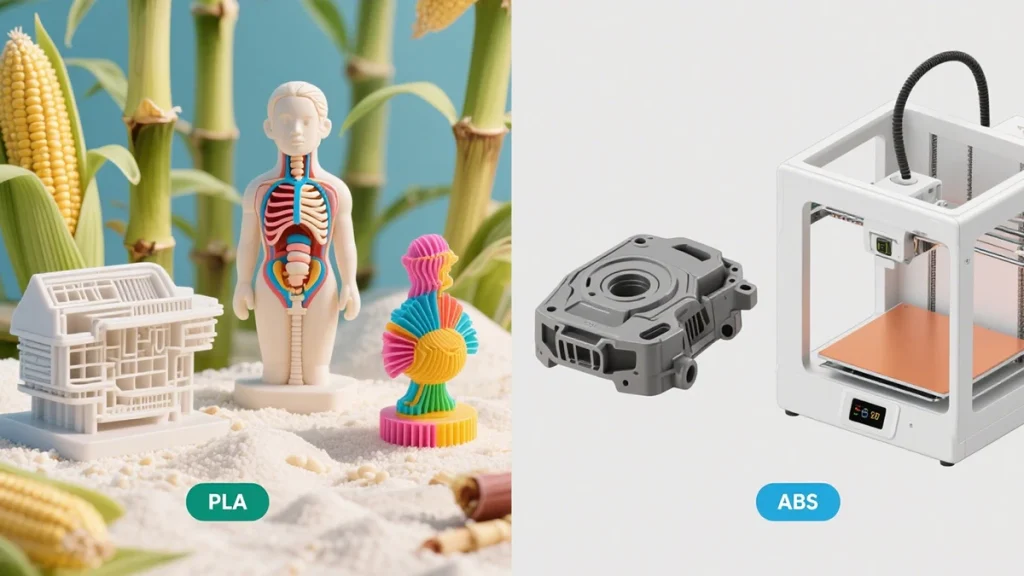
PLA is a biodegradable thermoplastic derived from renewable resources like cornstarch or sugarcane. It’s user-friendly, requiring no heated print bed, and excels at producing detailed prints with vibrant colors. These traits make PLA ideal for prototypes, educational models, and decorative items where sustainability is a priority.
ABS, a petroleum-based thermoplastic, offers superior strength and heat resistance. It’s more challenging to print due to its tendency to warp, often requiring a heated print bed and enclosed printer. ABS is well-suited for durable, functional parts like automotive components or protective casings.
Key Differences Between PLA and ABS
PLA (Polylactic Acid) and ABS (Acrylonitrile Butadiene Styrene) represent a classic trade-off between ease of use and robust mechanical performance. PLA, derived from renewable resources, is prized for its printability and fine detail, while petroleum-based ABS is the go-to for durable, heat-resistant functional parts. The table below outlines their core distinctions.
| Characteristic | PLA (Polylactic Acid) | ABS (Acrylonitrile Butadiene Styrene) |
| Material Source | Derived from renewable resources like cornstarch, making it biodegradable under industrial composting conditions. | A petroleum-based thermoplastic, making it non-biodegradable but highly durable. |
| Mechanical Properties | Higher stiffness and hardness, but more brittle. Good for detailed, low-stress applications. | Superior toughness and impact resistance. Flexible and durable, ideal for functional parts. |
| Temperature Resistance | Low. The material begins to soften and deform at its glass transition temperature (Tg) of approximately 60°C. | High. Withstands higher temperatures, with a glass transition temperature (Tg) of approximately 105°C. |
| Printability & Setup | Prints easily with minimal warping. A heated bed (~50–60°C) is helpful but not always required. | More challenging to print. Prone to warping and cracking, requiring a heated bed (~90–110°C) and an enclosed printer. |
| Fumes & Odor | Emits a minimal, slightly sweet odor during printing, making it suitable for less-ventilated spaces. | Releases potent styrene fumes with a strong plastic odor. Requires good ventilation. |
| Environmental Impact | An eco-friendlier option due to its renewable source and biodegradability in specific facilities. | Has a larger environmental footprint. It is recyclable in some municipal systems, but not biodegradable. |
Use PLA for high-detail prototypes, educational models, and decorative objects where environmental impact is a concern. Turn to ABS for functional, load-bearing parts, protective casings, and components that must endure heat and impact.
Applications of PLA and ABS
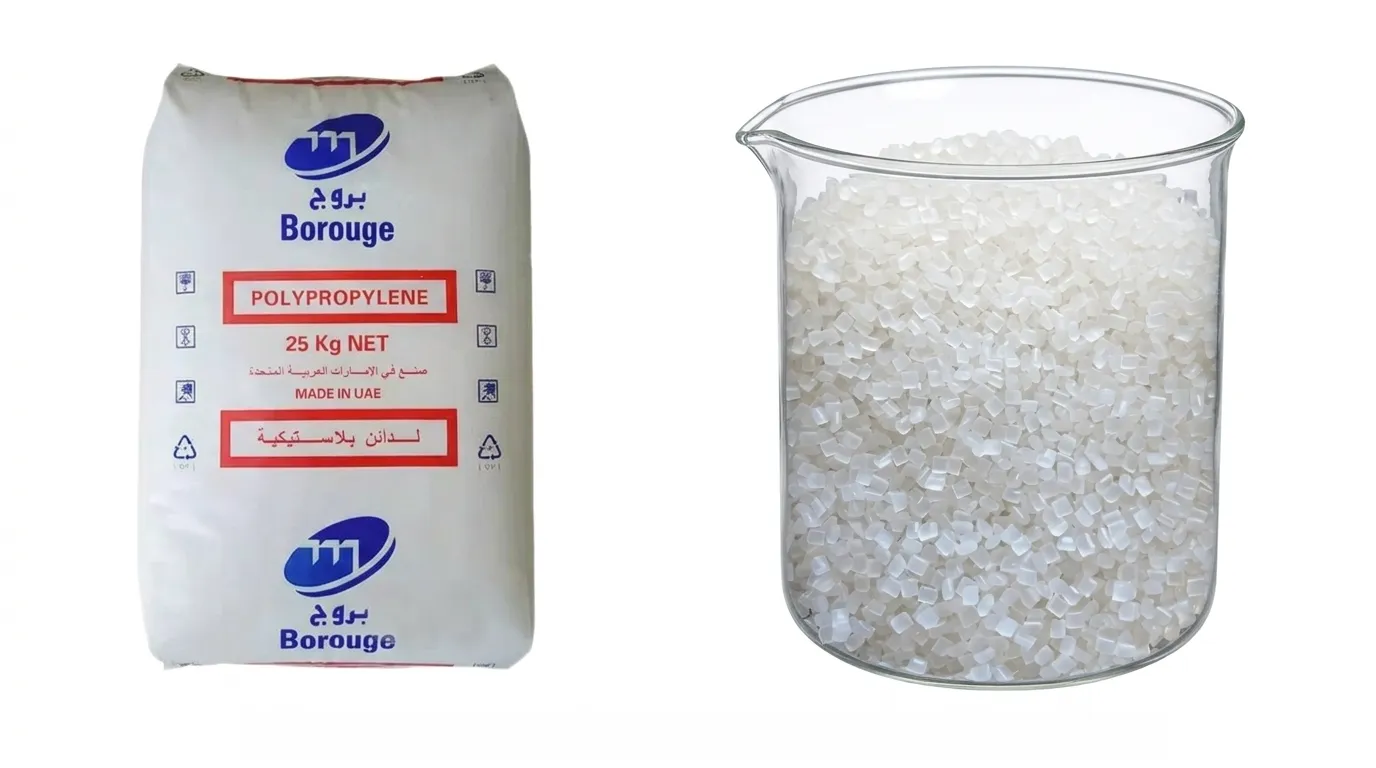
PLA and ABS granules for filament extrusion serve different end‑uses once printed. Choose based on the part’s temperature exposure, mechanical load, and finish requirements.
Each material has strengths that align with specific design goals—PLA prioritizes detail and ease of printing, while ABS focuses on toughness and durability.
Understanding these distinctions helps you match the right filament to the application from the start, reducing print failures and improving part performance.
When to Use PLA:
PLA’s ease of use and fine detail resolution make it the preferred material for:
- Prototypes and Visual Models: Excellent for creating high-detail, non-functional models with a smooth surface finish.
- Educational and Hobbyist Projects: Its low printing requirements and safety make it perfect for schools, homes, and beginners.
- Decorative Items: The wide range of vibrant colors and ease of printing allow for beautiful, intricate creations that won’t be exposed to high stress or heat.
When to Use ABS:
ABS’s robustness and heat resistance make it ideal for parts that need to perform under pressure:
- Functional Parts: Perfect for creating durable, impact-resistant components like gears, tool handles, and enclosures.
- Automotive and Electronics: Its ability to withstand higher temperatures makes it suitable for car interior parts and electronic housings.
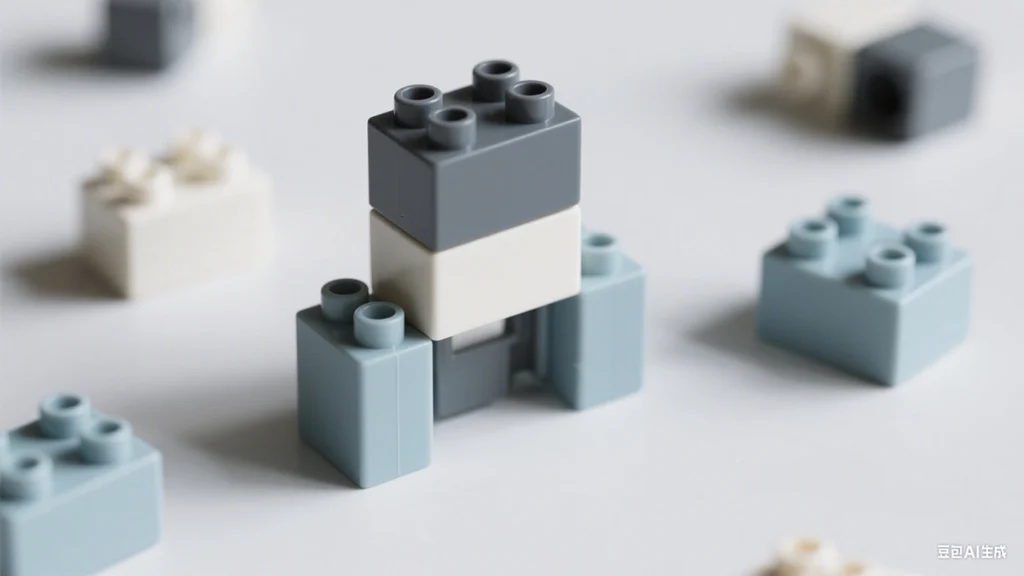
- Consumer Products: Used for items that require longevity and can withstand daily wear and tear, such as toy blocks (like LEGOs) or phone cases.
Practical Considerations for PLA and ABS in 3D Printing
The filament you choose for a 3D printing project directly affects its success. This section offers concise guidance on using PLA or ABS, focusing on printer compatibility, model complexity, and printing environment.
PLA and ABS have distinct properties suited to specific applications. PLA, made from renewable sources like cornstarch, is biodegradable and easy to print, making it perfect for home projects like decorative pieces or low-wear toys. ABS, with superior strength and heat resistance, is better for durable, functional components, such as automotive or mechanical parts. The table below outlines their key differences:
| Feature | PLA | ABS |
|---|---|---|
| Melting Point | 170–220°C | 210–250°C |
| Biodegradability | Biodegradable | Non-biodegradable |
| Strength | Less durable, brittle | Stronger, more flexible |
| Printer Needs | No heated bed required | Heated bed recommended |
| Best For | Decorative, low-stress | Functional, heat-resistant |
Environmental factors matter. PLA’s renewable origins make it eco-friendly, while ABS, derived from fossil fuels, is less sustainable but recyclable with proper facilities. Verify local recycling options before choosing ABS.
Your 3D printer’s capabilities are critical. Some printers handle both filaments effortlessly, while others need specific features, like a heated bed for ABS to prevent warping. Check your printer’s specifications to confirm filament compatibility.
Alternatives to PLA and ABS
Beyond PLA and ABS, advanced 3D printing materials like PETG, Nylon, and TPU offer distinct properties for specialized applications. These filaments address limitations of traditional options, enabling innovative designs and enhanced performance.
- PETG: Combines PLA’s ease of printing with ABS’s strength, offering durability without brittleness. It suits hobbyists and professionals crafting robust parts for functional or decorative use.
- Nylon: Renowned for exceptional strength, flexibility, and impact resistance, Nylon excels in mechanical components like gears or hinges, where durability under stress is critical.
- TPU (Thermoplastic Polyurethane): Highly flexible yet tough, TPU is ideal for wearable devices, automotive parts, or other applications requiring elasticity and resilience.
These materials expand the possibilities of 3D printing, delivering tailored solutions for projects where PLA and ABS fall short.
Ensuring Excellence from Granule to Final Print
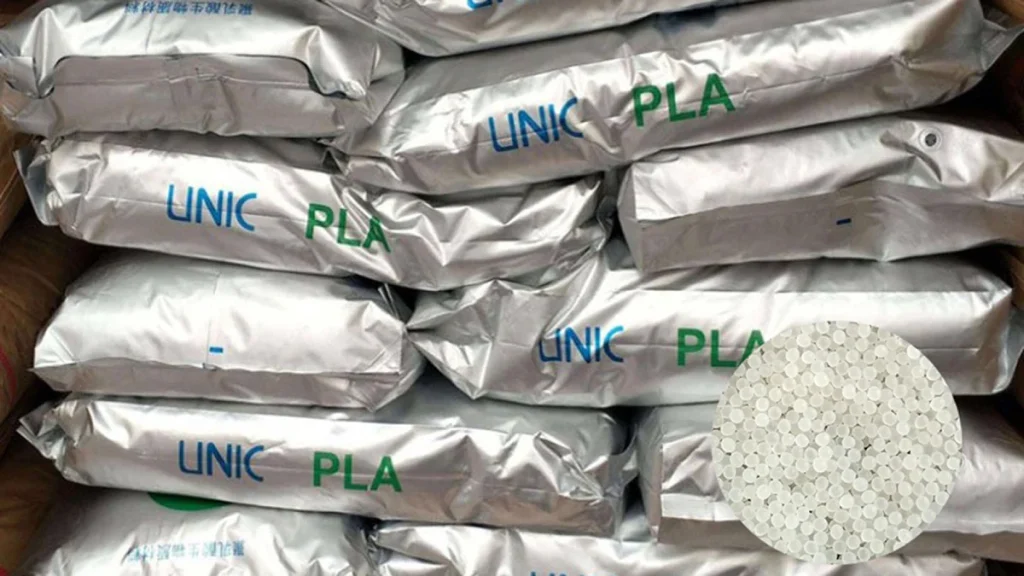
A successful 3D printing outcome hinges on matching the right filament—be it versatile PLA or durable ABS—to your project’s specific demands. Yet, even the best printer cannot overcome a filament made from subpar raw materials. The ultimate quality of any print is directly tied to the consistency and purity of the plastic granules it originates from.
As a trusted distributor, we supply the high-purity PLA and ABS granules that empower manufacturers to produce exceptional filaments and products. Our materials are defined by:
- Consistent Melt Flow: Ensuring stable processing during extrusion and molding.
- Low Impurity Levels: Guaranteeing a flawless finish and reliable performance.
- Tight Dimensional Control: Reducing waste and improving production efficiency.
We cater to a wide range of industries, from 3D printing filament manufacturers to producers of automotive parts, electronics, and consumer goods. Whether your focus is on PLA’s eco-friendly performance or ABS’s robust heat stability and impact resistance, our granules provide the foundation for excellence.
For filament manufacturers, industrial producers, product designers, or OEMs, partnering with us means achieving consistent quality and a competitive edge.
📩 Contact us at jerry@salesplastics.com or +86 18657312116 for expert advice, competitive quotations, or tailored solutions to enhance your manufacturing capabilities.
Frequently Asked Questions (FAQ)
A:Yes. ABS is generally stronger and more impact-resistant than PLA. It can also withstand higher temperatures (up to ~100 °C) without deforming, making it suitable for functional and durable parts. However, ABS is more challenging to print and typically requires a heated bed and an enclosed build chamber to reduce warping.
A:Yes, if your printer supports both materials. Most modern FDM printers can print with both PLA and ABS, but you must:Adjust print settings (e.g., nozzle temperature: PLA ~180–220 °C, ABS ~220–250 °C, and bed temperature);Use proper bed adhesion methods (e.g., glue stick, PEI sheets);Thoroughly clean the print head when switching filaments to avoid clogs or contamination.
A:Yes. ABS can be recycled through specialized recycling facilities. These centers can convert ABS waste into new filament or molded products, reducing landfill waste. If possible, check if your local recycler accepts ABS, as home recycling of ABS is generally not recommended without proper equipment.
A:PLA: Easier for beginners. Its lower glass transition temperature makes sanding, gluing, and painting simpler.
ABS: Can be finished with acetone vapor smoothing for a glossy, professional surface. It is also more heat-resistant after post-processing, but working with acetone requires proper ventilation and safety precautions.