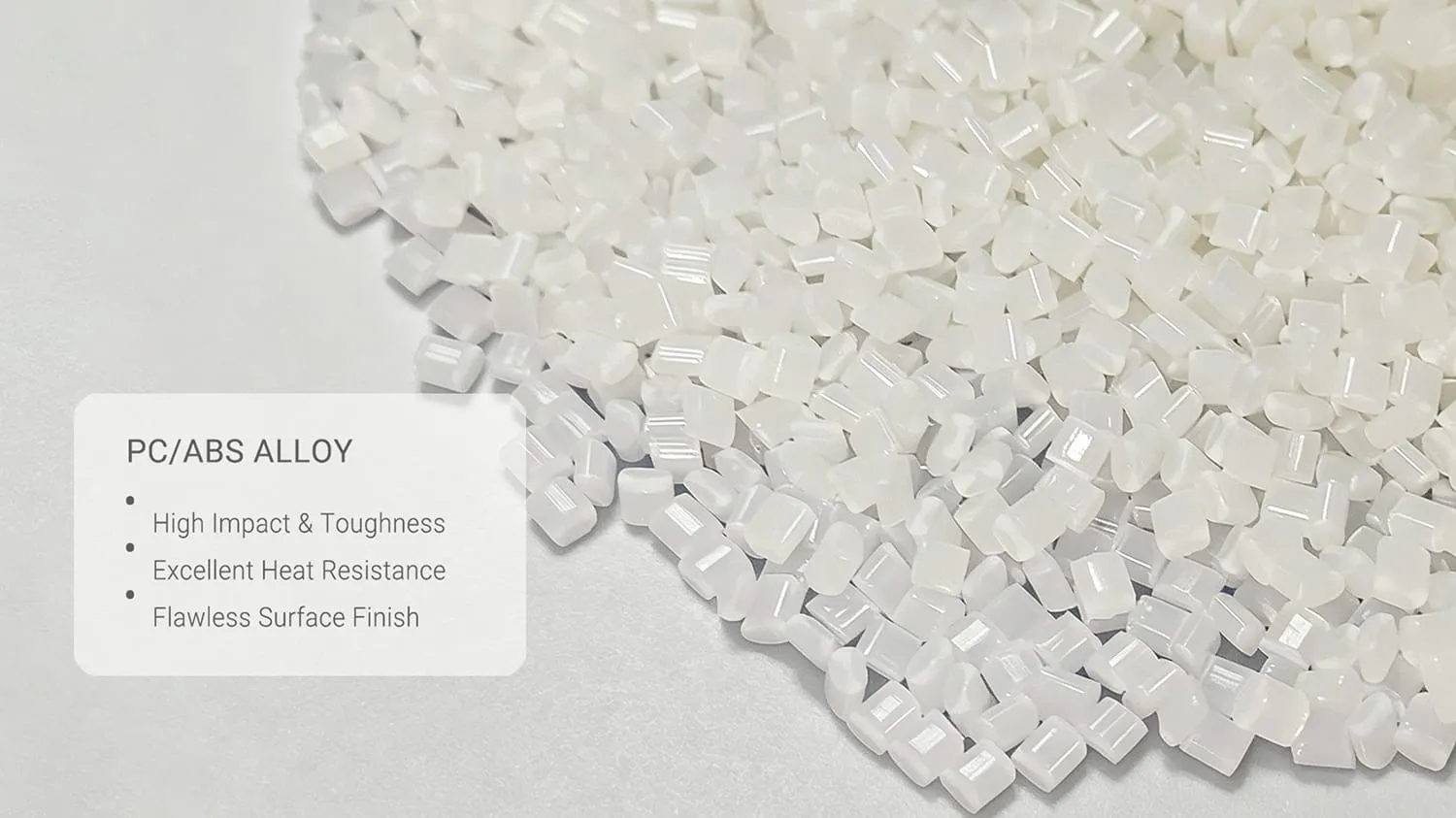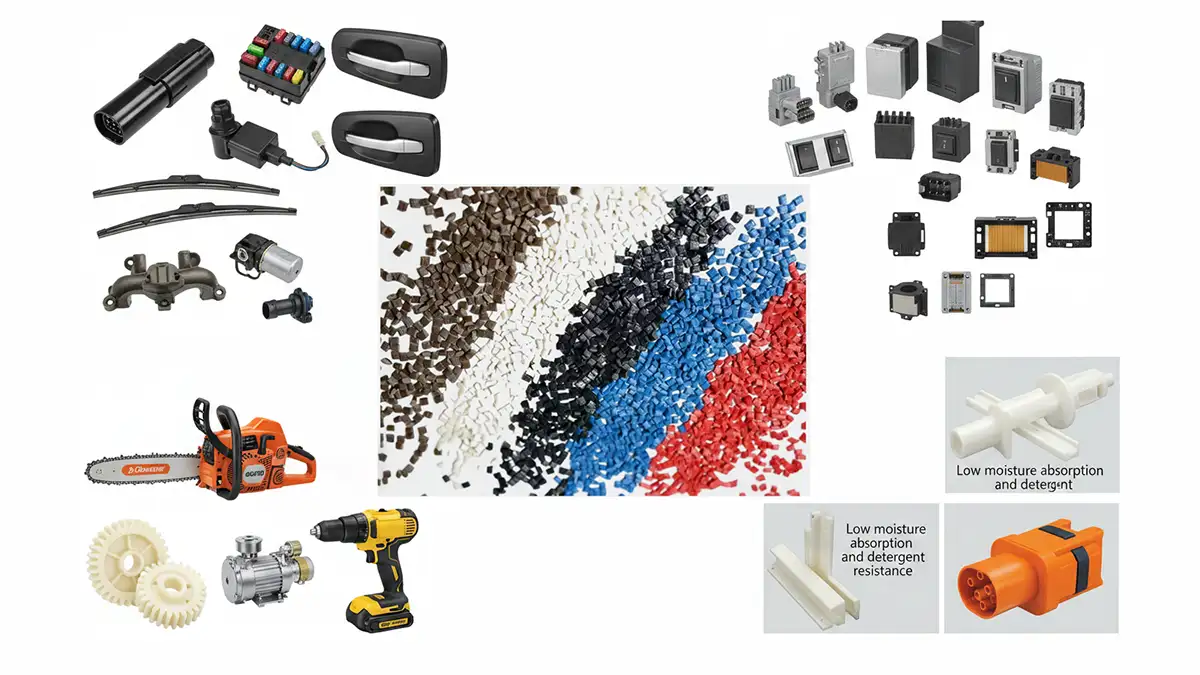
When it comes to demanding industrial applications that require absolute dimensional stability and long-term durability, Polybutylene Terephthalate (PBT) stands out as one of the most reliable semi-crystalline engineering thermoplastics available today. Celebrated for its exceptional balance of properties, PBT is highly favored across the automotive, electrical, and electronics sectors due to its outstanding electrical insulation, superior chemical resistance, and robust mechanical strength.
To support global manufacturers in optimizing production efficiency, our specialized polymer portfolio provides both high-purity virgin PBT resins and customized, high-performance modified compounds engineered for precise mechanical and thermal requirements.
Table of Contents
what is PBT Material?
Polybutylene Terephthalate, widely known as PBT, represents a core cornerstone of the thermoplastic polyester family, sharing its chemical lineage with PET (Polyethylene Terephthalate). Synthesized through the polycondensation of terephthalic acid or dimethyl terephthalate with 1,4-butanediol, this high-performance polymer delivers the rugged performance necessary for industrial environments where commodity plastics fail.
To truly understand what PBT brings to your production line, we must look past the chemical nomenclature and focus on its underlying molecular behavior.
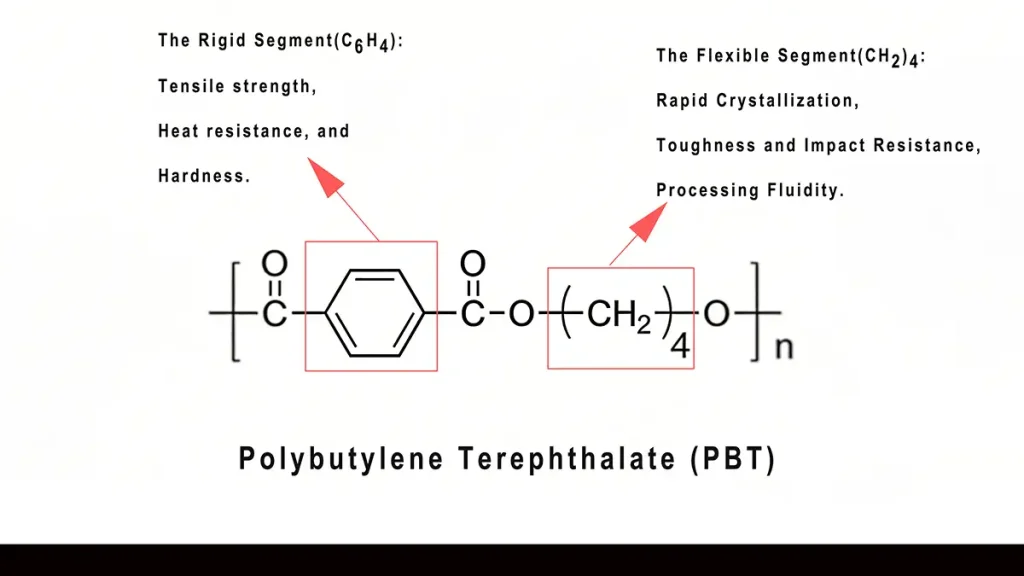
Molecular structure of Polybutylene Terephthalate (PBT)
Molecular Alignment & Processing Advantages
Molecular alignment drives the underlying performance of PBT. The material possesses a semi-crystalline structure characterized by highly ordered molecular chains that crystallize rapidly during cooling.
For injection molders and OEM manufacturers, this rapid crystallization rate serves as a primary processing advantage:
Accelerated Solidification
Molten resin solidifies almost instantly within the tool.
Shorter molding cycle times directly translate to higher daily production output.
Ensures exceptional dimensional repeatability across high-volume manufacturing runs.
Key Properties of PBT Plastic
Selecting the ideal engineering thermoplastic requires a precise balance of mechanical integrity, thermal endurance, and environmental stability. Polybutylene Terephthalate (PBT) delivers this equilibrium, maintaining its performance metrics even under severe operational stresses.
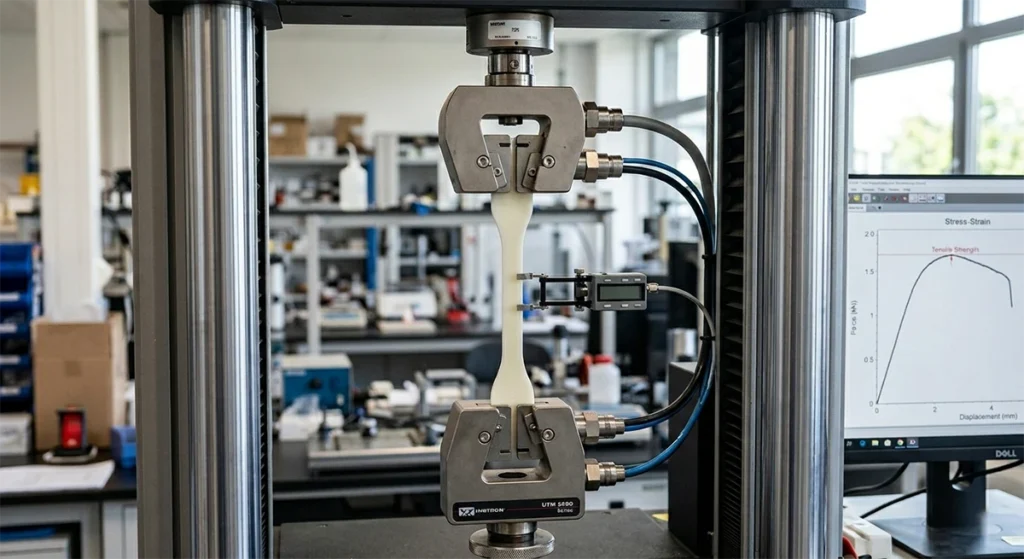
Mechanical Strength & Reinforcement
Unreinforced PBT provides robust toughness for standard components. However, its true engineering value shines through its compatibility with glass fiber reinforcement, which drastically elevates its load-bearing capacity.
- Tensile Strength (Unreinforced): 50–60 MPa
- Tensile Strength (30% GF): > 130 MPa
- Flexural Modulus: 2,300–2,500 MPa
Metal Replacement Performance
This dramatic strength upgrade enables thin-walled, high-stress structural parts to replace die-cast metals in automotive under-hood brackets, significantly reducing vehicle weight.
Thermal & Hydrophobic Stability
Unlike polyamides (Nylon) which suffer from moisture-induced degradation and swelling, PBT excels in hot, humid environments due to its hydrophobic nature.
- Continuous Use Temp: 120°C–150°C
- Moisture Absorption Rate: < 0.08% (Saturation)
Hydrophobic Reliability
With near-zero moisture absorption, molded components retain strict dimensions and mechanical reliability under prolonged water immersion, making it the benchmark for washing machine valves.
Chemical Resistance Profile
PBT possesses an exceptionally robust crystalline matrix, rendering it virtually inert to a wide spectrum of aggressive industrial chemicals and automotive fluids.
| Chemical Category | Resistance Rating | Typical Application Matrix |
| Aliphatic Hydrocarbons | EXCELLENT | Fuel system connectors & caps |
| Oils & Brake Fluids | EXCELLENT | Under-hood automotive sensors |
| Weak Acids & Bases | GOOD | Industrial chemical pump linings |
| Strong Acids & Bases | POOR | Avoid direct chemical exposure / Not recommended |
Electrical Insulation & Precision
For high-voltage electrical architectures and automated assembly lines, PBT serves as a high-precision, reliable insulating barrier:
Zero-Defect Automated Assembly: High CTI ratings prevent short circuits in heavy-duty electrical connectors and ignition bobbins, while low, isotropic shrinkage allows tool designers to hold tight tolerances for multi-pin micro-connectors, guaranteeing perfect mating on high-speed assembly lines.
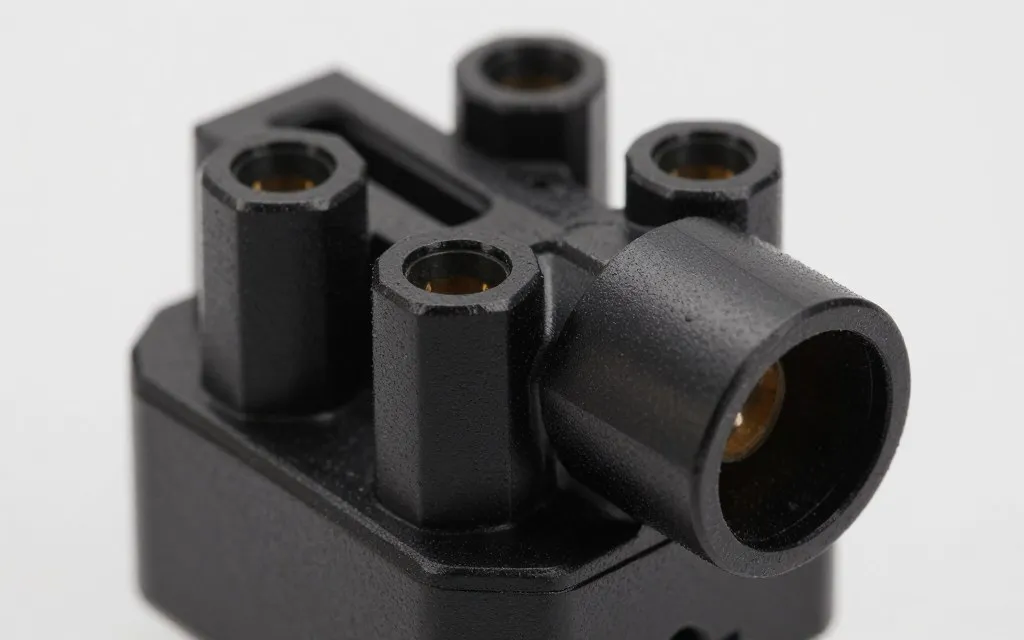
Common Modified PBT Grades & Selection Criteria
Neat polybutylene terephthalate rarely satisfies the rigid dimensional and thermal fatigue thresholds required by modern Tier-1 automotive and electronic OEMs. Compounding base PBT resin with specialized glass vectors, elastomeric impact modifiers, and non-halogenated flame retardants transforms this base polyester into a high-modulus engineering matrix capable of replacing die-cast metals.
Glass Fiber Reinforced Grades (15%–30% GF)
Glass fiber incorporation chemically rigidifies the PBT backbone, driving a steep increase in flexural modulus and tensile strength while suppressing thermodynamic deformation. Formulating 30% glass filled PBT tames predictable differential mold shrinkage, guaranteeing that intricate injection-molded toolings retain strict mechanical tolerances under continuous cyclic load.
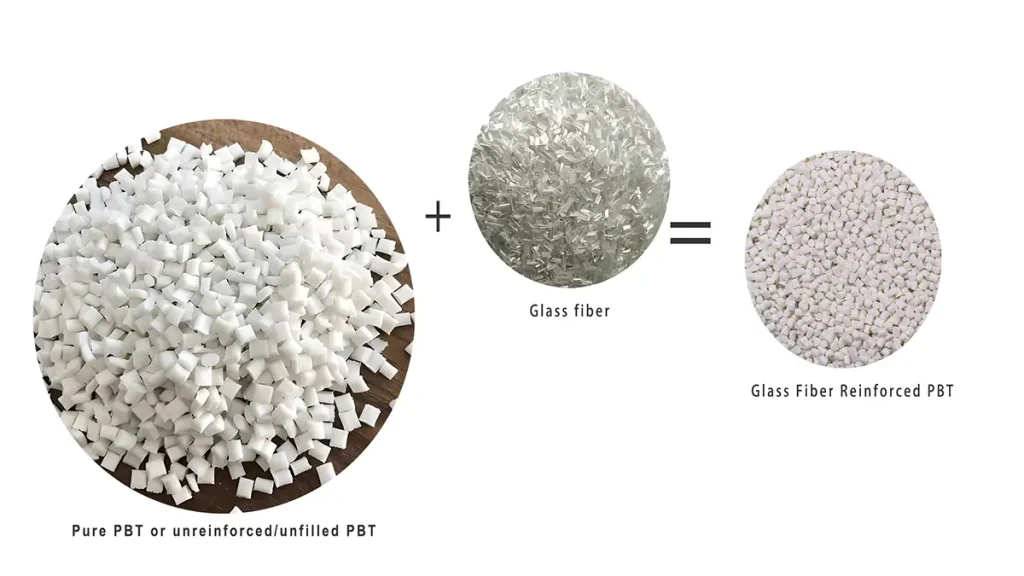
How Glass Fiber Reinforced PBT is Made: Pure PBT + Glass Fibers
| Formulation | Tensile Strength | Flexural Modulus | Heat Deflection Temp (°C) 1.8 MPa | Strategic Applications |
| PBT GF10% | 85-95 MPa | 3.5-4.0 GPa | 185-195°C | Precision precision gears |
| PBT GF15% | 100-110 MPa | 4.5-5.0 GPa | 195-205°C | Electronic connector shells |
| PBT GF30% | 130-150 MPa | 9.0-11.0 GPa | 210-220°C | Automotive structural parts |
| PBT GF50% | 160-180 MPa | 14.0-16.0 GPa | 220-230°C | High-stress metal replacement |
👉 Technical Deep Dive: For comprehensive property datasheets, mechanical load curves, and structural design protocols specific to the 30% reinforced matrix, review our technical profile: A Comprehensive Guide to PBT-GF30: Properties, Applications, and More.
Flame Retardant PBT (UL94 V-0 Certified)
High-voltage electrical architectures mandate absolute combustion suppression to prevent tracking failure and localized ignition. Advanced flame retardant PBT V0 grades disrupt the polymer fire cycle, establishing an instant char barrier that stops flaming drips during abnormal electrical overloads without disrupting the material’s baseline dielectric strength.
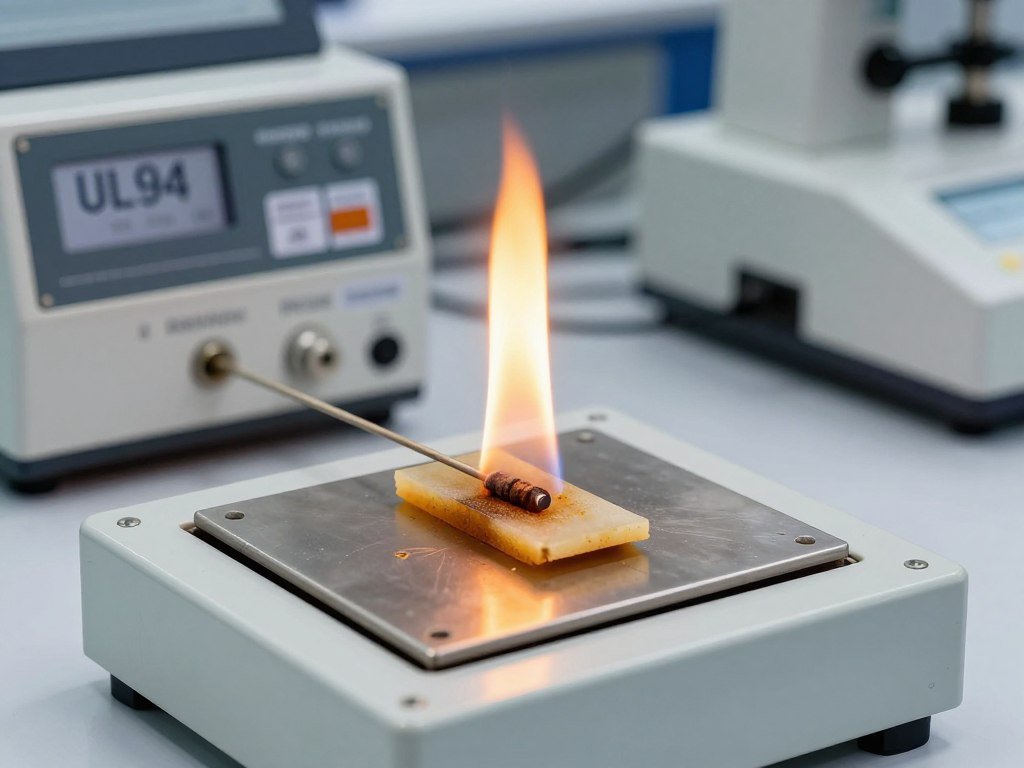
Flame retardant PBT resin undergoing UL94 vertical burn test to demonstrate fire safety properties
Advantages of FR PBT Grades
- Self-extinguishing properties
- Reduced smoke generation
- Compliance with international safety standards
- Available with various UL ratings (V-0, V-2, HB)
- Can be combined with glass fiber reinforcement
Considerations for FR PBT Grades
- Slightly reduced mechanical properties
- Higher cost than non-FR grades
- Potential environmental concerns with halogenated FR systems
- May affect colorability and surface appearance
- Processing window may be narrower
Impact Modified & Toughened Grades
Unmodified polyesters present acute notch sensitivity when exposed to rapid kinetic impacts or freezing environments. Integrating high-performance elastomeric secondary phases into the crystalline matrix mitigates localized stress concentration, allowing thin-walled molded components to absorb dynamic energy without catastrophic cleavage.
Target Sectors: Heavy-duty power tool casings, snap-fit industrial fasteners, and winterized automotive exterior trim.
UV & Weather Resistant Formulations
Solar radiation breaks down unprotected polymer bonds, triggering surface chalking, brittleness, and severe aesthetic yellowing. Infusing premium hindered amine light stabilizers (HALS) or targeted carbon black matrices halts photo-oxidative degradation, locking in the resin’s original tensile profile during multi-year outdoor exposure.
Target Sectors: Outdoor photovoltaic (solar) junction boxes, EV charging gun holsters, and telecommunication hardware.
Not Sure Which PBT Grade Meets Your Specifications?
Our engineering team provides detailed grade selection analysis based on your application requirements. We help you balance mechanical properties, processing parameters, and cost considerations.
Major Applications of PBT Material
Selecting the optimal polybutylene terephthalate grade bridges the gap between laboratory datasheets and real-world assembly performance. Industrial sectors mandate distinct compliance and physical limits, positioning modified PBT granules as the preferred replacement for zinc die-casts and hygroscopic nylons in hostile working thermal environments.
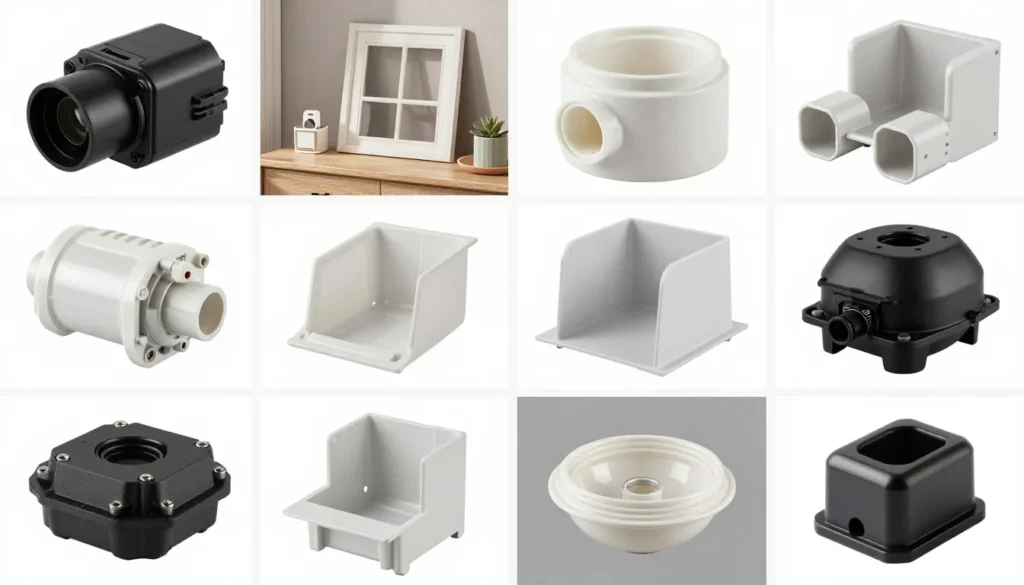
Critical Interconnects
Tier-1 automotive component manufacturing relies heavily on 30% glass fiber reinforced PBT to sustain uninterrupted electrical signaling across high-vibration engine compartments. This specific compounding matrix maintains absolute continuous dimensional stability against unrelenting thermal cycles fluctuating radically between -40°C and 150°C.
Add Your Heading Text Here
Powertrain & Lighting
Exterior Architecture
Chemical resistance profiles ensure these critical sub-assemblies withstand aggressive exposure to glycol coolants, synthetic engine oils, hydraulic brake fluids, and raw fuel vapor. Sourcing our premium automotive connectors material portfolio eliminates micro-cracking risks during long-term field deployment.
High-Voltage Electrical & Electronic Infrastructure
Power grid components and high-density computing architectures require absolute dielectric isolation combined with structural self-extinguishing behavior. The unique polymer matrix ensures that even when deployed in high-humidity factory floors or marine control boxes, the component limits moisture uptake, preventing dielectric breakdown or tracking failure.
- Power Distribution Grids: Heavy-duty circuit breakers, secure fuse holders, industrial junction boxes, and terminal rails requiring precise electronic housing plastic.
- Inductive Components: Fine-wire coil bobbins, automated relay housings, transformer casings, and strain-relief cable glands.
- High-Volume Consumer Electronics: Rigid power adapters, fast-charger enclosures, high-retention USB-C connectors, and insulated drone battery cases.
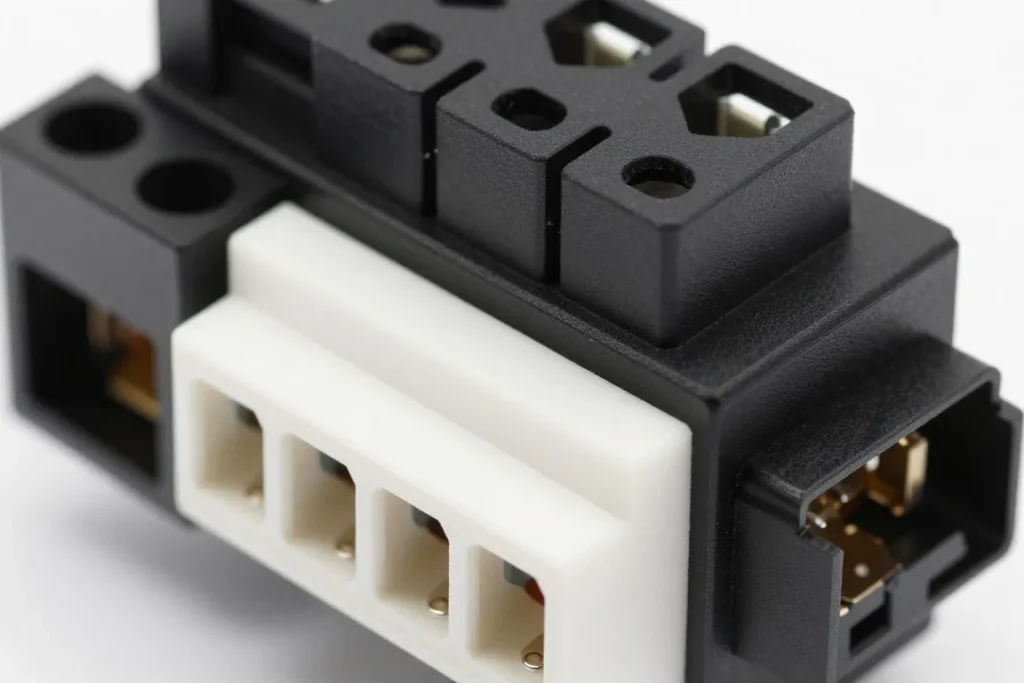
Compliance paths are simplified by utilizing our tailored flame retardant PBT V0 resins, meeting strict global RoHS, REACH, and WEEE directives smoothly.
Consumer Appliance Engineering
High-end small domestic appliances demand materials that balance premium surface aesthetics with severe hydrolytic stability. Internal brewing mechanisms, continuous steam channels, and structural heating element supports in commercial coffee makers, garment irons, and thermal kettles utilize modified PBT to prevent structural warpage during repeated boiling phases.
Food-Contact Regulation Compliance: Strict safety mandates (FDA and European Framework Regulation EC 1935/2004) are readily met by our specialized virgin resin grades. These compounds provide long-term resistance against lipid-based food oils, beverage staining, and organic odor absorption, preserving both product hygiene and mechanical load-bearing capacity.
Heavy-Duty Industrial Fluid Handling
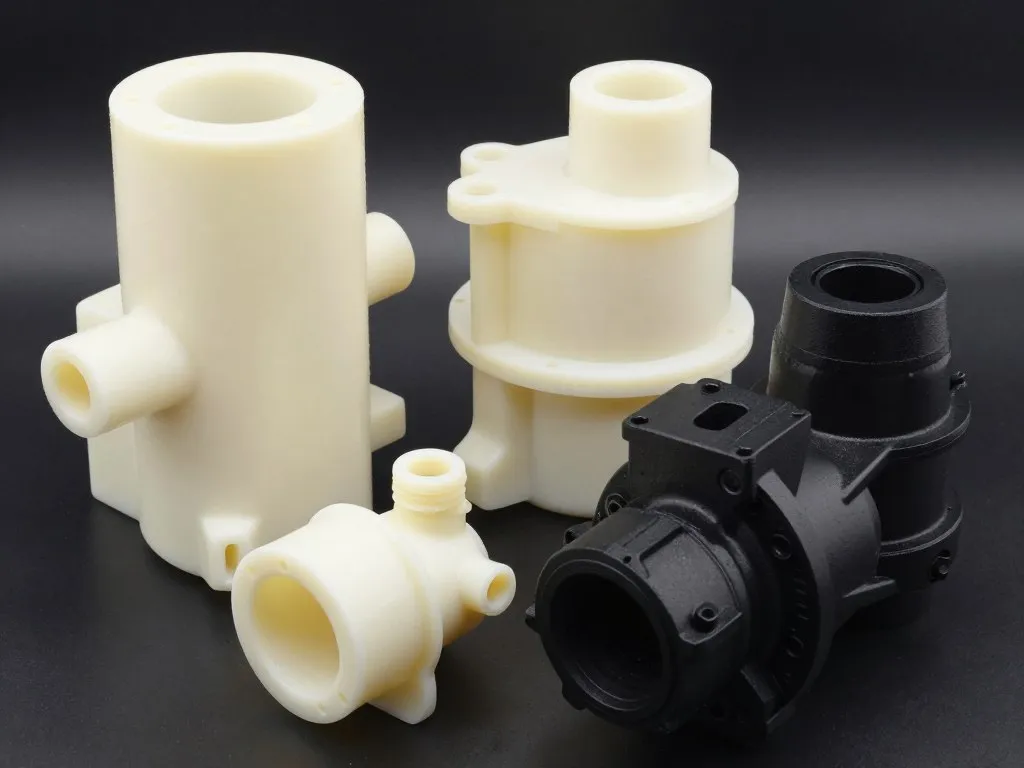
Pumping stations, pneumatic flow paths, and automated fluid circuits leverage the structural toughness of glass filled polyesters to manage aggressive process fluids. Molded impellers, high-pressure valve bodies, and chemical metering assemblies operate reliably without experiencing the localized swelling or tensile loss common in standard polyamides.
Processing technicians benefit from the clean, flash-free machining and excellent rheology of our PBT resin inventory. The molded parts smoothly accept automated ultrasonic welding, metal press-fit inserts, and high-torque thread-forming fasteners without generating micro-fractures around the fastening boss.
PBT vs Competitor Plastics (Material Selection Guide)
Navigating thermoplastic selection requires balancing raw material economies against long-term mechanical reliability. While polybutylene terephthalate stands as a benchmark engineering polyester, evaluating its performance limits against competing polymers ensures your conversion process minimizes both part failure and tooling retrofits.
💡 Engineer’s Note: Selecting the right polymer involves balancing cost and mechanical limits. For a complete, side-by-side technical matrix of polyesters, amides, and polyacetals, explore our comprehensive guide: Comparison of PBT with Other Engineering Plastics.
Quick Selection Reference: Cross-Polymer Benchmark
| Engineering Vector | PBT Resin Portfolio | PA66 (Nylon) | POM (Polyacetal) | PC (Polycarbonate) |
|---|---|---|---|---|
| Moisture Stability | ★ Absolute (<0.08%) | Poor (Swells up to 3.5%) | Excellent (<0.2%) | Excellent (<0.15%) |
| Chemical / Fuel Defense | ★ High (Semi-Cryst.) | Good (Attacked by Acids) | Vulnerable to Strong Acids | Severe ESC Risk (Solvents) |
| FR Compounding Affinity | ★ Seamless (Up to V-0) | Moderate (FR Grades) | Restrictive (Outgassing) | Excellent (Stable) |
| Notch Shock Resistance | Good (Alloys Available) | Excellent (Dry-Impact) | Excellent (High Yield) | Outstanding (Amorphous) |
| Molding Cycle Efficiency | ★ Rapid Crystallization | Standard Window | High Mold Temp Needed | Slow Cycle (High Viscosity) |
Distributor Procurement Advantage:
Facing a selection bottleneck where no single polymer fits? Our supply desk specializes in custom co-polymer modification, glass fiber dosing, and performance alloying (e.g., PBT/PC) to meet customized component blueprints.
PBT vs PA66 (Polyamide / Nylon)
- The Engineering Conflict: Polyamides deliver exceptional instantaneous kinetic impact energy absorption and weld-line strength. However, the aliphatic amide linkages render PA66 highly hygroscopic, leading to dimensional swelling and severe attenuation of dielectric performance upon environmental moisture equilibrium.
- The PBT Advantage: PBT limits moisture absorption to a negligible <0.08% at equilibrium, whereas standard PA66 absorbs 2.5%–3.5%. Where nylon components warp and experience tensile drop-offs in high-humidity environments, PBT maintains rigid structural tolerances and absolute volume resistivity, making it the premier choice for high-precision multi-cavity automotive connectors.
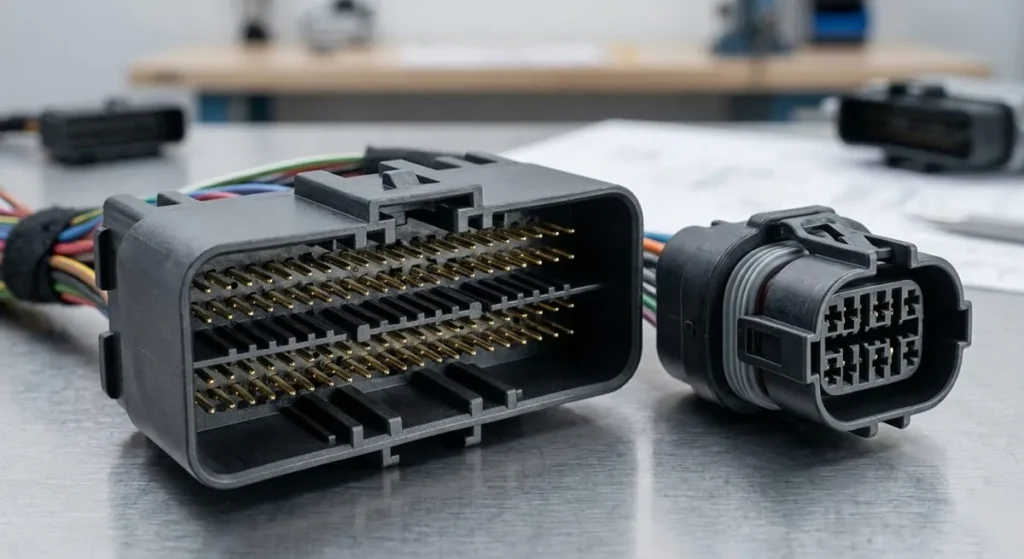
| Property / Specification | PBT Resin | Polyamide 66 |
|---|---|---|
| Moisture Absorption (%) | <0.08% | 2.5%–3.5% |
| Dimensional Tolerance | Excellent | Moderate to Poor |
| Dielectric Strength (kV/mm) | Excellent | Degrades in Humidity |
🔗 Sourcing Dilemma? For a deeper molecular matrix and processing dynamic comparison, read our dedicated PBT vs PA66 Deep-Dive Selection Guide.
PBT vs POM (Polyacetal / Polyoxymethylene)
- The Engineering Conflict: POM excels in high-load sliding tribology, offering an exceptionally low coefficient of friction and superior fatigue resistance for precision gear clusters. However, its homopolymer and copolymer backbones are acutely vulnerable to strong acidic media, oxidative degradation, and severe mold outgassing.
- The PBT Advantage: PBT delivers superior chemical resilience when exposed to aggressive automotive fuels, industrial solvents, and specialized cleaning agents. Furthermore, for electrical housings, PBT features excellent flame-retardant compounding affinity (achieving UL94 V-0 safely via additives), whereas POM releases hazardous formaldehyde gas when exposed to open flame and cannot be easily flame-retarded.
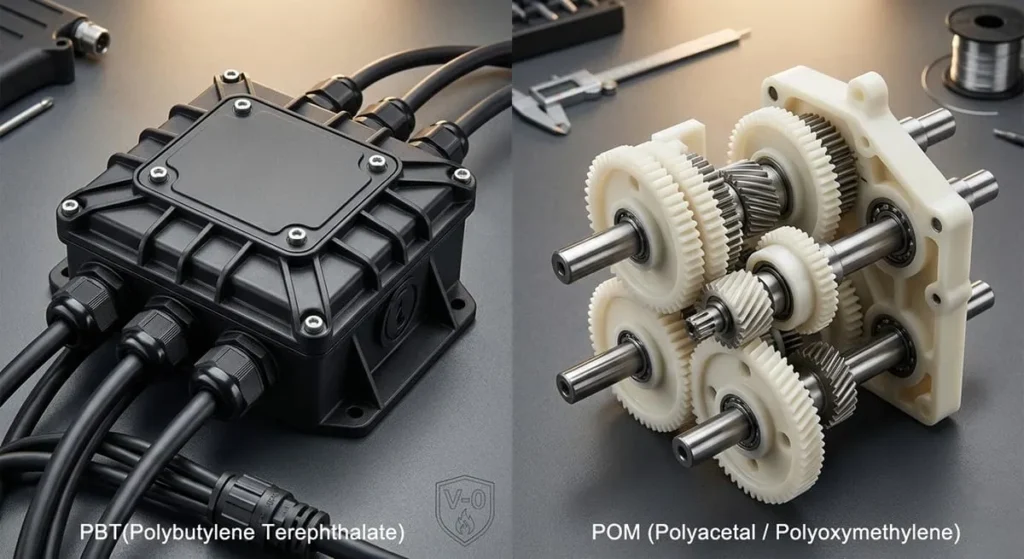
Material Selection Matrix
Choose Our PBT Resins When:
- High-voltage insulation is mandated
- Exposure to chemical fuels occurs
- UL94 V-0 flame retardancy is required
- Low-friction tribology is required
- High-load gears are specified
PBT vs PC (Polycarbonate)
- The Engineering Conflict: Polycarbonate is an amorphous titan regarding Izod impact toughness and optical transparency, surviving severe mechanical shock profiles that would shatter standard unreinforced polyesters.
- The PBT Advantage: Polycarbonate suffers from acute environmental stress cracking (ESC) when exposed to standard industrial greases, oils, and automotive fluids. PBT’s semi-crystalline framework delivers robust chemical barrier defense, preventing chemical stress-whitening and macro-cleavage.
For applications demanding both PC’s extreme impact defense and PBT’s exceptional chemical blockades, our supply desk provides tailored PBT/PC alloys. These blended solutions eliminate the trade-offs, optimizing your components for both toughness and fluid exposure.
Ready to Specify PBT for Your Project?
Our material selection experts provide comprehensive comparative analysis tailored to your specific application. We help you evaluate PBT against alternative materials considering performance, processing, and cost factors.
Injection Molding & Processing Guidelines for PBT
Optimizing conversion cycles requires precise thermal control and moisture management. These metrics are calibrated for standard operations utilizing our premium portfolio of unfilled, reinforced, and flame-retardant PBT resin grades.
1. Absolute Drying Protocols
PBT is highly susceptible to hydrolytic degradation at melt temperatures if surface moisture is present, severely cleaving ester linkages and causing brittle field failures.
Distributor Tip: Sealed original moisture-barrier bags still mandate a short pre-dry to clear atmospheric condensation.
2. Barrel Thermal Profiling
Proper zone profiling prevents thermal shearing and matrix breakdown. Ceilings exceeding 290°C risk discoloration and degradation.
| Zones | Unfilled (°C) | 30% GF (°C) | FR Grade (°C) |
|---|---|---|---|
| Rear Feed | 240 – 250 | 250 – 260 | 240 – 250 |
| Middle Comp. | 250 – 260 | 260 – 270 | 250 – 260 |
| Nozzle Tip | 260 – 270 | 270 – 280 | 260 – 270 |
3. Mold Temperature & Crystallization
Mold temperature dictates crystallization kinetics and floating-fiber minimization.
- Standard Range: 60°C – 90°C target tool temp.
- Connectors: 80°C – 90°C for ultimate dimensional stability.
- 30% GF Grades: 70°C – 90°C to prevent floating glass fibers.
4. Advanced Kinetic Parameters
Balancing high filling speeds against controlled pack settings secures flawless volumetric replication.
- Injection Pressure: 80 – 120 MPa
- Holding Pressure: 50% – 70% of peak
- Screw Speed: 50 – 150 RPM
- Back Pressure: 5 – 15 Bar
⏱️ PBT Rapid Cycle Advantage: Fast cooling drops cycle ceilings to 20–60s—drastically outperforming Nylon or PET.
Troubleshooting Conversion & Defect Solutions
| Molding Defect | Primary Root Cause | Practical Corrective Action |
|---|---|---|
| Surface Splay / Flash | Inadequate drying / High pressure | Extend desiccant drying; reduce injection parameters |
| Part Warpage | Differential cooling rates | Increase tool temperature; balance core cooling |
| Sink Marks / Brittleness | Premature gate freeze / Overheating | Increase holding time; lower barrel zone profiles |
Navigating processing windows shouldn't involve trial and error on your molding floor.
We bridge the gap between premium PBT resin supply and optimization support. Contact our desk for tailored processing datasheets or custom PBT alloys.
Conclusion
Optimizing the lifecycle and reliability of engineering components necessitates a rigorous alignment between PBT resin grades and their operational stressors. This guide underscores that the transition from a standard unfilled resin to a high-modulus PBT-GF30—or a specialized hydrolysis-resistant formulation—is a strategic move to manage thermal stability, mechanical loads, and environmental exposure.
Why Partner with Us?
Partnering with our supply desk bridges the gap between tier-one material performance and bottom-line cost efficiencies through three core advantages:
- Drop-in Brand Equivalents & Cost Optimization: Sourcing our high-performing, cost-effective equivalents allows you to match material specifications perfectly without requiring tooling retrofits or process alterations—even if your production lines are currently calibrated for BASF Ultradur®, DuPont Crastin®, SABIC Valox®, or Polyplastics DURANEX®. If you are working within strict budgetary constraints, let us know; we provide a tier of alternative cost-optimized grades tailored to maximize your savings without sacrificing mechanical reliability.
- Custom Functional Compounding: Modifying the base resin to your exact specification is our specialty. We deliver tailored PBT 30% GF reinforcement, precision color-matching, high-impact modification, and eco-friendly halogen-free UL94 V-0 flame retardant (FR) compounds.
- Supply Continuity & On-Floor Support: Utilizing localized logistics pipelines and stable inventory reserves eliminates your lead-time risks. Furthermore, our molding specialists provide direct engineering support to optimize your barrel settings and cycle costs directly on your factory floor.
📞 Connect with Our Material Specialists
Ready to optimize your material costs, work through a tight budget, or request an alternative high-value compound for your next project?
Contact our technical sales team today for a Free Quote, Alternative Grade Recommendations, Technical Data Sheets (TDS), or Material Samples for active factory trials.
Frequently Asked Questions
Is PBT material safe?
Yes, virgin PBT resin is completely non-toxic and chemically stable under standard handling conditions.
- Global Compliance: The premium PBT grades we distribute comply fully with FDA, REACH, RoHS, and EU food-contact standards, making them highly trusted for kitchen appliances and consumer electronics.
- Thermal Stability: Unlike POM, PBT will not release hazardous formaldehyde outgassing within its standard molding windows, ensuring a safer shop-floor environment for converters.
What is PBT 30% GF material?
PBT 30% GF is a high-performance composite structural plastic reinforced with 30% glass fiber by weight.
- The Engineering Shift: Incorporating glass fibers elevates the material’s structural matrix—nearly tripling tensile strength and boosting heat resistance (HDT) up to 200°C–210°C. It allows plastic to replace die-cast metals in harsh under-hood automotive brackets and industrial valve bodies.
- Processing Tip: Glass fiber introduction alters crystallization shrinkage. We recommend optimizing your mold temperature to 70°C–90°C to prevent floating fibers and secure a flawless surface gloss.
🔗 Sourcing Dilemma? For complete mechanical datasheets and anti-warpage processing tips, read our dedicated PBT 30% GF Conversion Guide.
What type of material is PBT?
PBT (Polybutylene Terephthalate) is a semi-crystalline thermoplastic polyester belonging to the wider engineering plastics family.
- High Chemical Defense: Its semi-crystalline molecular alignment provides a robust barrier against aggressive automotive fuels, industrial oils, and cleaning solvents.
- Fast Molding Cycles: Thanks to its unique polyester roots, PBT features rapid crystallization kinetics. For processors and converters, this translates directly to immediate solidification in the mold, shortened cooling cycles, and significantly lower high-volume manufacturing costs.