Polyhydroxyalkanoates (PHA) exhibit brittleness from high crystallinity, along with a limited processing range and elevated production costs. Blends with other biodegradable polymers help mitigate these issues, enhancing suitability for mulch films.
For a comprehensive introduction—including agricultural use and soil degradation pathways—see our companion article: PHA biodegradable mulch film: Use, Degrade, No White Pollution.
Blending PHA with Other Biodegradable Polymers
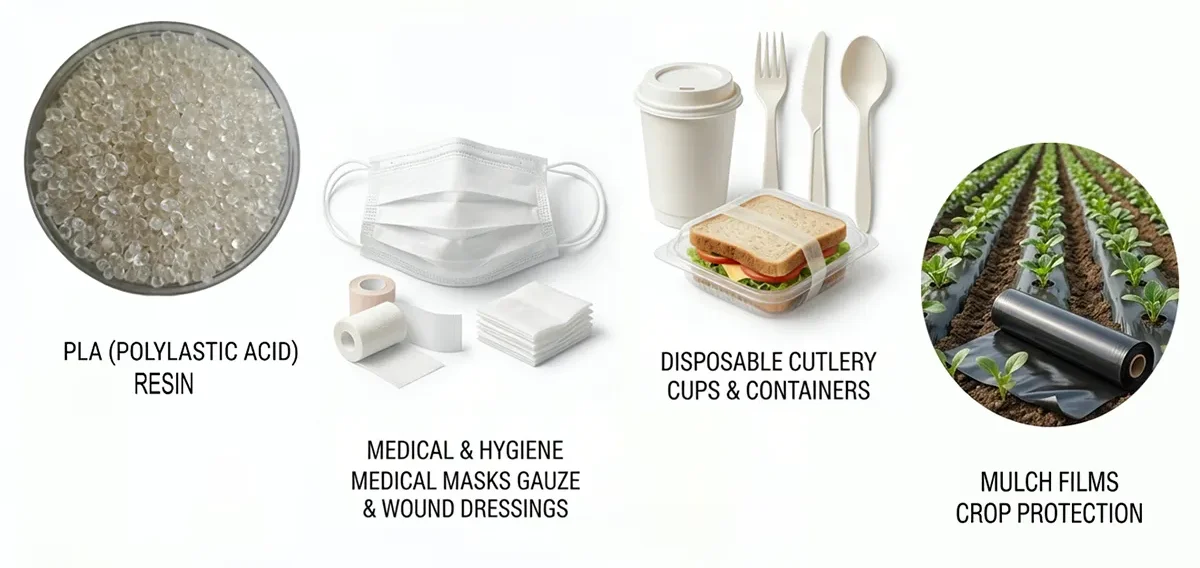
PHA + PLA
Integrates PLA's structural strength with PHA's rapid degradation efficiency.
- Ratios: 20:80 to 50:50
- Strength: 10–30 MPa
- Balanced durability
PHA + PCL
Adds low melting point (60°C) properties and dual-layer flexibility.
- Electron beam crosslinking
- 48% degradation in 5 weeks
- Reduced delamination
PHA + PBAT
Contributes notable toughness akin to polyethylene flexibility.
- 10–30% PHA component
- Service life +30 days
- Excellent soil performance
Novel Preparation Techniques
Radiation Crosslinking
Use of electron beams or gamma rays at 20–50 kGy to form molecular links, boosting heat tolerance and adhesion without sacrificing degradation speed.
Multi-Layer Co-Extrusion
Targeted functionality: PHA outer layers for weathering/weed control and PCL/PBAT inner layers for moisture management.
Ultra-Thin Variants
Incorporating cellulose nanocrystals or vegetable fillers to achieve thicknesses under 20 μm while maintaining tensile strength >20 MPa.
Precision Property Control
Addressing inconsistent degradation across soil types through refined fabrication metrics and additive ratios.
Comparison with Other Biodegradable Materials
PHA offers a distinct advantage in natural environments, requiring no industrial composting for complete breakdown.
| Material | Biobased | Soil Degradation | Mechanical (Pure) | Cost | Key Limitations |
|---|---|---|---|---|---|
| PHA | 100% | Mild (Months) | Brittle | High | Complete marine/soil breakdown |
| PLA | 100% | Higher Temp Needed | High Strength | Medium | Slow soil degradation |
| PBAT | Partial | Moderate (1 Year) | Excellent Toughness | Med-Low | Fossil-fuel components often used |
| Starch | High | Very Fast | Low Strength | Low | Moisture vulnerability |
| PGA | 100% | Fast (1-3 Mo) | High Strength | High | Short functional period |