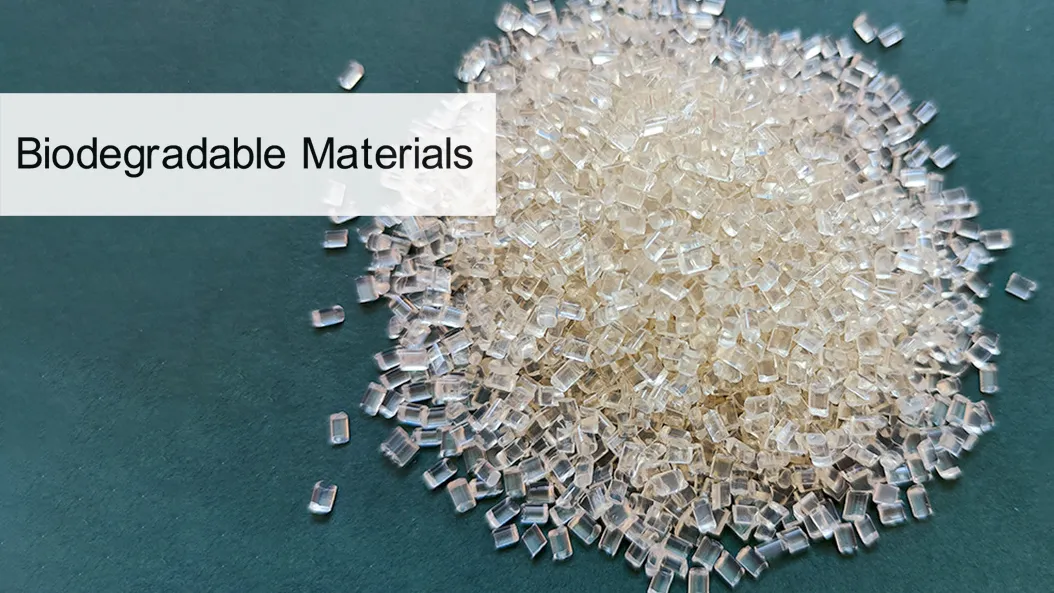
Packaging markets face an unprecedented regulatory crisis driven by 400 million tons of annual waste. The transition to high-performance biodegradable plastic is no longer an ethical choice—it is a strategic necessity to mitigate supply chain risks and meet tightening carbon mandates.
True sustainability requires a versatile material toolkit. Our specialized portfolio—comprising PHA (Polyhydroxyalkanoates) for marine-safe coatings, PLA (Polylactic Acid) for high-clarity applications, and Starch-based bioplastics for cost-baseline flexible packaging—bridges the gap between ecological responsibility and industrial performance. These resins provide the mechanical integrity required for modern commerce while ensuring a certified, residue-free end-of-life.
This guide explores the technical selection, performance benchmarks, and economic advantages of these advanced biopolymers to help you future-proof your packaging operations.
Unsure which biopolymer fits your production line?
Contact our technical team for a custom material consultation.
What Are Biodegradable Materials?
Biodegradability is the biological process where microorganisms—such as bacteria and fungi—metabolize carbon-based polymers into water, carbon dioxide (CO₂), and biomass. Unlike traditional synthetic plastics that merely fragment into persistent microplastics, our certified PHA, PLA, and Starch-based resins undergo total molecular assimilation, leaving zero toxic residues in the ecosystem.
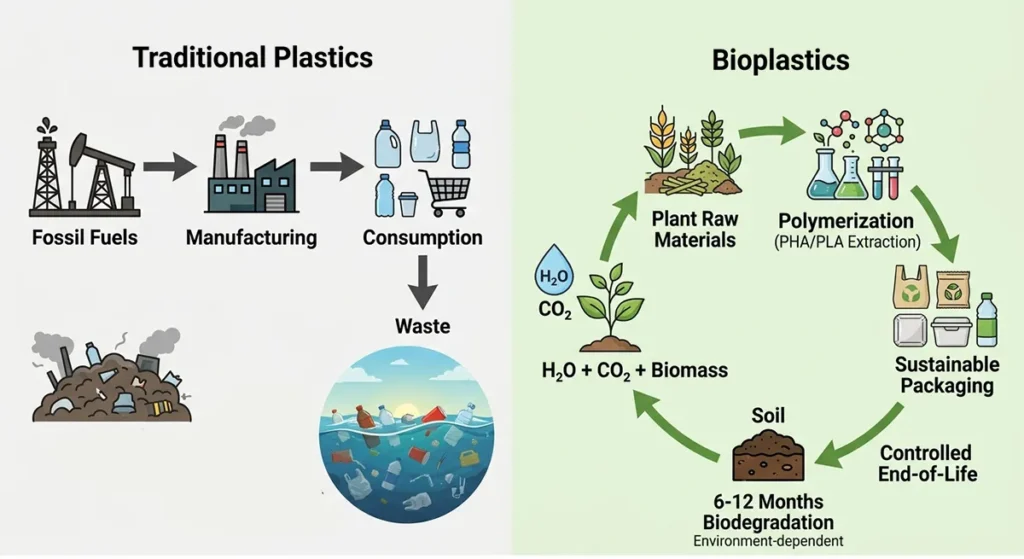
Environmental Footprint: A Strategic Comparison
The distinction between conventional and biodegradable materials lies in their “End-of-Life” (EoL) velocity and impact:
- Traditional Plastics: Derived from fossil fuels; persist for 400+ years; contribute to ocean plastic patches and soil toxicity.
- Biodegradable Biopolymers: Sourced from renewable feedstocks; designed to return to nature within months under specific conditions; significantly lower Life Cycle Analysis (LCA) scores.
Biodegradable vs Compostable: Navigating Compliance
In the packaging industry, precision is critical for regulatory compliance. While many use the terms interchangeably, a strict bio degradable definition covers a broad spectrum of materials that break down in various environments (soil, water, or anaerobic digesters), whereas compostable materials are a specific subset…
- Biodegradable: A broad term for materials that break down in various environments (soil, water, or anaerobic digesters).
- Compostable: A specific subset (like our PLA and Starch-blends) that must meet standards such as ASTM D6400 or EN 13432, ensuring they decompose within a specific timeframe in industrial composting facilities without harming the resulting compost.
Understanding the relationship between a material’s feedstock (Bio-based) and its environmental end-of-life is the foundation of a sound sustainability strategy. For an authoritative breakdown of these scientific classifications, we recommend reviewing our comprehensive resource: Biodegradable Materials: Fundamentals and Classification.
Top Biodegradable Raw Materials for Eco-Friendly Packaging
Selecting the right biopolymer is a balance between environmental mandates and functional performance. As a specialized supply chain partner for wholesale bioplastic resins, we provide high-purity PHA, PLA, and Starch-based pellets tailored for diverse industrial applications.
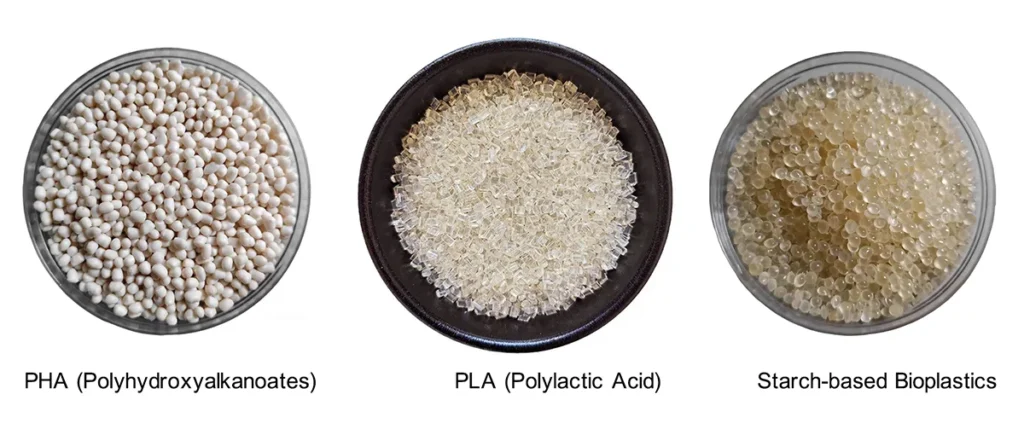
PHA (Polyhydroxyalkanoates): The "Gold Standard" of Biodegradability
PHA is the most versatile biopolymer for brands targeting zero-waste impact. Produced via bacterial fermentation of organic feedstocks, it mimics the performance of traditional polyolefins while offering a superior end-of-life profile.
- Key Advantage: It is the only mass-produced material certified for Marine and Soil Biodegradability. It decomposes completely in natural environments without requiring industrial composting.
- Packaging Performance: Offers exceptional moisture and oxygen barrier properties, making it the premier choice for food-contact coatings, marine-safe biodegradable utensils (such as knives, forks, and spoons), and high-end straws.
- Processing: Our PHA grades are optimized for a stable processing window, compatible with standard injection molding, extrusion, and thermoforming equipment with minimal parameter adjustments.
💡 Industry Insight: > > PHA isn’t just one material; it’s a family of polymers with tunable properties. Discover how we engineer specific grades for injection molding and coatings in our latest report: A Comprehensive Guide to Polyhydroxyalkanoates (PHA).
PLA (Polylactic Acid): High-Clarity Industrial Solution
Derived from renewable starch (corn or sugarcane), PLA is the most commercially mature bioplastic, favored for its high rigidity and aesthetic appeal.
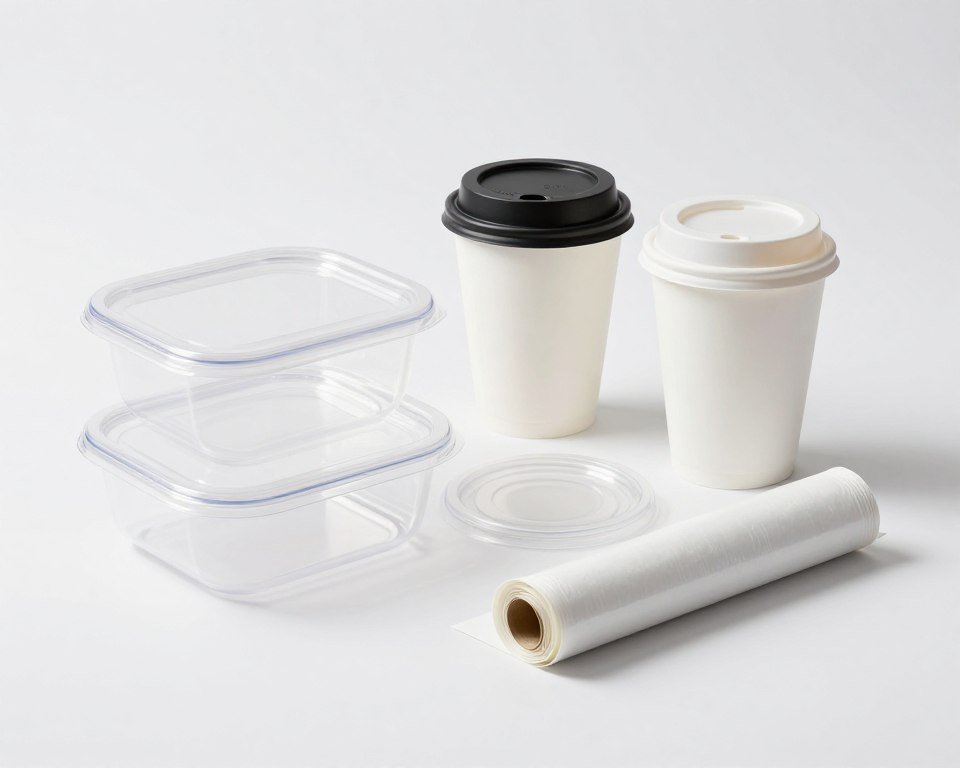
- Key Advantage: It offers unmatched optical clarity and high tensile strength, making it the industry benchmark for premium consumer displays and rigid structures.
- Packaging Performance: Ideal for high-transparency clamshells, cold-beverage cups, fresh produce trays, and applications requiring precise “snap-fit” functionality.
- Processing: Compatible with standard thermoforming and injection molding equipment, providing a stable processing window for high-volume manufacturing.
- End-of-Life: Certified for industrial composting (e.g., ASTM D6400, EN 13432), breaking down fully under controlled high-temperature (55-60°C) conditions.
Choosing the precise resin formulation is the boundary between project success and technical failure. Explore our Comprehensive PLA Selection Matrix: From Medical-Grade PLLA to Industrial High-Speed Spinning.
Starch-based Bioplastics: Cost-Effective Circularity
By blending natural starches (corn, potato, or tapioca) with biodegradable polyesters, these materials offer the most competitive price point for high-volume orders.
- Economic Strategy: Starch-based resins allow businesses to transition to eco-friendly packaging with minimal impact on unit margins, often matching the price of conventional PE in specific applications.
- Optimized Formulations: While pure starch is sensitive to humidity, our hydrophobic-modified blends ensure structural integrity for shopping bags, agricultural mulch films, and protective void-fill packaging.
- End-of-Life Accessibility: These materials are highly compatible with Home Composting systems, making them the most consumer-friendly option for municipal waste streams.
Technical Deep Dive > 🔗 What is Thermoplastic Starch (TPS)? Properties, Processing, and Uses, Learn how we utilize plasticization technology to transform native starch into high-performance industrial resins.
| Property | PHA | PLA | Starch-Blends |
| Best For | Marine-Safe / High Barrier | Clarity / Rigidity | Cost / Flexibility |
| Key Application | Coatings, Straws, Caps | Cups, Clamshells, Trays | Carrier Bags, Mailing Bags |
| Degradation | Marine, Soil, Compost | Industrial Compost | Home & Industrial Compost |
Need Help Selecting Materials for Your Products?
Our material specialists provide free consultations to match your packaging requirements with the optimal biodegradable solution. We analyze your product specifications, budget constraints, and sustainability goals.
PHA vs PLA: Choosing the Right Material for Your Products
We understand that selecting between PHA, and PLA isn’t just about environmental labels—it’s about balancing mechanical performance with your bottom line.
| Characteristic | PHA | PLA |
| Biodegradation | Soil, Marine, Compost | Industrial Compost |
| Barrier Properties | Exceptional (Moisture/O2) | Moderate |
| Heat Resistance | Up to 120°C (High-heat grades) | Up to 55-60°C (Standard) |
| Flexibility | High (Rubber-like) | Rigid (Glass-like) |
| Market Position | Premium / High-Performance | Mid-range / High Clarity |
Read our deep-dive analysis: PLA vs PHA: Choosing the Right Bioplastic for Sustainable Products — Learn how to align processing capabilities with material performance to avoid costly tooling mistakes.
Environmental Footprint: The Degradation Timeline
Understanding the disposal environment is critical for regulatory compliance and brand messaging.
- Industrial Composting: Both materials perform well in controlled facilities. PLA requires these specific conditions (55-60°C) to break down within 90-180 days.
- Home & Natural Environments: PHA is the industry leader in versatile biodegradation. It is certified for Home Composting, Soil, and Marine environments, decomposing naturally even in the absence of industrial infrastructure. This makes PHA the ultimate “zero-leakage” solution for global brands.
When to Choose PHA (Polyhydroxyalkanoates)
PHA is the premier choice for brands prioritizing the highest level of environmental safety and material integrity.
- Marine & Soil Protection: Essential for products likely to reach natural environments, such as coastal recreation or agricultural items.
- High-Barrier Needs: Its superior resistance to moisture and oxygen makes it ideal for food packaging requiring longer shelf-life.
- Home Composting: The perfect solution for consumer-facing products where industrial composting infrastructure is unavailable.
- Application Scenarios: High-clarity display packaging, cold-beverage cups, fresh produce clamshells, and rigid structured containers where product visibility is the primary sales driver.
When to Choose PLA (Polylactic Acid)
PLA remains the industry benchmark for rigid, aesthetically pleasing packaging where product visibility drives sales.
- Optical Clarity: Unmatched transparency for clamshells, cold-beverage cups, and fresh produce displays.
- Structural Rigidity: Ideal for structured forms that require “snap-fit” functionality or high tensile strength.
- Scalability: With a mature global supply chain, PLA offers a stable and cost-effective transition from traditional PET or PS.
- Application Scenarios:Rigid transparent containers, blister packaging, thermoformed trays, and 3D printing filaments intended for regions with established industrial composting infrastructure.
In regions with high humidity, material behavior is a critical variable. PHA offers superior stability against moisture-induced degradation during the use-cycle compared to starch-based alternatives. We recommend rigorous Climate-Stability Testing for all resins to ensure functional integrity throughout the supply chain.
Key Benefits of Integrating Biodegradable Materials
Adopting biodegradable resins delivers measurable advantages across environmental, operational, and commercial dimensions. The transition to PHA, PLA, and Starch-based solutions is a strategic move to future-proof operations against shifting global standards.
Regulatory Compliance & Global Market Access
As global mandates against single-use plastics tighten, businesses face increasing “Plastic Taxes” and stringent import regulations.
- Proactive Transition: Adopting certified biodegradable materials ensures your products meet international standards (such as EN 13432, TÜV Austria OK Compost), allowing seamless access to eco-conscious markets without the risk of heavy penalties.
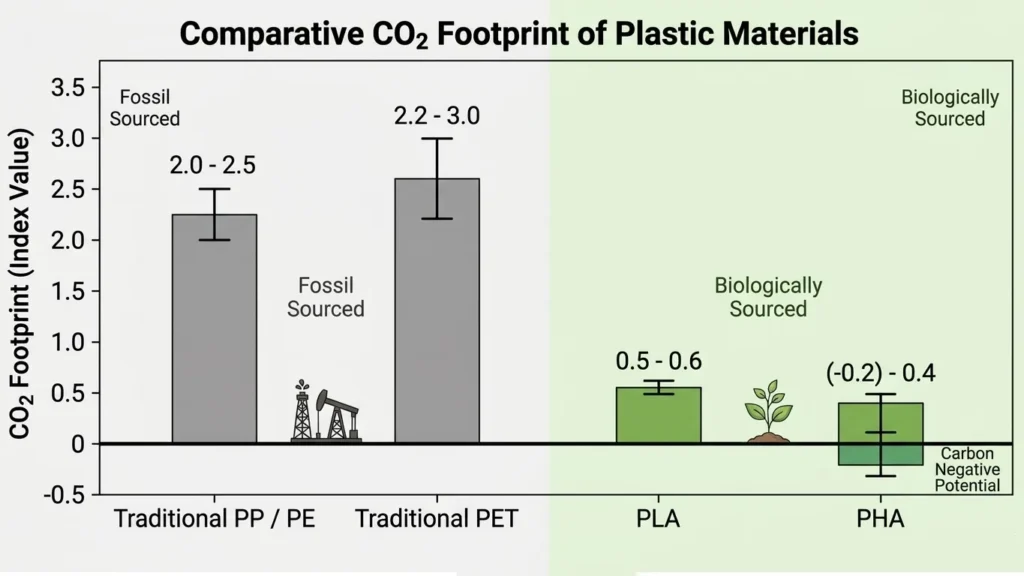
- Carbon Footprint Reduction: Transitioning from petroleum-based plastics to biopolymers can reduce carbon emissions by up to 80%, a critical metric for ESG reporting and carbon-border tax mitigation.
Enhanced Brand Equity & Market Differentiation
Consumers increasingly demand transparency in packaging life cycles.
- Premium Positioning: Utilizing PHA for plastic-free coatings or PLA for high-clarity displays allows brands to command a premium. It transforms packaging from a waste liability into a powerful marketing asset that reflects corporate responsibility.
- Zero-Microplastic Commitment: By ensuring complete biodegradation, businesses protect their reputation from the long-term environmental scrutiny associated with microplastic pollution.
Operational Resilience & Supply Chain Stability
The volatility of crude oil prices directly impacts conventional plastic margins.
- Stable Resource Base: Our biopolymers utilize renewable agricultural feedstocks, offering a more stable long-term supply outlook compared to finite fossil-fuel-based resins.
- Manufacturing Continuity: We provide optimized grades designed for “drop-in” compatibility alongside comprehensive Technical Data Sheets (TDS). This means your existing machinery can transition to sustainable production with minimal capital expenditure (CAPEX) on new equipment, avoiding operational downtime.
Early adopters gain an “Innovation Lead” in the packaging sector. Working with advanced materials like PHA creates opportunities for novel packaging designs—such as marine-degradable films or breathable produce packaging—that enhance product freshness while minimizing waste.
The Future of Sustainable Packaging: Trends and Innovations
The trajectory of bio-polymers is shifting from simple biodegradability to functional superiority. Advanced molecular grafting and nanotechnology are now being integrated into our PHA and PLA resins to overcome traditional limitations. These innovations result in materials with enhanced thermal stability (up to 120°C) and gas barrier properties that rival conventional high-barrier plastics like EVOH.
The versatility of PHA and PLA is driving a dual-sector revolution. In the food service industry, these materials are replacing PFAS-coated paper and microplastic-shedding containers with non-toxic, certified compostable alternatives. Simultaneously, the medical industry is leveraging the biocompatibility of PHA for high-value applications. This cross-industry validation ensures that our packaging-grade resins meet the most stringent safety and purity standards required for modern consumer health.
As production capacities for PHA and PLA expand globally, the scalability of bio-based materials has reached a critical tipping point. Transitioning to a sustainable supply chain is no longer a high-cost experiment but a strategic hedge against volatile crude oil prices. By optimizing manufacturing efficiencies and localizing distribution networks, we ensure that our bioplastic resins offer the consistency and volume required for large-scale industrial packaging operations.
Frequently Asked Questions (FAQ)
What material is 100% biodegradable?
Natural fibers like paper and bamboo are 100% biodegradable. Among industrial polymers, PHA (Polyhydroxyalkanoates) is the most versatile, as it degrades in soil, compost, and marine environments. PLA and Starch-based blends are also 100% biodegradable but are typically engineered for controlled decomposition in industrial or home composting facilities to ensure shelf-stability.
Is bamboo truly biodegradable?
Yes, pure bamboo fiber biodegrades in soil within months. However, many bamboo-based packaging products use synthetic binders or coatings that can leave residues. As a distributor, we recommend Bio-polymer resins (PHA/PLA) for high-volume manufacturing; they offer bamboo’s renewable benefits with superior consistency on standard plastic processing machinery.
How long does it take for PLA to decompose?
In industrial composting (55 — 60℃), PLA decomposes within 90 to 180 days.
- Shelf-Life: It will NOT degrade during storage. In a standard dry warehouse, our PLA resins remain mechanically stable for up to 24 months. Decomposition only triggers under the specific heat and microbial activity of a composting environment.
What makes a material truly “eco-friendly”?
It must meet two criteria: Renewable Sourcing (reducing CO₂ emissions by up to 80%) and Certified End-of-Life. A truly eco-friendly material must be verified by third-party standards such as EN 13432 or ASTM D6400, ensuring it returns to nature as water and biomass without releasing toxic substances or microplastics.
How long does it take for plastic to biodegrade?
Traditional plastics (PE, PP, PET) never truly biodegrade; they only fragment into microplastics over 500+ years. In contrast, certified biodegradable alternatives like PHA and Starch-blends are metabolized by microorganisms in months, effectively eliminating long-term environmental liability and microplastic pollution.
What is the most biodegradable material?
Paper and hemp are the fastest (2–6 weeks). However, for functional packaging, PHA is the most advanced option because it biodegrades in the widest range of conditions, including marine water and home soil. For cost-sensitive flexible applications, Starch-based bioplastics offer the most efficient home-composting profile.
Conclusion
Choosing the right raw material is the most critical decision in the transition to eco-friendly packaging. A mismatched biopolymer can lead to processing deviations, compromised shelf-life, or regulatory non-compliance. Success requires a precise alignment between material properties and your specific disposal infrastructure.
Key Takeaway: The Circular Impact of PHA, PLA, and Starch-Blends
Our specialized portfolio provides a comprehensive toolkit for the circular economy:
- PHA addresses the most challenging environments with its marine and soil biodegradability.
- PLA offers the high-clarity and structural rigidity required for premium consumer displays.
- Starch-based bioplastics deliver the most cost-effective path for high-volume flexible packaging.
Together, these materials empower businesses to eliminate long-term plastic pollution while maintaining industrial performance.
The shift toward biodegradable solutions is complex, but you do not have to navigate it alone. Consult with our material specialists to identify the optimal MFI (Melt Flow Index) and thermal grade for your existing machinery. We provide the technical data, regulatory guidance, and resin samples needed to ensure a seamless “drop-in” transition to a plastic-free future.