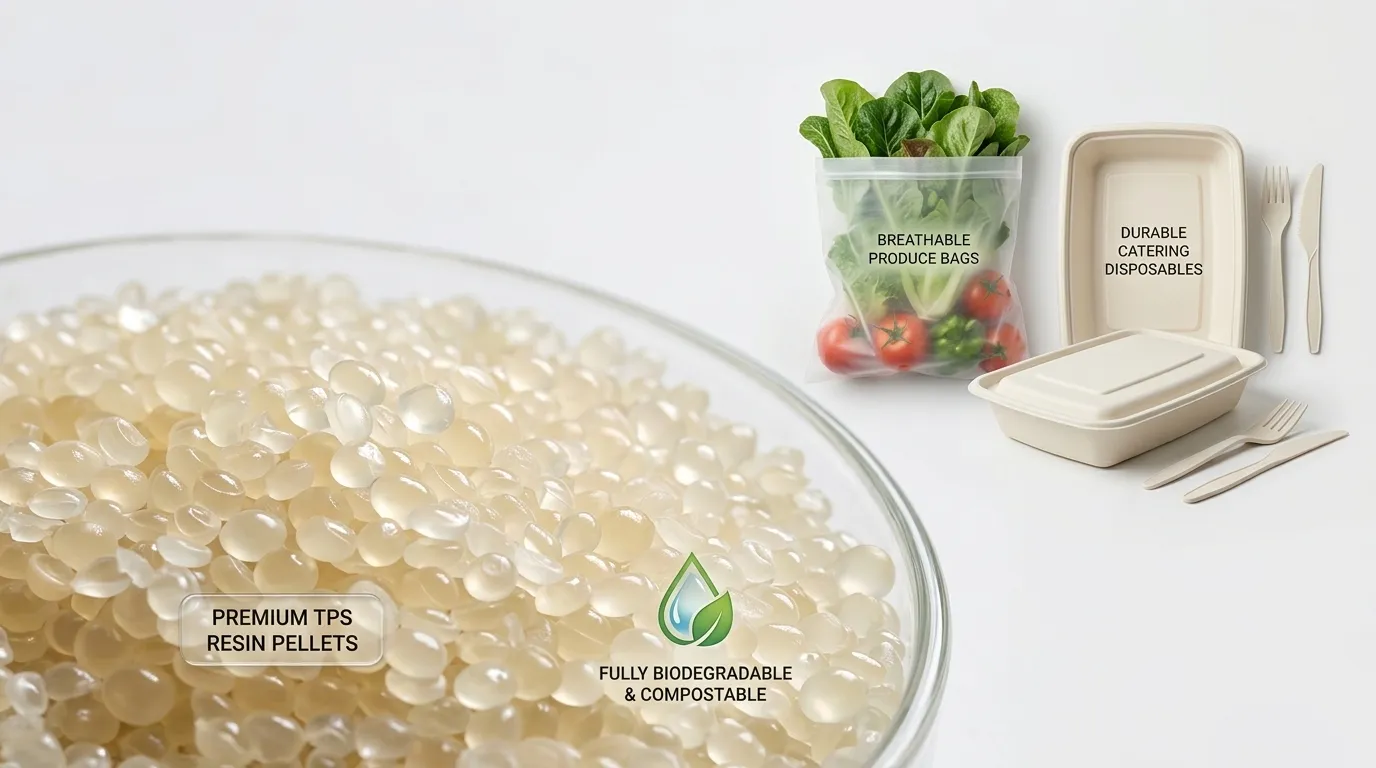
Thermoplastic Starch (TPS) is a renewable polymer derived from natural starches (like corn or cassava) treated with plasticizers. Unlike raw starch, TPS can be processed using conventional plastic machinery. It is a fully biodegradable and compostable material, often blended with PLA or PBAT to create sustainable, high-performance packaging and agricultural solutions.
If you’re looking to replace conventional PE without doubling your material costs or overhauling your machinery, starch thermoplastic is the most pragmatic bridge.Many manufacturers are caught between high-priced biopolymers and strict export regulations. Our industrial-grade Thermoplastic Starch (TPS) solves this by offering a “drop-in” resin solution. It’s designed to run on your existing lines, meeting EN 13432 standards while keeping your production economics aggressive and sustainable.
This guide outlines how to integrate starch thermoplastic resins into your workflow to balance high-performance packaging with aggressive production economics, ensuring your business remains compliant and competitive in the circular economy.
Key Thermoplastic Starch Properties & Performance Metrics
When evaluating thermoplastic starch properties for industrial use, thermal stability is the primary performance metric. eco-friendly resin pellets are typically engineered to operate below 180°C, preventing molecular carbonization while maintaining a flowable resin state.
Mechanical Performance & Versatility
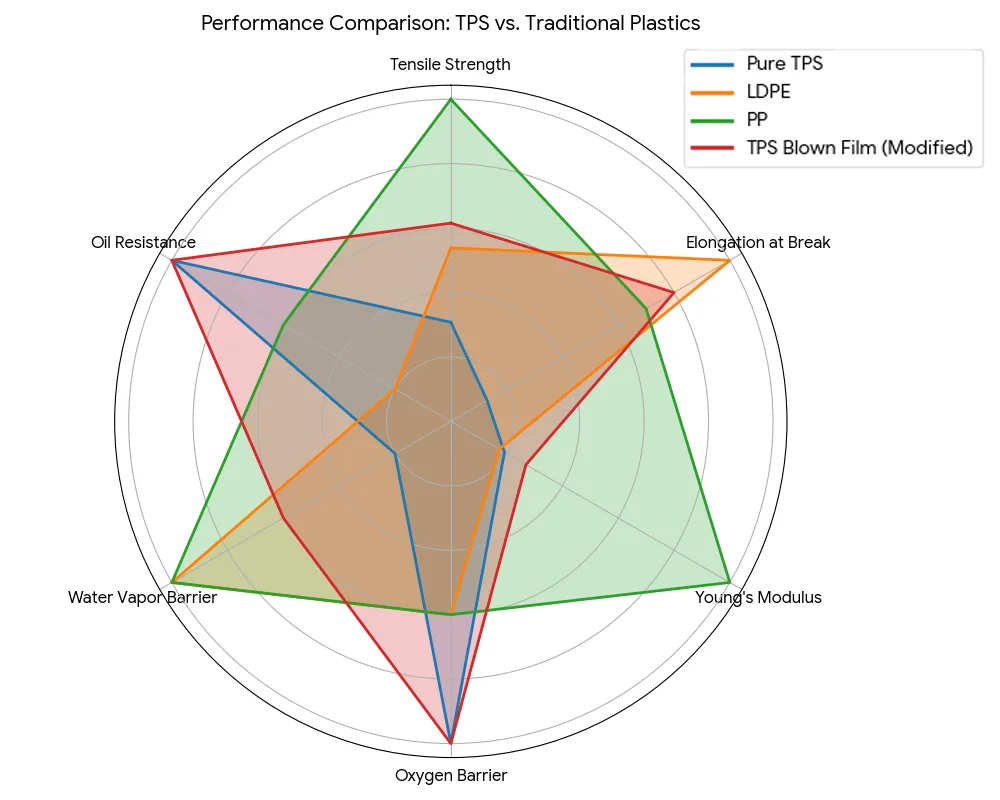
- Tensile Strength: 15–30 MPa. While lower than pure PE, it is highly effective for single-use packaging and catering disposables.
- Flexibility: Elongation at break (3% to 500% in blends), adjustable based on plasticizer content to meet either rigid or flexible requirements.
Note: Our resins are stabilized to prevent molecular degradation below 180°C.
Thermal Processing Window
For manufacturers, the processing stability of TPS is a key economic advantage:
- Glass Transition (Tg): Ranges from -40°C to 10°C, ensuring flexibility even in cold storage food packaging.
- Processing Temperature: Optimized at 100°C–170°C. It is recommended to keep temperatures below 180°C to prevent molecular degradation.
💡 For a deeper look into how plasticizers shift the melting point and how to avoid thermal degradation, see our specialized Guide to TPS Melting Point and Processing.
Barrier Performance Profile
TPS excels where conventional plastics often fail, particularly in food contact scenarios, though it requires strategic application for moisture-heavy environments.
| Feature | TPS Barrier Advantages | TPS Barrier Limitations |
| Oils & Grease | Naturally superior resistance; ideal for fatty foods | N/A |
| Aromas & Gases | Excellent flavor retention; moderate oxygen barrier | Oxygen permeability increases in high humidity |
| Moisture | Breathable structure prevents condensation | High water vapor transmission; limited shelf-life for wet products (requires multi-layering) |
| Hygiene | Natural antimicrobial properties in select blends | N/A |
Need Detailed Material Specifications?
Get comprehensive technical data sheets for TPS resins including mechanical properties, processing parameters, and barrier performance data tailored to your application requirements.
what is Thermoplastic Plastic used for
Thermoplastic Starch (TPS) is the most pragmatic solution for short-lifecycle products where environmental compliance is mandatory. By balancing cost-efficiency with high-performance biodegradability, TPS has evolved from a simple plastic substitute into a platform for functional materials.
Our resins are optimized for three core industrial sectors:
Sustainable Food Packaging (Produce & Bakery)
Food packaging is the primary driver for TPS adoption, specifically in scenarios where breathability is a functional requirement.
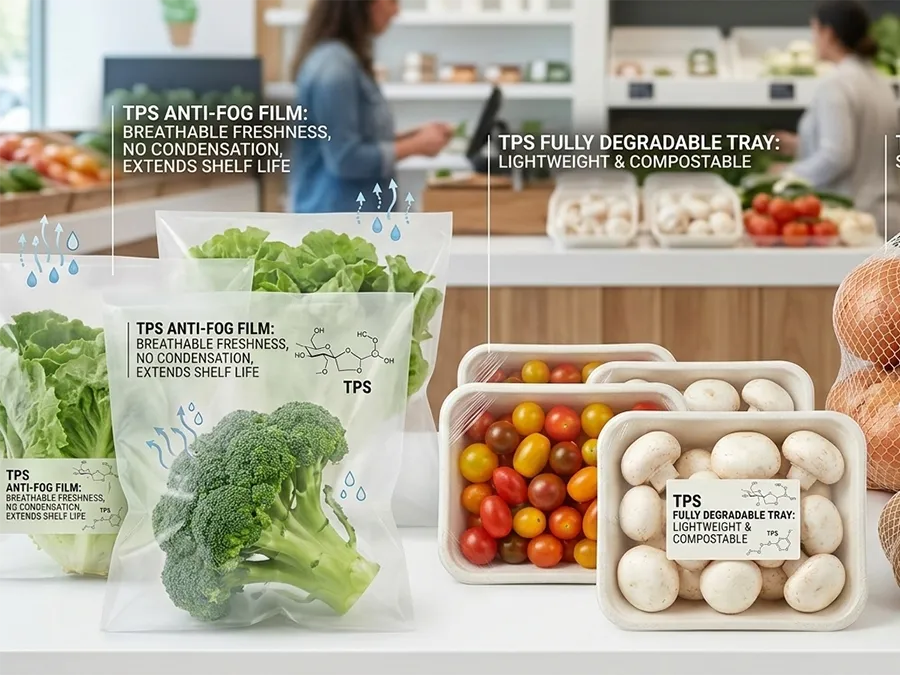
- The Use Case: Breathable bags for fresh fruits, vegetables, and baked goods.
- The Advantage: TPS films possess natural vapor permeability. Unlike conventional PE bags that trap ethylene gas and moisture—causing premature rot—TPS allows controlled transmission, significantly extending the shelf life of respiring produce.
- Advanced Solution: For dry goods, TPS can serve as a cost-effective structural core in multi-layer laminates, providing rigidity while specialized outer layers handle moisture barriers.
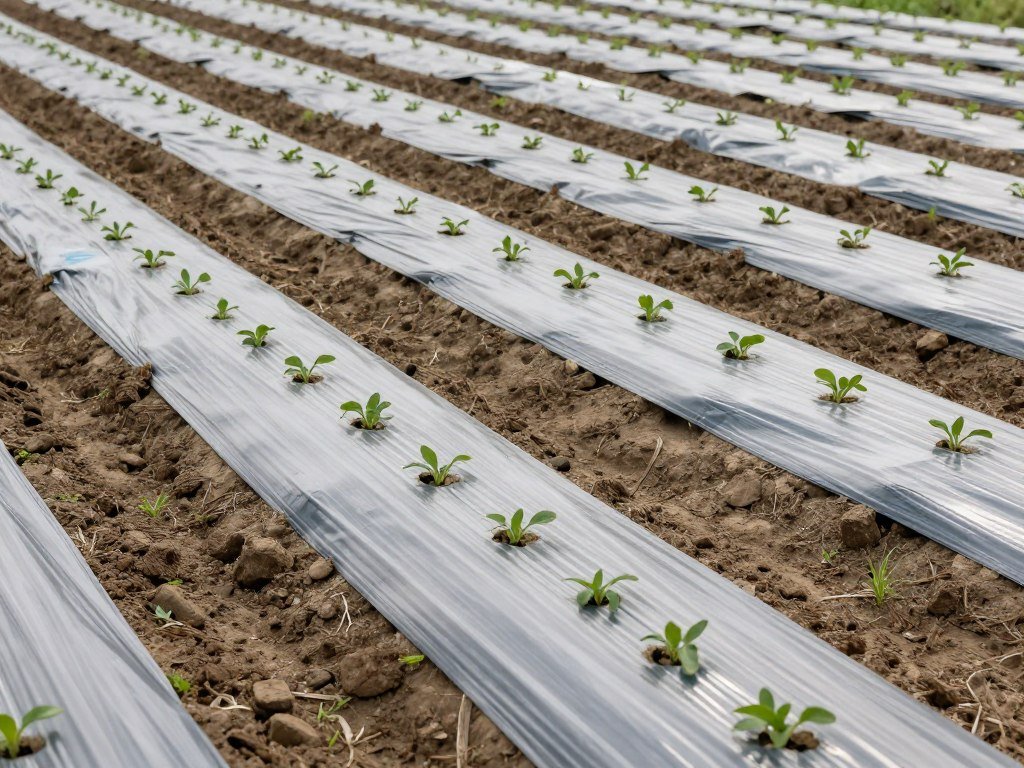
Agricultural Mulch Films (Zero-Waste Farming)
TPS solves the “white pollution” crisis in modern agriculture by eliminating the need for manual film recovery.
- The Use Case: “Plow-in” biodegradable mulch films and controlled-release fertilizer coatings.
- The Advantage: Traditional mulch requires laborers to spend roughly 15–20 man-hours per hectare for collection and disposal. Our TPS films are plowed directly into the soil, slashing post-harvest labor costs to zero.
- Functional Integration: Beyond films, TPS is an excellent carrier for nutrients, allowing for “programmed” fertilizer release that matches the crop’s growth cycle, reducing environmental runoff.
Single-Use Food Service (Cutlery & Catering)
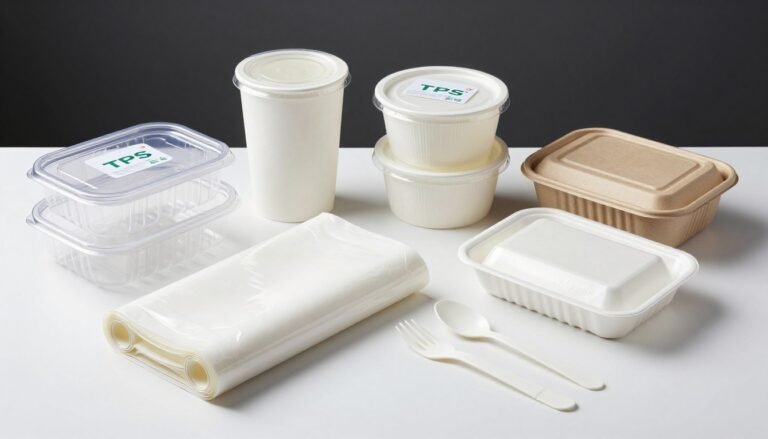
Our TPS resins are optimized for high-speed injection molding and thermoforming, offering a 100% compostable alternative to PFAS-coated items.
- The Use Case: Compostable forks, spoons, coffee stirrers, and hot-fill trays.
- The Advantage: While pure starch is soft, our TPS-PLA blends maintain structural integrity up to 80°C. They are naturally oleophobic (grease-resistant) without needing chemical coatings.
- Cost Efficiency: Utilizing TPS in blends reduces material costs by 20%–40% compared to using 100% synthetic biopolymers like pure PLA.
Selection Criteria: Is TPS Right for Your Application?
To help you determine if TPS is right for your project, consider the following technical benchmarks:
| Ideal Applications | Challenging Applications |
| Short service-life items (Logistics, catering) | Long-term outdoor storage (>2 years) |
| Breathable packaging (Produce, baked goods) | High-moisture liquid barriers (Bottles) |
| High-labor disposal zones (Agriculture) | High-temp environments (>90°C) |
Processing TPS: A "Drop-In" Solution for Existing Production Lines
Transitioning to sustainable manufacturing shouldn’t require a capital-intensive overhaul. Our industrial-grade TPS resins are engineered as a “drop-in” solution, allowing you to utilize your existing PE/PP extrusion, film blowing, and injection molding equipment with minimal recalibration.
Tech Specs At-A-Glance
- Optimal Temp: 100°C – 170°C
- Max Limit: 180°C
- Moisture: < 0.5%
Processing TPS: A "Drop-In" Solution for Existing Lines
Transitioning to sustainable manufacturing shouldn’t require a capital-intensive overhaul. Our resins work with your existing PE/PP equipment with minimal recalibration.
Practical Maintenance & Optimization
| 🛠️ Equipment Optimization | ⚠️ Purging Protocol (Maintenance) |
| Protecting Your Hardware | Ensuring Production Stability |
| • Chrome-plated Barrels: Recommended to prevent micro-corrosion from mild starch acidity. | • Short Stops (<15 min): Lower heater band temperatures to 100°C immediately. |
| • Bi-metallic Screws: Ensures smooth, consistent output over long-term high-volume runs. | • Extended Stops (>15 min): Mandatory Purge using low-index PE or cleaning compounds. |
| • Desiccant Drying: Keep feeding systems at <0.5% moisture to avoid steam bubbles. | • Goal: Prevent carbonization and “black spots” caused by stagnant bio-polymers. |
💡 Technical Insight for Production Managers: Most manufacturers successfully transition to TPS within 48 hours of trial runs. The key is staying below the 180°C threshold to maintain molecular integrity.
Need Processing Consultation?
Our technical specialists help optimize your existing equipment for TPS processing. We provide parameter recommendations, troubleshooting support, and hands-on guidance for seamless material transitions.
High-Performance Blends (TPS+PLA & TPS+PBAT)
While pure Thermoplastic Starch (TPS) is a highly sustainable material, its natural brittleness and moisture sensitivity limit its use in heavy-duty applications. To overcome these limitations, we engineer high-performance compounds by blending TPS with complementary biopolymers.
By adjusting the TPS ratio from 30% to 70%, manufacturers can balance cost-efficiency with the high tensile strength of PLA or the ultra-flexibility of PBAT.
Here is how different blends are optimized for specific industrial requirements:
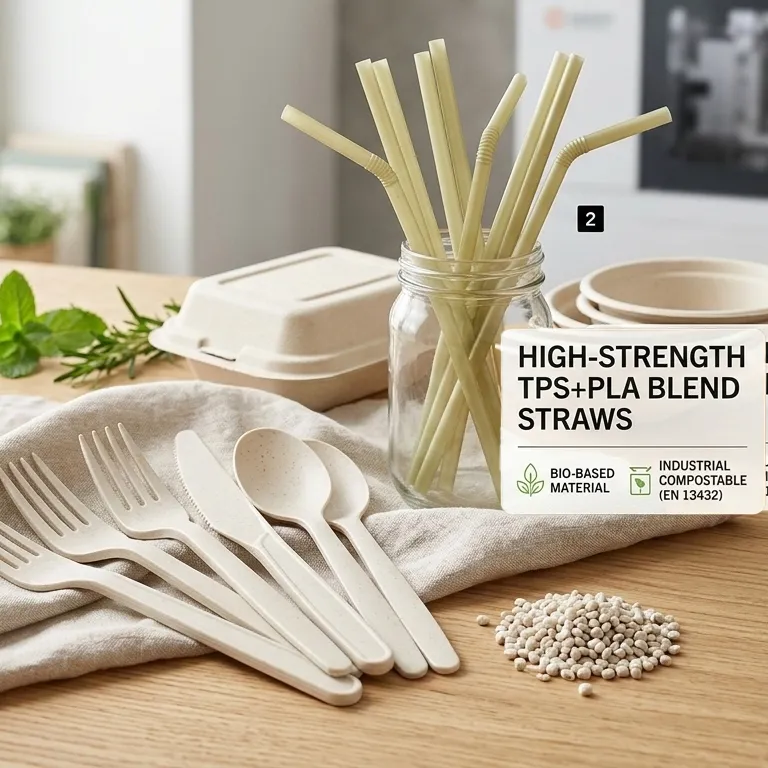
1.TPS + PLA (For Rigid Applications)
Polylactic Acid (PLA) serves as the ideal partner when structural integrity is paramount, such as in single-use cutlery and rigid food containers.
- Target Use Cases: Disposable tableware, hot-fill trays, and rigid containers.
- Key Mechanical Benefits:
- Stiffness & Tensile Strength: Blends reach 30–60 MPa, providing the rigidity needed for heavy-duty use.
- Heat Resistance: Retains structural stability up to 80°C.
- Economic Advantage: Lowers material costs by 20%–40% compared to using 100% pure PLA.
🔗 Call-to-action (CTA): “Curious about the base material? Read our detailed breakdown: Is PLA Biodegradable? The Ultimate Guide to Sustainable Plastics.
2. TPS + PBAT (For Flexible Films)
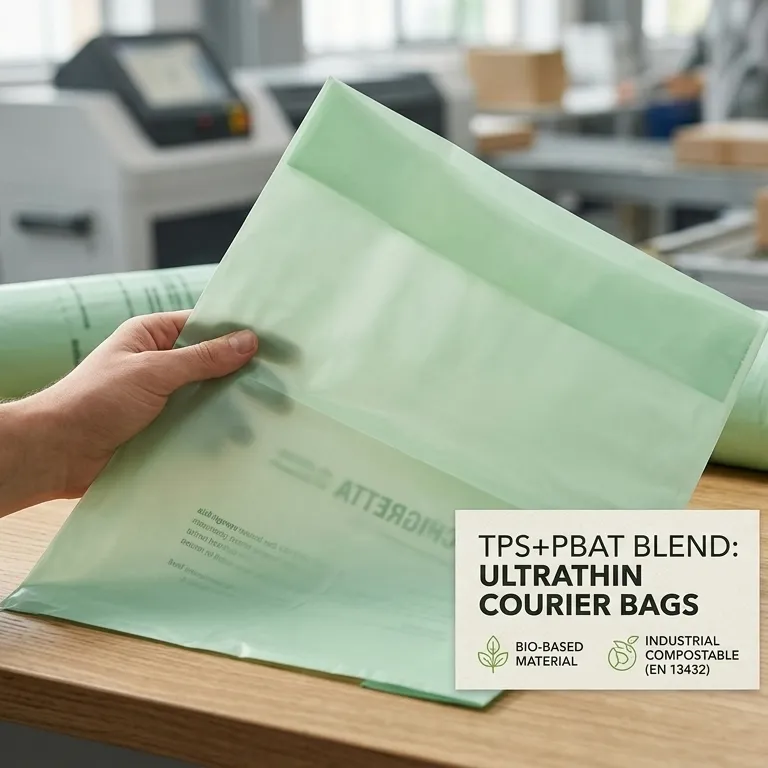
Integrating Polybutylene Adipate Terephthalate (PBAT) with TPS yields high-performance flexible packaging that behaves like traditional polymers.
- Target Use Cases: Agricultural mulch films, shopping bags, and e-commerce mailers.
- Key Mechanical Benefits:
- Toughness & Elongation: Elongation at break exceeds 300%–500%, matching the elasticity of conventional LDPE.
- Tear Resistance: Provides exceptional multi-directional tear strength required for weight-bearing packaging.
Sustainability and Certification: Meeting Export Requirements
Environmental compliance is no longer a “nice-to-have” feature—it is a mandatory entry ticket. As global “plastic bans” evolve, understanding the certification landscape is your primary strategic advantage.
The Gold Standards of Biodegradability
The transition from traditional polymers to TPS-based resins is driven by the need to meet strict end-of-life criteria. In European and North American markets, compliance is measured by the material’s ability to return to nature without a trace.
- Industrial Compostability: The EN 13432 (Europe) and ASTM D6400 (USA) standards are the benchmarks. To pass, TPS must achieve 90% biodegradation within 180 days.
- The “Clean” Difference: Beyond breaking down, our TPS resins ensure the compost remains non-toxic, passing rigorous tests for heavy metals and “seedling ecotoxicity”—ensuring the soil remains fertile.
Expert Insight: > While industrial composting is the norm, Home Composting (OK Compost Home) is the new frontier. It requires materials to degrade at ambient temperatures (< 30°C), making it the perfect selling point for premium eco-friendly brands.
Navigating Food Contact & Safety
When your product touches food, the stakes are higher. Whether you are producing disposable cutlery or fresh-produce wrap, safety is non-negotiable.
The Carbon Advantage: More Than Just Degradability
Sustainability is a “cradle-to-grave” story. By choosing TPS, you are addressing the carbon footprint at the source:
- Lower Emissions: TPS typically offers a 50% to 70% reduction in CO2 compared to traditional Polyethylene (PE).
- Renewable Origins: Utilizing corn or cassava starch replaces fossil-fuel dependence with annual renewable crops.
- Circular Economy: Composting TPS returns carbon to the soil, closing the nutrient loop that traditional plastics break.
Export Checklist: What You Need in Your Dossier
To ensure your shipments clear customs without delay, we provide our partners with a complete Compliance Package:
- Certificates of Conformity (TÜV, DIN CERTCO, or BPI).
- Migration Test Reports for food-contact safety.
- Declaration of Compliance (DoC) affirming REACH and local regulation adherence.
Why Choose Our TPS Resin?
Selecting the right TPS partner is about securing your bottom line and ensuring production stability. We provide more than just resin pellets; we offer a strategic partnership that de-risks your transition to sustainable manufacturing.
Scalable Supply & Price Stability
We leverage a robust, high-capacity feedstock network to ensure a stable supply of bio-based resins. By optimizing our raw material sourcing, we shield our partners from the price volatility often seen in fossil-fuel-based polymers, providing long-term cost predictability for your projects.
Technical Expertise: From Trial to Full Production
- Machine Calibration: Our technical team provides tailored processing parameters for your specific hardware, minimizing material waste and downtime during initial trials.
- Custom Resin Matching: We don’t just sell off-the-shelf products; we help match the specific TPS blend (TPS+PLA or TPS+PBAT) to your final product’s mechanical requirements.
Quality Assurance & Reliable Logistics
- Batch Consistency: Every shipment is accompanied by a Certificate of Analysis (COA), ensuring that your production lines run smoothly without the need for constant recalibration.
- Strategic Export Hub: Our operation is strategically located near major international shipping ports, ensuring streamlined logistics and reliable lead times of 14–21 days for standard orders.
- Flexible Evaluation: We support your R&D process with no minimum order quantities (MOQ) for initial evaluation samples.
Proven Factory Partnerships: We work exclusively with large-scale, certified production facilities to ensure that the material quality remains consistent across multi-ton orders, backed by our hands-on quality audits.
Partner with Proven TPS Resin Suppliers
Request samples of our certified TPS resins and experience the difference quality materials and expert support make in your sustainable packaging transition. Our team stands ready to discuss your specific requirements and demonstrate how our resins solve your application challenges.
Conclusion
Thermoplastic starch (TPS) has matured into a pragmatic, high-performance solution for manufacturers navigating the shift from conventional polymers to sustainable alternatives. By balancing biodegradability, renewable sourcing, and cost-efficiency, TPS addresses the dual pressure of regulatory compliance and market demand.
Key Takeaways:
- Application Fit: Excels in short-lifecycle packaging (fresh produce, food service, agriculture) where natural breathability extends shelf life.
- Drop-In Processing: Runs on existing PE/PP lines without capital-intensive machinery overhauls.
- Cost-Efficiency: Blends with PLA/PBAT reduce material costs by 20%–40% while maintaining full compostability.
Whether you are looking to enter premium export markets or comply with local plastic bans, we provide the technical expertise and transparent supply chain to make your transition seamless.
Ready to Explore TPS for Your Production?
Connect with our team to discuss how thermoplastic starch solutions can address your specific manufacturing challenges while advancing your sustainability objectives.
FAQs
What is thermoplastic starch used for?
Thermoplastic starch (TPS) is primarily used in high-volume, biodegradable packaging where regulatory compliance and cost-efficiency are critical. It is the material of choice for single-use food service items (cutlery, plates, bowls), flexible films (shopping bags, produce bags), and agricultural mulch films.
Because of its excellent breathability, TPS is particularly effective for fresh produce packaging, extending shelf life by preventing moisture buildup. Beyond packaging, it serves specialized roles in controlled-release fertilizers, water-soluble laundry bags for hospitals, and eco-friendly horticultural pots. It is the most pragmatic solution for short-lifecycle products that need to “disappear” after use.
Unsure if TPS fits your specific product? Contact our technical team for a free material compatibility assessment.
what is thermoplastic made of
TPS is a bio-based polymer derived from natural starches such as corn, potato, or tapioca. In its raw state, starch cannot be processed like plastic; therefore, it is blended with plasticizers (typically 15%–35% of the formula) such as glycerol or sorbitol. These additives disrupt the starch’s crystalline structure, granting it the “thermoplastic” ability to melt and flow.
To ensure industrial-grade performance, commercial TPS is often alloyed with other biopolymers (like PBAT or PLA). This blending process enhances water resistance and mechanical strength while maintaining 100% biodegradability. All our formulations prioritize renewable feedstocks, ensuring your final product meets the highest environmental standards.
What is an example of thermoplastic starch?
A premier example of TPS in action is the certified compostable retail shopping bag. These bags offer the tensile strength and printability of traditional polyethylene (PE) but will completely break down in a composting facility.
Another impactful example is biodegradable mulch film. Unlike conventional plastic films that leave microplastic residues in the soil, TPS-based films can be plowed directly into the earth after harvest, where they biodegrade into biomass and CO₂. This saves farmers significant labor costs associated with film collection and disposal. Additionally, TPS is widely recognized in the form of “packing peanuts”—the cushioning foam that dissolves instantly in water.
What is TPS plastic?
“TPS plastic” is a common industry term for Thermoplastic Starch. While it behaves like traditional plastic—softening when heated and solidifying when cooled—it is fundamentally different in origin and end-of-life. Unlike petroleum-based plastics that persist for centuries, TPS is a renewable polymer that returns to nature within months in a composting environment.
The “plastic” designation is important for manufacturers because it confirms that the material is compatible with standard machinery, such as film blowers, injection molders, and extruders. For companies facing plastic bans, TPS provides a “drop-in” alternative that balances the manufacturing convenience of traditional polymers with the rigid compliance requirements of modern sustainability laws.