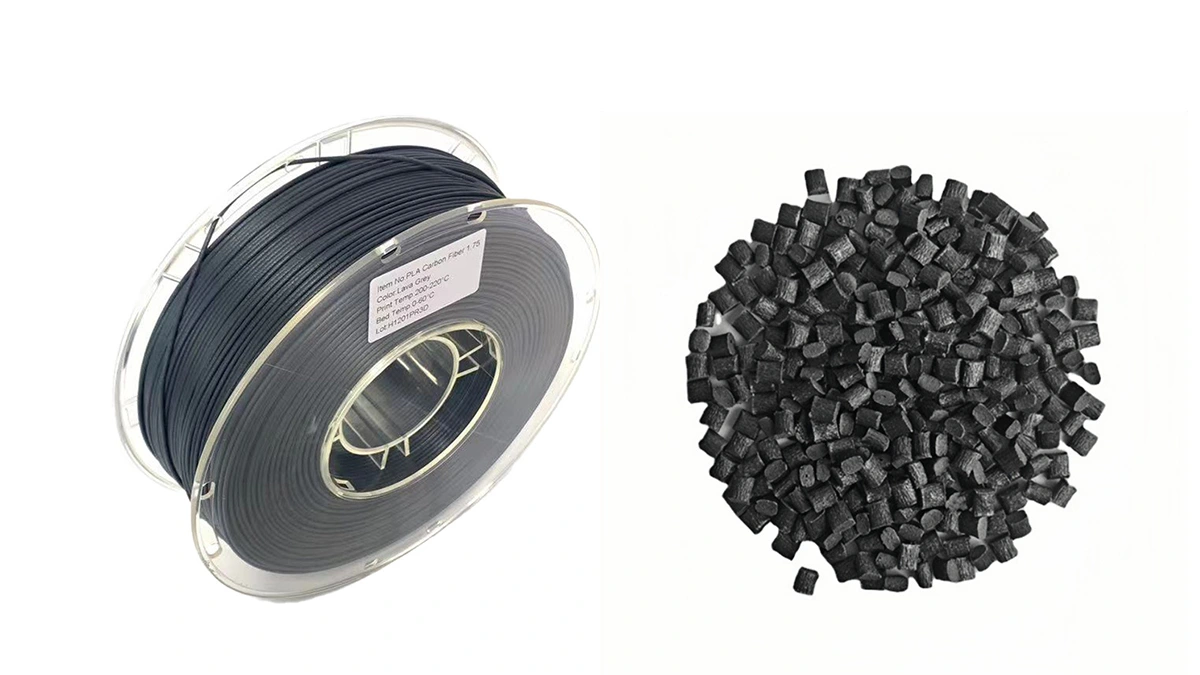
Carbon fiber reinforced PLA has redefined additive manufacturing by harmonizing the fluid processability of premium base resins with exceptional mechanical rigidity. For filament manufacturers, the synergy between high-purity PLA and carbon fiber micro-strands is the decisive factor in achieving structural integrity and maximizing production uptime.
This guide explores the technical requirements for PLA-CF base resins, focusing on how molecular consistency dictates the success of large-scale filament extrusion and final part performance.
what is PLA-CF?
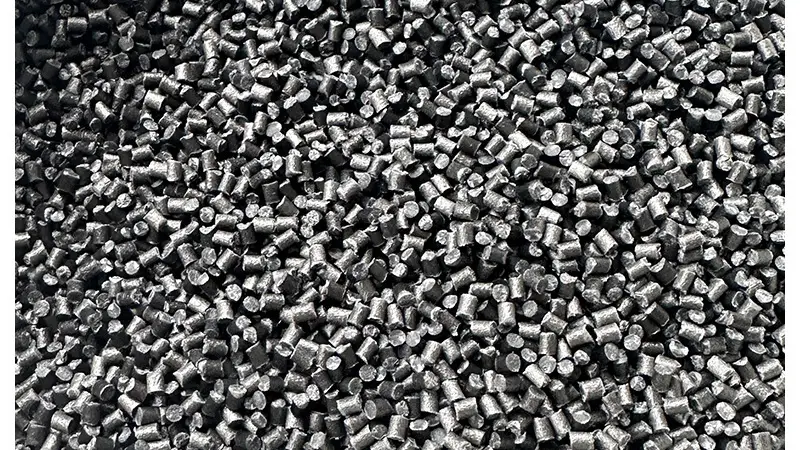
Carbon fiber PLA (CF-PLA) is a high-performance thermoplastic composite formulated by dispersing premium carbon fiber strands within a specialized polylactic acid (PLA) polymer matrix. While carbon fiber provides the structural reinforcement, the quality of the PLA base resin is the decisive factor in achieving a consistent 10% to 30% loading without compromising processing stability.
Rheology Control and Fiber Dispersion: The Foundation of Stable Compounding
The structural integrity of CF-PLA begins with the rheological properties of the base polymer. Unlike generic PLA, our specialized resin grades feature an optimized Melt Flow Index (MFI) and a narrow molecular weight distribution. This technical precision is essential for:
- Preventing Fiber Agglomeration: Controlled viscosity ensures that carbon fiber micro-strands (typically 50-150 microns) are dispersed uniformly during the high-shear environment of twin-screw extrusion.
- Operational Uptime: Uniform dispersion is critical for preventing die-clogs and screen pack pressure spikes, allowing for continuous, 24/7 production cycles.
- Dimensional Precision: A stable melt flow facilitates consistent filament diameter tolerances (±0.02mm), which is the primary quality benchmark for premium filament brands.
Expanding the Structural Frontier: For a granular analysis of how carbon fiber redefines the mechanical and thermal boundaries of the PLA matrix—including ASTM D638 modulus shifts and SEM-verified dispersion techniques—explore our comprehensive technical analysis: Advanced Engineering of Carbon-Fiber-Reinforced PLA (PLA-CF).
Optimizing your CF-PLA formulation?
The secret to high-performance composites lies in the polymer matrix.Contact our Technical Team to request the TDS (Technical Data Sheet) of our specialized PLA grades optimized for carbon fiber reinforcement and improved interfacial bonding.
Key Benefits of Using Optimized PLA Base Resin in Carbon Fiber Reinforced Compounds
The integration of chopped carbon fibers into a high-viscosity PLA base resin fundamentally alters the polymer’s stress response. While generic PLA serves decorative needs, our reinforced composites achieve a tensile modulus exceeding 6,000 MPa. This rigidity allows industrial components to maintain structural form under high-load conditions where standard bioplastics would yield or deform.

Optimized Strength-to-Weight Ratio
In the fields of aerospace and robotics, every gram counts.High-quality PLA base resin enables compounders to produce CF-PLA filament that delivers 20-25% better strength-to-weight ratio, ideal for drone frame applications.

Precision & Aesthetics
- Zero-Warping: Low CTE ensures flat prints even on large-scale geometries.
- Seamless Finish: The fiber-infused matrix naturally masks layer lines, delivering a high-friction, tactile surface for professional prototypes.

Enhanced Thermal Resistance
While standard PLA softens at approximately 55°C, the carbon fiber skeletal structure within the matrix maintains part geometry at slightly elevated temperatures. This reinforcement provides the necessary thermal stability for automotive interior prototypes and electronic housings that encounter moderate heat accumulation.
Carbon Fiber PLA vs. Regular PLA: A Quick Comparison
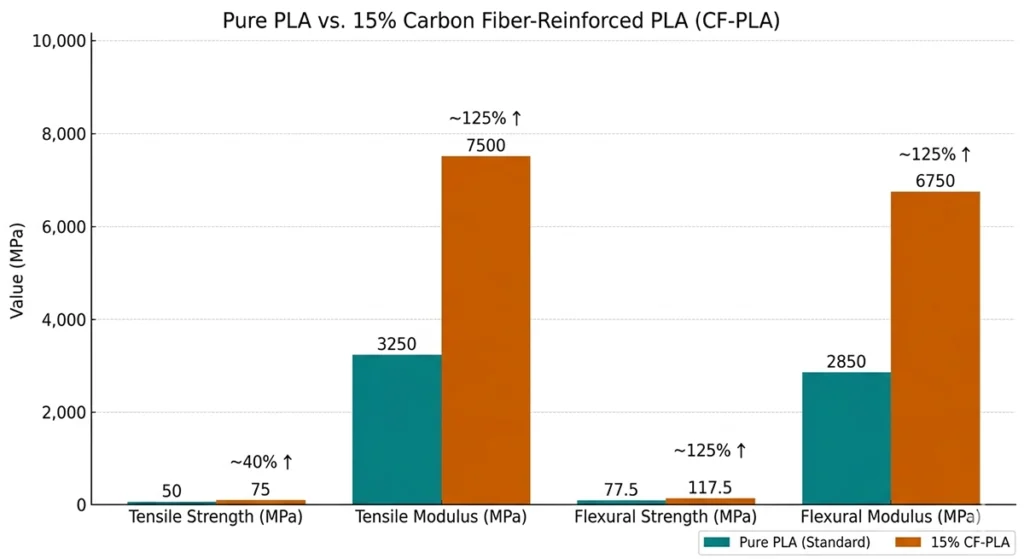
Distinguishing between standard polylactic acid and carbon fiber reinforced grades is essential for optimizing material selection in technical projects. While both share a bio-based origin, the addition of specialized reinforcement to a high-crystallinity PLA matrix creates a superior mechanical profile.
Comprehensive Material Comparison
| Technical Metric | High-Purity Base Resin | CF-Reinforced Compound (20% Load) | Industrial Advantage |
| Tensile Modulus | ~3.5 GPa | 8.5 – 12.0 GPa | Extreme structural rigidity for end-use parts |
| Melt Flow Index (MFI) | 6–10 g/10 min | 3–5 g/10 min | Optimized rheology for stable filament pull & diameter control |
| HDT (@0.45 MPa) | 52°C | 68°C – 75°C | Significantly improved thermal form stability |
| Processing Temp | 190°C – 210°C | 210°C – 230°C | Broad processing window for high-speed extrusion lines |
| Density | 1.24 g/cm³ | 1.19 – 1.21 g/cm³ | Lightweighting potential for UAV and aerospace |
Critical Processing Requirements: Hardware Optimization
To preserve the critical aspect ratio of carbon fibers, we recommend staged-shear screw configurations. Our technical team provides validated drying protocols (<200 ppm moisture via desiccant dryers) to eliminate micro-voids, ensuring the final filament is defect-free and optimized for precision winding.
Unlike generic resins that suffer from “melt-fracture” at high fiber loadings, our specialized grades are optimized for high-speed spooling (up to 90m/min). This technical precision ensures your high-capacity lines run at peak efficiency without internal friction causing motor fatigue or under-extrusion.
Carbon Fiber PLA Manufacturing Advantages
- Achieves extreme structural rigidity with a tensile modulus exceeding 8,000 MPa.
- Ensures superior dimensional stability with near-zero shrinkage during high-speed cooling.
- Optimizes melt strength to prevent carbon fiber PLA filament breakage during high-speed vertical or horizontal pulling.
- Facilitates uniform carbon fiber dispersion to eliminate die-swell and diameter fluctuations.
- Enhances thermal form stability for functional industrial components and jigs.
- Delivers a professional, consistent matte surface finish directly from the extrusion die.
- Provides high interlayer adhesion (Z-axis strength) through optimized polymer matrix bonding.
- Supports sustainable production with 100% bio-based, compostable-certified PLA resin.
Technical Processing Considerations
- Requires specialized screw configurations to preserve carbon fiber aspect ratios during compounding.
- Demands hardened steel or tungsten carbide extrusion dies to mitigate internal abrasive wear.
- Necessitates strict moisture control below 250 ppm to prevent hydrolytic degradation.
- Involves higher raw material costs compared to standard unfilled PLA resins.
- Limits color customization options due to the inherent black pigment of carbon fiber strands.
- Increases melt viscosity, requiring precise temperature management to maintain throughput.
- Generates airborne micro-fibers during pelletizing, requiring robust dust extraction systems.
- Requires specific purge compounds to prevent carbonized residue buildup during line shutdowns.
Best Applications for Carbon Fiber PLA
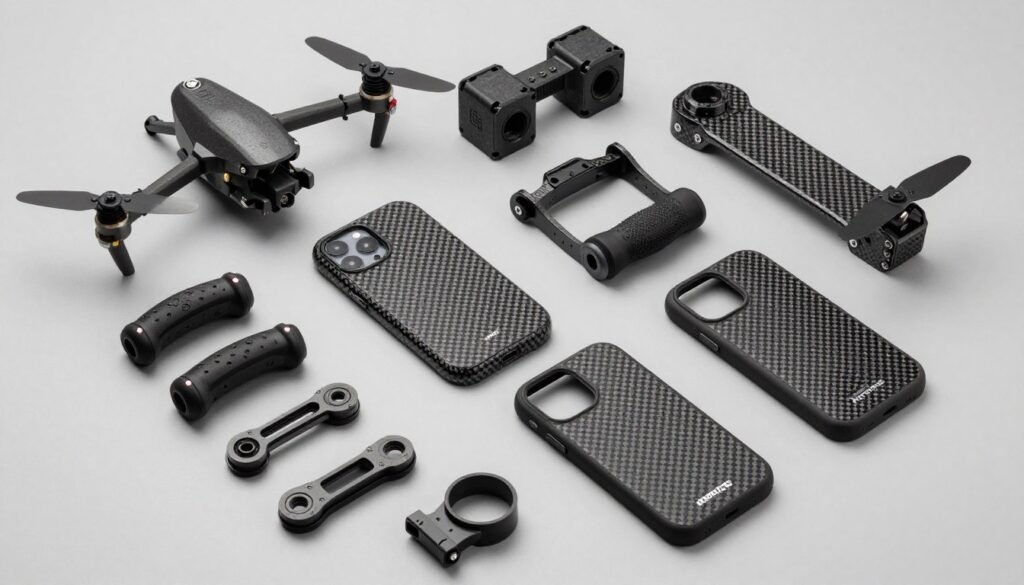
Leveraging the structural synergy of carbon fiber and high-purity PLA resin, manufacturers can transition from decorative models to functional, end-use industrial components.
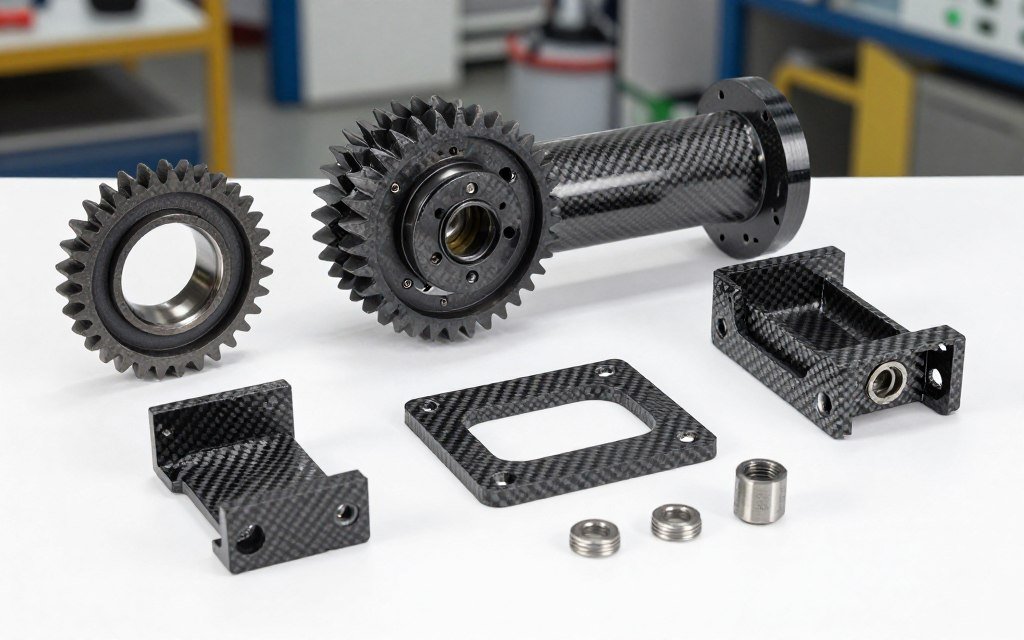
Engineering Jigs, Fixtures & Tooling
For precision manufacturing, PLA-CF acts as a high-modulus alternative to aluminum for custom assembly jigs and drill guides. The zero-warp characteristic of our base resin ensures that complex alignment fixtures maintain tight tolerances over repeated duty cycles, significantly reducing workshop lead times.
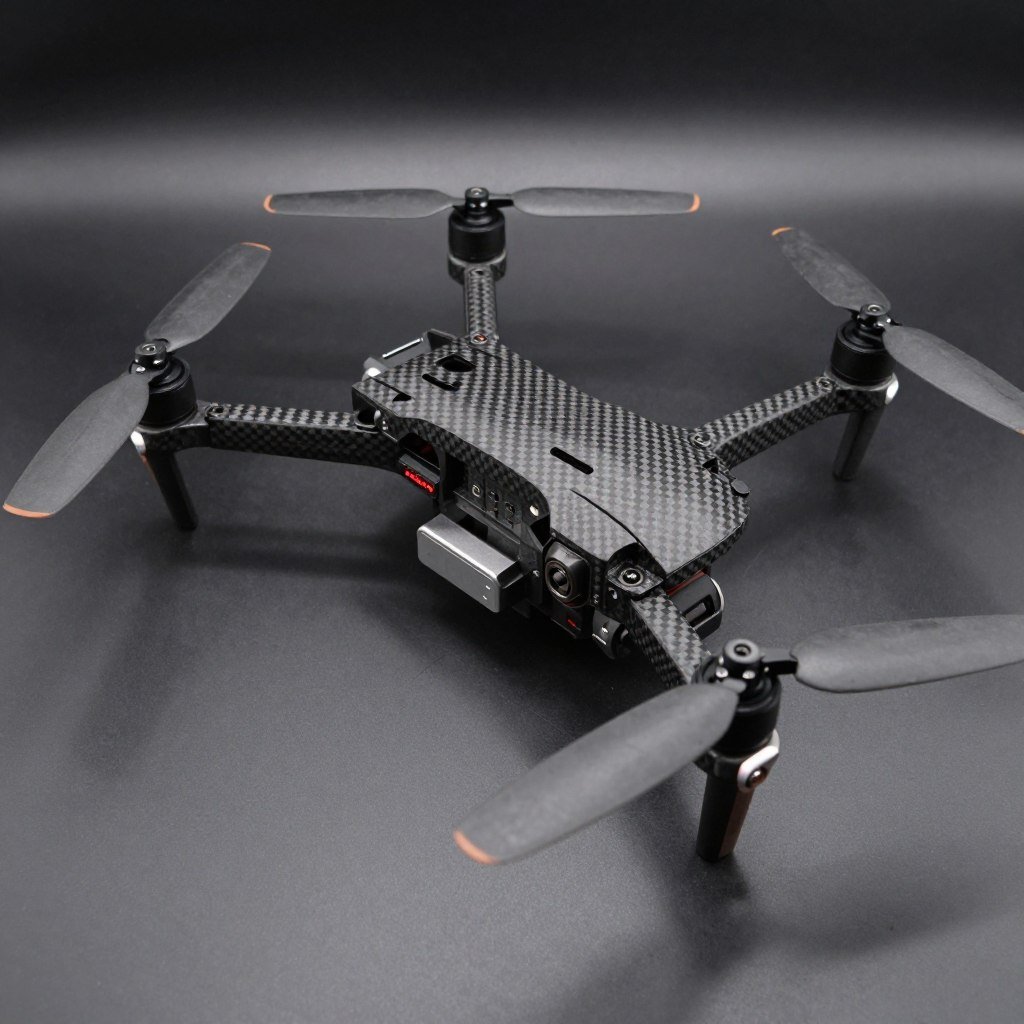
Aerospace & UAV Structural Frames
In the drone industry, the stiffness-to-weight ratio is the primary KPI. By utilizing a low-density PLA matrix reinforced with carbon fiber micro-strands, developers can produce motor mounts and chassis that dissipate high-frequency vibrations while maintaining the rigidity necessary for flight stability.
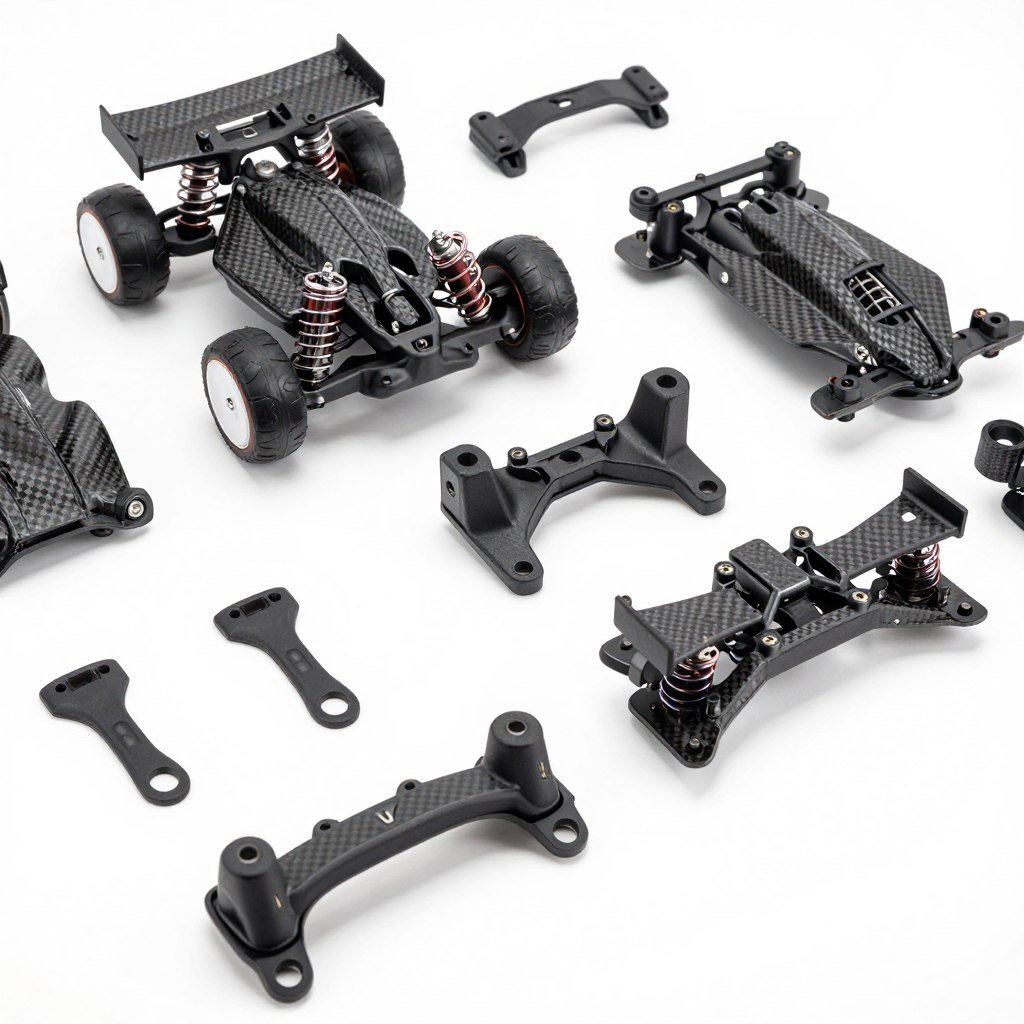
Automotive Prototypes & Interior Components
PLA-CF provides the essential UV stability and heat deflection required for automotive cabin environments. Custom dash mounts, vent bezels, and trim pieces benefit from the material’s satin matte finish, which matches OEM injection-molded plastics, eliminating the need for costly post-processing.
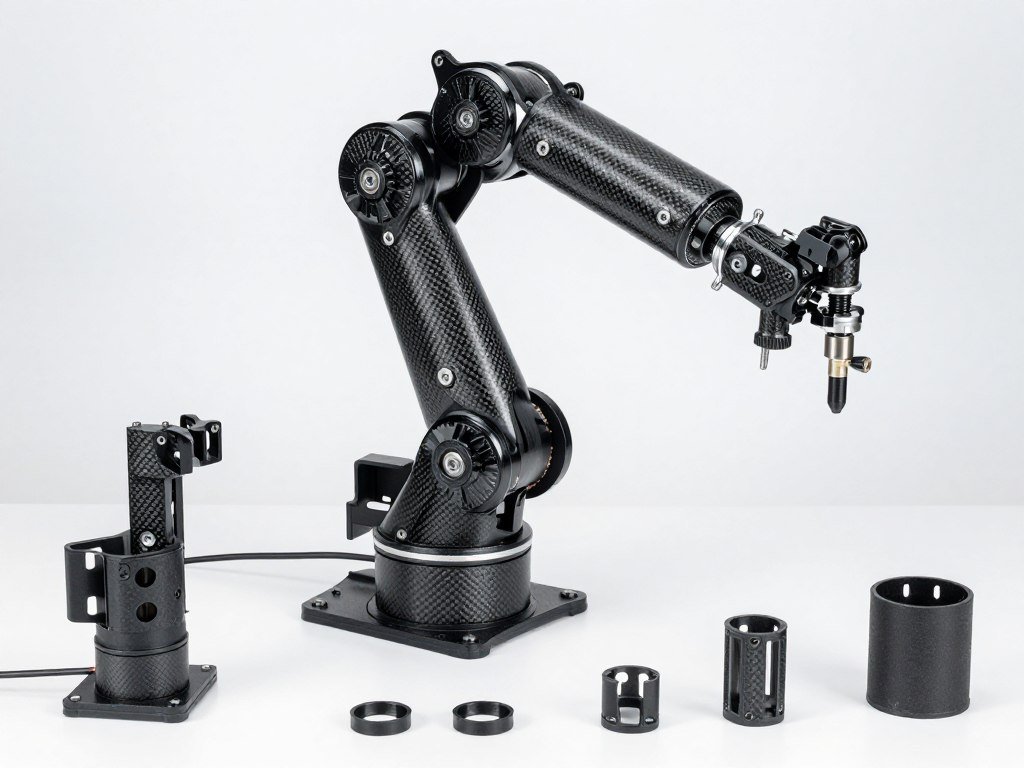
Robotics & Automated End-Effectors
Robotic arm components and sensor housings require low inertia and high structural integrity. Our modified PLA grades ensure superior interlayer bonding (Z-axis strength), allowing robotic grippers to handle mechanical stress without the delamination risks associated with lower-quality composites.
Why Partner with Salesplastics for Your Carbon Fiber PLA Supply?
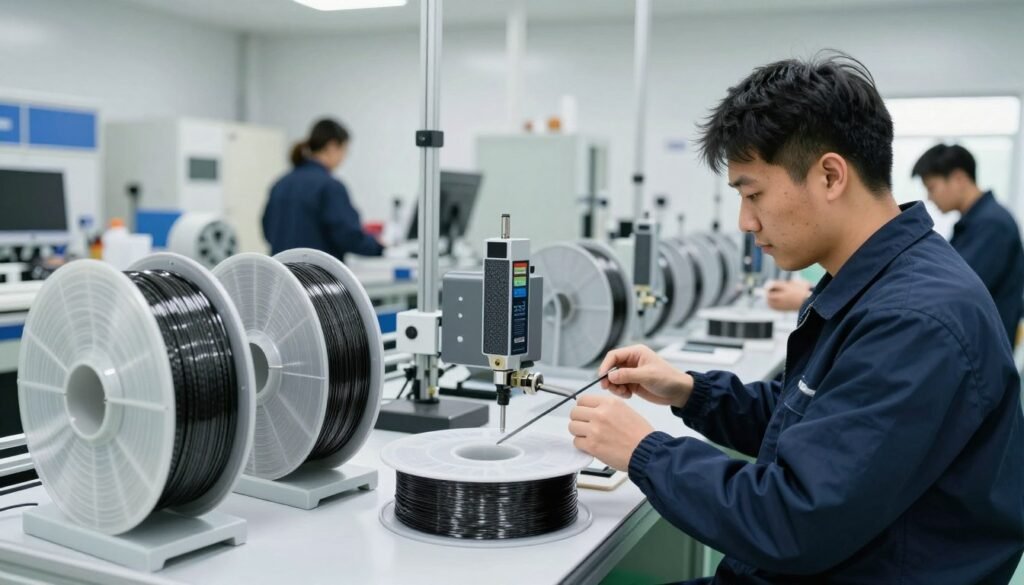
At Salesplastics, we go beyond simple distribution. We provide high-performance PLA resin base grades and optimized carbon fiber masterbatches designed for industrial-scale consistency. Our focus is on empowering compounding facilities and filament manufacturers to produce superior products with high-yield stability.
Our Commitments to Filament Manufacturers:
Custom MFI Tuning
- We tailor the resin’s Melt Flow Index (MFI) to match your specific production line speeds, ensuring zero-defect extrusion.
Full Regulatory Compliance
- Every batch is accompanied by comprehensive TDS (Technical Data Sheets) and MSDS. Our resins meet EN 13432 and ASTM D6400 compostability standards, alongside FDA/EU food-contact safety protocols.
Global Logistics Hub
- We ensure seamless, high-volume shipping to international warehouses with robust safety stock to buffer market volatility.
Request a Technical Sample for Your Production Line
Ready to elevate your filament performance? Contact our engineering team to request a sample of our high-modulus CF PLA base resin and receive a customized extrusion processing guide.
Conclusion
Carbon fiber reinforced PLA represents the definitive shift from rapid prototyping to functional industrial manufacturing. By harmonizing the inherent processability of premium PLA resin with the structural rigidity of carbon fiber, this composite offers a sustainable, high-performance alternative to traditional engineering plastics.
For manufacturers, the strategic value of PLA-CF lies in its exceptional strength-to-weight ratio and its compliance with global sustainability mandates. Whether you are scaling production for drone components, industrial tooling, or specialized mechanical housings, the success of your project depends on the molecular consistency of the base polymer matrix.
Salesplastics is committed to bridging the gap between raw material science and your final product’s success. As a dedicated distributor of high-purity PLA resins and modified composites, we provide more than just material—we offer batch-to-batch integrity, regulatory compliance (EN 13432/FDA), and technical optimization for high-volume extrusion.