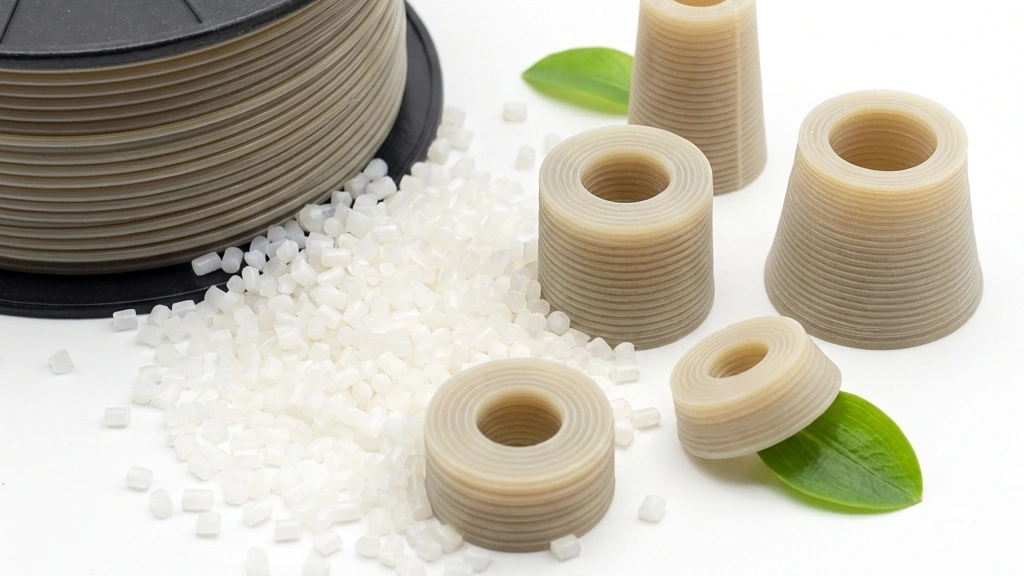
Successfully converting PBAT resin into premium biodegradable film requires specialized technical insight. Due to its polyester backbone, this material is sensitive to moisture and thermal history, demanding precise control over rheology to ensure mechanical integrity.
Pre-processing: Eliminating the Hydrolysis Risk
Moisture represents the primary challenge during the initial stages of production. Residual water molecules trigger rapid hydrolytic degradation under high temperatures, leading to unstable melt strength and "chain-scission."
Drying Parameters
- • Temp: 65℃ to 80℃
- • Cycle: 4 to 6 Hours
- • Moisture Target: < 0.02%
The "15-Minute Rule"
Material exposed to ambient air for over 15 mins must be re-dried to prevent film brittleness.
Precision Film Blowing Parameters
Temperature Gradient Control
Balancing full plasticization against thermal degradation is a delicate act.
Optimal Blow-Up Ratio for balanced longitudinal and transverse strength.
Stable crystallization point ensures optical clarity and mechanical orientation.
Die Design & Cooling
Die geometry must prioritize a "first-in, first-out" flow pattern. Because PBAT can carbonize in "dead zones," streamlined internal channels are necessary to avoid black specs.
Troubleshooting & Production Stability
| Issue / Defect | Recommended Onsite Adjustment |
|---|---|
| "Shark Skin" (Surface Roughness) | Lower screw speed or slightly increase die temperature. Consider fluorine-based PPA. |
| Blocking / Stickiness | Precise cooling roll temp management and calibrated slip agents (e.g., erucamide). |
| Yellowish Discoloration | Reduce overall temperature profile; check for thermal degradation. |
| Un-melted "Fish-eyes" | Increase back pressure or slightly raise zone temperatures for full plasticization. |
Safe Shutdown & Purging
Leaving PBAT in a heated barrel during a shutdown leads to rapid decomposition. For short interruptions, drop temperatures to 100℃.
Purging Protocol
For long-term shutdowns, the system must be purged with a low-melt-index Polypropylene (PP). This prevents the resin from degrading into an acidic residue that can corrode the screw and barrel surfaces.