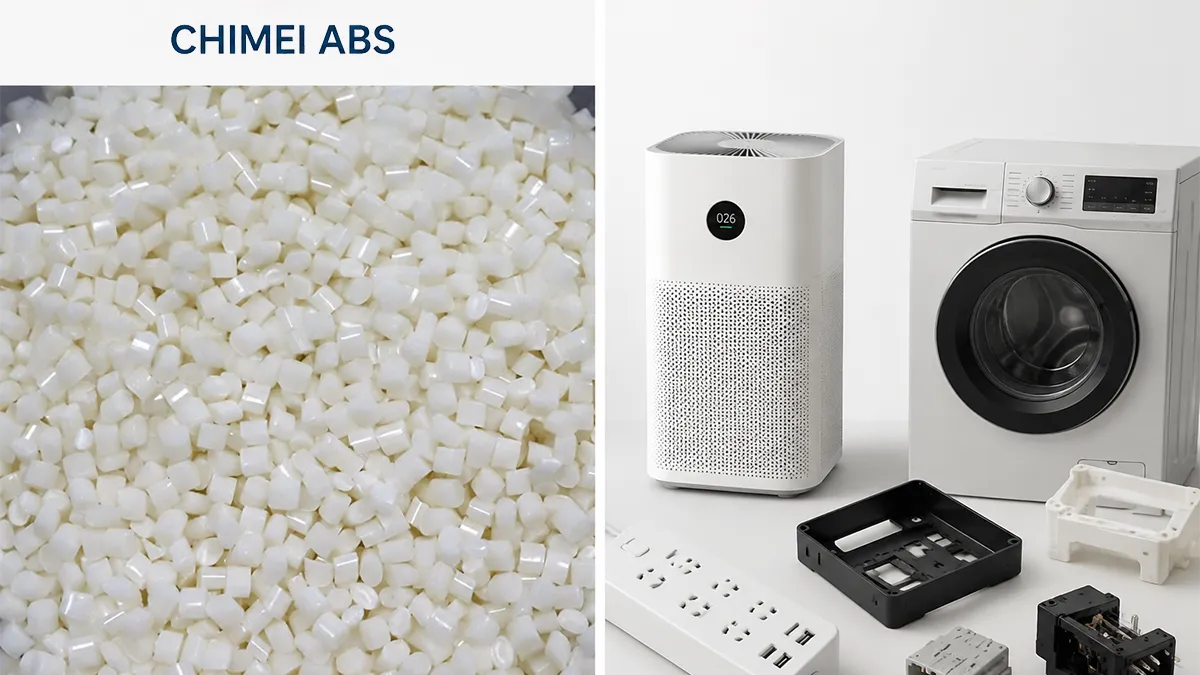
Choosing the right CHIMEI POLYLAC ABS grade starts with the material’s chemistry and how those characteristics match your part requirements. This ABS resin family is an acrylonitrile–butadiene–styrene copolymer engineered as a practical range of grades — standard, high-impact, heat-resistant and specialty formulations — to suit industrial plastic applications.
CHIMEI POLYLAC ABS combines styrene, acrylonitrile, and butadiene to balance rigidity, chemical resistance, and impact toughness, providing a foundation for matching grades to application requirements.
Matching CHIMEI ABS Grades by Application
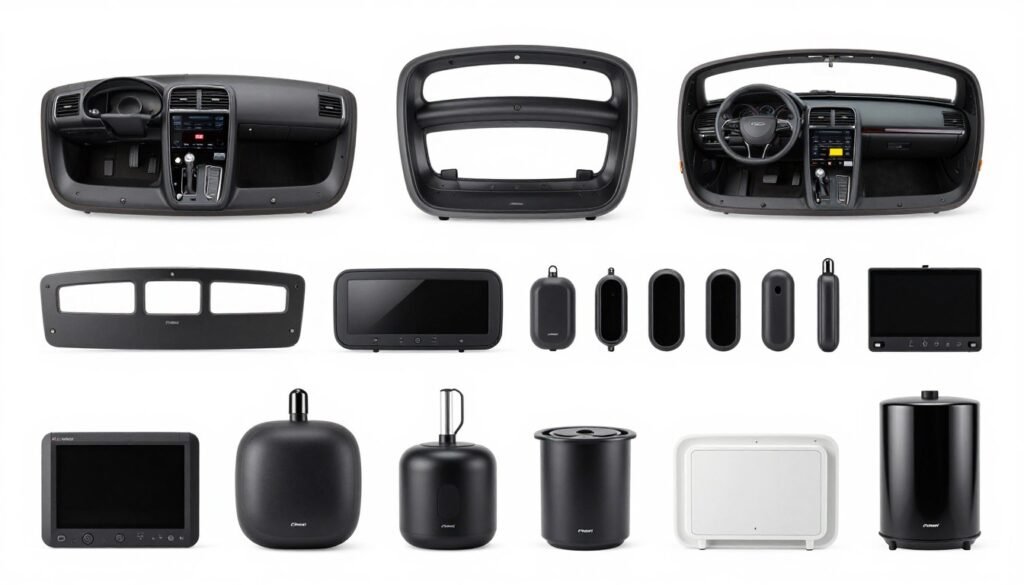
Different applications place different demands on ABS materials. Some products prioritize impact resistance, while others require flame-retardant performance, elevated heat resistance, or premium surface appearance.
To simplify grade selection, These ABS grades are grouped into four performance families. This framework helps engineers and procurement teams quickly match product requirements with the right grade category.
01General Purpose & High Gloss
Processability ; Mechanical Strength ; Surface Finish

Typical Applications
Key Material Properties: Well-balanced Melt Flow Rate (MFR), high surface hardness, and excellent color stability for secondary operations like painting or electroplating.
Processing Tip
Maintain mold temp 60–80℃; pre-dry at 80℃ for 2–3 hours to eliminate silver streaking on gloss surfaces.
Benchmark: PA-757
02High Impact
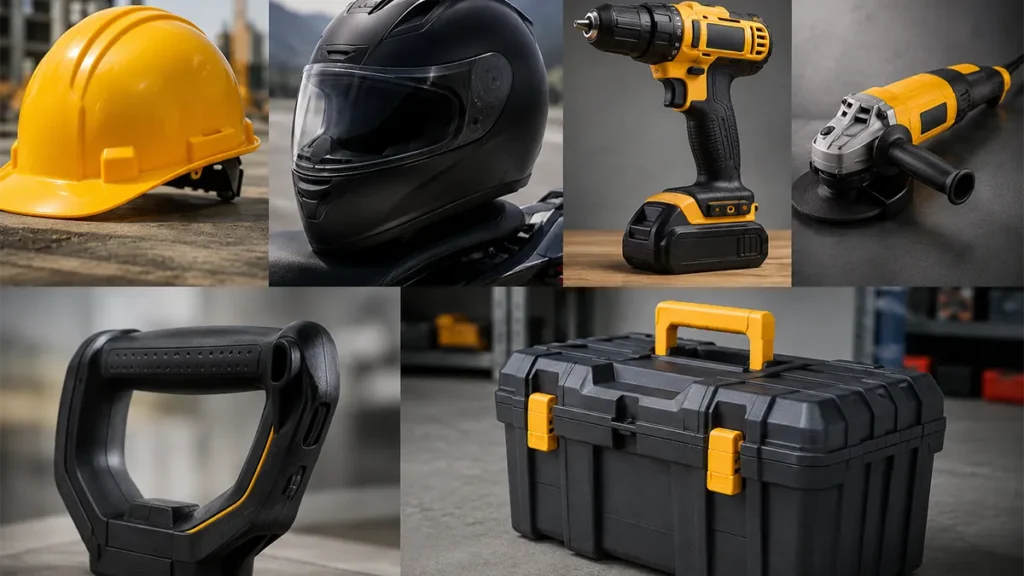
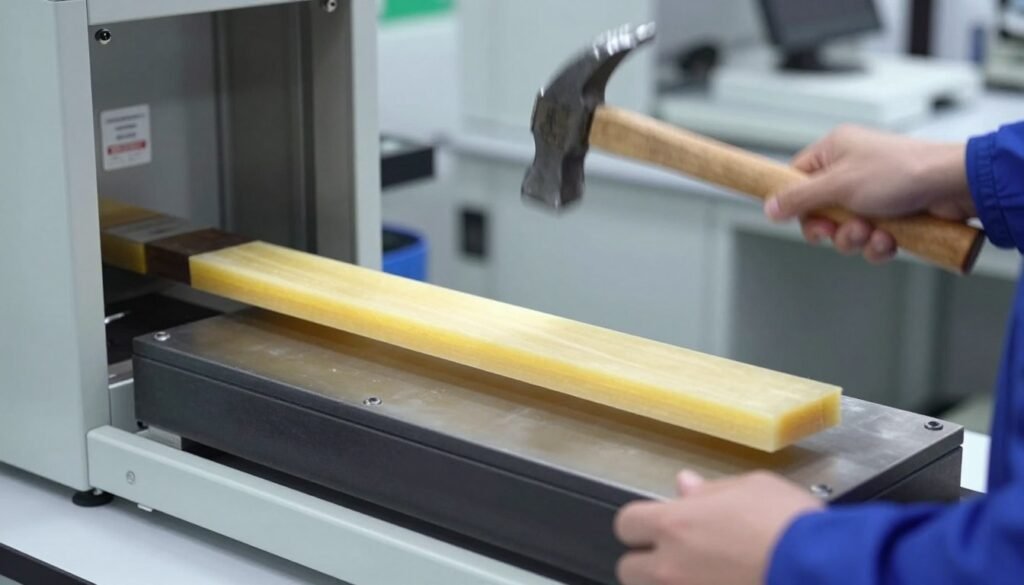
Energy Absorption ; Crack Resistance ; Low-Temp Toughness
Typical Applications
Key Material Properties: Exceptional notched Izod impact strength (even at sub-zero temperatures) and high fatigue resistance.
Processing Tip
Design wider gates/runners to reduce shear; use generous radius blends in corners to distribute impact stress efficiently.
Benchmark: PA-747
03Flame Retardant
Fire Safety Compliance ; Thermal Stability ; Electrical Insulation

Typical Applications
Key Material Properties: Certified UL94 V-0 / 5VA flammability ratings, high glow-wire ignition temperature (GWIT), and excellent thermal stability during processing.
Processing Tip
Keep barrel residence time short; maintain temps below 240℃. Ensure robust mold venting to allow gases to escape safely.
PA-765A
PA-764 04Heat Resistant
High Vicat Point ; Low Thermal Deformation ; Dimensional Stability

Typical Applications
Key Material Properties: High Vicat softening temperature, low coefficient of linear thermal expansion (CLTE), and high creep resistance under thermal load.
Processing Tip
Set mold temperature near upper limit (80–90℃) to prevent post-molding shrinkage when parts encounter actual working temperatures.
PA-777D
PA-754 | POLYLAC® ABS Category | Benchmark Grades | Core Performance Metric | Top Target Application |
| General Purpose & Gloss | PA-757, PA-717C | Surface Aesthetics & Processability | Appliance Housings, Consumer Electronics |
| High Impact | PA-747, PA-707 | Toughness & Energy Absorption | Safety Helmets, Industrial Tool Casings |
| Flame Retardant | PA-765A, PA-764 | UL94 V-0 / 5VA Fire Safety | EV Chargers, Electrical Enclosures |
| Heat Resistant | PA-777D, PA-754 | High Vicat Softening Point | Automotive Interiors, High-Power Appliances |
Need Help Selecting the Right Grade?
Our materials specialists will provide a recommended grade shortlist, technical data sheets and sample availability based on your application, processing equipment and performance targets.
Additionally, we offer a comprehensive range of other CHIMEI series, including the sustainable Ecologue™ D-1200 and D-2400, to help reduce your product’s carbon footprint.
Technical Comparison Matrix: Key Properties at a Glance

Choosing the right CHIMEI POLYLAC® ABS grade requires a direct comparison of quantifiable physical properties. The matrix below maps CHIMEI’s core flagships—PA-757 (General Purpose/High Gloss), PA-747 (High Impact), PA-765A (Flame Retardant), and PA-777D (Heat Resistant)—against key performance metrics to streamline your material selection process.
POLYLAC® ABS Core Grades Physical Property Comparison
The comparison matrix below highlights key performance differences among representative CHIMEI POLYLAC® ABS grades. Use it as a quick-reference tool to compare strength, toughness, heat resistance, processability, and surface appearance before narrowing your material shortlist.
| Property | Standard Grade | High Impact | Heat Resistant | High Rigidity |
| Tensile Strength (MPa) | 40-45 | 35-40 | 45-50 | 50-55 |
| Impact Strength (kJ/m²) | 15-20 | 30-40 | 12-18 | 10-15 |
| Heat Deflection Temp (°C) | 85-90 | 80-85 | 100-105 | 90-95 |
| Surface Gloss (60°) | 85-90 | 75-80 | 80-85 | 90-95 |
| Melt Flow Rate (g/10min) | 15-25 | 10-20 | 12-22 | 8-18 |
| Chemical Resistance | Good | Good | Excellent | Very Good |
Note: The values listed above represent typical resin property ranges for injection molding grades based on standard ASTM testing methods. For exact batch specifications, certified Technical Data Sheets (TDS), or regulatory compliance certs, please contact our technical sales team.
Grade Selection Decision Tree
Follow this rapid checklist to lock in your CHIMEI POLYLAC® grade:
STEP 1: Check Regulatory Compliance
Injection Molding Processing Guide: How to Avoid Defects
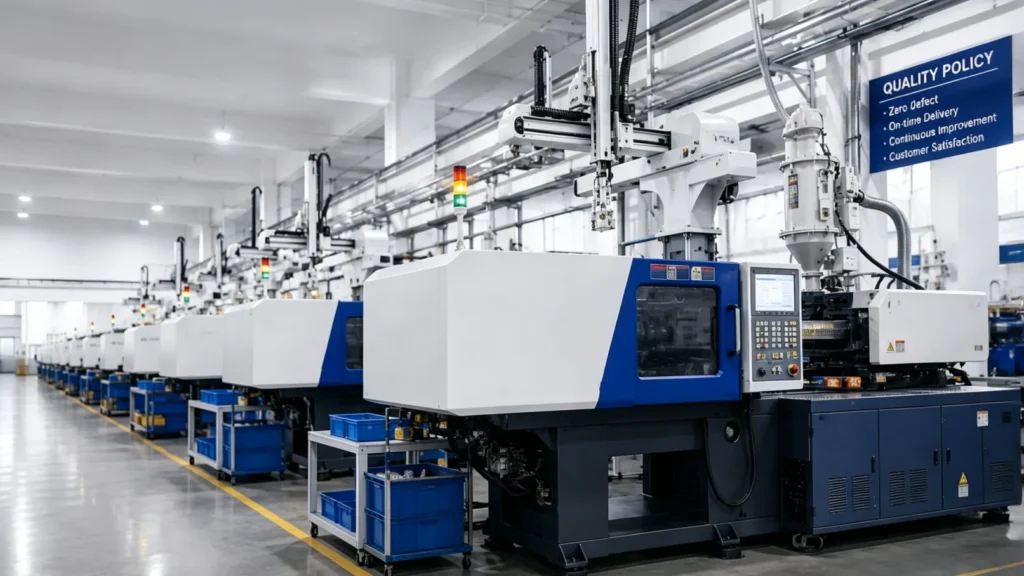
Successful injection molding of CHIMEI POLYLAC ABS requires precise control over three critical process variables: material preparation, thermal profiling, and cavity pressure management. Optimizing these parameters ensures parts achieve full mechanical performance and a premium surface finish without cosmetic flaws.
For detailed guidance on setting melt and mold temperatures, and optimizing ABS grade-specific parameters, see our grade-specific ABS injection molding guide.
Drying Process & Moisture Control
ABS is inherently hygroscopic and readily absorbs atmospheric moisture. Processing wet resin leads to hydrolytic degradation and severe cosmetic flaws. When trapped moisture encounters high heat inside the barrel, it turns into superheated steam, which is sheared along the mold surface during injection, resulting in silver streaks (splay marks) and brittle parts.
- Drying Protocol: Pre-dry all POLYLAC ABS grades at 80℃ for 2 to 4 hours using a desiccant hopper dryer.
- Target Moisture: Ensure the residual moisture content is below 0.05% before charging the screw.
- Shop Floor Tip: Avoid simple hot-air ambient dryers in humid environments; consistent dew-point control (-40℃ or lower) is vital to guarantee zero silver streaking on high-gloss or flame-retardant parts.
Processing Temperature Profiles
Achieving a homogenous melt without causing thermal degradation requires a progressive temperature profile across the injection molding machine’s barrel and mold.
| Zone | Temperature Range (°C) | Purpose |
| Feed Throat | 40-60 | Prevent premature melting and bridging |
| Rear Zone | 180-200 | Initial melting and plastication |
| Middle Zone | 200-220 | Complete melting and homogenization |
| Front Zone | 210-230 | Maintain melt temperature stability |
| Nozzle | 220-240 | Ensure optimal flow into mold cavity |
Processing Tip: When switching between CHI MEI ABS grades, perform a full purge cycle, then stabilize temperatures gradually; document purge volume and temperature changes for reproducibility.
Defect Troubleshooting: Pressures & Temperatures
For quick shop-floor reference, the table below summarizes the most common ABS molding defects, their likely causes, and the first corrective actions to consider.
| Common Defect | Primary Root Cause | Primary Process Correction | Secondary Process Correction |
| Silver Streaks (Splay) | Residual moisture or overheat | Extend drying time at 80°C | Lower barrel temperature |
| Weld Lines | Cold flow fronts / low packing | Boost injection speed & mold temp | Increase hold pressure |
| Sink Marks | Insufficient volumetric packing | Increase hold pressure & hold time | Lower melt temperature |
For hands-on assistance, contact our technical team — we provide on-site troubleshooting, setup audits, and parameter optimization to reduce start-up defects and speed qualification for production equipment.
Securing Reliable Supply: Why Partner with Us for CHIMEI ABS Resins
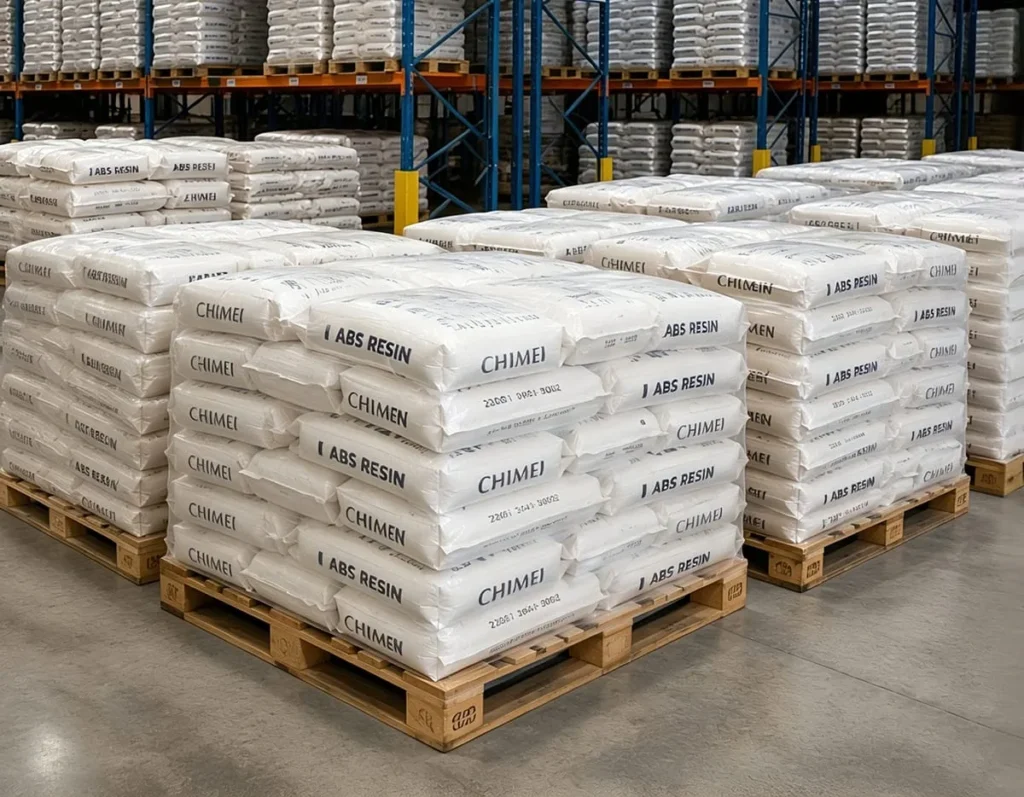
Reliable material supply is about more than inventory availability. Successful long-term sourcing requires consistent material quality, flexible logistics, responsive technical support, and complete regulatory documentation.
100% Original Resins
Exclusively prime granules in factory-sealed packaging. Every shipment backed by authentic COA, RoHS, REACH, and UL certifications traceable to original factory batches.
Flexible MOQs & Buffer Stock
Flexible volume allocations resolve high MOQ constraints. Ready-to-ship rolling buffer stock of PA-757 and PA-747 insulates your production from market shortfalls.
Shanghai Port Proximity
Strategically located adjacent to Shanghai Port, ensuring rapid container positioning, expedited export clearance, and prioritized booking for predictable delivery.
Conclusion
Selecting the right CHIMEI POLYLAC ABS grade means matching material properties to your application: prioritize impact resistance where drop or low-temperature toughness matters, choose heat-resistant grades where elevated HDT and dimensional stability are required, and specify surface/gloss characteristics for visible products. Clear property targets (impact, tensile, HDT, gloss) make grade comparisons and testing faster.
Processing discipline is equally important — proper drying, controlled temperature profiles and optimized cycle times preserve resin properties and prevent defects, keeping production efficient and repeatable. Design and tooling choices (uniform wall thickness, balanced gates, effective cooling) directly reduce warpage, sink and other dimensional problems.
- Pick grades by application requirements, not price alone — this reduces rework and warranty risk.
- Validate processing parameters (drying, barrel/mold temperatures, cooling) on your equipment before full-scale runs.
- Secure supply and technical support to lower total cost of ownership and accelerate qualification.
Ready to move forward? Please contact us to request a grade consultation, download TDS, or order samples — our team can provide test data, processing recommendations and sample shipments to support your product development and production schedules.