Biodegradable plastics are gradually reshaping packaging, consumer goods, and selected industrial applications as sustainability requirements continue to evolve. Regulatory frameworks, corporate ESG commitments, and growing environmental awareness are collectively accelerating the shift toward lower-impact material solutions.
Among the most widely adopted materials are polylactic acid (PLA), polyhydroxyalkanoates (PHA), and polybutylene adipate terephthalate (PBAT). Each represents a different balance of performance, processing behavior, and end-of-life characteristics.
This article reviews current biodegradable plastics market trends, focusing on how PLA, PHA, and PBAT are positioned across key application sectors, and how these leading compostable polymers are shaping packaging, agriculture, and specialty applications, while also outlining their future development directions.
What's Driving the Growth of Biodegradable Plastics?
The expansion of biodegradable plastics is supported by several structural market drivers.
Regulatory Pressure
Many regions are tightening restrictions on single-use plastics and increasing requirements for compostable or recyclable alternatives, reshaping material selection across packaging and food service.
Sustainability Commitments
Brands and converters are integrating renewable polymers into product portfolios to meet ESG targets, with material selection increasingly driven by compliance and brand positioning rather than cost alone.
Consumer Awareness
Rising awareness of plastic pollution is influencing purchasing behavior, particularly in packaging and disposable categories, reinforcing demand for materials with reduced environmental persistence.
Long-Term Demand
Overall, these factors are steadily strengthening long-term demand for compostable plastics across global markets.
PLA: The Most Established Commercial Bioplastic
The volume leader in commercial bioplastics
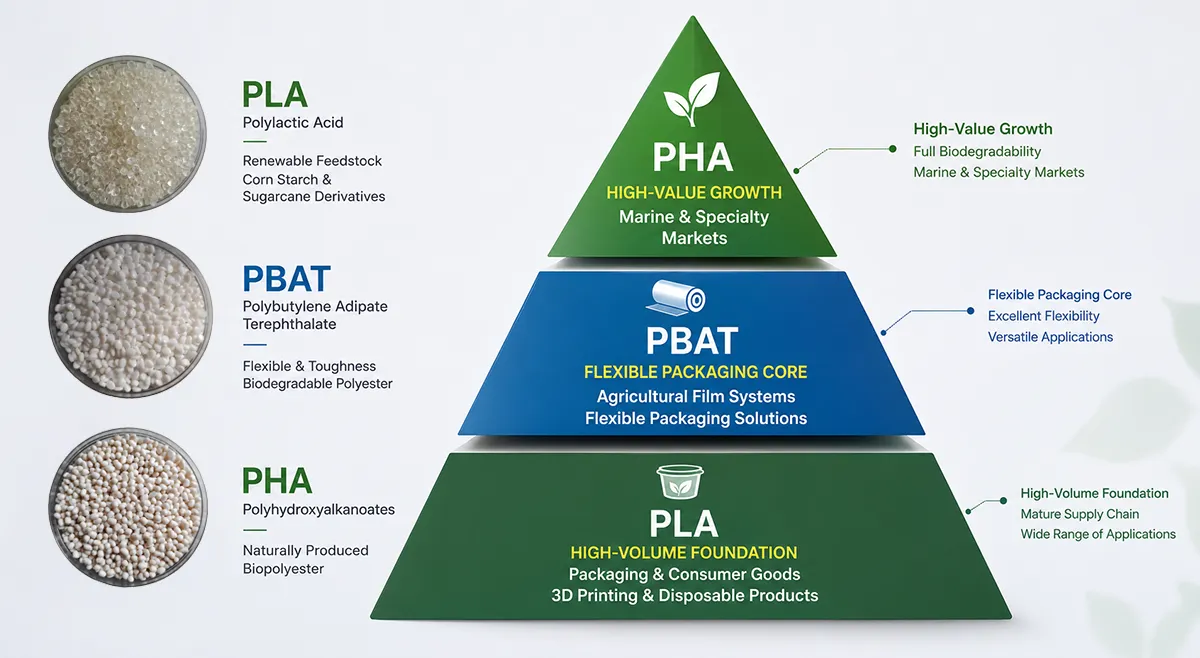
PLA (polylactic acid) is currently the most commercially established biodegradable plastic. It is produced from renewable feedstocks such as corn starch and sugarcane derivatives, supported by a relatively mature global supply chain and stable processing infrastructure.
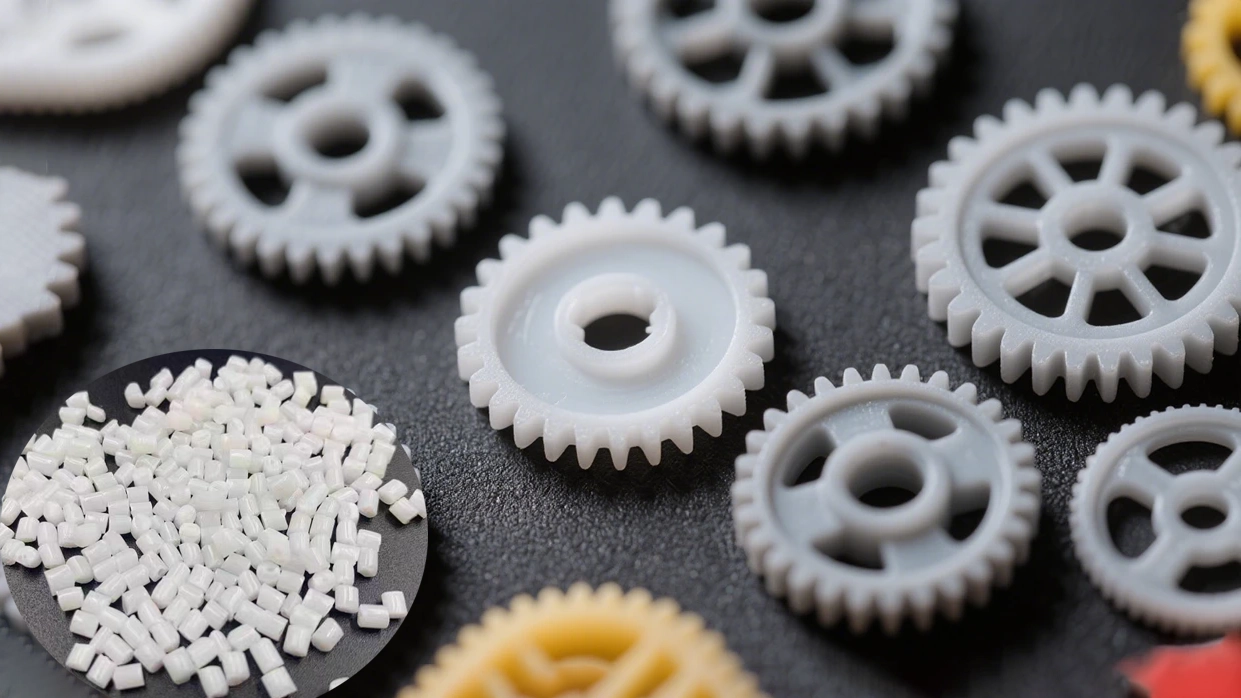
PLA is widely used in rigid packaging applications such as transparent containers, trays, and disposable tableware. It also plays a significant role in 3D printing, where its dimensional stability and ease of processing make it a commonly used filament material.
Key limitations & development focus
Despite its strong commercial position, PLA still faces technical limitations, particularly in heat resistance and certain durability requirements. Ongoing development efforts are focused on improving thermal stability, impact performance, and expanding its use in more demanding engineering applications.
PHA: Expanding Potential in High-Value Applications
Biodegrades across the widest range of environments
PHA (polyhydroxyalkanoates) is gaining attention due to its ability to biodegrade in diverse environments, including soil, freshwater, marine conditions, and home composting systems. This broader biodegradation profile distinguishes it from many other biodegradable polymers.
Advancements in fermentation technology and production scaling are gradually improving the commercial viability of PHA. As production efficiency increases, interest from packaging and specialty application sectors continues to grow.
The main constraints for wider adoption remain production cost and limited large-scale supply infrastructure. However, continued investment in bio-fermentation processes is expected to gradually improve competitiveness.
Biodegradation Environment Coverage
Comparing material performance across key ecosystems
Highly versatile biological degradation paths.
Requires specific soil biology or elevated warmth.
Highly stable under standard ambient environments.
BIODEGRADATION ENVIRONMENT COVERAGE
compost
compost
PBAT: Core Material for Flexible Packaging Systems
High elongation and toughness for films
PBAT (polybutylene adipate terephthalate) is a flexible, compostable polyester widely used in film-based applications. Its high elongation and toughness make it particularly suitable for flexible packaging systems and agricultural films.
PBAT is commonly used in compostable bags, mulch films, and flexible packaging structures. It is also frequently blended with PLA to improve flexibility and impact resistance in film applications.
Technology Trends Shaping Biodegradable Plastics
Material innovation continues to play a central role in shaping bioplastics trends and market direction.
Bio-Based Feedstocks
Growing interest in non-food biomass and waste-derived raw materials to improve sustainability profiles.
Material Blending
PLA, PHA, and PBAT combinations are increasingly used to tailor mechanical and thermal performance.
Processing Improvements
Advances in extrusion, thermoforming, and injection molding are improving efficiency and product consistency.
Circular Economy Integration
Compostability, recyclability, and recovery systems are becoming part of broader material lifecycle planning.
Fastest-Growing Application Areas
Packaging
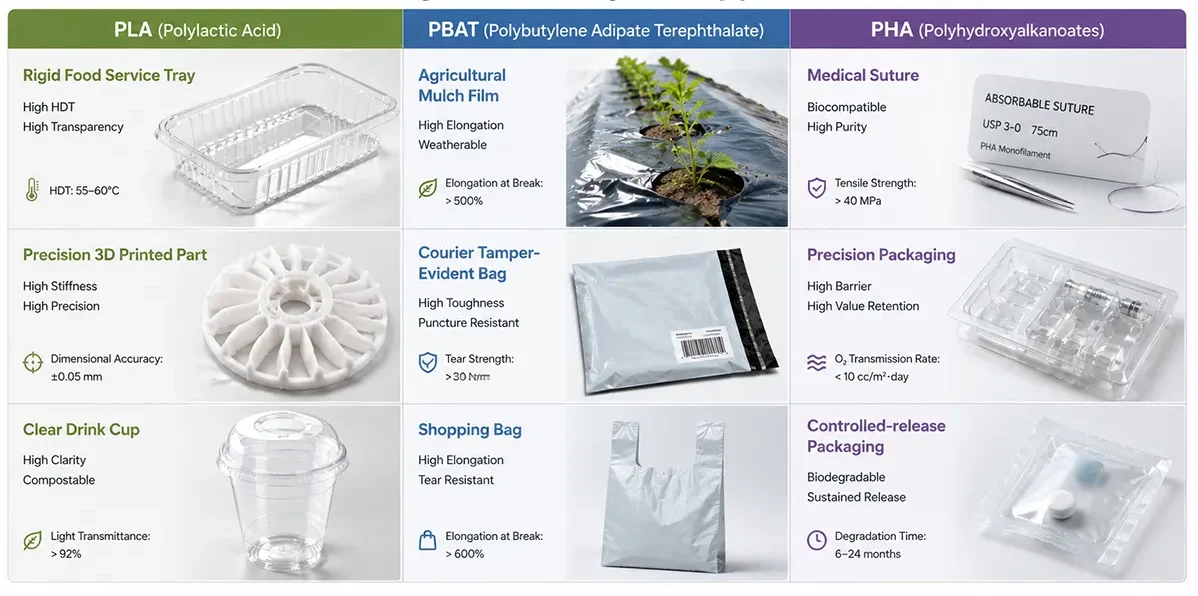
Packaging remains the largest application segment. PLA dominates rigid formats, while PBAT is more widely used in flexible film structures.
Agriculture
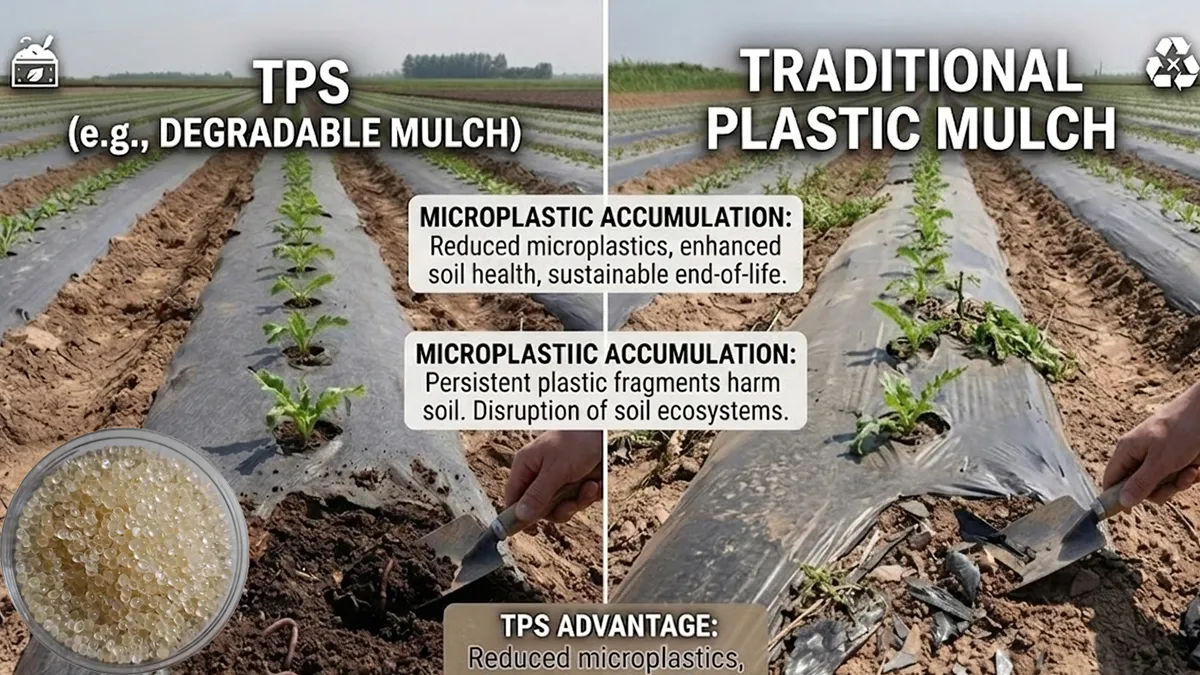
Agricultural films and soil-contact materials increasingly rely on PBAT and PHA-based systems due to controlled degradation behavior.
Food service products
Disposable items such as cups, trays, and cutlery are increasingly shifting toward PLA/PBAT-based formulations driven by regulatory requirements.
3D printing
PLA remains the preferred material for fused deposition modeling due to its stable processing window and consistent mechanical behavior.
Medical & healthcare
PHA is gaining attention in specialized biomedical applications where biocompatibility and controlled degradation are required.
Future Outlook for PLA, PHA, and PBAT
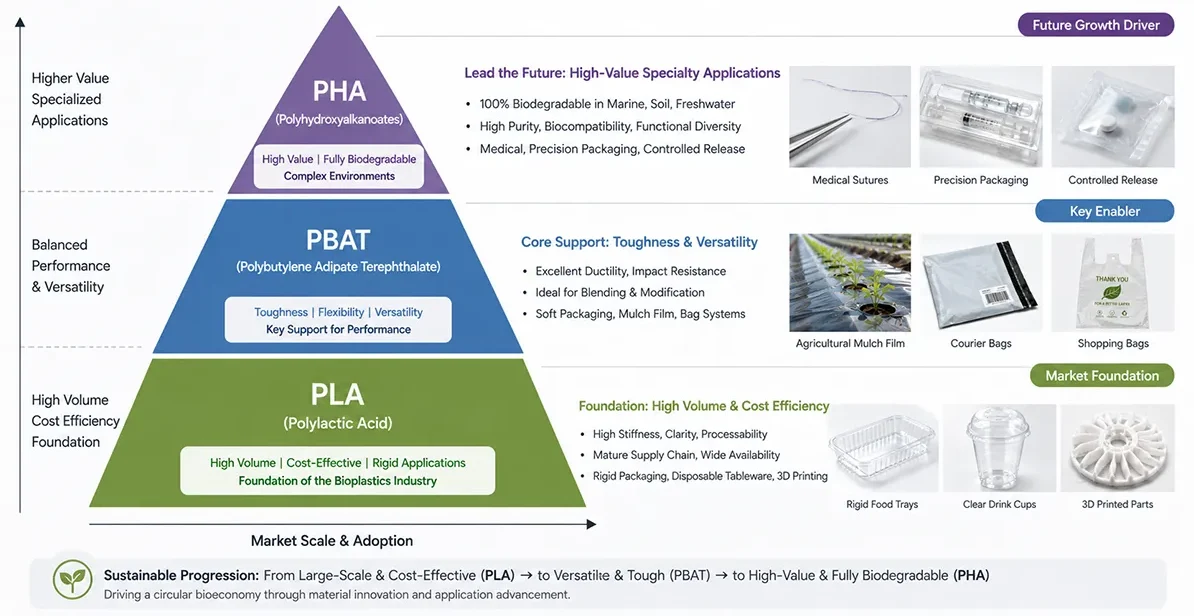
Rather than direct competition, PLA, PHA, and PBAT are increasingly forming a complementary material system, each serving distinct performance and application requirements.
| Material | Outlook |
|---|---|
| PLA | Expected to maintain its position as the dominant biodegradable plastic in high-volume applications such as packaging and consumer goods. |
| PHA | Positioned for growth in higher-value applications where full biodegradability in natural environments provides a clear functional advantage. |
PBAT | Will continue to play a key role in flexible packaging systems, particularly in blend formulations with PLA. |
Conclusion
PLA, PHA, and PBAT are each playing distinct roles in the evolution of biodegradable plastics. PLA continues to dominate high-volume packaging and consumer applications, PBAT remains essential for flexible films and compostable packaging systems, while PHA is gradually expanding into higher-value applications that require broader biodegradation performance.
Rather than competing directly, these materials are increasingly being combined and optimized to meet specific processing, performance, and sustainability requirements. Continued advances in feedstock development, material blending, and manufacturing technologies are expected to support wider adoption across packaging, agriculture, consumer products, and specialty applications.
Understanding the strengths and limitations of each material is becoming increasingly important as companies evaluate sustainable material strategies and product development opportunities.
If you are exploring PLA, PHA, PBAT, or customized biodegradable material solutions for your application, feel free to contact our team for material recommendations, grade selection support, and sourcing assistance.