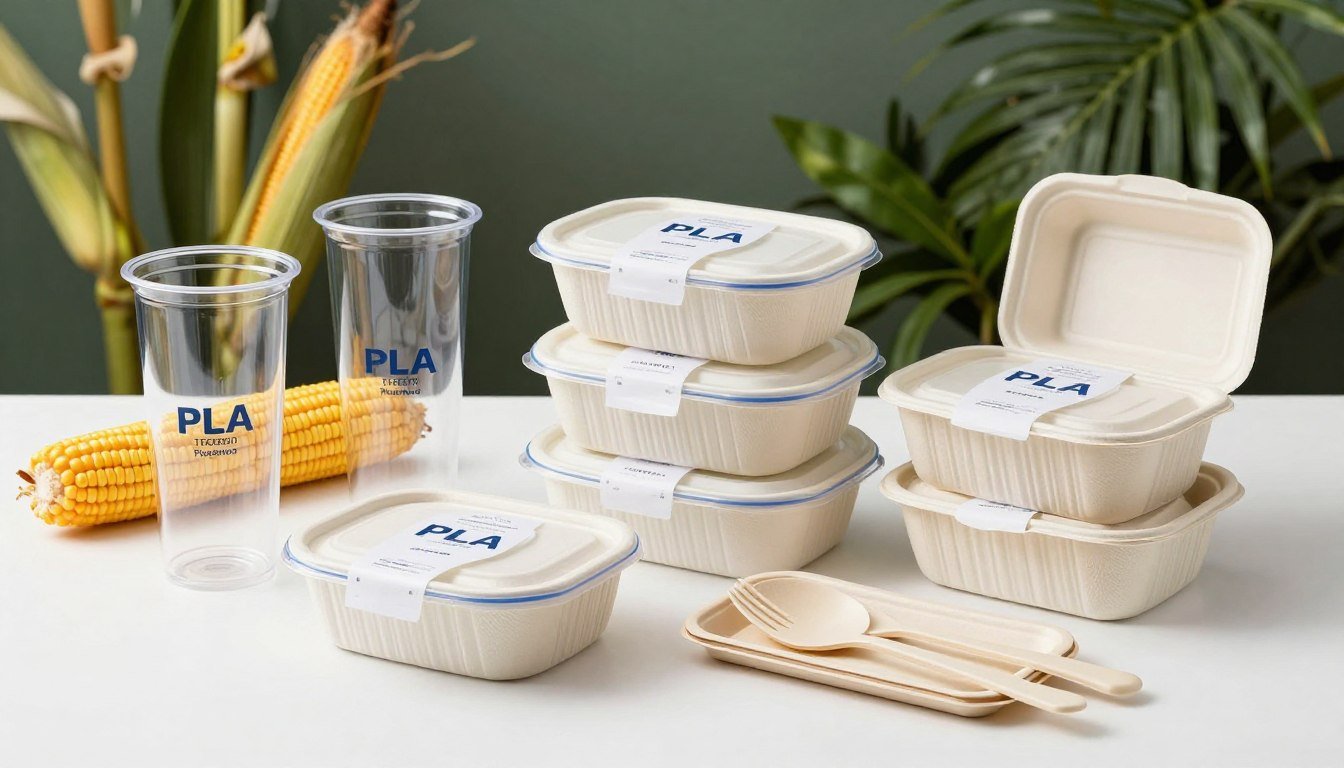
In high-performance polymer modification, Polylactic Acid (PLA) presents a classic engineering conflict: the enhancement of thermal stability often precipitates a dramatic loss in impact toughness.
The Physical Conflict: Why Thermal Stability Induces Brittleness
The HDT of PLA is fundamentally governed by its molecular mobility. Raising the thermal ceiling requires restricting this mobility through increased crystallinity or the addition of rigid inorganic fillers. While these methods successfully lock polymer chains at elevated temperatures, they concurrently reduce the matrix's capacity to absorb mechanical energy.
"Without elastic domains to dissipate energy, the material undergoes catastrophic brittle failure upon impact."
Strategic Solutions: A Synchronized Compounding Strategy
Crystallinity Management
Utilizing high-efficiency nucleating agents or stereocomplexation to reduce amorphous regions that soften prematurely, maximizing crystalline phase without excessive internal stress.
Reactive Elastomeric Integration
Integrating high-molecular-weight modifiers (e.g., PBAT) as energy sinks to initiate micro-voiding or shear yielding to arrest crack propagation.
Interfacial Compatibilization
Using reactive coupling agents to ensure efficient mechanical load transfer across fiber-polymer boundaries, preventing stress concentration sites.
Design Hierarchy
Industrial Consensus: "Stabilize First, Toughen Second"
Establish Thermal Foundation
Use high-purity resin and nucleating agents to reach the target HDT (typically 100℃+).
Calibrate Toughness
Incrementally introduce impact modifiers until the fracture toughness meets the application’s threshold.
Comparative Performance Matrix
Evaluating different PLA modification paths
| Modification Method | HDT Potential | Impact Toughness | Trade-off / Cost |
|---|---|---|---|
| Nucleated Crystallization | High (100℃+) | Low | Increased part shrinkage |
| Elastomer Blending | Moderate (60-70℃) | High | Reduced structural modulus |
| Fiber Reinforcement | Maximum (120℃+) | Low | Increased tool wear |
| Hybrid Synergy | Optimized (110℃+) | Balanced | Requires precise MFI tuning |