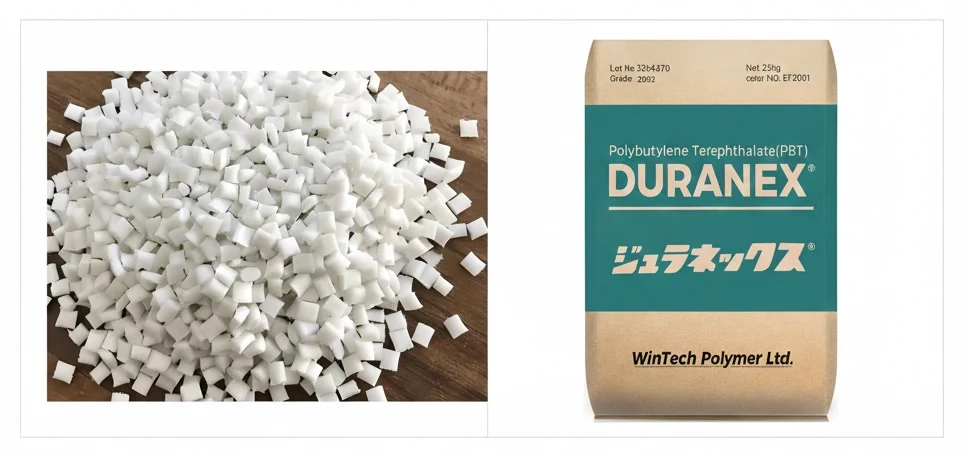
Polyplastics holds a distinguished reputation at the forefront of the global engineering plastics industry, consistently delivering high-performance polymer innovations. The company’s flagship series, Duranex PBT, remains a top choice for international manufacturers who demand exceptional dimensional stability, robust thermal resistance, and superior electrical insulation.
Duranex 2002 represents a premium, unreinforced selection within this acclaimed portfolio. Expertly formulated as a medium-viscosity grade, this resin offers an excellent balance of mechanical toughness and stable melt processability. It is specifically designed for injection molders and product designers who require flawless surface aesthetics and tight dimensional tolerances without the presence of glass fibers.
Key Advantages of Duranex 2002:
- Premium Unreinforced Matrix: Delivers high surface gloss and precise part geometry, eliminating glass-fiber read-through.
- Optimized Medium Viscosity: Provides a reliable rheological profile suitable for consistent molding across intricate tool designs.
- Proven Material Compliance: Manufactured by Polyplastics to align with stringent international electrical and industrial quality standards.
As your strategic material partner, we connect your manufacturing facility with authentic Duranex 2002 PBT, backed by stable global supply chains, complete traceability (COA), and expert technical communication.
Key Features & Performance Advantages
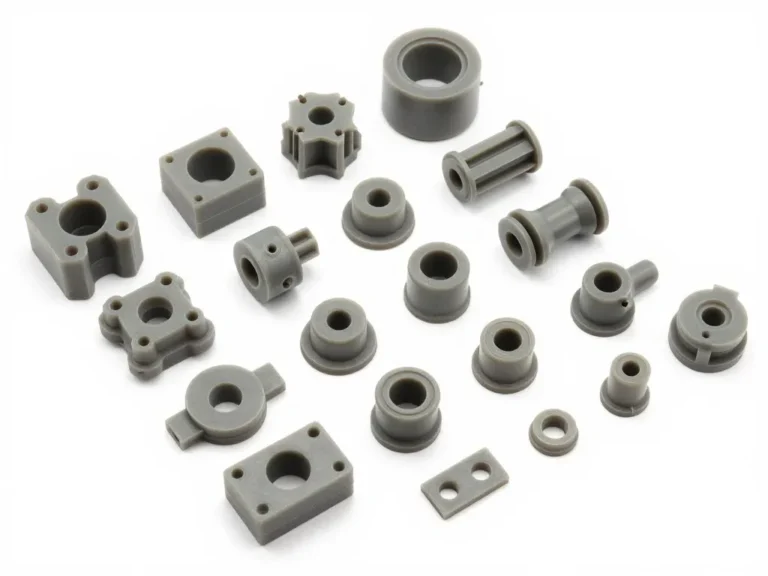
Selecting the right base resin requires a deep understanding of how unreinforced polymers behave under mechanical and environmental stress. Unlike glass-fiber reinforced alternatives that trade surface quality and ductility for rigidity, Duranex 2002 leverages its pure, unmodified polymer structure to deliver an exceptional balance of toughness, precision, and long-term reliability. Compounding plants, injection molders, and product designers utilize these distinct performance characteristics to achieve strict technical specifications in high-precision applications.
Dynamic Mechanical Balance (Without Fiber Brittleness)
- Pure Toughness: Delivers high tensile yield strength and excellent elongation without glass-fiber brittleness.
- No Warping: Eliminates anisotropic shrinkage, making it ideal for flexible living hinges and snap-fits.
- Best for: Living hinges, snap-fit assemblies, and structural clips requiring repeatable flexing without failure.
Advanced Electrical Insulation (High-Dielectric Profiles)
- High Dielectric Strength: Maintains stable insulation and arc resistance across fluctuating temperatures.
- Zero Tracking Risk: Clean, additive-free formulation prevents ionic contamination in E&E connectors.
- Best for: Delicate electrical connectors, automotive sensor housings, and switchgear components.
Superior Dimensional Predictability vs. Polyamides (PA6 / PA66)
- Near-Zero Hydrolysis: Features a moisture absorption rate of ~0.1%, completely outperforming Nylon 6/66.
- Strict Tolerances: Components retain their exact physical dimensions regardless of atmospheric humidity.
✔ Duranex® 2002 PBT: ~0.1% Moisture Intake (Dimensions remain stable)
✘ Standard Nylon 6/66: >2.0% Moisture Intake (Risk of warping & shifting)
Dynamic Mechanical Balance (Without Fiber Brittleness)
- Pure Toughness: Delivers high tensile yield strength and excellent elongation without glass-fiber brittleness.
- No Warping: Eliminates anisotropic shrinkage, making it ideal for flexible living hinges and snap-fits.
- Best for: Living hinges, snap-fit assemblies, and structural clips requiring repeatable flexing without failure.
Duranex 2002 Material Specifications & Technical Data
Below are the verified laboratory test values for Polyplastics Duranex 2002 (Unfilled, High-Impact Base Resin). All parameters conform to rigorous ISO, IEC, and UL testing methodologies.
| Property Classification | Test Standard | Typical Value | Unit |
|---|---|---|---|
| PHYSICAL PROPERTIES | |||
| Density | ISO 1183 | 1.31 | g/cm³ |
| Water Absorption (23°C, 24hr) | ISO 62 | 0.2 | % |
| MECHANICAL PERFORMANCE | |||
| Tensile Strength | ISO 527 | 60 | MPa |
| Elongation at Break | ISO 527 | 50 | % |
| Flexural Modulus | ISO 178 | 2,630 | MPa |
| Charpy Notched Impact (23°C) | ISO 179 | 3.4 | kJ/m² |
| THERMAL PROPERTIES | |||
| Heat Deflection Temperature (HDT @ 1.8MPa) | ISO 75 | 70 | °C |
| ELECTRICAL INSULATION | |||
| Volume Resistivity | IEC 60093 | 5E+16 | Ω·cm |
| FLAMMABILITY | |||
| Flame Rating (0.71mm / 1.5mm / 3.0mm) | UL 94 | HB | All Colors |
📊Need Advanced Material Performance Data & Low-Temp Mechanics?
While standard ISO testing benchmarks provide a reliable baseline, real-world engineering environments demand a deeper look. Duranex® 2002 maintains its exceptional structural integrity and impact resistance even in sub-zero settings down to -40°C, whilst demonstrating unique surface hardness and aroma-retention profiles. For an exhaustive breakdown of the resin’s mechanical aging, fluid interaction thresholds, and dielectric performance curves, explore our specialized technical brief: PBT Duranex® 2002: In-Depth Material Properties & Engineering Analysis .
Primary Applications of Duranex 2002
Aligning material properties with demanding operational environments dictates the commercial success of an engineered component. Duranex® 2002 serves as a reliable material baseline across industries where unreinforced precision, high dielectric strength, and structural integrity are non-negotiable.
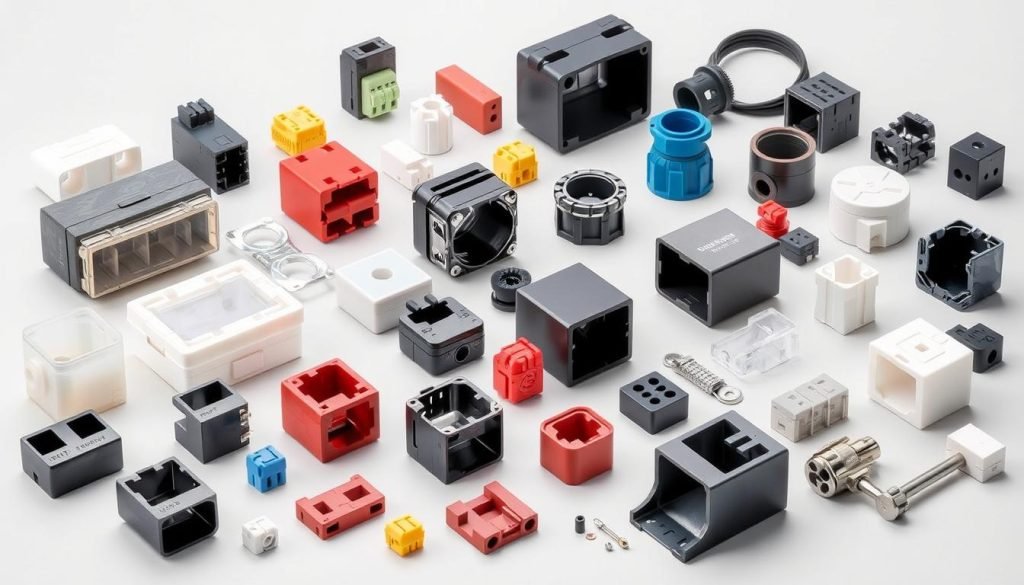
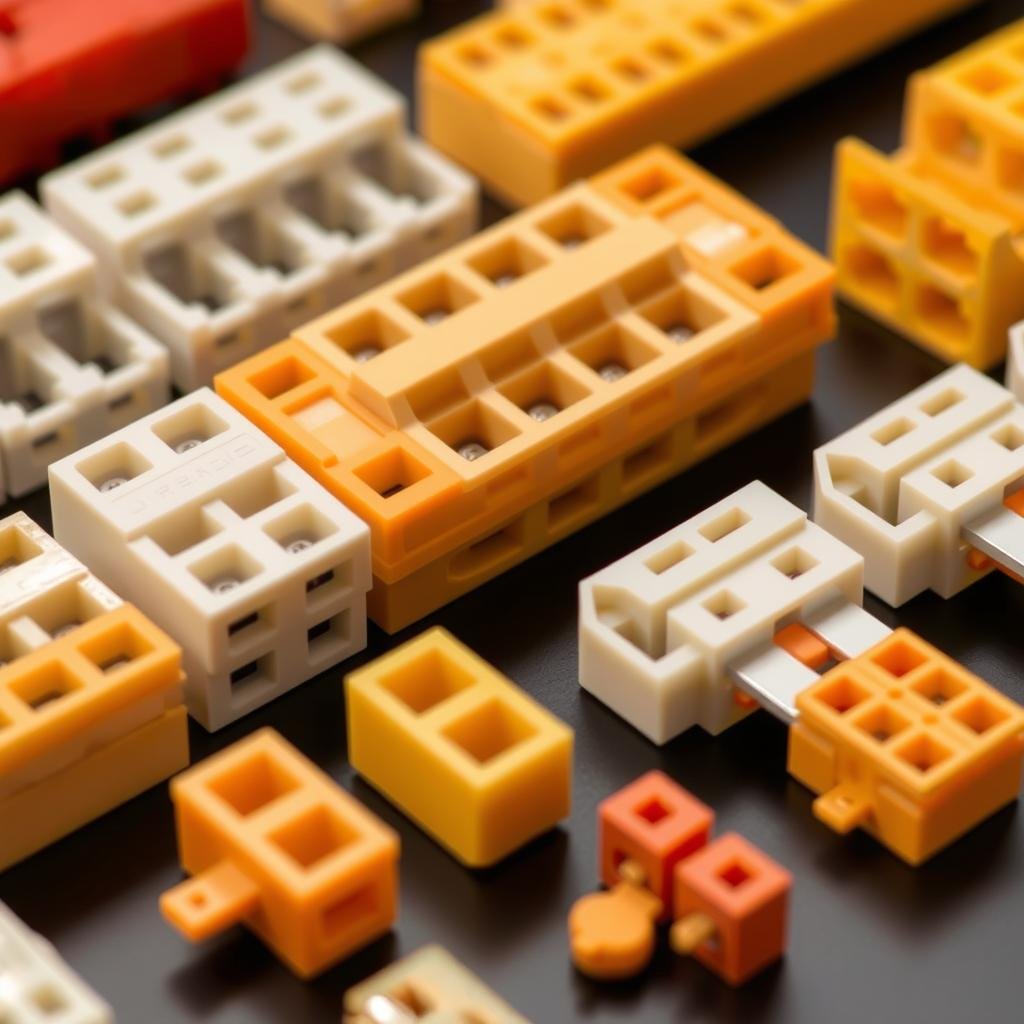
Diverse industrial components manufactured using Duranex 2002 PBT resin
Electrical & Electronics (E&E)
Continuous thermal cycling and continuous voltage exposure require baselines with exceptional long-term insulation properties.
- Key Components: Delicate coil bobbins, heavy-duty relays, insulation plates, and terminal blocks.
- Material Advantage: High arc resistance and a clean, additive-free matrix prevent dielectric tracking failures.
Automotive Industry
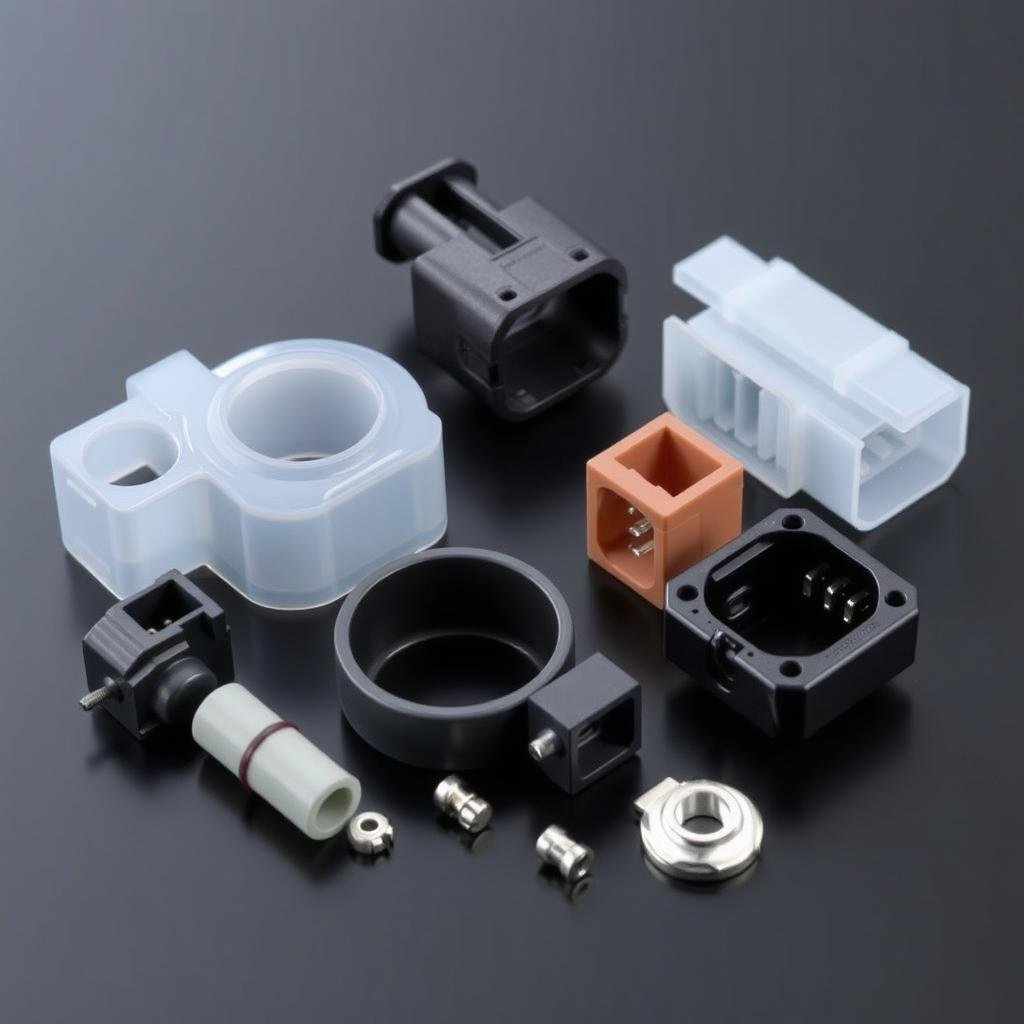
Precision components within the automotive sector rely heavily on materials that maintain tight dimensional clearances under thermal loads.
- Key Components: Electrical connectors, multi-functional switches, sensor housings, and micro-motor enclosures.
- Material Advantage: Provides excellent resistance to automotive fluids and ensures exceptional warpage control during precision assembly.
Compounding Base Resin (For Modification Specialists)
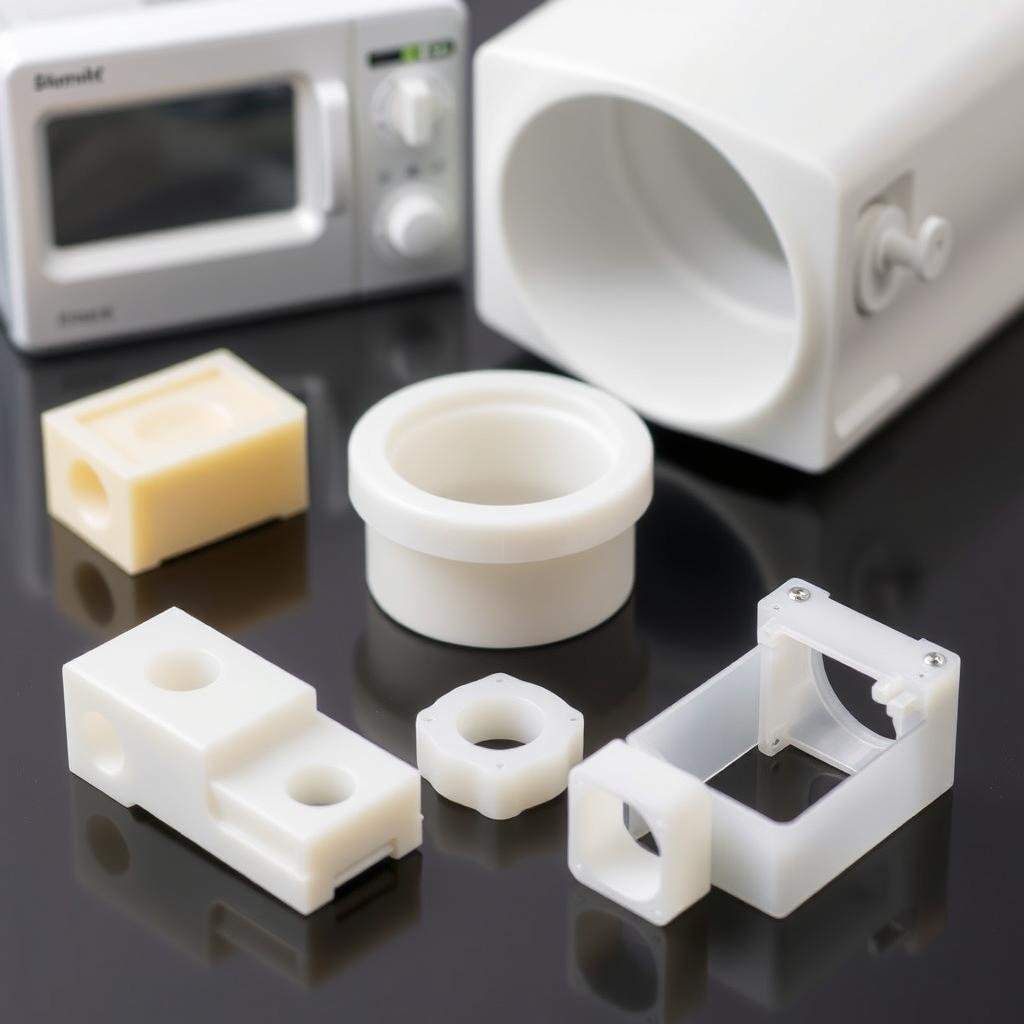
Compounding plants and modification engineers require a clean, predictable polymer matrix to develop high-value functional formulations.
- Modification Fit: Serves as an ideal carrier matrix for flame retardants (FR), impact modifiers, color masterbatches, and functional fillers.
- Processing Advantage: Consistent medium viscosity ensures uniform shear during twin-screw extrusion, supporting stable pelletizing outputs.
💡 Looking for Specific Component Blueprints & Part Design Parameters?
Duranex® 2002 also excels in general precision mechanical parts—such as paper-feed gears for office copiers, power tool battery latches, and appliance sliders with an optimal wall thickness of 0.8–1.8 mm. For a granular breakdown of part geometry and micro-component case studies, read our dedicated application brief: PBT Duranex 2002: Typical Applications & Component Case Studies .
Processing Guide for Injection Molding
Mastering the rheological behavior of unreinforced PBT is essential for unlocking its full performance potential. Below are the recommended processing parameters for engineering teams running Duranex 2002.
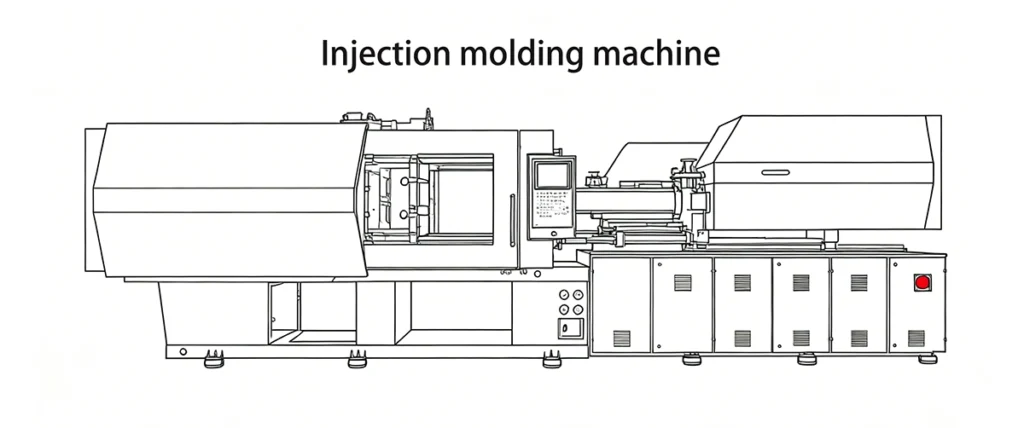
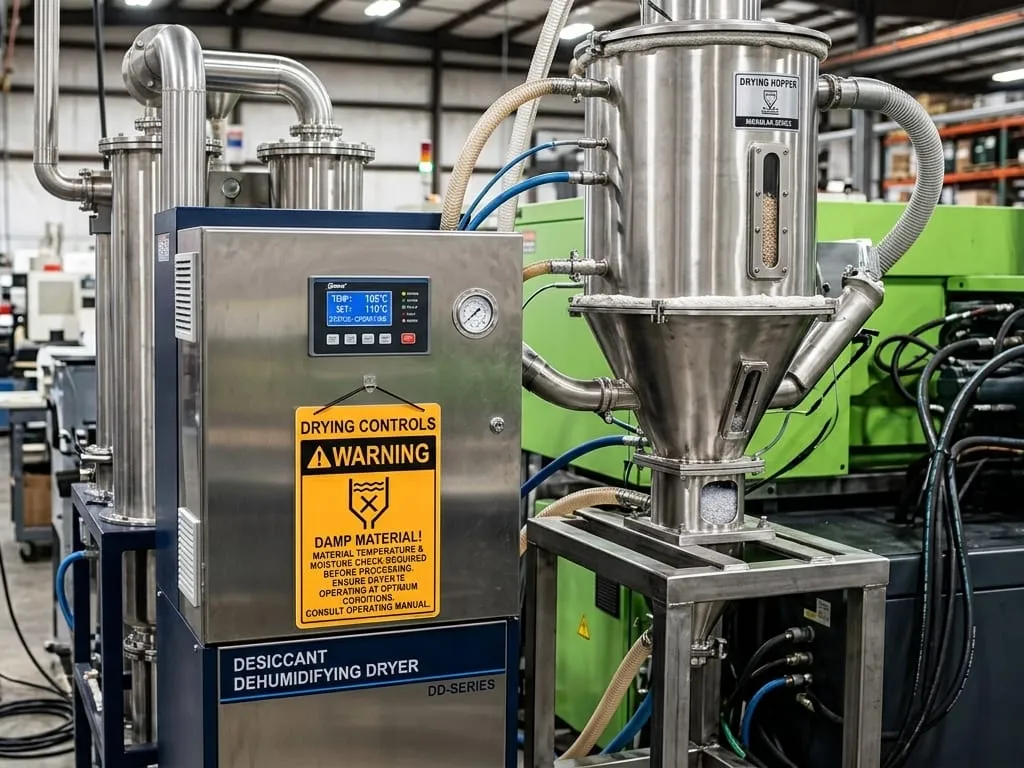
Proper drying is non-negotiable for PBT to prevent hydrolytic degradation (which destroys molecular weight and causes part brittleness) during molding.
- Desiccant Dryer Settings: 120°C to 140°C for 3 to 4 hours.
- Target Moisture Limit: Strictly below 0.02% prior to molding.
- Technical Tip: Avoid prolonged drying exceeding 8 hours to prevent potential thermal discoloration of the neat granules.
| Cylinder & Mold Zone | Recommended Parameter Range |
| Rear / Feed Zone | 230°C – 245°C |
| Center / Compression Zone | 240°C – 255°C |
| Front / Metering Zone | 245°C – 260°C |
| Nozzle Temperature | 250°C – 260°C |
| Optimal Melt Target | 250°C – 260°C |
| Mold Temperature Base | 40°C – 80°C (Higher temperatures optimize aesthetics) |
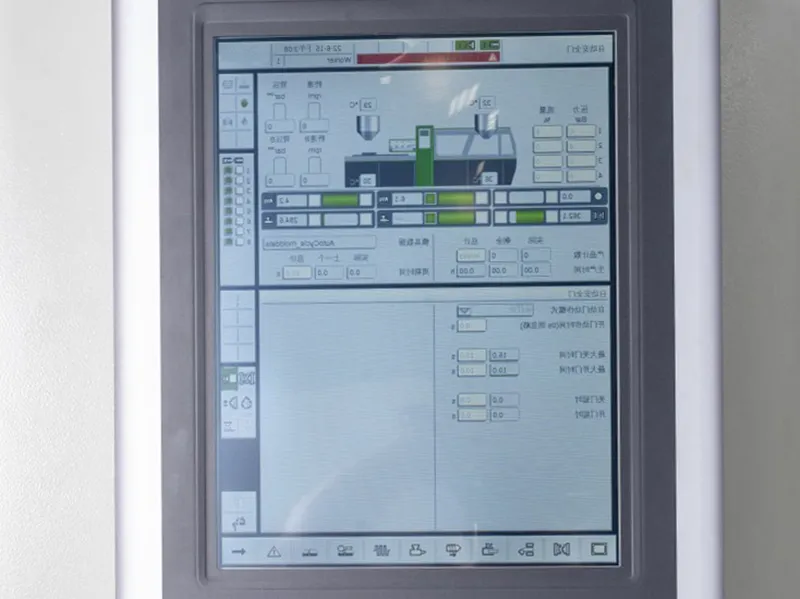
- Injection Speed: Moderate to high velocity profile. Swift mold filling prevents the unreinforced matrix from premature freezing within complex thin-walled paths.
- Injection Pressure Range: 50 to 120 MPa, depending primarily on precision part configurations and gate types.
- Holding Pack Pressure: 40 to 80 MPa. Maintain adequate pack pressure to counteract natural crystal shrinkage, mitigating structural voids and surface sink marks.
- Screw Back Pressure: 5 to 10 MPa. Ensures reliable melt homogeneity and prevents volatile gas pocketing during plasticization.
While mastering these molding parameters ensures the pristine quality of unreinforced PBT, engineering teams often face a critical choice: should they utilize the pure matrix or pivot to a reinforced alternative?
Comparative Selection Strategy: Duranex 2002 vs 3300 (GF30)
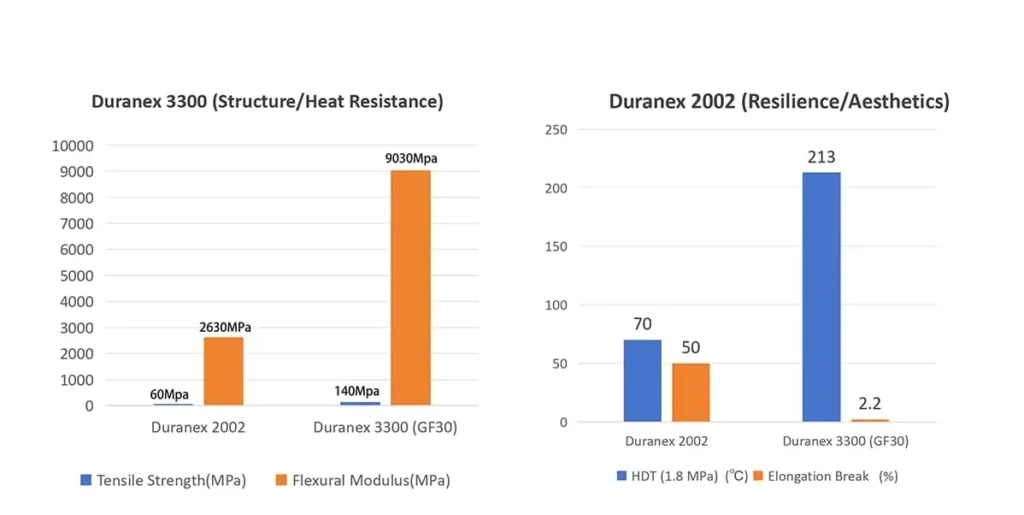
Selecting the optimal PBT grade requires a clear understanding of the design trade-offs between the unfilled baseline and its reinforced counterparts. The comparison below, using the 30% glass-fiber reinforced Duranex 3300 (GF30) as a reference, highlights the performance distinctions that guide the material specification process.
| Property | Duranex® 2002 (Unfilled) | Duranex® 3300 (GF30) | Design Implications |
|---|---|---|---|
| Tensile Strength | 60 MPa | 140 MPa | GF30 provides >2x structural load capacity. |
| Flexural Modulus | 2,630 MPa | 9,030 MPa | GF30 provides >3x higher stiffness for load-bearing. |
| HDT (1.8 MPa) | 70°C | 213°C | GF30 offers significantly higher thermal resistance and creep stability. |
| Elongation at Break | 50% | 2.2% | 2002 delivers high ductility and exceptional impact tolerance. |
| Surface Finish | Pristine, High-Gloss | Fair (Fiber visible) | 2002 is mandatory for highly aesthetic external components. |
| Dimensional Stability | Isotropic (Low Warpage) | Anisotropic (Moderate Warpage) | 2002 minimizes distortion in flat or complex geometries. |
| Material Cost | Lower Cost Advantage | Higher | 2002 provides a notable raw material cost optimization. |
🔍 Looking for Higher Thermal Loads or UL94 V-0 Grades?
If your project requires structural glass-filled alternatives like Duranex 3300 (GF30), cross-reference our Polyplastics Duranex PBT: Ultimate Sourcing & Grade Selection Guide to unlock full inventory specifications.
Choose Duranex 2002 When:
- Aesthetics and Finish Quality are primary external requirements.
- Ductility, impact absorption, or resilient snap-fit features are necessary.
- Complex geometries or thin-walled parts require maximum melt flow and uniform shrinkage.
- Tightly toleranced components require isotropic dimensional stability to eliminate warpage.
- Project cost optimization is prioritized over maximum structural performance.
- Operating temperatures remain strictly below 70°C under continuous mechanical load.
Choose Duranex 3300 (GF30) When:
- High mechanical loads and sustained structural rigidity are mandatory.
- Elevated temperature performance (up to 213°C HDT) is essential.
- Creep resistance and long-term dimensional stability under continuous stress are critical.
- Modulus-to-weight ratio is a key metric for lightweight structural parts.
- The part design can accommodate anisotropic shrinkage and potential fiber flow lines on the surface.
Need Expert Material Selection Guidance?
Our technical specialists can help you determine whether Duranex 2002 or another grade is optimal for your specific application requirements.
Conclusion
Selecting a high-precision resin like Duranex® 2002 is only the first step toward manufacturing excellence. For compounding plants and injection molders, securing a reliable, transparent, and technically competent supply chain partner is what guarantees long-term operational profitability.
Why Partner with Us for Your Duranex® 2002 Sourcing?
100% Authentic Resin
We supply strictly factory-sealed branded polymer resins with full traceability and batch consistency for every shipment.
Stable Ready Stock
Avoid unexpected downtime. We maintain strategic buffer stocks near key shipping hubs to ensure predictable lead times.
Flexible MOQ Framework
From low-volume trials for modification specialists to full container loads for large factories, we optimize your supply costs.
Efficient Global Logistics
Leveraging efficient international trade networks, we handle complex export compliance and documentation seamlessly.
For volume pricing inquiries, to request the official Technical Data Sheet (TDS/MSDS), or to verify current batch availability, please reach out to our engineering sales team directly. You can contact us via Email at jerry@salesplastics.com or message us on WhatsApp at +61 468862776. We look forward to supporting your next high-precision manufacturing cycle and will respond with a data-backed commercial proposal within 12 business hours.