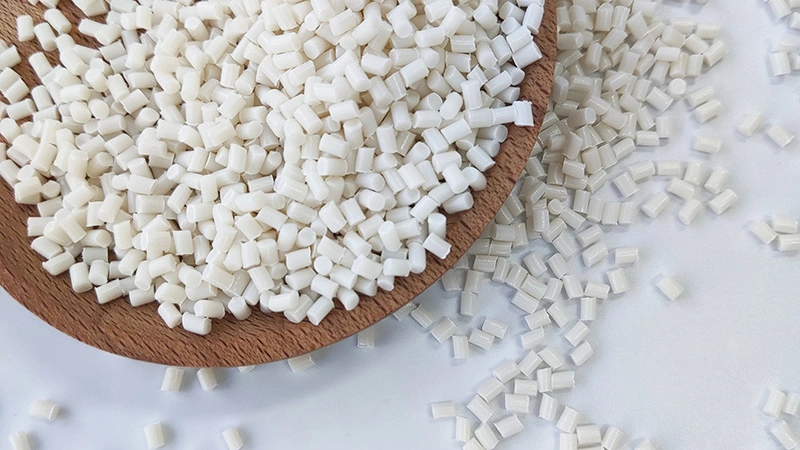
High-Density Polyethylene (HDPE) pipes offer exceptional strength, flexibility, and chemical inertness, making them a reliable choice for water distribution, gas transport, and industrial piping systems. Produced through precision extrusion, their high molecular weight structure ensures long-term durability in demanding environments, from urban infrastructure to industrial facilities. Lightweight construction reduces transportation costs, and flexible design simplifies installation, accelerating project timelines.
What is High-Density Polyethylene (HDPE)?
High-density polyethylene (HDPE) is a semi-crystalline thermoplastic polymer produced through the polymerization of ethylene monomers. It features a linear molecular structure with low branching and high crystallinity, resulting in greater tensile strength and stiffness compared to low-density polyethylene (LDPE) or linear low-density polyethylene (LLDPE).
Typical HDPE has a density between 0.941 and 0.965 g/cm³, which directly influences its mechanical performance and barrier characteristics. Polymerization is achieved using Ziegler-Natta or metallocene catalysts, allowing for precise control of molecular weight distribution and resin flow behavior. These catalysts produce uniform polymer chains, supporting stable processing and consistent product quality.
Thanks to its structural properties, HDPE exhibits excellent chemical resistance, moisture barrier performance, and impact resistance. It maintains dimensional stability in a temperature range from -40°F to 180°F (-40°C to 82°C), making it suitable for both low-temperature outdoor environments and warm industrial systems.
HDPE’s resistance to acids, bases, and many organic solvents supports its use in corrosive fluid handling, chemical storage, and long-life infrastructure components. Its combination of strength, processability, and resistance characteristics allows manufacturers to use HDPE pellets in demanding applications without compromising durability.
Physical and Mechanical Properties of HDPE
High-Density Polyethylene (HDPE) pellets are engineered for exceptional physical and mechanical performance, making them ideal for manufacturing durable pipes and other products. Key properties include:
- Density: Ranges from 0.93 to 0.97 g/cm³, providing a lightweight yet robust material suitable for diverse applications.
- Tensile Strength: 21–37 MPa, enabling HDPE pipes to resist significant tensile stress without fracturing, ideal for high-pressure systems.
- Elongation at Break: Exceeds 350%, offering flexibility for installations in dynamic environments, such as areas prone to ground movement.
- Flexural Modulus: 800–1,500 MPa, balancing stiffness and flexibility to withstand bending stress without deformation.
- Impact Resistance: Maintains integrity at low temperatures (down to -40°C), ensuring reliability in cold climates.
- Environmental Stress Crack Resistance (ESCR): Resists cracking under prolonged stress, extending service life in harsh conditions.
- UV Resistance: With additives like carbon black, HDPE withstands UV degradation, making it suitable for outdoor applications.
- Thermal Performance: Operates reliably from -40°C to 60°C with a thermal expansion coefficient of 100–200 µm/m·°C, accommodating temperature fluctuations.
- Operating Temperature: Suitable for continuous use up to 60°C and short-term exposure up to 80°C, supporting applications like water distribution and industrial fluid transport.
These properties make HDPE pellets a preferred choice for manufacturing pipes that deliver long-term performance, corrosion resistance, and adaptability to challenging environments.

Benefits and Features of HDPE Pipe
HDPE pipes combine mechanical strength, chemical resistance, and installation efficiency, making them suitable for industrial, municipal, and infrastructure applications. Under standard conditions, service life can exceed 50 years, with some systems performing well beyond 100 years.
Key Advantages of High density polyethylene Systems:
- Corrosion and Chemical Resistance: HDPE does not corrode, rust, or degrade in contact with aggressive chemicals, unlike traditional metal or concrete materials. This minimizes long-term maintenance and replacement costs.
- Lightweight and Easy to Handle: HDPE pipes are significantly lighter than traditional alternatives, reducing transportation and installation costs by up to 40%.
- Low Friction Loss: Smooth internal walls result in a lower Manning’s coefficient, enhancing flow efficiency and reducing energy requirements in fluid transport systems.
- Flexibility: The inherent flexibility of HDPE allows for installation with fewer fittings and accommodates ground shifts, reducing risk of joint failure.
- Leak-Free Heat Fusion Joints: Heat fusion creates homogenous joints that are as strong as—or stronger than—the pipe itself, virtually eliminating leakage.
- Biological Resistance: HDPE is resistant to biofilm formation, scaling, and tuberculation, preserving flow capacity and water quality over time.
- Trenchless Installation Capability: HDPE’s ductility makes it ideal for directional drilling, pipe bursting, and sliplining methods, minimizing excavation and surface disruption.
- Seismic and Ground Movement Tolerance: HDPE pipes absorb ground movement and vibration without cracking, making them reliable in unstable or earthquake-prone areas.
These advantages make HDPE pellets the preferred material for manufacturing durable pipe systems used in potable water, wastewater, mining, and industrial chemical transport networks.

High-density polyethylene Specifications and Pellet Requirements
High-Density Polyethylene (HDPE) pipes, produced from premium HDPE pellets, are tailored for applications such as water distribution, gas transport, and drainage. The pipe’s structure, wall thickness, and performance depend on the extrusion process and the intended pressure rating, requiring specific pellet grades to meet mechanical and environmental standards.
SDR and Pressure Classes
Two key classification systems are used for high density polyethylene pipes design:
- SDR (Standard Dimension Ratio) – the ratio of pipe outer diameter to wall thickness. Lower SDR values indicate thicker walls suitable for higher pressure resistance.
- PN (Pressure Nominal) – defines the pipe’s rated working pressure at 20°C, typically ranging from PN 2.5 to PN 25.
The required HDPE pellet grade must match these mechanical expectations. Higher-pressure pipes require pellets with high tensile strength, excellent melt strength, and consistent molecular weight distribution.
Main Pipe Types Produced from HDPE Pellets
- Solid Wall Pipes: Used in pressurized water, gas, and chemical transport systems. These require high-quality, virgin-grade HDPE pellets with excellent stress crack resistance and long-term strength.
- Corrugated Pipes: Applied in non-pressure applications like drainage and cable protection. These are made using more flexible or cost-effective pellet formulations.
- Perforated Pipes: Designed for subsurface drainage, made from standard HDPE but with specific extrusion and perforation processes.

Selecting the right HDPE pellet type is critical to ensuring that the final pipe product meets required mechanical, thermal, and environmental standards.
Applications of HDPE Pipes
High-Density Polyethylene (HDPE) pipes, manufactured from high-quality extrusion-grade HDPE pellets, are essential for reliable infrastructure and industrial systems. These pellets, supplied by our company, enable the production of durable, corrosion-resistant pipes used across diverse applications, ensuring performance and cost efficiency.
- Municipal Water Systems: HDPE pipes, extruded from our premium pellets, are ideal for potable water supply and fire protection systems. Their leak-free heat fusion joints and 50–100-year lifespan ensure safe, long-term water delivery, meeting NSF/ANSI 61 standards for water purity.
- Agricultural Irrigation: Produced from UV-resistant HDPE pellets, these pipes support irrigation networks and sprinkler systems. Their flexibility simplifies installation in varied terrains, reducing costs and maintenance.
- Industrial and Mining Operations: HDPE pipes, made from chemically inert pellets, safely transport corrosive substances in chemical plants and slurries in mining operations. Their abrasion resistance and durability minimize maintenance costs.
- Telecommunications: Extruded from impact-resistant HDPE pellets, these pipes serve as conduits for fiber optic cables and telecommunications ducting. Their smooth interiors protect cables during installation and operation.
- Hydroelectric Projects: HDPE pipes, manufactured from high-pressure-rated pellets, are used for penstock linings and cooling water systems in hydroelectric plants, offering corrosion resistance and reliability in demanding conditions.
Industry Standards and Certifications for HDPE Pellets
HDPE pellets used for pipe manufacturing must meet strict quality and performance standards to ensure reliable end products. Our HDPE pellets comply with industry specifications that support production of pipes conforming to global standards, including:
- ISO 4427 – Governing polyethylene pipes for water supply systems (typically PE80 and PE100 grades)
- ISO 4437 – Covering polyethylene pipes used in gas distribution with requirements for slow crack growth resistance
- ASTM D3035 – Standard specification for polyethylene pressure pipes, focusing on dimensional tolerances and mechanical properties
- NSF 61 – Certification ensuring materials are safe for potable water applications, controlling chemical leaching
Our pellets undergo rigorous quality control to ensure consistent melt flow, density, and mechanical properties, enabling manufacturers to produce pipes that pass these international standards and certifications.
FAQ
Q:HDPE pipes are widely used in municipal water supply networks, natural gas distribution, sewage and stormwater drainage, agricultural irrigation systems, and protective conduits for electrical and communication cables due to their corrosion resistance, flexibility, and chemical inertness.
Q:HDPE pipes offer superior impact resistance, flexibility, and chemical resistance compared to PVC pipes. They are better suited for environments with ground movement and high internal pressures. PVC pipes are more rigid and generally less expensive but are more prone to cracking under stress.
Q:HDPE is most commonly employed in water and gas pipeline systems, wastewater management, drainage infrastructure, and agricultural irrigation networks.
Q:HDPE has limited temperature resistance, typically unsuitable for continuous use above 60°C. It can also degrade under prolonged ultraviolet light exposure if not stabilized with UV additives.
Q:HDPE piping is ideal for buried infrastructure such as potable water distribution, gas pipelines, sewer systems, chemical transport lines, and irrigation systems requiring durability and leak resistance.
Q:High-density polyethylene is used to manufacture pressure pipes, plastic containers, industrial drums, caps, films, and various injection- and blow-molded products where chemical resistance and toughness are essential.
Q:Use HDPE piping when applications demand high impact resistance, flexibility, chemical inertness, and resistance to corrosion, especially in underground installations or environments with shifting soil conditions.
Q:No. HDPE is a polyethylene polymer characterized by flexibility, chemical resistance, and toughness. PVC is polyvinyl chloride, generally more rigid, less flexible, and with different chemical resistance profiles.
Q:Yes. high density polyethylene hdpe pipe are impermeable to water and do not absorb moisture, making them fully waterproof.
Q:High-density polyethylene (HDPE) is used in producing pipes, filament, sheets, containers, and plastic films for applications requiring durability and chemical resistance.
Conclusion
High-Density Polyethylene (HDPE) pellets are essential for producing durable, corrosion-resistant, and versatile HDPE pipes used in water supply, gas distribution, and industrial applications. Their chemical inertness, UV stability, and recyclability ensure long-lasting performance in demanding environments.
If you have questions about High Density Polyethylene(HDPE) or our products, get in touch.
You can email us at jerry@salesplastics.com or call +8618657312116. We’re here to help.