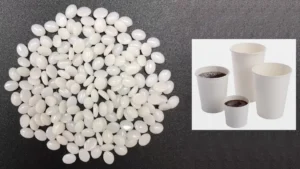
Polyhydroxyalkanoates (PHA) are emerging as a leading bioplastic due to their superior gas and water barrier properties. Compared to bioplastics like Polylactic Acid (PLA) and Polybutylene Adipate Terephthalate (PBAT), PHA offers significant advantages in applications requiring long-lasting product preservation, such as food packaging and medical products.
Key Barrier Properties
Water Vapor Transmission Rate (WVTR)
Indicates a material's ability to resist water vapor permeation. Lower values signify better moisture resistance.
Oxygen Transmission Rate (OTR)
Measures oxygen barrier efficiency, crucial for preventing oxidation in food and medical products.
"PHA (particularly PHB) shows significantly better resistance to both water and oxygen transmission than PLA and PBAT."
Barrier Performance Comparison
| Material | WVTR (g·mm/m²·day) | OTR (cm³·mm/m²·day·atm) |
|---|---|---|
| PHA (PHB) | 1.0–5.0 | 2.0–10.0 |
| PHA (PHBV) | 1.0–3.0 | 5.0–14.0 |
| PLA | 5.0–10.0 | 15.0–25.0 |
| PBAT | High (~40) | Medium (~600) |
Note: Lower values indicate superior barrier performance.
Why Barrier Properties Matter
Water Vapor Transmission
Excess moisture can spoil food products. PHA’s low WVTR ensures that moisture-sensitive items remain fresh longer.
Oxygen Transmission Rate
Oxygen exposure leads to spoilage and loss of nutrients. PHA ensures product integrity, especially for snacks and dry goods.
Key Advantages of PHA
Superior Performance
PHB’s water vapor resistance is up to five times better than PLA, and its oxygen resistance is superior to both PLA and PBAT.
Food Packaging
Ideal for food packaging, maintaining freshness without additional coatings or multi-layer packaging, unlike PLA.
Sustainability
Fully biodegradable, offering an eco-friendly alternative to PET. Read: "The Ultimate Fully Biodegradable Revolution" →
Versatility
PHA offers flexibility, with PHBV providing a balance between barrier properties and toughness for diverse applications.
Real-World Applications
Food Packaging
Coffee pods, dry snacks, and fresh produce benefit from PHA’s superior barrier properties.
Medical Packaging
Ensures the protection of sterile products while remaining fully biodegradable.
Electronics
Protects sensitive electronic devices from moisture and oxygen damage.
Conclusion
PHA offers exceptional barrier properties that outperform PLA and PBAT, particularly in applications where product preservation is essential. Its combination of high performance and biodegradability positions it as a valuable material in packaging, medical, and electronics industries.