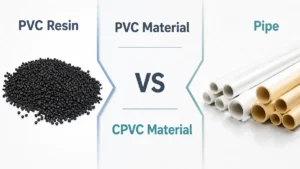
Selecting the wrong PVC grade can lead to processing instability, inconsistent product quality, higher scrap rates, and unnecessary production costs. For industrial manufacturers, choosing the right resin requires more than simply matching a product to its application. K-Value, processing method, required material performance, and key quality parameters all need to be considered together.
This guide provides a practical framework for selecting PVC resin based on application and processing requirements. It explains how K-Value relates to PVC grade selection, compares common grades for different industrial applications, and highlights the key resin specifications buyers should verify before production and procurement.
What Is PVC Material and Key Selection Parameters?
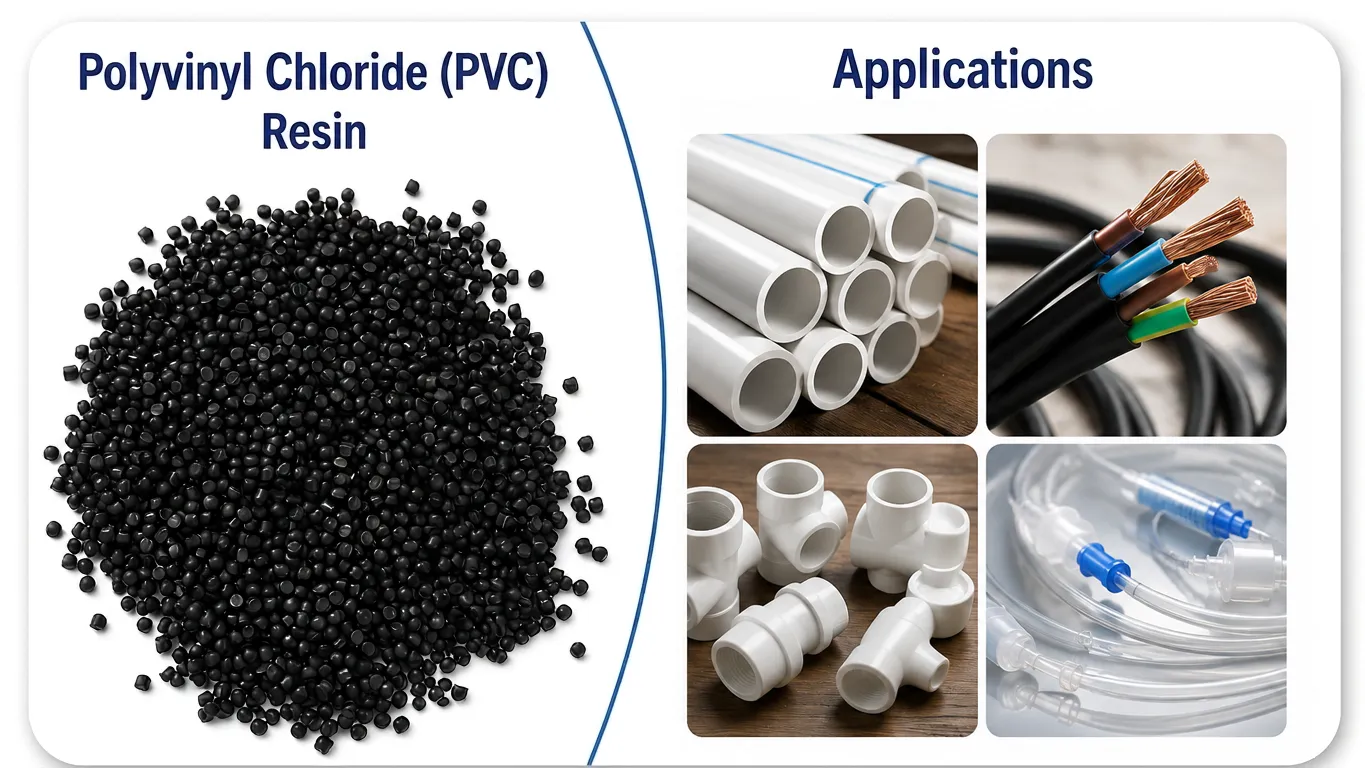
Polyvinyl Chloride (PVC) is a versatile thermoplastic polymer used across construction, electrical, healthcare, packaging, and other industrial applications. For resin selection, the polymerization method and molecular weight are key factors because they influence particle characteristics, processing behavior, and suitability for downstream applications.
Suspension PVC (S-PVC)
>80% Global OutputProduced by suspension polymerization, S-PVC forms porous particles with good plasticizer absorption and consistent particle characteristics. It is widely used as a base resin for rigid extrusion, injection molding, and flexible PVC compounds.
⚙️ Primary Route: Rigid Extrusion, Pipe Fittings & Flexible PVC Compounds
Emulsion PVC (E-PVC)
Paste & Coating Grade
Produced by emulsion polymerization, E-PVC consists of fine particles designed for dispersion into liquid formulations. It is primarily used in plastisols, coatings, artificial leather, dip coating, and slush molding.
🎨 Primary Route: Plastisols, Artificial Leather, Dip Coating & Slush Molding
Matching Molecular Weight to Downstream Industrial Processing
Critical Quality & Physical Parameters
K-Value Tolerance
±0.5 K-Value
Indicates consistency in molecular weight and melt behavior. A controlled K-Value range helps maintain stable processing conditions and reduce batch-to-batch variation.
Bulk Density
0.45–0.58 g/cm³
Affects resin feeding, conveying, and extrusion throughput. Consistent bulk density supports stable material handling and more predictable processing.
Residual VCM
<1.0 ppm
Important for resin purity and regulatory requirements, particularly in applications such as medical products and food-contact materials where tighter limits may apply.
Main Types of PVC Material
Industrial PVC divides into two primary compounded categories—Rigid (PVC-U) and Flexible (PVC-P)—alongside specialized engineered resins. Aligning downstream application requirements with the appropriate compounding formulation is essential for optimal melt processing.
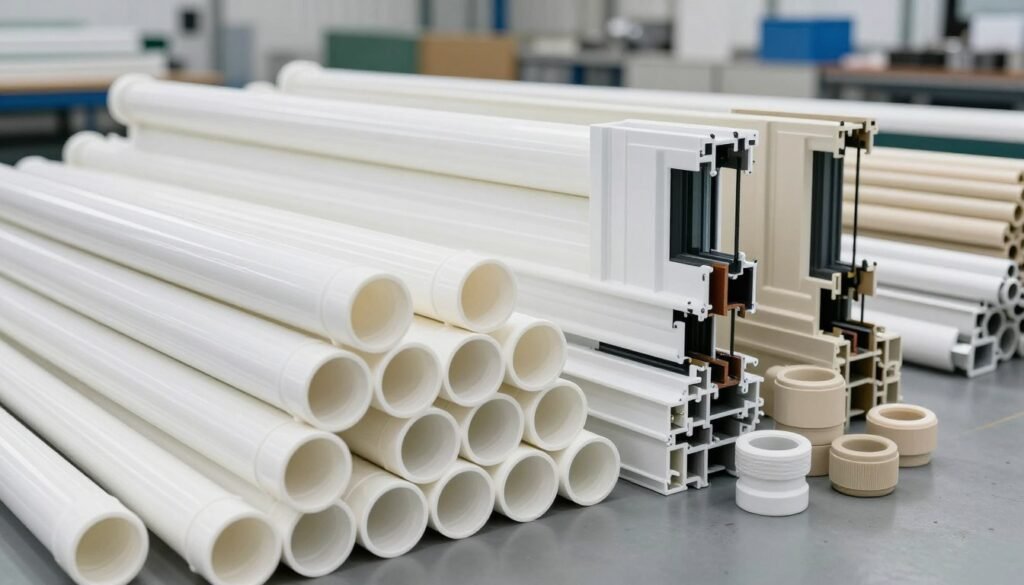
Rigid PVC (PVC-U) Unplasticized
Unplasticized formulations offer high tensile strength, structural stiffness, and excellent chemical resistance.
- Primary Grades: SG-5 SG-8
- Key Uses: Pressure pipes, structural profiles, conduits, and rigid packaging.
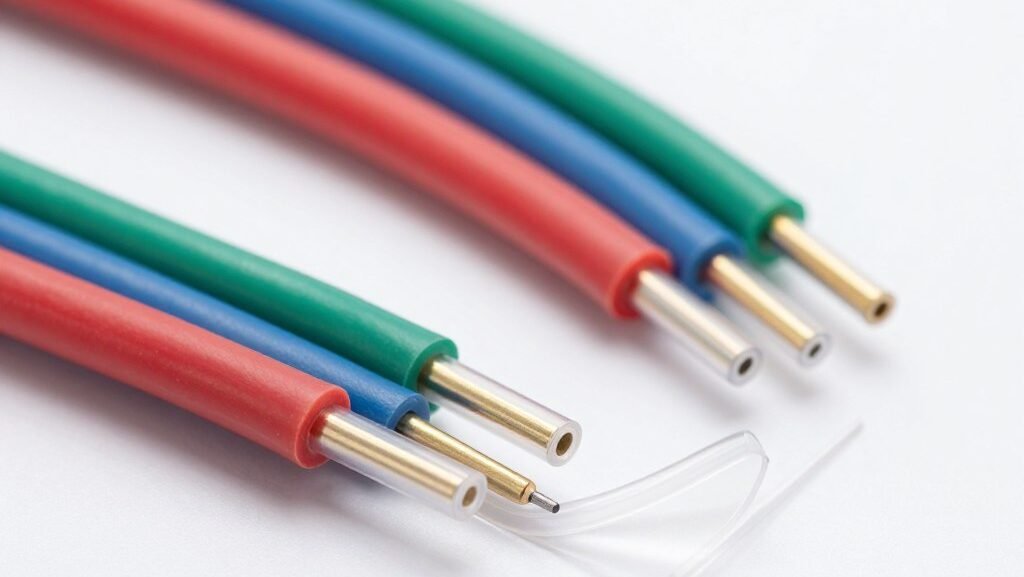
Flexible PVC (PVC-P) Plasticized
Compounded with plasticizers (e.g., DOTP, DINCH) to achieve high elasticity, flexibility, and lower processing temperatures.
- Primary Grades: SG-3 (K-70–72)
- Key Uses: Cable insulation, medical tubing, flexible hoses, and soft films.
Specialty & Engineered Resins
CPVC (Chlorinated PVC)
Emulsion PVC (E-PVC / Paste)
To optimize extrusion efficiency and prevent compound degradation, choosing high-purity base resin with tight molecular distribution is essential.
PVC Grade Selection Guide: K-Value Matching Matrix
K-value is an important indicator of the average molecular weight of PVC resin. It affects melt viscosity, mechanical strength, plasticizer absorption, and processing behavior. In general, a higher K-value indicates higher molecular weight, which can improve strength but also increase melt viscosity and processing difficulty.
For practical grade selection, the following matrix provides a general reference:
| K-Value | Typical SG Grade | Typical Use | Processing Behavior |
| K-57–58 | SG-8 | Injection molding | Higher flow and easier processing |
| K-65–67 | SG-5 | Rigid extrusion | Balanced flow, strength, and processability |
| K-70–72 | SG-3 | Flexible PVC | Higher plasticizer absorption |
The relationship can be understood simply: lower K-values generally provide better melt flow, while higher K-values tend to provide higher molecular weight and mechanical strength. However, the final processing behavior also depends on plasticizer content, stabilizers, fillers, processing aids, and the specific formulation.
For this reason, K-value should be considered together with the intended application and processing method rather than used as the only criterion for PVC grade selection.
Critical Incoming Quality Control Indicators
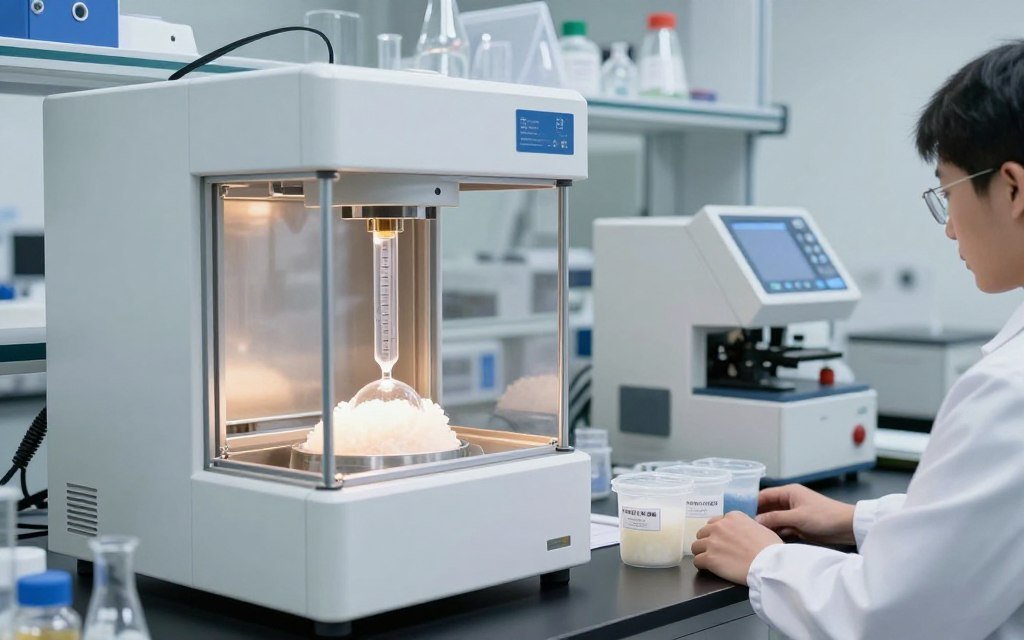
Beyond K-value selection, raw resin quality and batch consistency directly affect processing stability and final product quality. After receiving PVC resin, buyers should verify the following key indicators against the supplier’s COA and agreed specifications.
| QC Indicator | What to Check | Why It Matters |
| COA | Batch number, test results, and specification limits | Confirms the delivered material meets the agreed requirements |
| K-Value | Actual value versus the agreed specification | Helps confirm consistent processing behavior |
| Bulk Density | Actual value versus the specified range | Supports stable powder feeding and handling |
| Moisture / Volatile Content | Test result versus the specified limit | Helps prevent processing and quality issues |
| Residual VCM | Actual content versus the applicable specification | Verifies resin purity and compliance requirements |
| Batch Consistency | Results across different batches | Helps identify quality fluctuations over time |
A clear set of acceptance criteria helps buyers maintain consistent PVC resin quality from batch to batch.
Key Industrial Applications of PVC Material
Different PVC applications place different demands on resin flow, strength, flexibility, purity, and processing performance. Grade selection should therefore be matched to both the manufacturing process and the final product requirements.
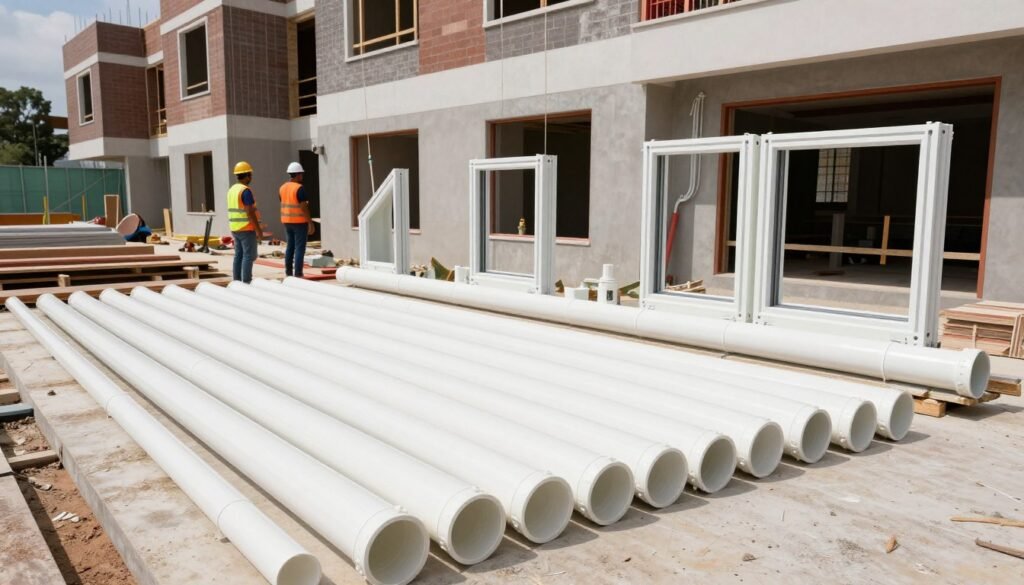
Pipes, Fittings & Structural Profiles
Pressure pipes and pipe fittings require a combination of mechanical strength, dimensional stability, and reliable processing.
- Pressure Pipes → SG-5: A common choice for rigid extrusion, offering a balance of strength and processability.
- Pipe Fittings → SG-8: Often preferred for injection molding because of its higher flow characteristics.
Wire & Cable Insulation
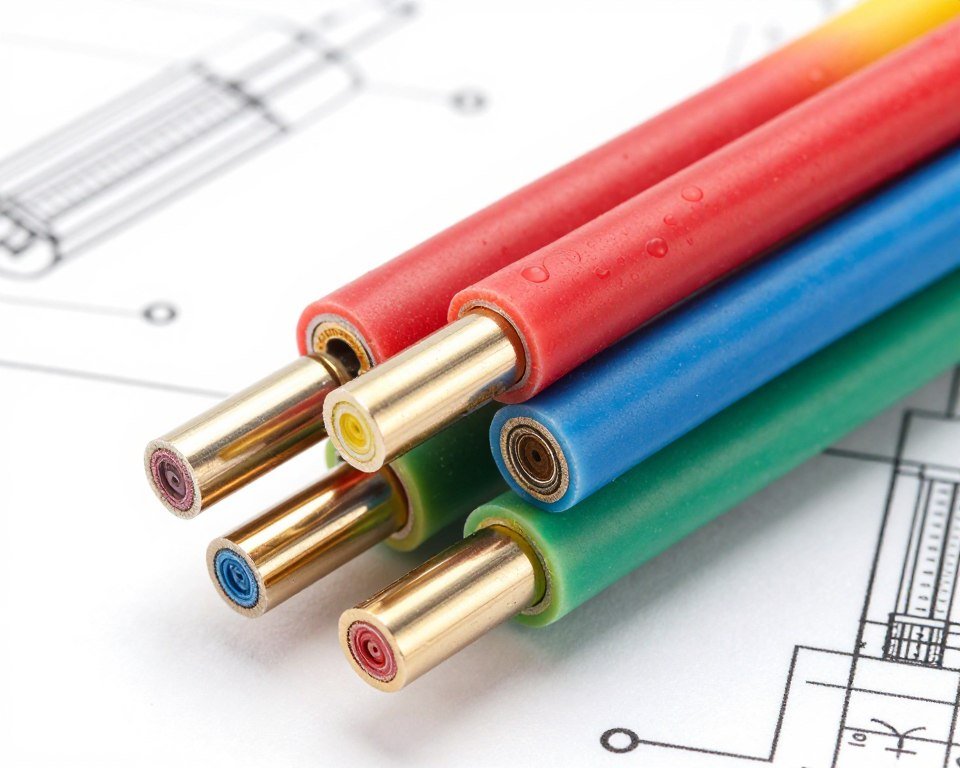
Cable insulation requires flexibility, electrical insulation performance, and stable processing, particularly for applications involving plasticized PVC.
- Cable Insulation → SG-3: Commonly selected for flexible PVC formulations where higher plasticizer absorption and flexibility are required.
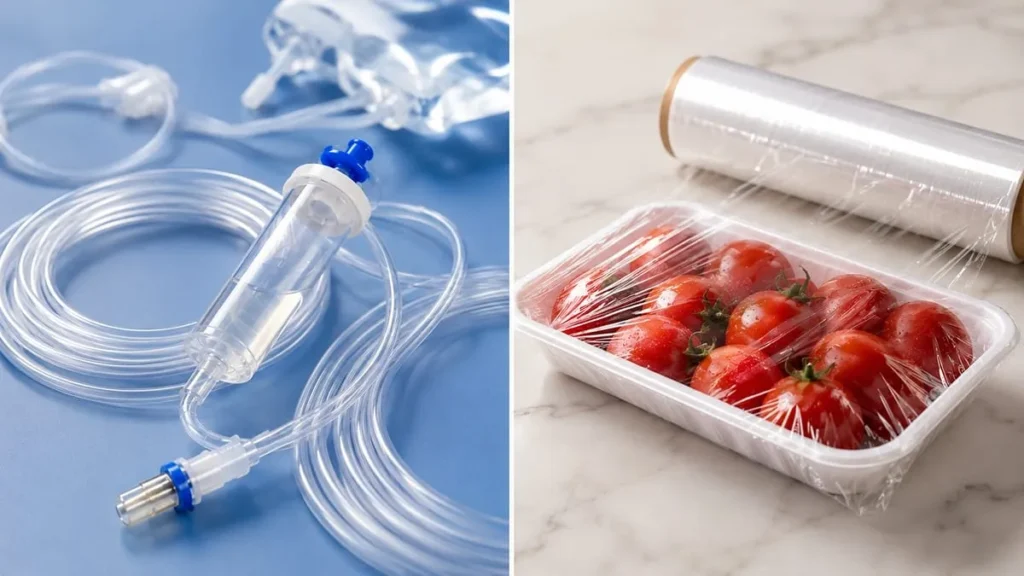
Medical Tubing & Food-Contact Packaging
Medical tubing, flexible bags, films, and packaging products place greater emphasis on resin purity, controlled processing, and regulatory requirements.
- Grade Selection: Depends on the required flexibility, processing method, and finished-product performance.
- Key Requirements: Resin purity, residual VCM control, and compliance with applicable regulatory requirements should be evaluated before procurement.

Automotive & Industrial Components
Wire and cable coatings, interior components, protective profiles, and other automotive parts require different combinations of flexibility, durability, and processing performance. Grade selection should therefore be based on the specific component, processing method, and formulation.
Application-Specific Selection & Compliance Matrix
The matrix below summarizes typical PVC resin choices by application, processing method, technical requirements, and compliance considerations.
| Sector | Primary Resin Grade | Processing Method | Key Technical Criteria | Regulatory |
| Construction – Pressure Pipes | SG-5 | Extrusion | Strength, dimensional stability, processing consistency | Applicable pipe standards |
| Construction – Pipe Fittings | SG-8 | Injection Molding | Flow, strength, dimensional stability | Applicable product standards |
| Electrical – Cable Insulation | SG-3 | Extrusion | Flexibility, electrical insulation, plasticizer absorption | Applicable electrical standards |
| Healthcare & Packaging | Application-dependent | Extrusion / Injection Molding | Purity, residual VCM, flexibility, product performance | Applicable food-contact or medical requirements |
| Automotive Components | Application-dependent | Extrusion / Injection Molding | Flexibility, durability, thermal and processing performance | Applicable automotive requirements |
Securing Reliable Raw Material Supply
Need help finding the right PVC resin grade for your application?
Once the right PVC grade has been identified, consistent supply becomes the next consideration.
Review the TDS, COA, samples, compliance requirements, and batch consistency before placing your order.
Sourcing High-Quality PVC Material for Industrial Manufacturing
Selecting the right PVC supplier is as important as defining the right resin grade. Consistent quality, competitive landed cost, and a practical qualification process all contribute to more reliable long-term procurement.
Quality Assurance
Incoming QC & Certificate of Analysis
TDS and COA documentation, batch consistency, and traceable quality records help buyers verify material quality and maintain stable production.
Total Cost of Ownership (TCO)
Material price is only part of the overall cost. Logistics, packaging, and processing consistency can also affect the final cost of production.
Streamlined Supplier Qualification Workflow
A practical supplier qualification process can follow a simple path: sample evaluation → application trial → bulk order. Technical documentation and compliance requirements can be reviewed alongside trial results before moving to regular procurement.

Looking for a reliable source of PVC plastic for your production needs?
We can supply SG-3, SG-5, and SG-8 PVC plastic , supported by technical datasheets, COA documentation, trial samples, and bulk supply options.
Making Confident PVC Material Decisions for Your Production
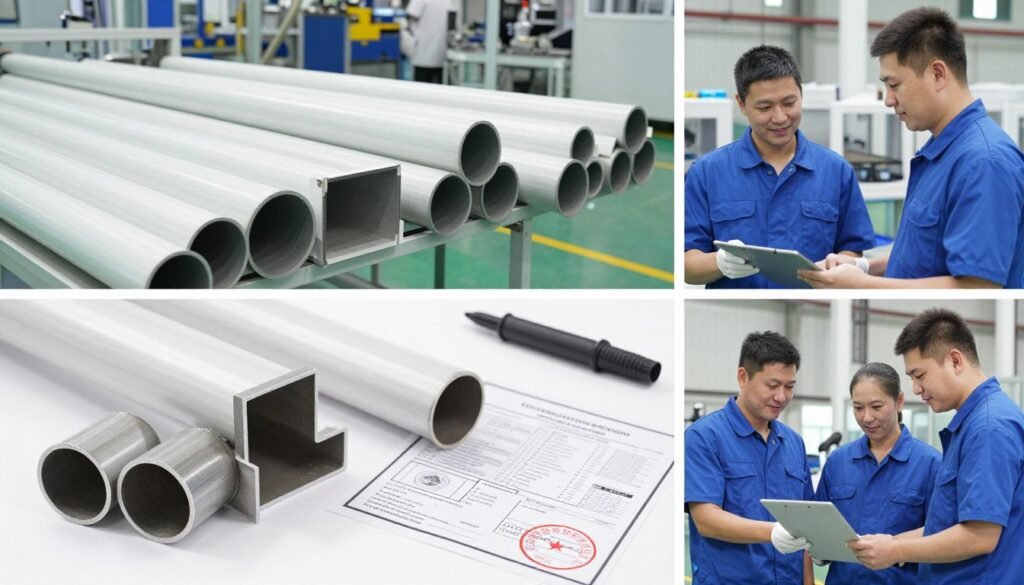
Selecting the right PVC materials involves more than choosing a grade. A practical decision should connect processing requirements, resin quality, and supplier reliability.
Choose a resin grade that fits the processing method and performance requirements of the finished product.
Check technical documentation, incoming quality, and batch consistency against the agreed specifications.
Consider quality consistency, supply capability, technical support, and overall procurement reliability for long-term production needs.
Frequently Asked Questions
Is polyvinyl chloride toxic ?
PVC itself is not generally considered toxic in its finished form, but its safety depends on the formulation, additives, processing conditions, and intended application. Specific applications may also be subject to relevant safety and regulatory requirements.
Is polyvinyl chloride PVC safe?
Yes. PVC can be suitable for many industrial and consumer applications when properly formulated and processed. For food-contact, healthcare, and other regulated applications, the resin and finished product should meet the applicable regulatory requirements.
what is pvc material made of ?
PVC polymer is a synthetic polymer produced from chlorine and ethylene, which account for approximately 57% and 43% of its composition by mass, respectively.
To process base resin into finished materials, performance additives are blended in:
- Thermal Stabilizers: Prevent heat degradation (e.g., Ca-Zn).
- Plasticizers (Flexible PVC): Add elasticity and flexibility (e.g., DOTP, DINCH).
- Lubricants & Fillers: Improve processing flow, strength, and UV resistance (e.g., CaCO₃, TiO₂).
Which PVC grade is suitable for injection molding?
SG-8 is commonly selected for PVC injection molding because its lower K-value generally provides better melt flow. The final grade should be confirmed based on the product design, formulation, and processing requirements.