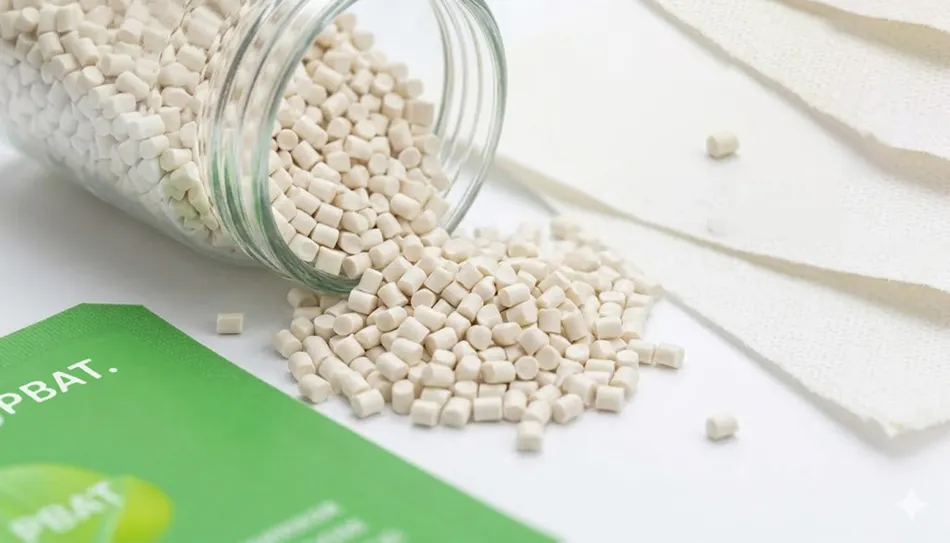
Is PBAT Biodegradable? The short answer is yes. PBAT (Polybutylene adipate terephthalate) is a 100% biodegradable and compostable polymer that has become a cornerstone in the global transition toward sustainable packaging. As a high-performance bioplastic resin, PBAT bridges the gap between traditional petroleum-based plastics and eco-friendly alternatives by offering the mechanical flexibility of LDPE without the long-term environmental footprint.
However, understanding its biodegradability requires looking beyond a simple “yes.” Factors such as composting environments, molecular breakdown processes, and international regulatory certifications play a critical role in its real-world performance. This comprehensive guide provides a technical deep dive into how PBAT resin degrades, its impact on the ecosystem, and the global standards that verify its compostable claims, helping manufacturers and distributors make informed material choices.
Understanding PBAT Biodegradability & How the Resin Breaks Down
PBAT (Polybutylene adipate terephthalate) is a sophisticated aliphatic-aromatic copolyester engineered to bridge the gap between high-performance durability and environmental responsibility.
The Degradation Mechanism: Enzymatic Hydrolysis
The biodegradation process is primarily driven by a targeted biochemical reaction:
- Trigger: Exposure to compost or soil environments rich in microbial activity.
- Process: Specialized enzymes—such as lipases and esterases—cleave the ester bonds within the polymer backbone.
- Result: Rapid scission reduces molecular weight, converting the resin into bio-available oligomers and monomers.
Complete Mineralization (Zero Toxic Residue)
Unlike traditional plastics that fragment into persistent microplastics, our PBAT resins undergo complete mineralization:
Microbial Metabolism → Carbon Dioxide (CO₂) + Water (H₂O) + Biomass
This ensures a clean lifecycle, making it the premier choice for high-standard sustainable formulations in packaging and agriculture.
Degradation Conditions: Industrial vs Home Composting
The biodegradation kinetics of PBAT are highly sensitive to environmental parameters. Understanding these conditions is essential for selecting the right resin grade to meet specific certification requirements.
Industrial Composting: The High-Efficiency Path
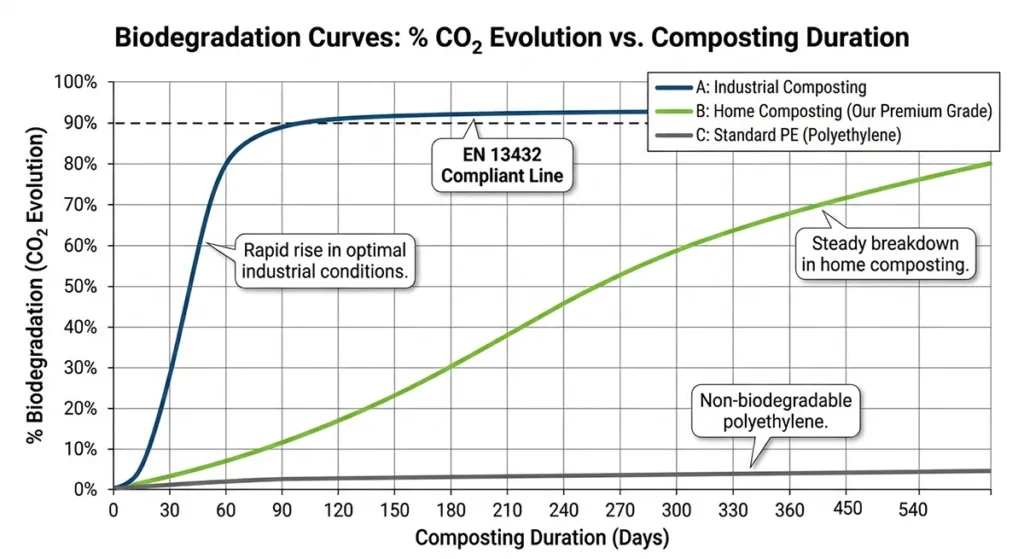
Industrial composting is the most efficient route for PBAT mineralization. These facilities maintain thermophilic temperatures (55–65°C) and high microbial density, which synergistically accelerate enzymatic hydrolysis. Under these controlled conditions, certified PBAT films typically achieve complete disintegration within 90–180 days, aligning with global standards like EN 13432 and ASTM D6400.
Home Composting: Ambient Temperature Performance
Unlike industrial systems, home composting operates at ambient temperatures (20–40°C) with lower microbial activity. While standard PBAT may take longer to break down in these settings, we offer specialized bio-based blends and modified PBAT resins specifically engineered for home compostability. These grades ensure reliable biodegradation in backyard bins, helping our clients secure OK Compost HOME certifications.
Natural Environments: Soil & Marine Behavior
In natural settings, the degradation rate is significantly more gradual:
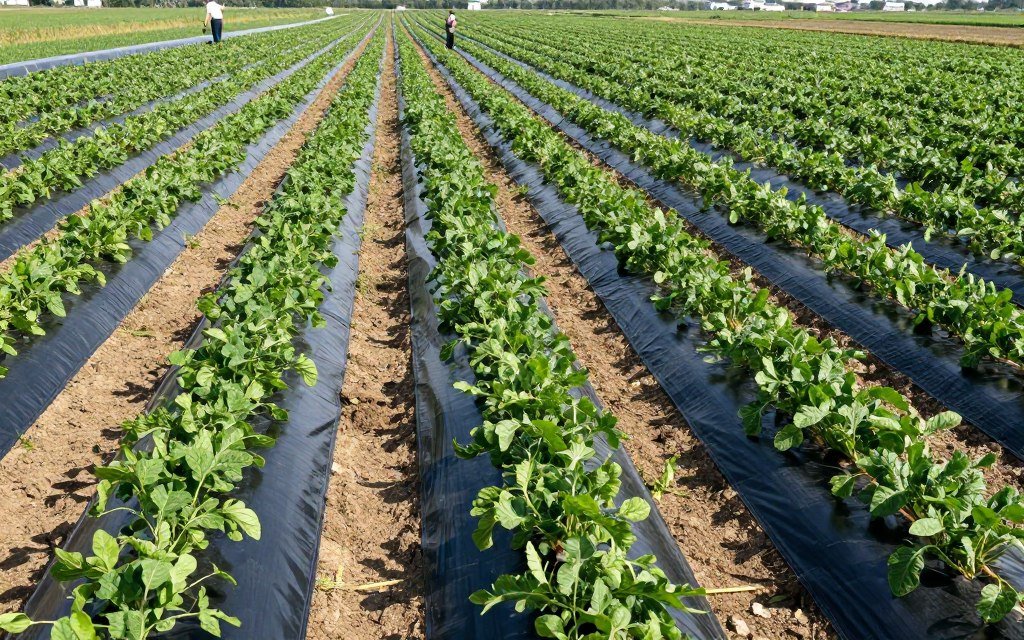
- Soil Burial: Designed primarily for agricultural mulch films, PBAT undergoes steady decomposition over 12–24 months, returning nutrients to the soil without leaving toxic residues (compliant with EN 17033).
- Aquatic Environments: In colder marine or freshwater conditions, enzymatic activity is naturally slower. While PBAT is inherently biodegradable, it is not a solution for ocean littering; we advocate for responsible disposal and circular waste management.
Technical Reference: PBAT Biodegradation Timelines
| Environment | Avg. Temp | Degradation Timeline | Certification | Best Use Case |
| Industrial Compost | 55 – 65°C | 90 – 180 Days | EN 13432 | Shipping Mailers |
| Home Compost | 20 – 40°C | 12 – 24 Months | OK Compost HOME | Produce Bags |
| Soil Burial | 15 – 25°C | 1 – 3 Years | EN 17033 | Mulch Films |
Need Technical Guidance on PBAT Applications?
Our material specialists provide brief formulation checks and degradation forecasts for specific applications.Request Technical Consultation to evaluate rates, additives, and processing trade-offs.
How Long Does It Take for PBAT to Biodegrade?
The biodegradation timeline of PBAT is a controlled process governed by environmental conditions and product specifications. Unlike traditional polymers, PBAT offers a predictable and verifiable end-of-life cycle.
Composting Efficiency: The 180-Day Benchmark
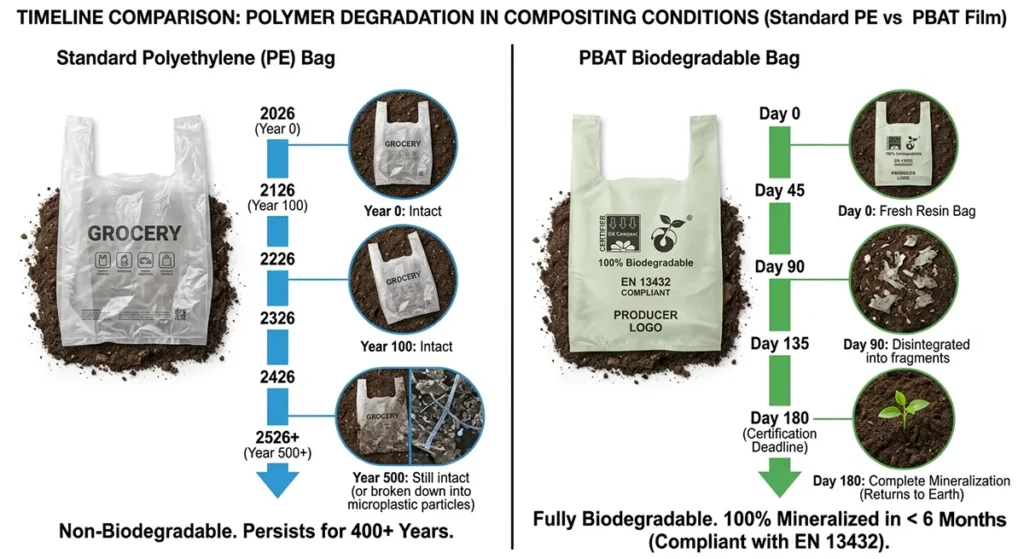
In professional composting environments, PBAT resins exhibit exceptional degradation kinetics. According to global standards such as EN 13432 and ASTM D6400, certified PBAT films typically achieve over 90% mineralization within 180 days.
Disintegration
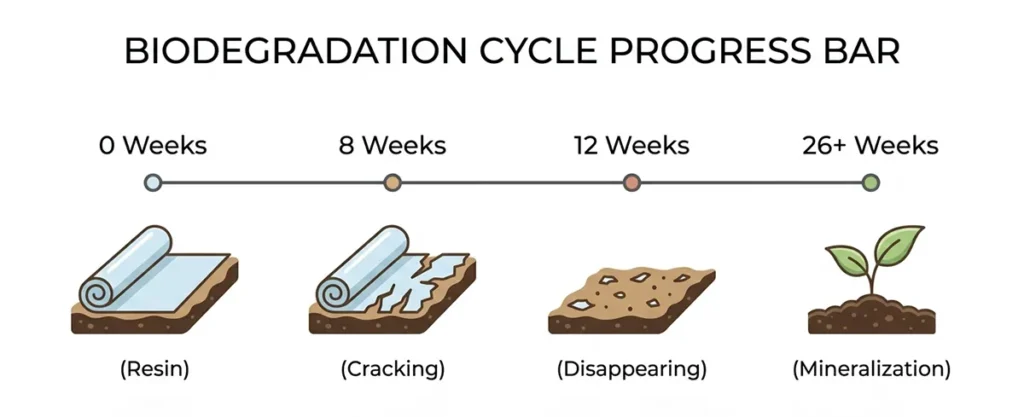
- Physical breakdown into fragments smaller than 2mm usually occurs within the first 8–12 weeks for standard thin-gauge films.
Full Mineralization
- Complete conversion into CO₂, water, and biomass is finalized within the 6 month certification window.
The Great Divide: PBAT vs Conventional Plastics
To understand the revolutionary nature of PBAT, one must compare it to petroleum-based alternatives. While PBAT completes its lifecycle in months, traditional plastics like PE (Polyethylene) and PP (Polypropylene) can persist in the environment for 400 to 500 years. By switching to our PBAT resins, manufacturers can reduce the environmental footprint of their products by several centuries.
Key Factors Influencing Degradation Speed
We emphasize that “Time to Biodegrade” is an adjustable variable:
- Product Thickness: Thinner films (≤ 25 μm) degrade significantly faster than rigid packaging (>100 μm).
- Environmental Stimuli: Higher microbial density, sustained thermophilic temperatures, and optimized moisture levels act as catalysts, shortening the degradation window.
- Formulation Synergy: Blending PBAT with specialized additives or bio-fillers (like starch) can further tune the degradation rate to meet specific application needs.
Global Certifications for PBAT Resin
In the bioplastics industry, certifications are more than just labels—they are the ultimate guarantee of material integrity and environmental safety. For manufacturers and brand owners, sourcing certified PBAT resin is essential to ensuring global market access and consumer trust.
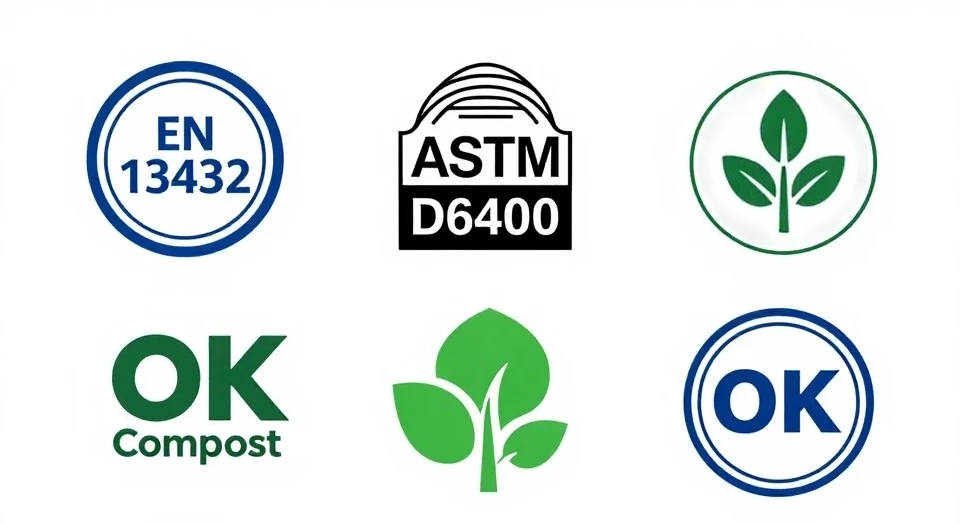
The Gold Standards: EN 13432 & ASTM D6400
The authenticity of industrial compostable PBAT is governed by two primary international frameworks:
- EN 13432 (Europe): The most rigorous standard requiring ≥ 90% mineralization within 180 days, alongside strict limits on heavy metals and ecotoxicity to ensure the resulting compost supports plant growth.
- ASTM D6400 / BPI (North America): The definitive benchmark for the U.S. and Canadian markets. A BPI-certified resin ensures that the material will disintegrate and biodegrade at a rate consistent with known compostable materials.
OK Compost: Industrial vs. Home
Managed by TÜV Austria, these marks are the most recognized visual indicators for PBAT products:
- OK Compost INDUSTRIAL: Validates that the resin meets EN 13432 requirements in large-scale municipal facilities.
- OK Compost HOME: A premium tier for specialized PBAT grades. It guarantees biodegradation even at the lower, variable temperatures of backyard composting bins—eliminating the need for industrial heat.
| European Market | North American Market | Specialized Grade |
| EN 13432 / Seedling | ASTM D6400 / BPI | OK Compost HOME |
| Focus: Industrial Composting | Focus: US/Canada Compliance | Focus: Low-Temp Degradation |
| Requirement: ≥ 90% mineralization within 180 days. | Requirement: Strict disintegration and ecotoxicity audits. | Requirement: Reliable breakdown in backyard bins (< 30°C). |
| Standard for EU Exports | Key for Amazon/US Retail | Differentiates Premium Products |
Why Certification Matters for Your Supply Chain
Choosing certified PBAT resins protects your brand from “greenwashing” risks. Every batch of our resin is tested for:
- Complete Disintegration: Passing through a 2mm sieve after 12 weeks.
- Bio-assimilation: Ensuring no microplastics are left behind.
- Zero Toxicity: Confirming the material is safe for soil, water, and sensitive ecosystems.
Navigating Global Compliance Standards?
We provide full regulatory support and batch-specific testing reports to ensure your products meet international export requirements.
PBAT vs Other Bioplastics
Selecting the ideal bioplastic requires a strategic balance between mechanical performance and degradation kinetics. While various resins exist, PBAT stands out as the premier choice for applications demanding high energy absorption and durability.
PBAT vs PLA (Polylactic Acid): Bridging the Gap Between Toughness & Stiffness
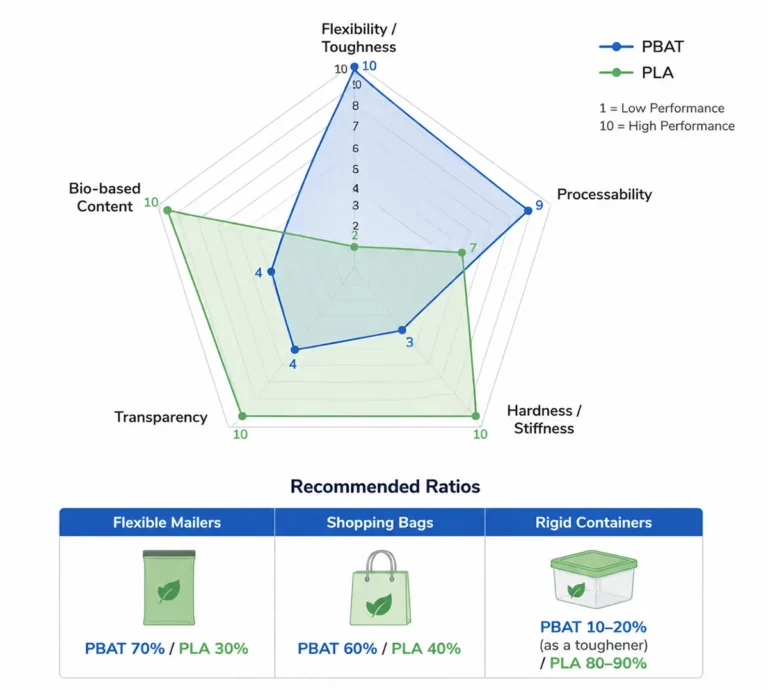
PLA (Polylactic Acid) is widely recognized for its high stiffness and bio-based content, yet its inherent brittleness limits its use in flexible applications.
- The PBAT Advantage: Unlike the rigid nature of PLA, PBAT offers exceptional ductility and impact strength. It can achieve an elongation at break exceeding 500%, making it indispensable for film-blowing and heavy-duty packaging.
- The Synergistic Blend: In the industry, PBAT is the “Gold Standard” modifier for PLA. By blending PBAT with PLA, manufacturers can create compounds that possess both structural integrity and the required flexibility, effectively eliminating product failure during transport.
Technical Deep Dive: Choosing between PLA and PBAT is a strategic decision that dictates production efficiency. For a side-by-side performance matrix and blending roadmap, read our expert guide: PLA vs PBAT: Which Biodegradable Polymer is Best for Your Application?
PBAT: The Essential Base for High-Performance Compounds
Beyond pure resin applications, PBAT’s molecular structure makes it a superior matrix material for various functional blends:
- Vs Starch: While starch-based plastics are cost-effective, they are highly sensitive to moisture. PBAT provides the necessary hydrophobic barrier and mechanical frame, ensuring the final product remains stable during shelf-life.
- Vs PHA: Although PHA offers marine biodegradability, PBAT remains the more commercially viable and processable solution for large-scale industrial manufacturing, providing a more stable supply chain for high-volume distributors.
| Property | PBAT | PLA | PHA |
| Mechanical Profile | High Toughness & Flexibility | High Stiffness (Brittle) | Balanced / Variable |
| Elongation at Break | Excellent (>500%) | Low (<10%) | Moderate (10–100%) |
| Processing Goal | Film Blowing / Toughening | Injection Molding / Rigids | Specialty Niche |
| Degradation Path | Industrial / Home Compost | Industrial Compost Only | Multi-environment |
Frequently Asked Questions About PBAT Biodegradable
Is PBAT recyclable at home?
Short answer: No. PBAT belongs to the Organic Recycling stream (composting) rather than the mechanical recycling stream (HDPE/PET).
- Correct Route: PBAT products should be processed via industrial or home composting to leverage their biodegradable properties.
- Industry Tip: Avoid mixing PBAT with curbside recyclables to maintain the purity of traditional plastic recycling streams.
How is PBAT made?
Short answer: PBAT is a high-performance copolyester synthesized through the precise polycondensation of adipic acid, terephthalic acid, and 1,4-butanediol (BDO).
🔬 Material Engineering: Understanding the “Golden Ratio”—How PTA and Adipic Acid balance determines your product’s tear resistance and flexibility. Read the full technical guide: How is PBAT Made?
- The Process: Advanced esterification technology allows us to tailor the molecular weight and crystallinity of the resin, ensuring optimal melt strength for film-blowing applications.
- Quality Assurance: Every batch undergoes strict chromatography and mechanical testing to meet industrial-grade performance benchmarks.
Is PBAT biobased?
Short answer: Not by default, but bio-based options are increasingly available to meet sustainability goals.
- Bio-Content Varieties: We offer resins ranging from 0% to over 40% bio-based content by incorporating renewable monomers.
- Procurement Advice: If bio-based content (ASTM D6866) is a priority for your brand, our technical team can recommend the appropriate sustainable grade for your formulation.
PBAT Applications and Products
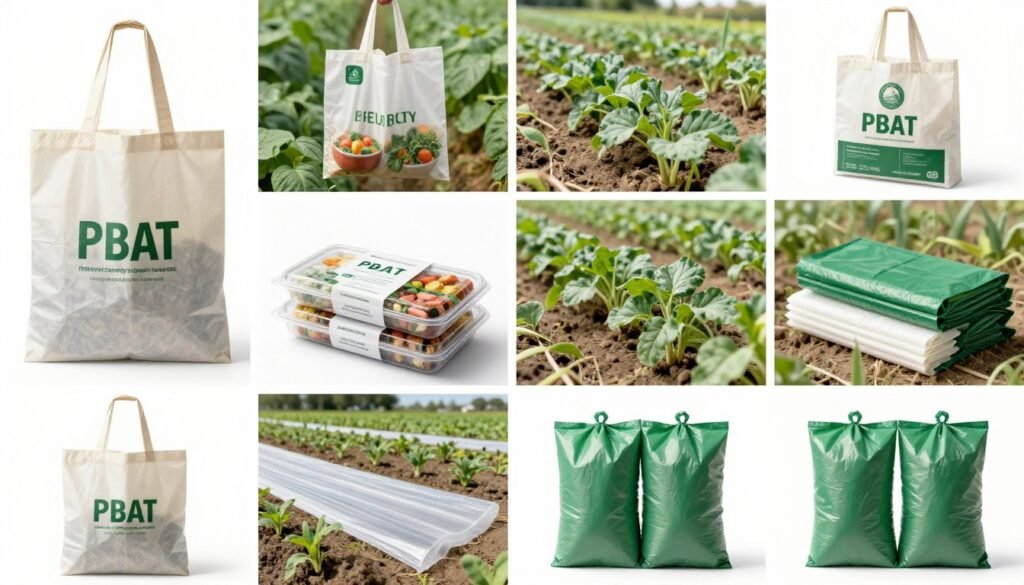
PBAT isn’t just a lab curiosity; it is a commercially proven resin powering the next generation of sustainable products. Due to its exceptional flexibility and melt strength, it has become the “Industry Standard” for the following sectors:
- 🛒 Flexible Packaging: From compostable shopping bags to high-tear-resistance shipping mailers.
- 🌱 Agricultural Solutions: Certified biodegradable mulch films that can be tilled directly into the soil.
- 🍱 Food Service: Compostable wrap films and coatings that ensure food safety without plastic waste.
- 🧪 Emerging Tech: 3D printing filaments and protective coatings for moisture-sensitive paper packaging.
📘 Explore the Full Capabilities of PBAT
Want to know the specific mechanical properties, density, and thermal limits that make these applications possible? Read our Comprehensive Guide: What is PBAT Plastic? Properties, Advantages, and Global Applications.
Conclusion
PBAT is more than a biodegradable resin; it is a vital tool for manufacturers to eliminate persistent plastic waste while maintaining high-performance standards. By bridging the gap between mechanical toughness and biological mineralization, PBAT offers a practical, compliant path toward a circular economy.
Whether it is preventing microplastic accumulation in agricultural soils or solving the recycling challenges of contaminated flexible packaging, the strategic adoption of certified PBAT resins ensures that your products meet the highest global standards for environmental safety.
We provide more than just raw materials; we offer the technical expertise and regulatory support necessary to navigate the complex landscape of global certifications like EN 13432 and ASTM D6400. We invite you to leverage our deep industry knowledge and robust supply capabilities to optimize your formulations and enhance your brand’s sustainability profile.
For detailed technical consultations, custom price quotes, or to request the TDS for our premium PBAT grades, please feel free to reach out to our team directly. You can contact us via WhatsApp(Phone) at +61 468862776 or email us at jerry@salesplastics.com. We welcome your private messages at any time and typically respond within one business day.