A common misconception persists: that environmental value is determined solely by "origin." Let's look beyond where a material begins and focus on where it ends.
The "Origin" Myth
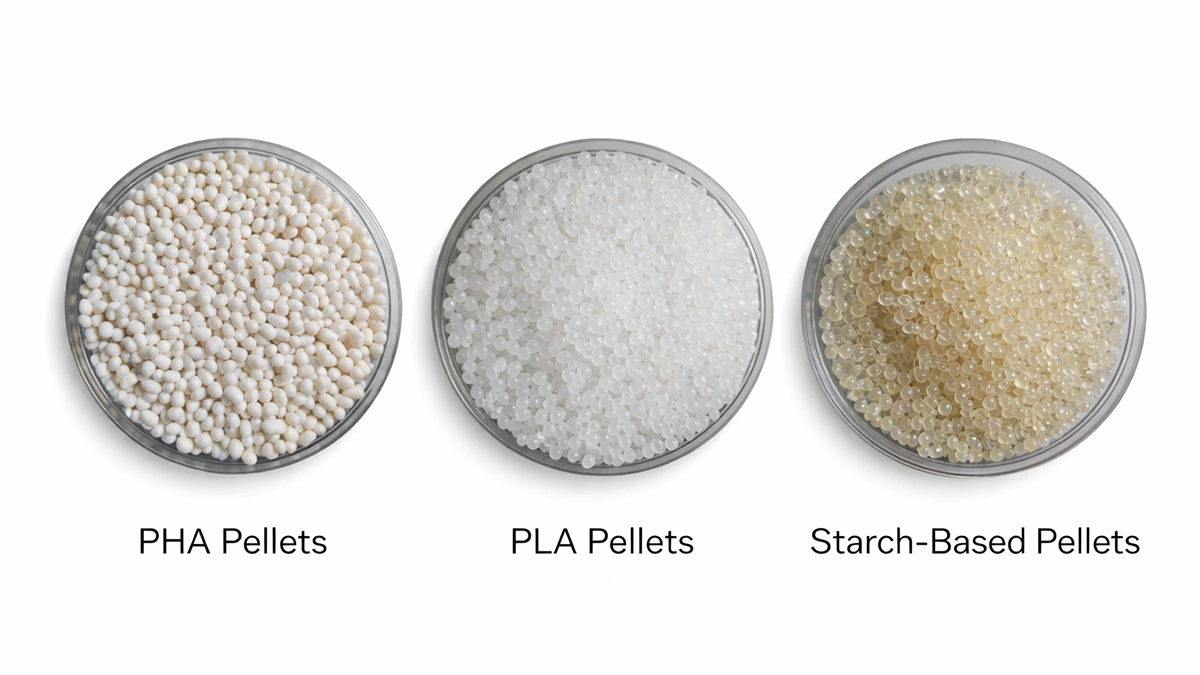
Many procurement teams assume that if a resin isn't 100% bio-based—like PLA or starch blends—it automatically fails the sustainability test.
"True environmental impact must be measured by the material’s entire journey, focusing not just on where it begins, but where it ends."
The PBAT Solution
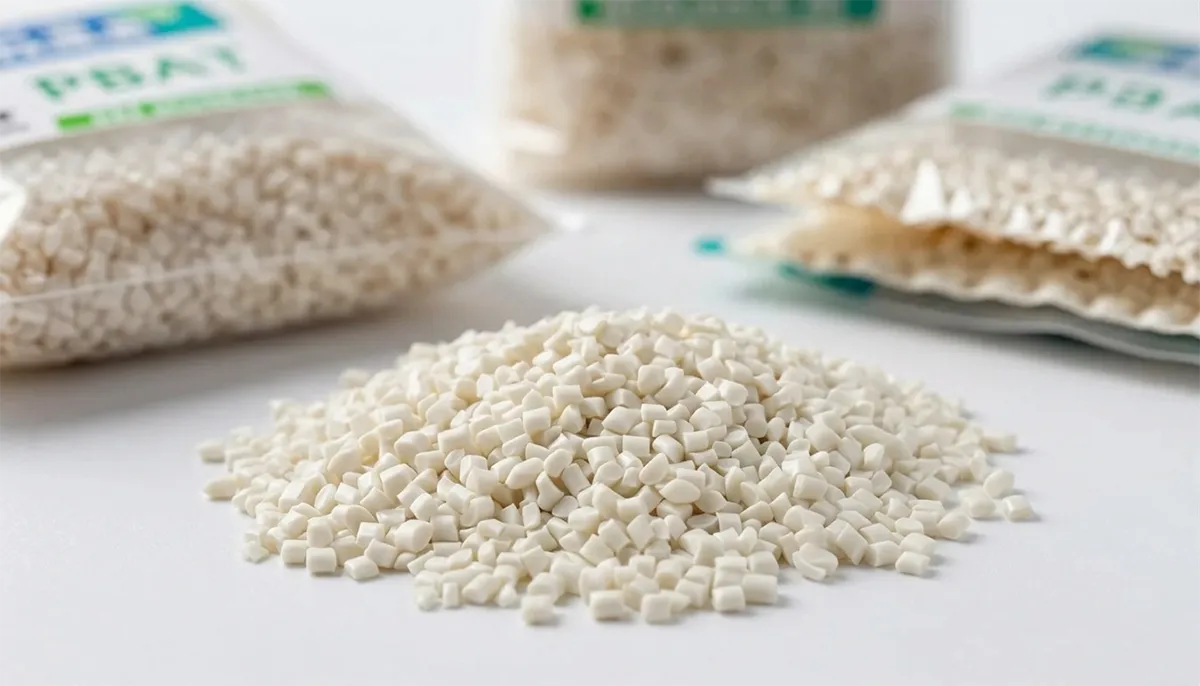
PBAT (Polybutylene adipate terephthalate) solves the most persistent crisis in plastic pollution:
The Raw Material Paradox
Petroleum-derived monomers vs. soil-friendly molecular architecture.
Traditional PE
Polyethylene (LDPE/HDPE)
- • Carbon-Carbon backbone cannot be severed by microorganisms.
- • Fragments into microplastics that persist for centuries.
PBAT Copolyester
Petroleum Derived, Bio-Circular
- • Contains Ester Bonds susceptible to enzymatic hydrolysis.
- • Recognized by bacteria/fungi as a direct carbon source.
Master the Molecular Mechanics
Deepen your understanding of how PBAT breaks down at the chemical level to ensure your procurement strategy aligns with global regulations.
Read: Is PBAT biodegradable?Life Cycle Analysis: Beyond the "Cradle"
Disposal phase advantages that drive both environmental and economic efficiency.
Agricultural Efficiency
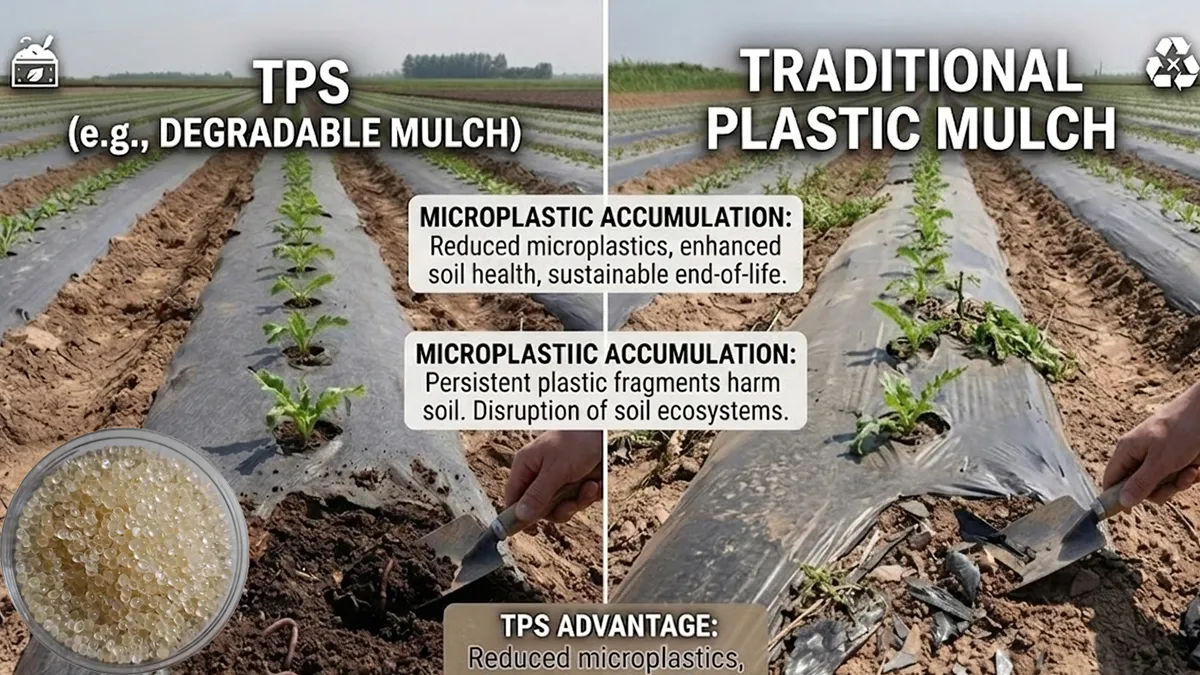
Eliminates manual retrieval of mulch films. PBAT can be plowed directly into the earth, preserving soil integrity while saving labor costs.
Complete Mineralization
Converts entirely into H₂O, CO₂, and nutrient-rich biomass. Zero synthetic residue left behind at the end-of-life stage.
Navigating Compliance
Rigorous certification for global regulatory demands.
Industrial Composting (58℃)
Meets EN 13432 and ASTM D6400. Disintegrates within a 12-week window, supporting organic waste management in EU/North America.
Home Composting & Soil
Achieves TÜV OK Compost Home. Offers a safety net for regions lacking industrial infrastructure, degrading naturally based on moisture/microbial density.
The Strategic Role in a Circular Economy
PBAT does not compete with mechanical recycling; it solves the problem of "unrecyclable" plastics. Contaminated flexible packaging—like fast-food liners—is almost never recycled.
Furthermore, when blended with PLA, PBAT adds necessary flexibility. This synergy allows manufacturers to produce thinner, more resource-efficient packaging without sacrificing strength.
Final Verdict
Is PBAT eco-friendly? The answer is a definitive yes, provided the definition includes a material's capacity to protect soil health and eliminate permanent waste.