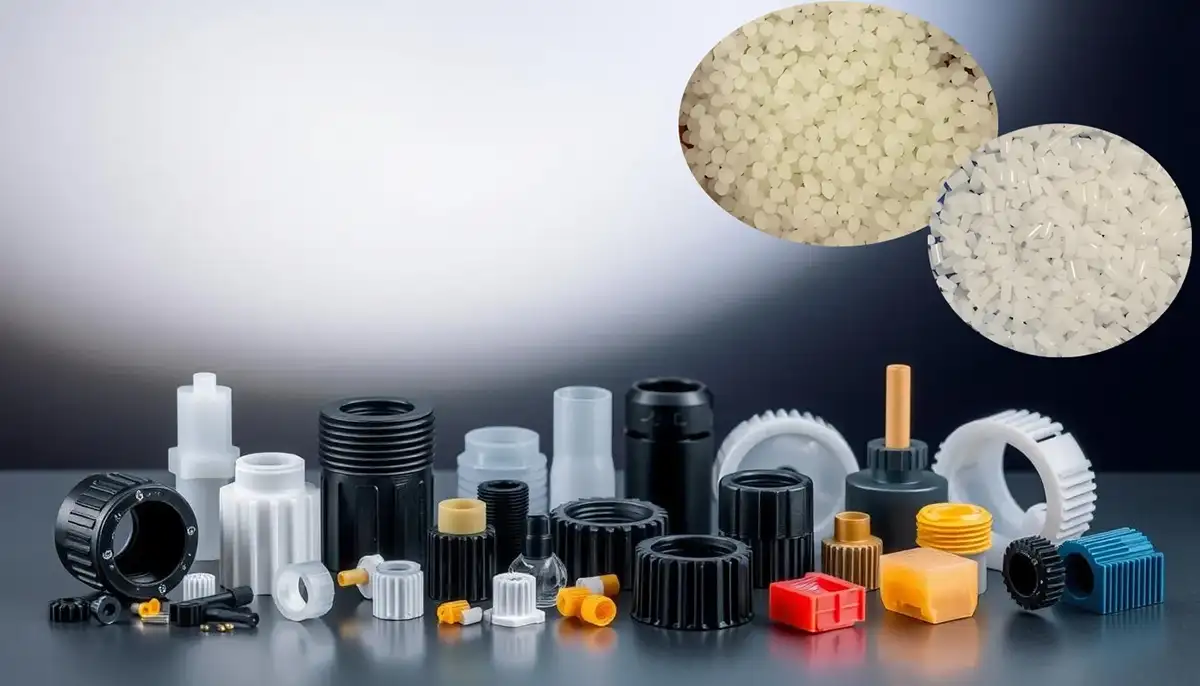
Manufacturers are rapidly pivoting toward PLA as a premium, bio-based alternative. We bridge the gap between "eco-friendly" and "high-performance" through sophisticated molecular modification.
Overcoming the "Performance Gap"
Standard PLA often falls short in demanding industrial environments. We transform brittle bioplastics into robust engineering materials.
The Brittleness Issue
Standard PLA suffers from extreme brittleness, with Izod impact strength frequently dropping below 20J/m, limiting its mechanical durability.
Thermal Sensitivity
With a Heat Deflection Temperature (HDT) of 55-60℃, neat PLA cannot survive automotive interiors or hot-fill environments—until now.
Advanced Modification Strategies
PBS Blending
Integrating Polybutylene Succinate (PBS) significantly enhances toughness and thermal stability.
Compared to 10% in neat PLA
Reactive Chain Extension
Specialized chain extenders rebuild molecular weight during the melt phase, preventing degradation.
- Increased Melt Strength
- Stable Processing Up to 200℃
Technical Deep Dive
From Brittle to Versatile: The Roadmap
Discover how modifiers like PBAT or Starch offer unique benefits for film blowing and thermoforming. Discover the complete technical roadmap in our comprehensive guide:
PLA Modification: From Brittle Material to Versatile Bioplastic.Processing Recommendations
Modified PLA formulations run smoothly on standard screws, requiring no expensive hardware overhauls.
| Parameter | Recommended Setting |
|---|---|
| Moisture Content | < 0.02% Crucial |
| Barrel Temperature | 175℃ - 200℃ |
| Mold Temperature | 40℃ - 60℃ |
| Drying Conditions | 4 - 6 hours at 60℃ - 80℃ |
Your Partner in Bio-Plastic Innovation
Transitioning to sustainable materials no longer requires a compromise on durability or processing efficiency.
Our engineered PLA formulations provide the impact resistance of ABS and the processability of PP, all within a fully compostable framework that meets the highest industrial standards.