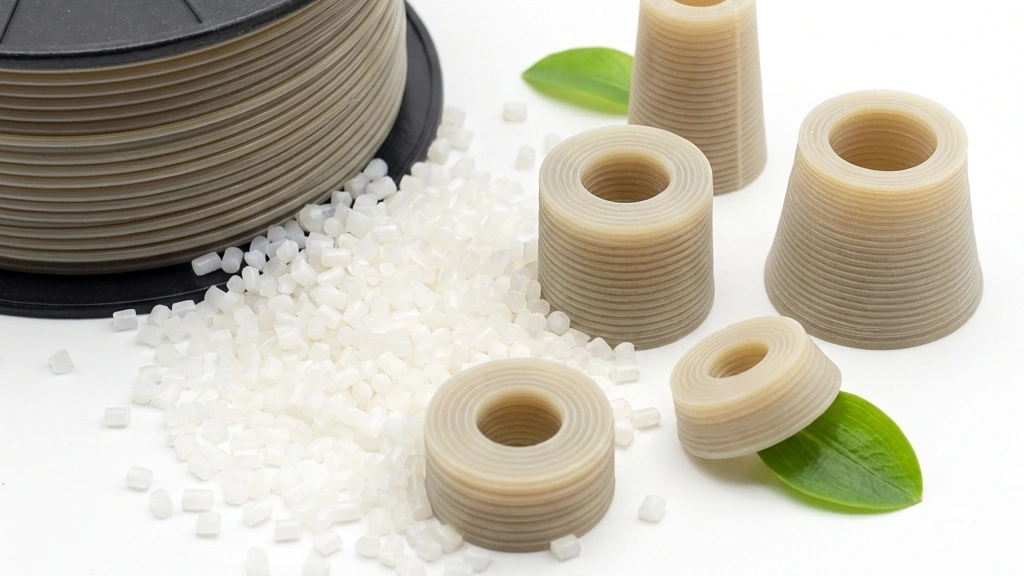
PHA biopolymers provide filament manufacturers a high-performance, bio-based alternative combining flexibility, strength, and true biodegradability.Its stable extrusion properties and consistent quality make PHA an ideal choice for commercial filament production.
Understanding PHA materials requires exploring their molecular structure, mechanical properties, and Melt Flow Index (MFI). This guide provides manufacturers with an in-depth analysis of basic composition, extrusion parameters, and industrial applications to ensure informed material sourcing.
What is PHA Filament?
PHA (Polyhydroxyalkanoate) is a family of biopolymers produced through bacterial fermentation, utilizing renewable plant sugars and oils. Characterized by excellent rheological properties and unique crystallization kinetics, PHA exhibits stable melt viscosity, making it an ideal choice for commercial filament extrusion.
ColorFabb and other manufacturers blend PHA with PLA to achieve a balance of flexibility and strength. Different PHA grades exist based on their molecular composition.
PHB (polyhydroxybutyrate) represents the most common variant known for its rigidity, while PHBV includes valerate units to enhance impact resistance and flexibility. Each formulation offers distinct processing and mechanical characteristics tailored for industrial-grade applications.
📌 PHA Quick Facts
- Melt Flow Index (MFI): 3 – 10 g/10 min (190°C, 2.16 kg)
- Processing Temperature: 185°C – 195°C (Die Temperature: 190°C – 200°C)
- Drying Requirements: 60°C – 70°C for 4 to 6 hours (desiccant or vacuum dryer)
- Compliance: ASTM D6400, EN 13432, and FDA food-contact safe
- Core Advantage: Superior inter-layer adhesion with near-isotropic strength
Struggling to decide between these two materials? Read our in-depth comparison: PLA vs PHA: Choosing the Right Bioplastic for Sustainable Products.
Material Properties of PHA Filament
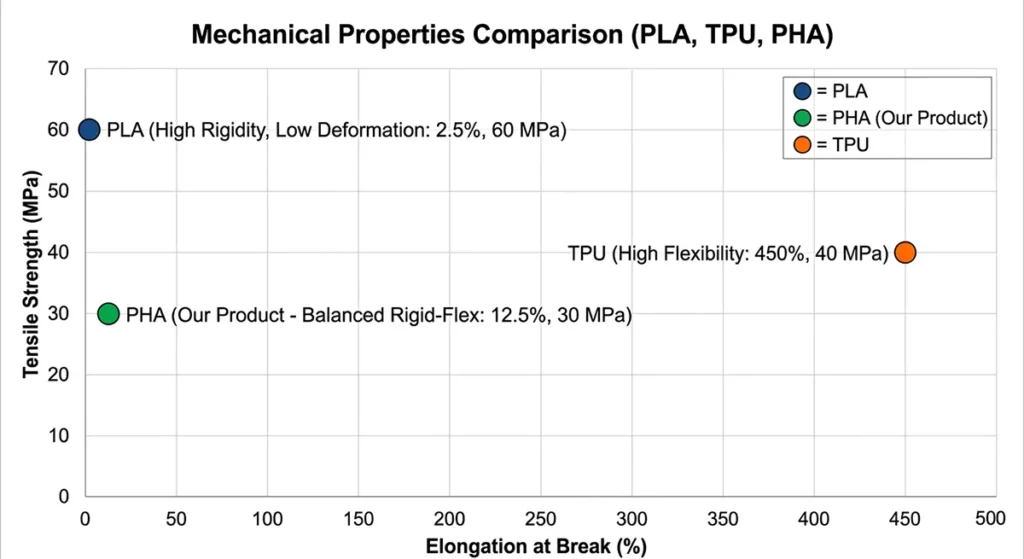
The mechanical properties of PHA filament determine its suitability for various applications. Tensile strength typically ranges from 20 to 40 MPa. This positions PHA between flexible TPU and rigid PLA on the strength spectrum.
Flexibility stands as one of PHA’s defining characteristics. The material exhibits rubber-like elasticity in thin sections. Thicker prints maintain rigidity while resisting brittle failure. This balance makes PHA versatile for different design requirements.
Key Physical Properties
| Density | Melting Point (Tm) | Glass Transition (Tg) |
| 1.23 – 1.25 g/cm³ | 160 – 180°C | 0 – 5°C |
| Elongation at Break | Flexural Modulus | Max Usage Temp |
| 5 – 20% | 1.5 – 3.5 GPa | Up to 60°C |
Heat resistance varies depending on PHA composition. Pure PHA softens at lower temperatures than PLA. Blended formulations improve thermal stability. Parts withstand temperatures up to 60°C during regular use without deformation.
Durability differs from petroleum plastics in important ways. PHA resists oils and greases effectively. The material shows moderate UV resistance. Long-term outdoor exposure causes gradual degradation, which aligns with its biodegradable nature.
Chemical resistance makes PHA suitable for food contact applications. The material doesn’t leach harmful substances. FDA approval exists for certain PHA formulations. This opens opportunities in packaging and food service products.
Explore PHA Material Science
Want to dive deeper into the chemistry and production methods behind PHA biopolymers? Download our comprehensive technical guide to understand how these materials are engineered for optimal 3D printing performance.
Extrusion and Processing Guide for PHA Compounds
To produce high-quality PHA filament, precise control over the compounding and extrusion process is essential. PHA resins exhibit unique rheological properties, making them suitable for standard single-screw or twin-screw extrusion lines.
Extrusion Parameters & Melt Flow Index (MFI)
Maintaining a consistent Melt Flow Index (MFI) is critical for diameter tolerance (±0.03 mm) during spooling. Our PHA grades are engineered with an MFI range of 3-10 g/10 min (190°C, 2.16 kg), ensuring stable melt viscosity and excellent die swell control.
Recommended Extrusion Temperature Profile:
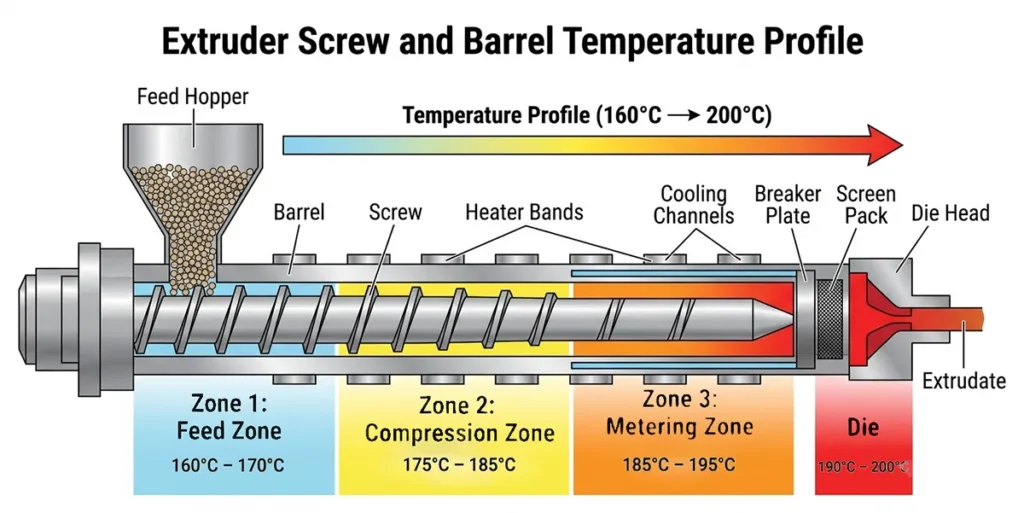
| Processing Zone | Temp Range °C |
| Zone 1 ( Feed Section) | 160°C – 170°C |
| Zone 2 ( Compression Section) | 175°C – 185°C |
| Zone 3 ( Metering Section) | 185°C – 195°C |
| Die Temperature | 190°C – 200°C |
⚠️ CRITICAL: Drying Protocol
PHA is highly sensitive to moisture. Pre-dry at 60°C – 70°C for 4 to 6 hours using a desiccant or vacuum dryer to prevent hydrolytic degradation.
Compounding with PLA and Additives:
For enhanced rigidity and cost-efficiency, PHA can be compounded with PLA or other bio-polyesters. Our technical team can provide masterbatch formulations and tailored compounding ratios to meet specific end-user mechanical requirements.
Is PHA Filament Biodegradable?
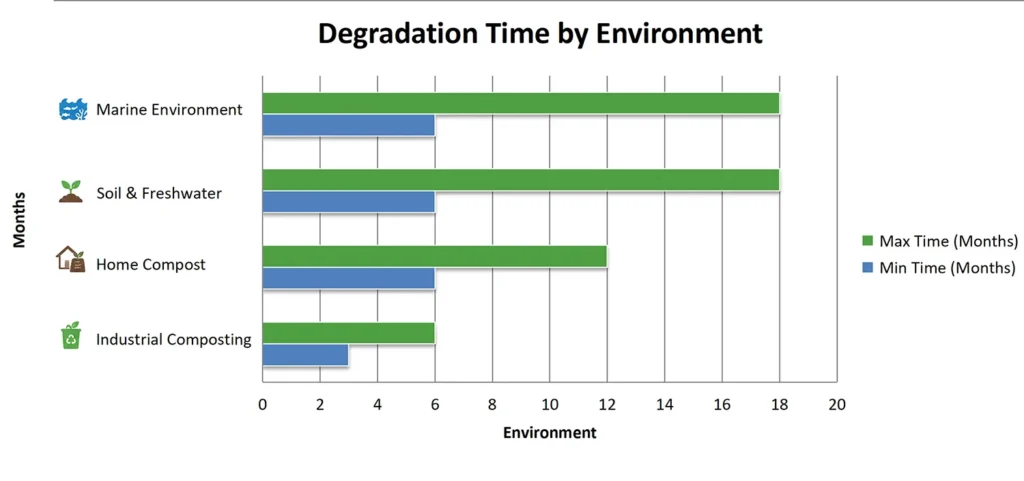
PHA filament offers genuine biodegradability in multiple environments. Unlike PLA requiring industrial composting, PHA breaks down in home compost, soil, and marine environments. Microorganisms recognize PHA as food and consume it completely.
The composting timeline varies based on conditions. Industrial composting facilities break down PHA in 3-6 months. Home compost piles require 6-12 months. Marine environments show degradation within 6-18 months depending on temperature and microbial activity.
Temperature and moisture accelerate the biodegradation process. Warm, humid conditions favor microbial activity. PHA breaks down faster than natural materials like wood or paper in some environments. No toxic residues remain after complete decomposition.
Environmental Benefits
- Biodegrades in home compost
- Marine environment compatible
- No microplastic residue
- Renewable resource production
- Reduces plastic pollution
- Carbon-neutral lifecycle
Environmental Considerations
- Production requires resources
- Energy-intensive fermentation
- Limited recycling infrastructure
- Degradation releases CO2
- Agricultural feedstock needs
Certifications validate PHA’s environmental claims. ASTM D6400 certification confirms compostability. EN 13432 European standards also apply. These certifications require rigorous testing for biodegradation rates and eco-toxicity.
🌿 Compliance & Environmental Certifications:
To ensure your end products meet global environmental regulations, our PHA materials are rigorously tested and certified for:
- ASTM D6400: Validates industrial and soil biodegradability.
- EN 13432: European standard for compostability.
- FDA Compliance: Food-contact safe formulations available upon request.
Comparing PHA to other bioplastics reveals its advantages. PLA requires industrial composting at 60°C. PHA degrades at ambient temperatures. PBAT blends need industrial facilities. PHA’s versatility makes it truly sustainable across disposal scenarios.
The environmental impact extends beyond end-of-life disposal. PHA production uses renewable materials instead of fossil fuels. Manufacturing generates lower carbon emissions than conventional plastics. The complete lifecycle shows significant environmental benefits.
PHA filament properties: Why PHA is the Premium Choice
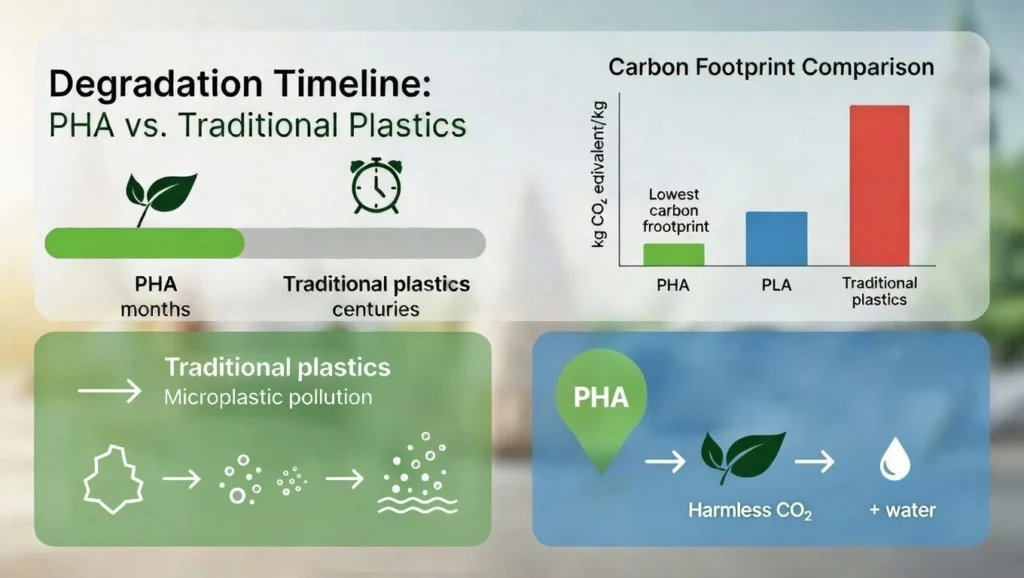
PHA vs. Traditional Plastics: Faster Degradation, Lower Carbon Footprint, Zero Microplastic Pollution
Key Physical and Mechanical Properties
| Physical & Mechanical Properties | Value / Range | Testing Standard |
| Density | 1.23 – 1.25 g/cm³ | ISO 1183 |
| Melt Flow Index (MFI) | 3 – 10 g/10 min | ISO 1133 |
| Tensile Strength | 20 – 40 MPa | ISO 527 |
| Elongation at Break | 5 – 20% | ISO 527 |
| Flexural Modulus | 1.5 – 3.5 GPa | ISO 178 |
| Melting Point | 160°C – 180°C | ISO 11357 |
Environmental Circularity
PHA is the only 3D printing material that offers true 360-degree biodegradability.Unlike PLA, which requires industrial composting conditions, PHA can biodegrade in soil, freshwater, and marine environments without leaving persistent microplastics.
For a deeper look at how PHA breaks down in real ocean conditions and why this matters for plastic pollution, see our detailed analysis on Advantages of PHA’s Marine Biodegradation.
Thermal Stability Warning
PHA is sensitive to Residence Time. As a technical partner, we advise ensuring that the material does not sit idle in a heated nozzle for extended periods to prevent thermal degradation and maintain optimal mechanical properties.
Superior Layer Fusion & Mechanical Strength
With a tensile strength of 30-40 MPa, PHA rivals ABS in durability. However, its real secret weapon is exceptional inter-layer adhesion. Due to its unique crystallization kinetics, PHA prints exhibit near-isotropic strength, meaning the “weak spots” typically found between layers in 3D prints are virtually eliminated.
Bio-Aesthetic Excellence
PHA removes the “plastic-look” from 3D printing. It boasts a natural, matte, and slightly tactile finish. As a distributor, we offer grades that are highly compatible with organic fillers (like wood or coffee waste), allowing for a range of sensory experiences that traditional polymers cannot replicate.
| Property | PHA (Our Selected Grades) | PLA | ABS |
| Biodegradability | Universal (Soil/Marine/Home) | Industrial Only | Non-biodegradable |
| Regulatory Compliance | ISO 14855 / ASTM D6691 | ISO 14855 | N/A |
| Layer Adhesion | Superior (Near-Isotropic) | Good | Moderate (Warping) |
| Heat Resistance (HDT) | Up to 120°C (Post-Annealing) | ~55°C | ~95°C |
| Carbon Footprint | Low to Negative | Moderate | High |
Note on Heat Resistance:
While PHA prints at low temperatures, specific formulations (like our PHB-rich blends) can achieve an HDT of 120°C after a secondary crystallization/annealing process, far surpassing the limits of standard PLA.
Applications of PHA Filament
Prototyping benefits from PHA’s ease of printing and good mechanical properties. Design iterations happen quickly with reliable print success. The material captures fine details for concept models. Functional testing reveals real-world performance characteristics.
Functional parts made from PHA serve in various industries. The material’s flexibility prevents brittle failure in stress applications. Gears, clips, and fasteners perform well. Outdoor applications leverage biodegradability for temporary installations.
Biocompatible Medical Devices
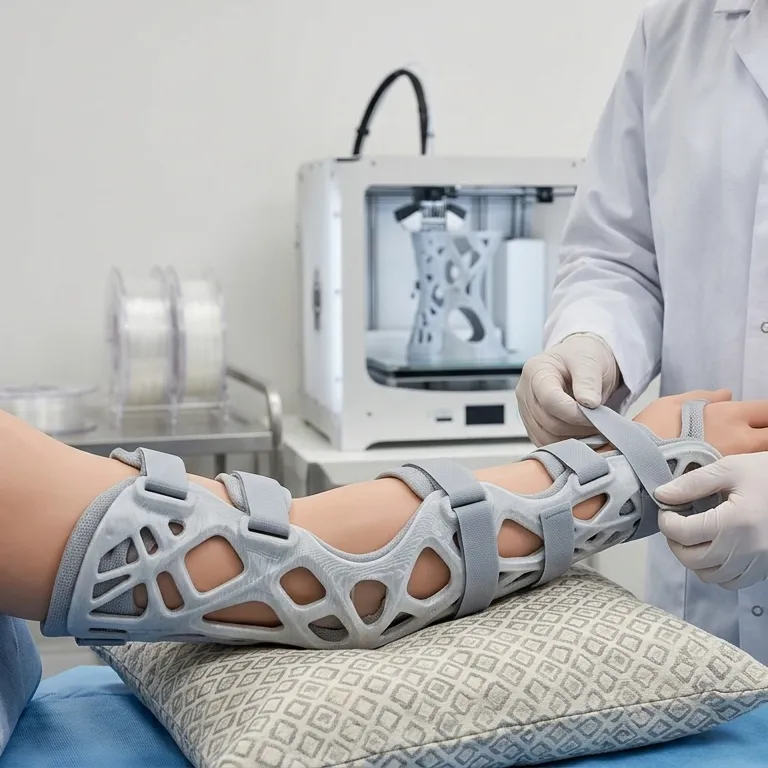
Leveraging its biocompatibility and FDA-compliant formulations, specific PHA grades are increasingly utilized for medical training models, anatomical planning tools, and customized surgical guides.
Packaging Solutions
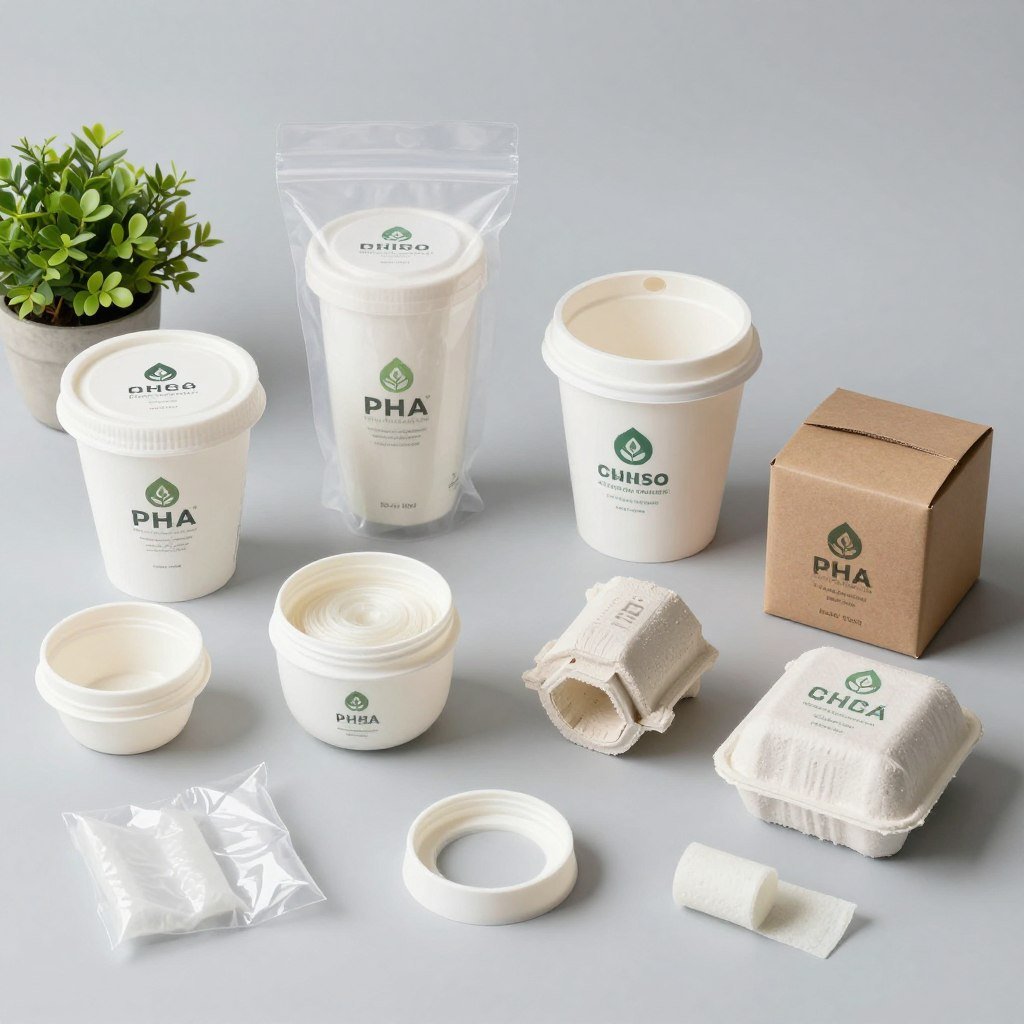
Single-use packaging leverages PHA’s biodegradability. Custom protective inserts decompose after use. Food containers meet safety standards. The technology enables on-demand production of sustainable packaging designs.
Consumer Products
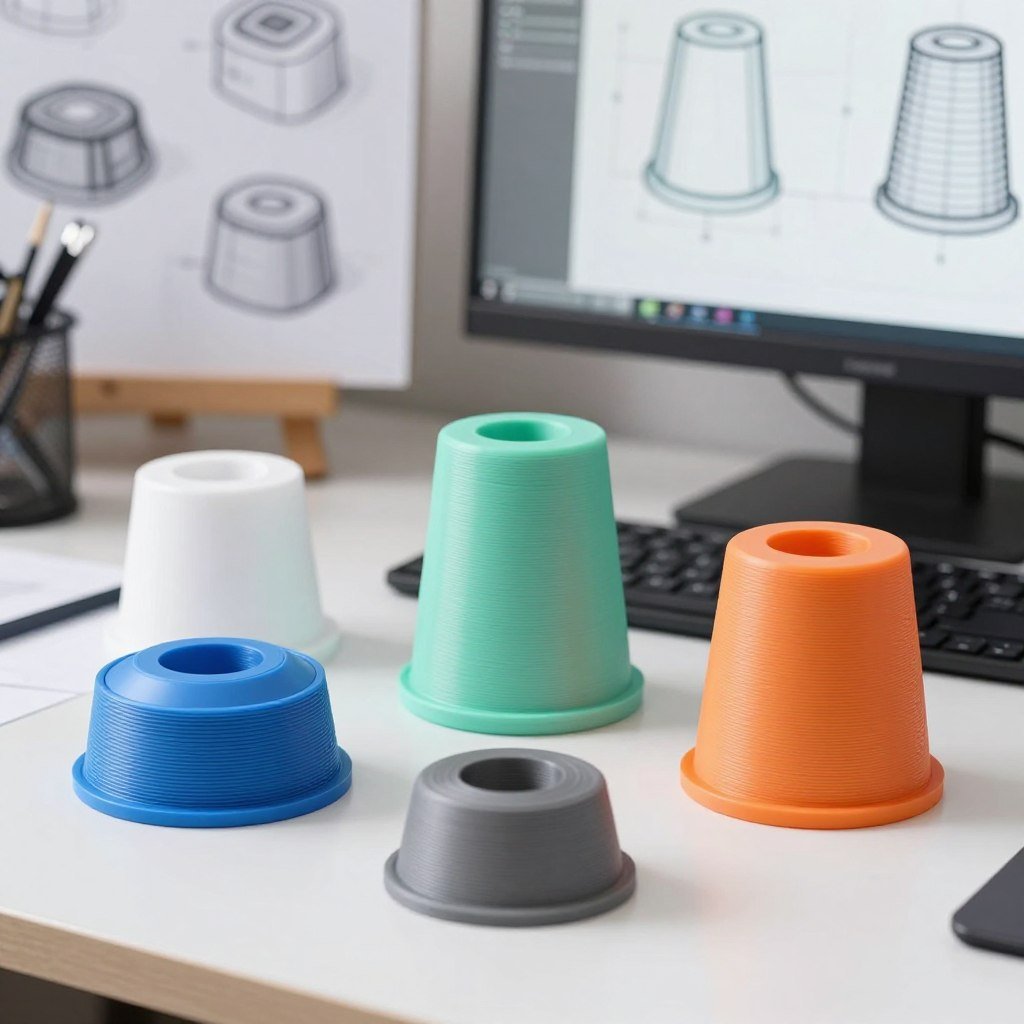
Everyday items benefit from PHA’s environmental profile. Utensils, planters, and organizers serve their purpose then decompose. The material enables guilt-free disposable products. Design freedom allows customization for specific needs.
Educational settings adopt PHA for student projects. Safety and biodegradability matter in schools. Students learn 3D printing while understanding environmental responsibility. The material supports STEM education goals effectively.
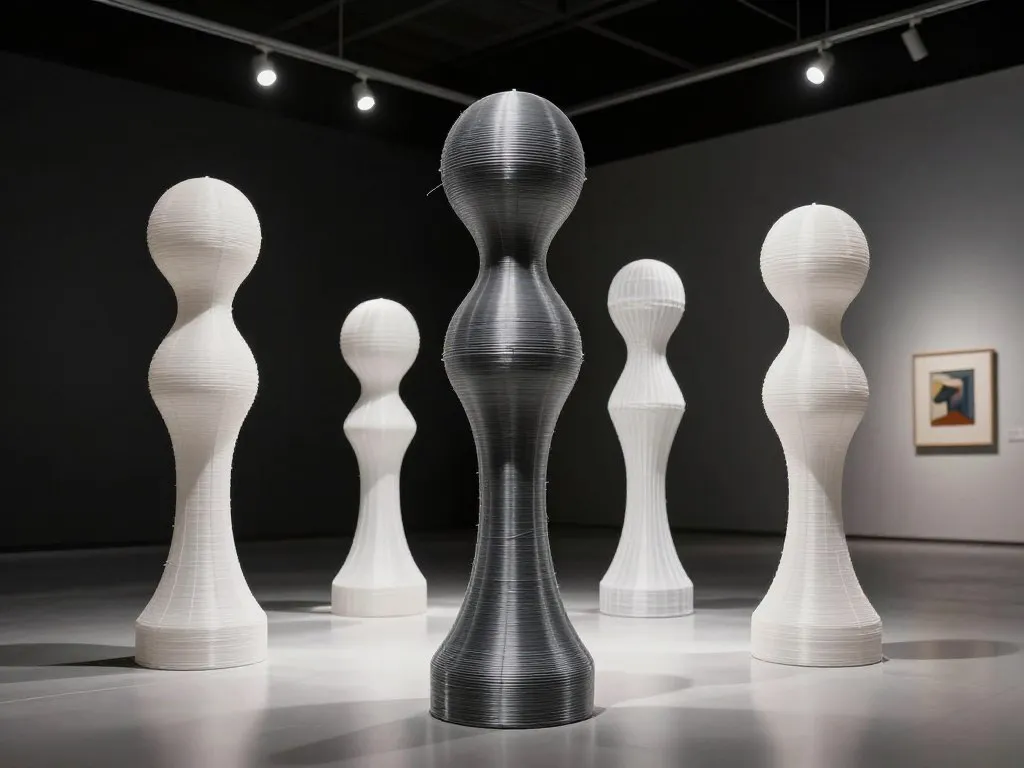
Art and design projects explore PHA’s unique properties. Sculptors appreciate the material’s finish and workability. Temporary installations embrace eventual decomposition as part of the artistic statement. Creative applications continue expanding as artist awareness grows.
Marine research benefits from PHA’s ocean biodegradability. Equipment housings and monitoring devices don’t persist as pollution. The technology enables responsible ocean research. Lost or abandoned items naturally degrade without harm.
Explore Industry-Specific Applications
Discover how PHA filament can address specific challenges in your industry. Our technical consultants can help identify opportunities to integrate sustainable 3D printing into your workflows.
PHA Filament vs PLA: Practical Comparison
When selecting raw polymers for filament extrusion, understanding the differences in processing windows and mechanical properties is essential for maintaining quality tolerances.
| Property | PHA Resin Grades | PLA Resin Grades |
| Processing Complexity | Requires precise moisture control and temp profiling | Wide extrusion window, easier processing |
| Flexibility & Impact | Superior flexibility, high impact resistance | Rigid, high tensile strength but more brittle |
| Degradation Environment | Soil, freshwater, marine, and home compost | Industrial composting only |
| Raw Material Cost | Premium (higher due to complex bacterial fermentation) | Standard (cost-effective) |
Processing Considerations for Manufacturers: While PLA remains cost-effective for large-volume production, PHA’s superior layer adhesion and home-compostable credentials make it the premium choice for compounding formulations and multi-material hybrid applications.
True environmental biodegradability separates these materials most significantly. PLA sits in landfills for years without industrial composting. PHA degrades in backyard compost piles. For genuine sustainability, PHA offers superior end-of-life options.
Cost considerations play a critical role in filament portfolio decisions. For high-volume, cost-sensitive production runs, standard resins like PLA remain an economical choice for general-purpose applications. Conversely, PHA commands a premium that reflects the complexity of its bacterial fermentation and superior material properties. Manufacturers targeting eco-conscious and high-performance markets find that the added value and premium margins of PHA outweigh the higher raw material cost.
Choose PHA for Applications When:
- Genuine home and marine compostability is required
- Flexible, high-impact parts are needed
- Food-contact safety is a priority
- Circular economy and zero-waste credentials matter
- Bio-based sourcing replaces petroleum dependencies
Choose PLA for Applications When:
- High tensile strength and rigidity are required for structural parts
- Cost-effective, large-volume production is the priority
- Beginner-friendly processing and a wider extrusion window are preferred
- A wide variety of color customization or masterbatching is needed
Hybrid approaches combine both materials strategically. Support structures in PHA dissolve in water-based solutions. Main parts print in PLA for strength. This partnership leverages each material’s strengths for complex prints.
Commercialization and Market Considerations
The PHA market is surging as global regulations phase out single-use plastics. For manufacturers, transitioning to PHA is no longer an option but a strategic necessity for the circular economy.
PHA resin costs reflect the complexity of bacterial fermentation. However, bulk procurement significantly offsets the premium compared to small-batch sampling. We provide volume-based pricing tiers to help commercial processors maintain competitive margins while scaling production.
Optimized Resin Grades
To ensure a diameter tolerance of ±0.03 mm, we offer industrial-grade resins with stabilized MFI:
- High-Flow Grades: Optimized for high-speed extrusion and consistent melt strength.
- Toughened Grades: Molecularly engineered to reduce brittleness and improve filament winding.
- Compliance: Full batch traceability with ASTM D6400 and EN 13432 certifications.
We offer more than just resin supply. Leveraging our expertise in custom compounding, we assist clients in developing proprietary PHA/PLA blends tailored to specific thermal or mechanical requirements.
Handling & Storage
PHA is moisture-sensitive. To prevent degradation, resins must remain in original sealed packaging. Pre-drying at 60°C – 70°C is mandatory to ensure optimal melt viscosity and final product integrity.
Conclusion
PHA filament represents a genuine advancement in sustainable 3D printing materials. The technology delivers biodegradability that extends beyond industrial composting to natural environments. Mechanical properties balance flexibility and strength for diverse applications.
Understanding PHA’s characteristics enables informed material selection. The printing process requires attention to temperature and speed settings. Results reward careful calibration with excellent layer adhesion and surface quality. Environmental benefits justify the premium cost for eco-conscious users.
Applications span from prototyping to production parts across multiple industries. Medical, packaging, and consumer products benefit from PHA’s unique properties. The material’s biodegradation timeline and conditions make it truly sustainable for temporary applications.
Market growth continues as awareness spreads and production scales. More brands enter the PHA space with innovative formulations. Pricing will likely decrease as demand increases. Early adoption positions makers at the forefront of sustainable manufacturing.
Choosing PHA filament makes a statement about environmental values. The material enables responsible creation without compromising functionality. As 3D printing evolves, biodegradable materials like PHA will define the next generation of sustainable making.
Next Steps: Optimize Your Sustainable Filament Portfolio
Integrating PHA into your 3D printing lineup elevates your brand’s environmental value while delivering high-performance, bio-aesthetic parts. We provide industrial-grade PHA raw materials engineered for stable extrusion. Our team can assist you with customized compounding ratios and masterbatch formulations tailored to meet your production demands.
Frequently Asked Questions
What is the difference between PLA and PHA filaments?
- Processing & Extrusion: PLA has a wider extrusion window and is easier to process. PHA requires strict moisture control and precise temperature profiling.
- Mechanical Properties: PLA is rigid and brittle (Tensile Strength: 50-70 MPa). PHA offers superior flexibility and impact resistance (20-40 MPa).
- End-of-Life: PLA requires industrial composting, while PHA degrades naturally in ambient environments (home compost, soil, and marine).
- Cost: PHA carries a premium due to complex bacterial fermentation.
Is PETG or ABS stronger?
- Strength & Impact: Both offer comparable tensile strength (40-55 MPa), but PETG exhibits superior impact resistance and layer adhesion.
- Thermal Resistance: ABS withstands higher temperatures (up to 100°C), whereas PETG softens at 70-80°C.
- Environmental Value: Both are petroleum-based and lack biodegradability. PHA serves as the preferred alternative when sustainability credentials outweigh maximum structural rigidity.
What is PHA plastic?
PHA (Polyhydroxyalkanoate) is a high-performance, bio-based polymer produced through the bacterial fermentation of renewable plant sugars and oils. It is supplied in raw resin form to ensure stable extrusion into uniform filament. It provides manufacturers with a true zero-waste material that leaves no microplastic residue, while offering excellent rheological properties and melt viscosity for compounding.
What are the disadvantages of PHA plastic?
- High Raw Material Cost: Driven by complex fermentation processes.
- Lower Rigidity: Tensile strength (20-40 MPa) is lower than engineering plastics, limiting high-load structural uses.
- Processing Sensitivity: Demands precise temperature control and thorough pre-drying (60°C – 70°C).
- Solution: Blending PHA with other bio-polyesters optimizes cost and rigidity, which our technical team supports through customized masterbatch formulations.