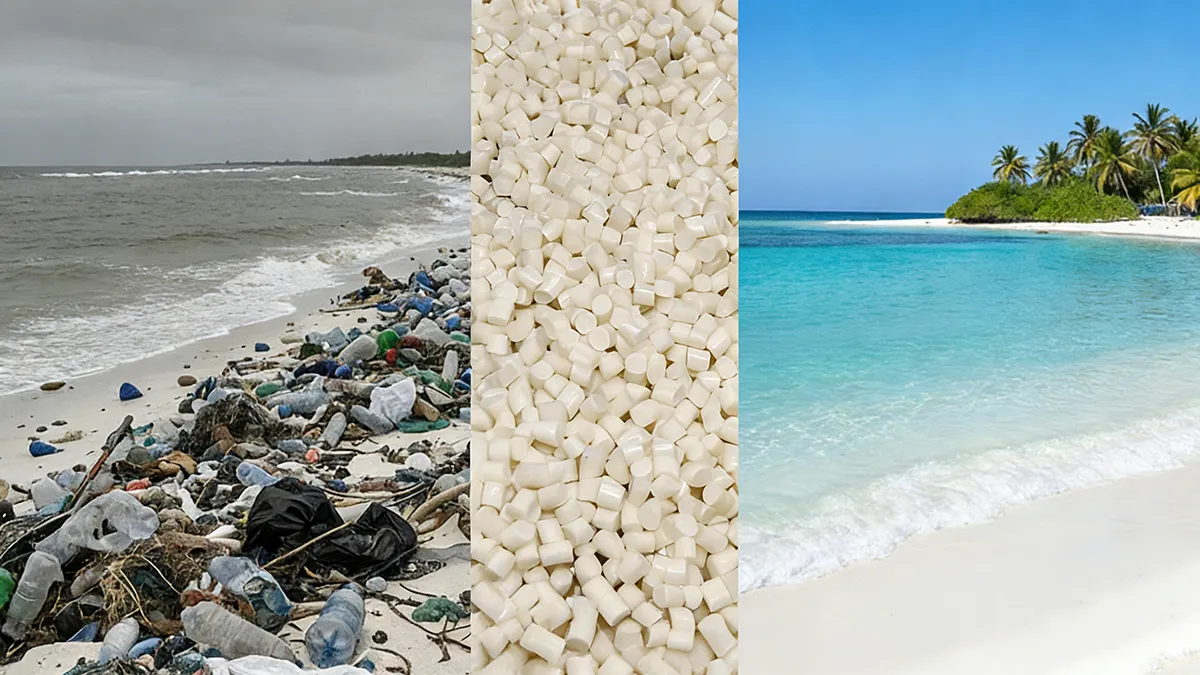
The global packaging industry is reaching a critical inflection point. As traditional plastics continue to saturate landfills and oceans, tightening European regulations (such as PPWR) and a radical shift in consumer consciousness are no longer distant risks—they are immediate business imperatives.
PHA (Polyhydroxyalkanoates) has emerged as the most promising biopolymer to bridge the gap between uncompromising performance and true circularity. Unlike first-generation bioplastics, PHA offers exceptional barrier properties and heat resistance while ensuring certified biodegradability in diverse environments—including marine, soil, and home compost settings.This guide has been developed to move beyond the market hype, providing the critical technical data and integration strategies required by procurement and engineering teams to lead the transition to sustainable packaging and future-proof their supply chains.
What is PHA (Polyhydroxyalkanoates)?
PHA is a family of biopolymers produced naturally by microorganisms through fermentation of renewable feedstocks, such as plant oils or organic waste. This process mimics brewing, where bacteria store energy as polymers in their cells.
Why PHA Stands Apart in the Polymer Market:
PHA differentiates itself through customizable properties and environmental benefits, though it comes with trade-offs like higher initial costs.
- Tailored Material Properties: By varying bacterial strains and feedstocks, PHA grades range from rigid PHB to flexible PHBV or P4HB, suitable for injection molding, extrusion, and film blowing.
- Environmental Versatility: PHA biodegrades in marine, soil, and home composting environments without microplastics, certified under standards like ISO 17556 and ASTM D6691.
- Safety and Compliance: Inherently PFAS-free and biocompatible, PHA meets FDA/EFSA food-contact standards.
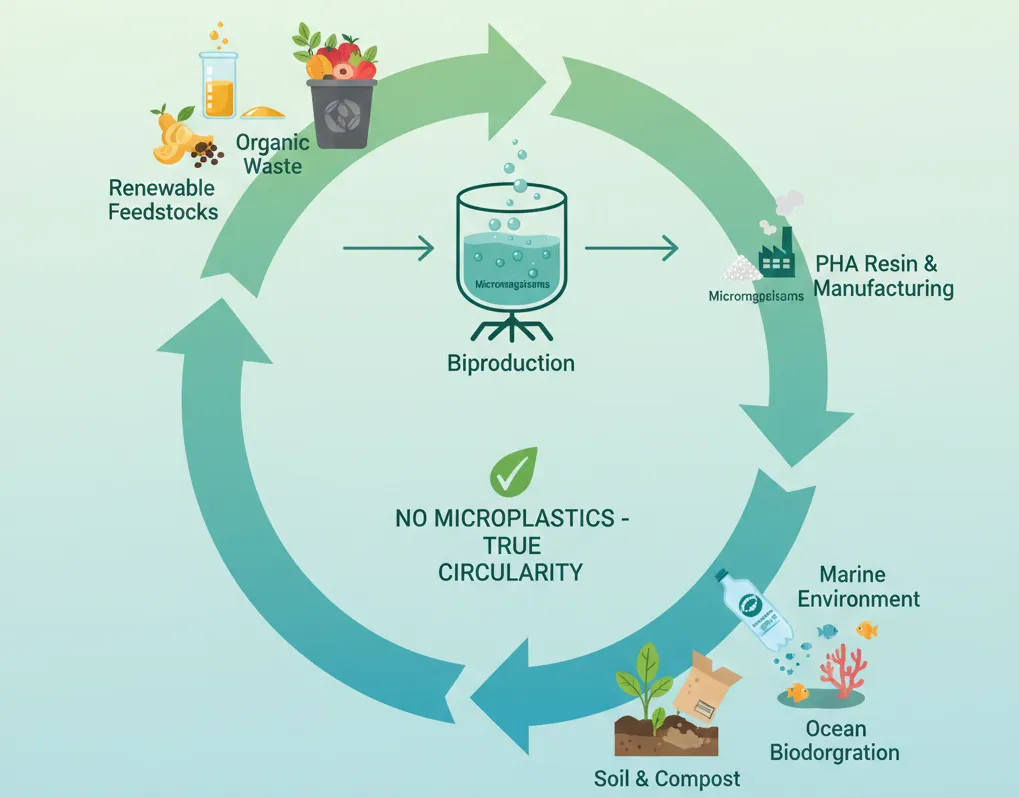
Key Distinction: Unlike PLA, which often requires industrial composting, PHA degrades naturally in diverse settings, addressing real-world disposal issues.
Key Properties Making PHA Ideal for Sustainable Packaging
PHA balances performance and sustainability but may require additives or blending to overcome limitations like brittleness.
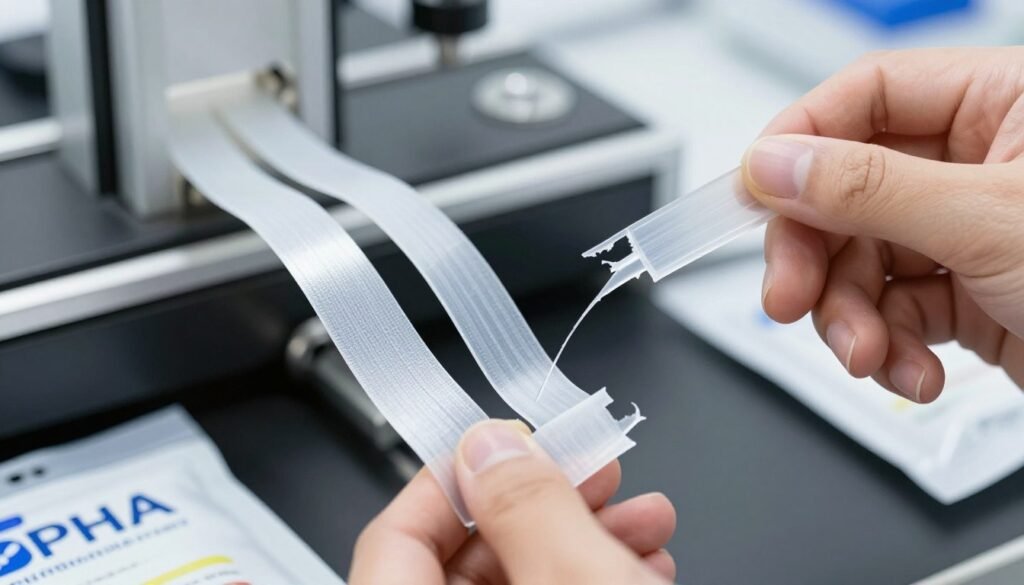
Our PHA resins are designed for rigid and flexible packaging:
| Property | PHA Performance | Comparative Advantage |
|---|---|---|
| Tensile Strength | 15 – 40 MPa | Comparable to PP and LDPE |
| Barrier Properties | High O₂ & Moisture Barrier | Better shelf life extension than PLA |
| Thermal Stability | Up to 120°C – 150°C | Suitable for hot-fill; however, narrow processing window (170-200°C) risks thermal degradation |
| Processability | Optimized Melt Flow | Drop-in for existing equipment, though may need adjustments for brittleness |
The "Gold Standard" of End-of-Life Versatility
While other bioplastics require specific industrial conditions, PHA is the only material that guarantees Complete Circularity across all ecosystems:
Certified Marine & Soil Biodegradability
Degrades naturally without leaving microplastics or toxic residues (ISO 17556 / ASTM D6691).
Home & Industrial Compostable
Seamlessly fits into existing organic waste streams.
PFAS-Free & Food Safe
Naturally compliant with the strictest FDA/EFSA food contact regulations—no chemical additives required for grease resistance.
Ready for Your Production Line
There is no need for costly equipment overhauls. Our PHA grades are “Process-Ready” for:
- Blow Molding: For beverage and cosmetic bottles.
- Film Extrusion: For heavy-duty bags and food wraps.
- Injection Molding: For high-precision caps, closures, and medical components.
The Top Advantages of PHA Over Traditional Plastics and Other Bioplastics
PHA supports circularity by degrading completely in various ecosystems, certified for marine/soil biodegradability and home/industrial composting. It is PFAS-free and food-safe, aligning with global standards.
PHA vs. Traditional Plastics and Other Bioplastics: Advantages and Limitations
While PHA excels in sustainability, it faces challenges like production costs ($4-6/kg vs. $1-2/kg for traditional plastics) and potential brittleness, which can be mitigated through blending or process optimization.
PHA Advantages:
- Biodegrades without microplastics.
- Renewable feedstocks reduce carbon footprint by up to 80%.
- Non-toxic lifecycle.
- Aligns with regulations and consumer preferences.
Traditional Plastics Limitations:
- Fossil-based, persistent in environments.
- Contribute to microplastic pollution.
- Facing bans and taxes.
PHA Limitations:
- Higher costs due to fermentation and extraction.
- Brittleness in some grades, leading to lower elongation (5-7%).
- Processing challenges, including thermal instability.
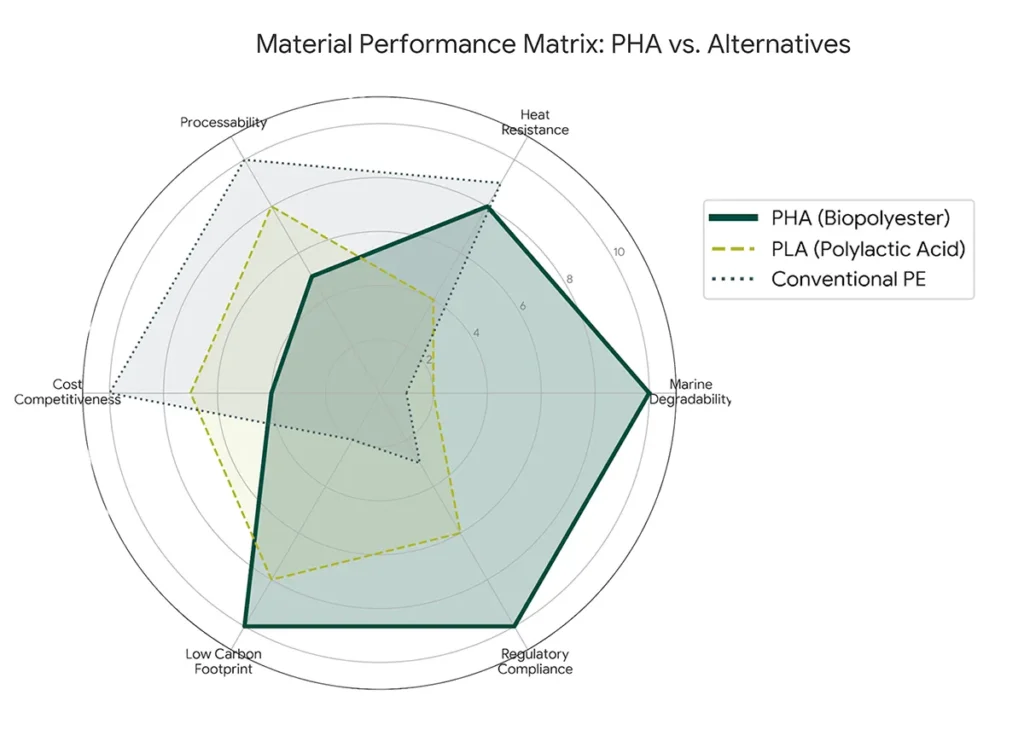
| Feature | PHA | PLA | Starch Blends | Conventional PE |
|---|---|---|---|---|
| Marine Biodegradable | Yes (Certified) | No | Limited | No (400+ years) |
| Home Compostable | Yes | No | Yes | No |
| Heat Resistance | Up to 140°C | ~55°C | Low | High |
| Microplastic Risk | Zero | High (if not composted) | Low | High |
| Regulatory Future-Proof | High | Moderate | Moderate | Low |
| Cost per kg (2026 est.) | $4-6 | $2-3 | $2-4 | $1-2 |
Navigating the Regulatory Landscape
The “Cost of Inaction” is rising. PHA is specifically engineered to comply with the most stringent global mandates:
- EU Single-Use Plastics Directive: PHA is often exempt from certain bans that affect traditional plastics.
- French AGEC Law: Meets the strictest requirements for home compostability and plastic reduction.
- PFAS Bans: Naturally grease-resistant without “forever chemicals,” ensuring 100% food-contact safety.
Addressing the Cost Question
While PHA currently commands a premium over commodity resins, forward-thinking manufacturers view it as an Investment in Risk Mitigation.
- EPR Savings: Lower Extended Producer Responsibility fees in many jurisdictions.
- Brand Equity: Direct alignment with Gen Z and Millennial “Plastic-Free” purchasing trends.
- Operational Readiness: Our grades are optimized for high-speed production, minimizing scrap rates compared to early-stage biopolymers.
Explore PHA Solutions for Your Business
Our sustainability experts help you evaluate PHA packaging for your specific applications. Schedule a consultation to discuss material selection, and performance requirements.
PHA Applications in Sustainable Packaging Sector
Whether you require high transparency for retail or superior mechanical strength for industrial use, our PHA portfolio is engineered to replace conventional resins without compromising on-site efficiency.
High-Barrier Food & Beverage Packaging
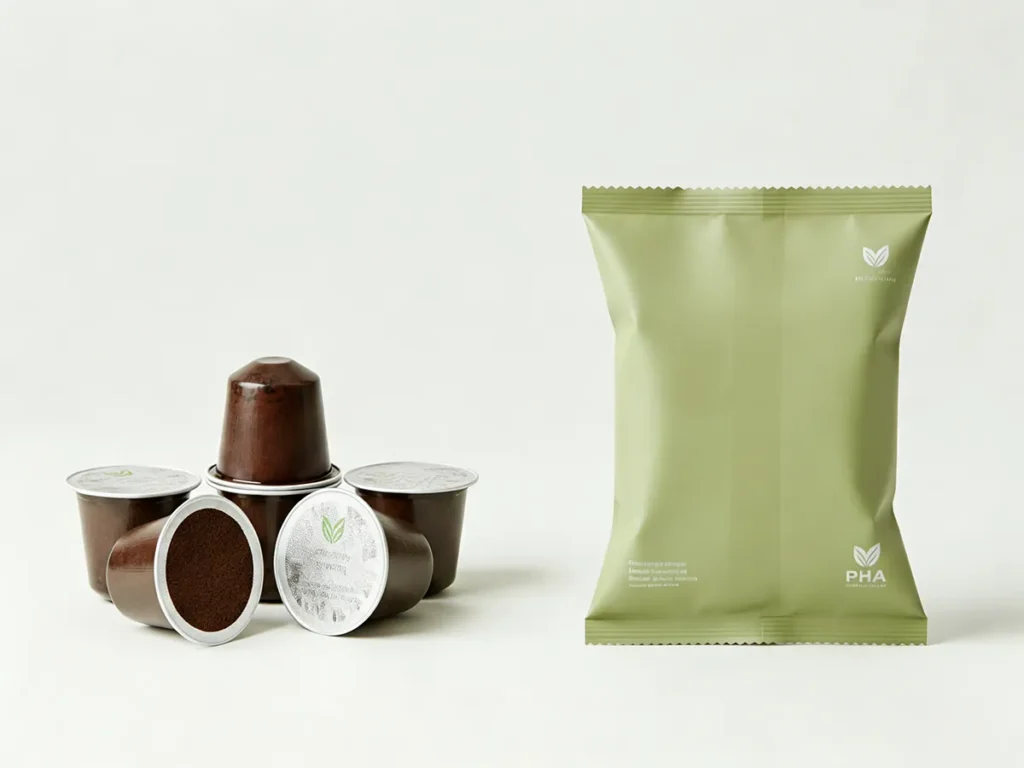
PHA is the ideal “Drop-in” replacement for PP and PE in food-contact scenarios, offering inherent grease resistance and safety.
- Flexible Solutions (Films & Pouches): Optimized for Flow-wrap and Stand-up pouches (SUP). Our PHA film grades provide competitive Oxygen (OTR) and Moisture (WVTR) barriers, extending the shelf life of perishables.
- Rigid Solutions (Injection & Thermoforming): Replace single-use yogurt cups, coffee capsules, and takeaway containers. These grades withstand high-temperature filling and are certified for Home Composting.
Premium Cosmetics & Personal Care
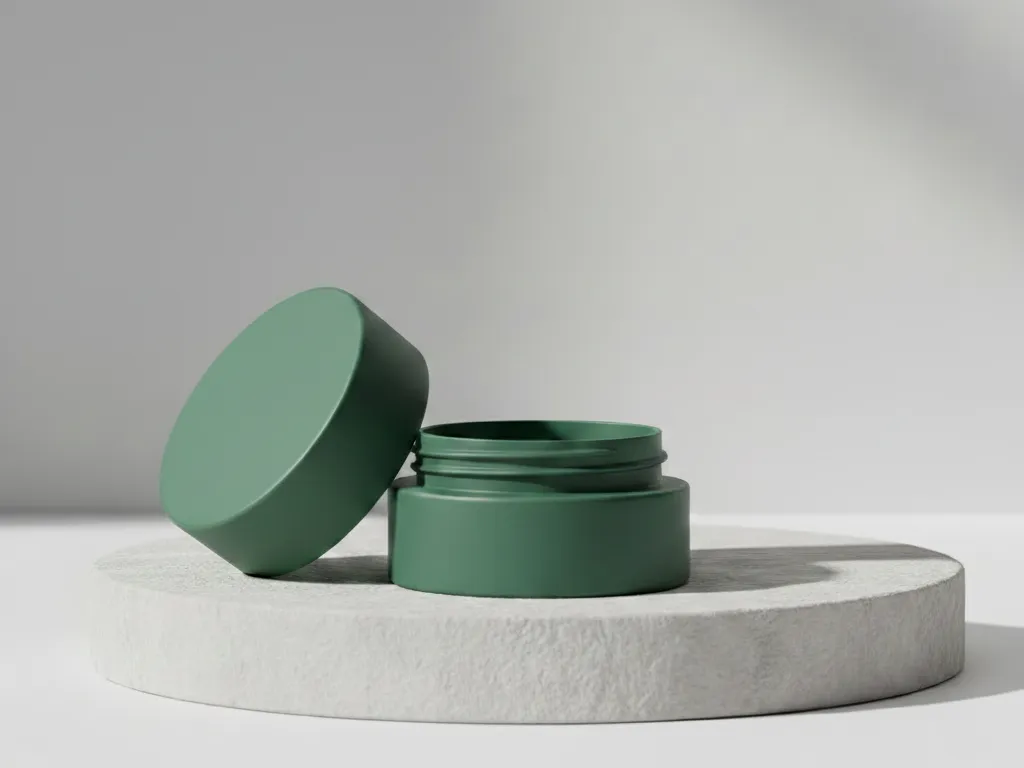
The beauty industry demands aesthetics as much as sustainability. PHA delivers a premium, “heavy” tactile feel that aligns with luxury branding.
- Precision Closures: Threaded caps and snap-fits that maintain mechanical integrity over repeated use.
- Engineered Bottles & Tubes: High-clarity grades for lotions and shampoos that are resistant to essential oils and chemical surfactants.
Functional Agricultural & Industrial Solutions
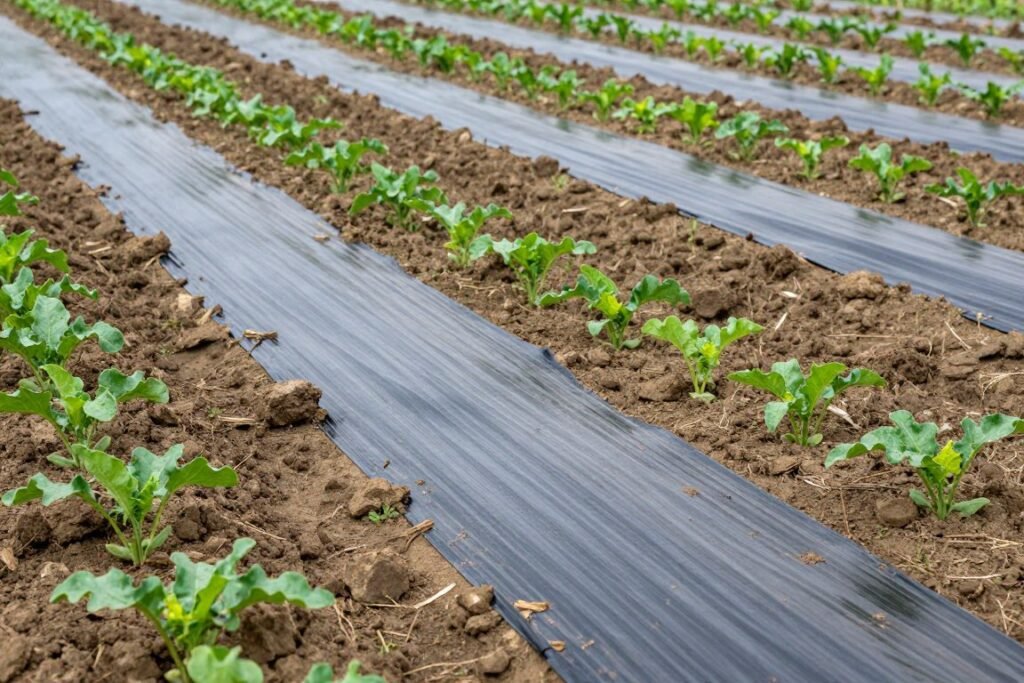
- Agro-Films: Our Soil-Biodegradable mulch films eliminate the $100+/acre cost of plastic retrieval and disposal.
- Protective Electronics Packaging: Antistatic PHA foams and cushioning that provide the shock absorption of EPS (Styrofoam) but with a 100% bio-based footprint.
Specialized Medical & Pharmaceutical
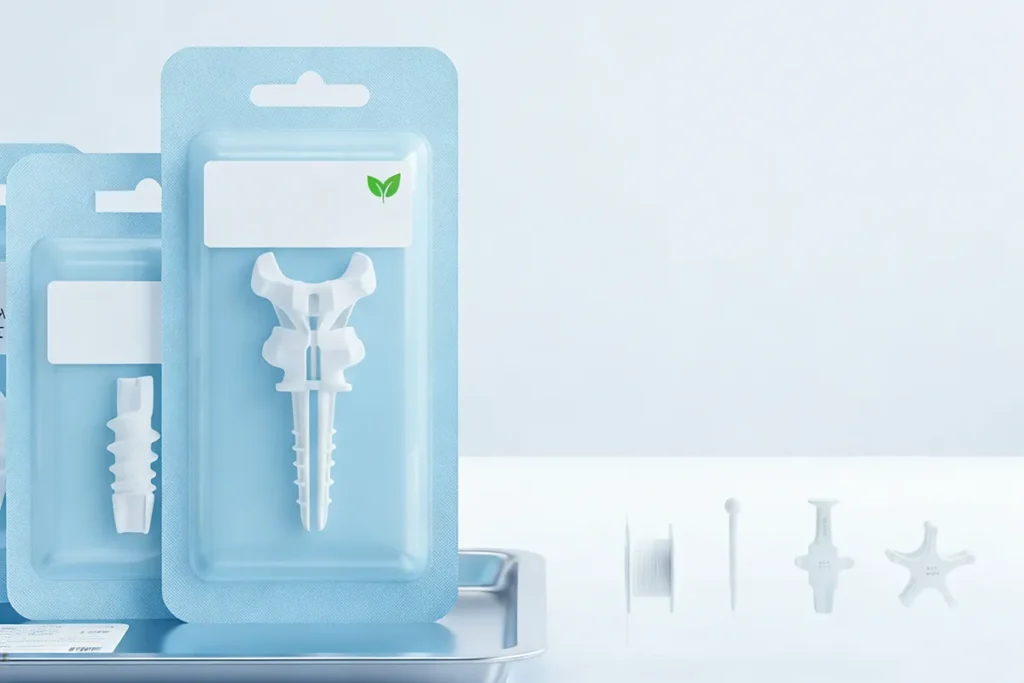
For high-stakes applications, our medical-grade PHA offers:
- Biocompatible Blister Packs: Breathable yet sterile protection for sensitive devices.
- Surgical Components: Specialized resins for non-permanent medical aids that require controlled in-vivo degradation.
Find the Right PHA Packaging for Your Application
Our material scientists help identify optimal PHA solutions for your specific packaging requirements. Request a custom assessment including material recommendations, performance testing, and cost analysis.
PHA Compliance and Market Opportunities in Key Regions
Compliance is no longer a choice; it is a prerequisite for market access. As governments tighten the net on fossil-based polymers, PHA provides the most robust pathway to compliance across global markets.
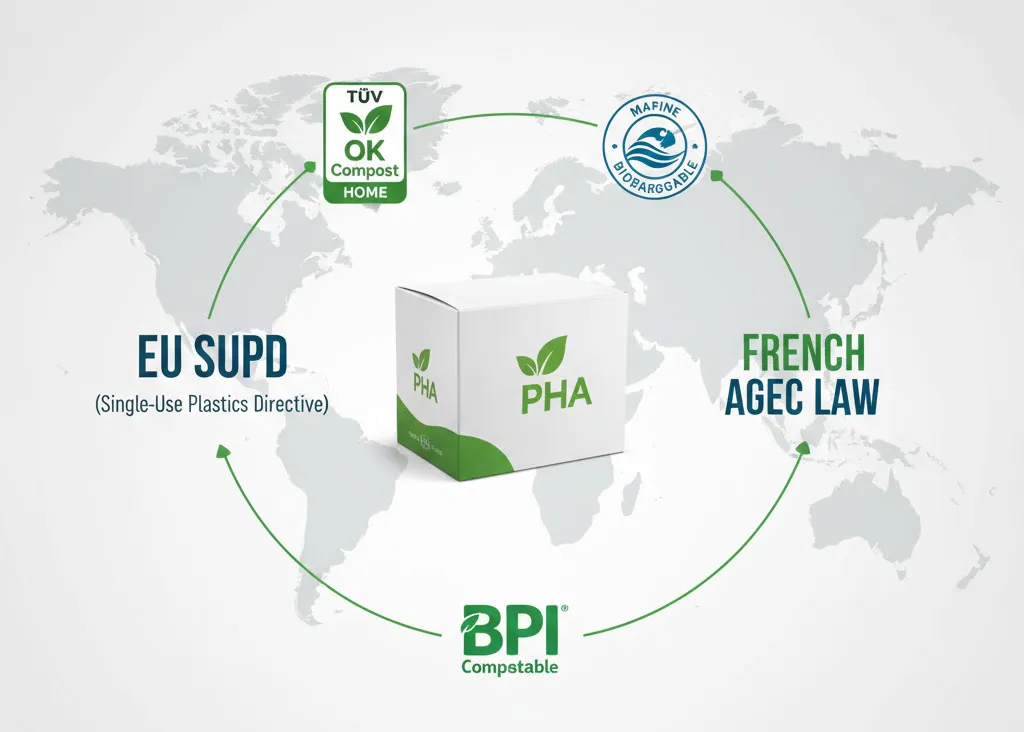
European Union Regulations
Europe leads in plastic packaging regulations. Multiple directives create strong demand for genuine alternatives like PHA.
- Bans certain plastic products from July 2021
- Requires biodegradable alternatives for exempted items
- PHA meets compostability standards completely
- Market access advantages for compliant materials
- Consumer protection through verified sustainability
EU Single-Use Plastics Directive
- Sets recycling and recovery targets for member states
- Encourages design for recyclability and compostability
- PHA aligns with circular economy objectives
- Extended producer responsibility compliance support
- Future-proof material selection reducing regulatory risk
Packaging and Packaging Waste Directive
France AGEC Law
- Prohibits certain plastic packaging from 2025
- Requires biodegradability certification for alternatives
- PHA qualifies under compostable packaging provisions
- Market opportunity in French retail and food service
- Clear regulatory pathway for PHA packaging adoption
North America: The PFAS-Free Shift
In the United States, the focus has shifted toward chemical safety and “Truth in Labeling.”
- PFAS-Free Mandates: With over 12 states banning PFAS in food packaging, PHA offers a natural barrier to grease and moisture without the need for harmful “forever chemicals.”
- BPI Certification Ready: Our materials are optimized to pass BPI (Biodegradable Products Institute) testing, essential for North American retail entry.

Global Market Momentum & Scalability
The shift to PHA is accelerating, backed by massive capacity expansions in Asia and the USA.
| Region | Regulatory Driver | Market Opportunity |
| EU | PPWR & Green Claims Directive | Compulsory compostability for food-contact items. |
| USA | SB 54 (California) & PFAS Bans | Premium eco-branding and “Plastic-Free” labeling. |
| China | National Plastic Ban (Single-Use) | Massive demand for agricultural mulch and delivery packaging. |
| Japan | Marine Plastic Strategy | High-tech electronic and cosmetic primary packaging. |
Conclusion: Why Choose PHA for Your Sustainable Packaging Needs
The transition to sustainable packaging is no longer a peripheral environmental goal—it is a core business strategy for the 2026 landscape and beyond. PHA stands as the only material that simultaneously resolves the “End-of-Life” dilemma and meets industrial performance standards.
Why Partner with SalesPlastics for Your PHA Transition?
PHA resolves end-of-life challenges while meeting high-performance industrial standards. At SalesPlastics, we provide more than just advanced biopolymers; we serve as your strategic technical partner to ensure a seamless integration into your existing production lines:
- Tailored Grade Selection: Instead of a one-size-fits-all approach, we curate the ideal PHA resin based on your product’s unique characteristics—balancing flexibility, clarity, and barrier strength to meet your exact specifications.
- Supply Chain Security: We maintain stable inventory and logistics to safeguard your production schedules against global market volatility.
- Regulatory & Certification Support: We provide the documentation and compliance data (TÜV, BPI, FDA) needed to fast-track your product’s market entry.
- Sample & Trial Assistance: Our technical team supports your pilot runs to minimize downtime and optimize processing parameters.
Take the Lead in the Sustainable Revolution
Don’t wait for regulations to disrupt your supply chain. Join the industry leaders who are already differentiating their brands through authentic, ocean-friendly packaging solutions.
get in touch
Frequently Asked Questions About PHA Sustainable Packaging
What is an example of a PHA packaging?
PHA packaging examples are diverse, ranging from high-precision industrial components to consumer-facing disposables. Key applications include:
- Food Service: Heat-resistant coffee lids, cutlery, and takeaway containers that require high-temperature stability.
- Flexible Solutions: High-barrier produce bags, bakery pouches, and flow-wraps that maintain product freshness.
- Rigid Retail Packaging: Cosmetic jars and luxury soap containers where a premium tactile feel and chemical resistance are essential.
- Agricultural Innovation: Soil-biodegradable mulch films and plant pots that eliminate the labor costs of plastic collection and waste disposal.
What is PHA in packaging?
In the packaging context, PHA (Polyhydroxyalkanoates) is a high-performance, 100% bio-based polyester that serves as a “drop-in” alternative to petroleum plastics like PP, PE, and PS.
Unlike first-generation bioplastics, PHA offers exceptional versatile processing—it can be used in injection molding, extrusion, and blow molding equipment with minimal adjustments. It provides the mechanical strength required for modern logistics while ensuring the packaging leaves no microplastics behind at the end of its life cycle.
Is PHA environmentally friendly?
Absolutely. PHA is widely considered the “Gold Standard” of sustainable polymers. Its environmental credentials are three-fold:
- Renewable Origin: Produced via microbial fermentation of plant-based oils or organic waste, significantly reducing the carbon footprint compared to fossil fuels.
- True Circularity: It is one of the only materials certified for Marine, Soil, and Home Compost biodegradation. It breaks down into CO₂ and water, mimicking nature’s carbon cycle.
- Clean End-of-Life: It does not require industrial composting facilities to degrade. Even if it escapes the waste stream, it will not contribute to the global microplastic crisis.
What are the disadvantages of PHA plastic?
Currently, the primary challenge is the price premium compared to commodity plastics, driven by specialized production scales. However, as your distribution partner, we help you mitigate this through:
- Regulatory Savings: Offsetting costs by avoiding “Plastic Taxes” and reducing Extended Producer Responsibility (EPR) fees in regions like the EU.
- Operational Efficiency: Our specialized grades are optimized for high-speed production, reducing scrap rates and energy consumption compared to other biopolymers.
- Risk Mitigation: Future-proofing your brand against tightening global bans on single-use plastics and PFAS-containing materials. While the resin cost is higher, the Total Cost of Ownership—including brand equity and compliance—makes PHA a strategic investment for market leaders.