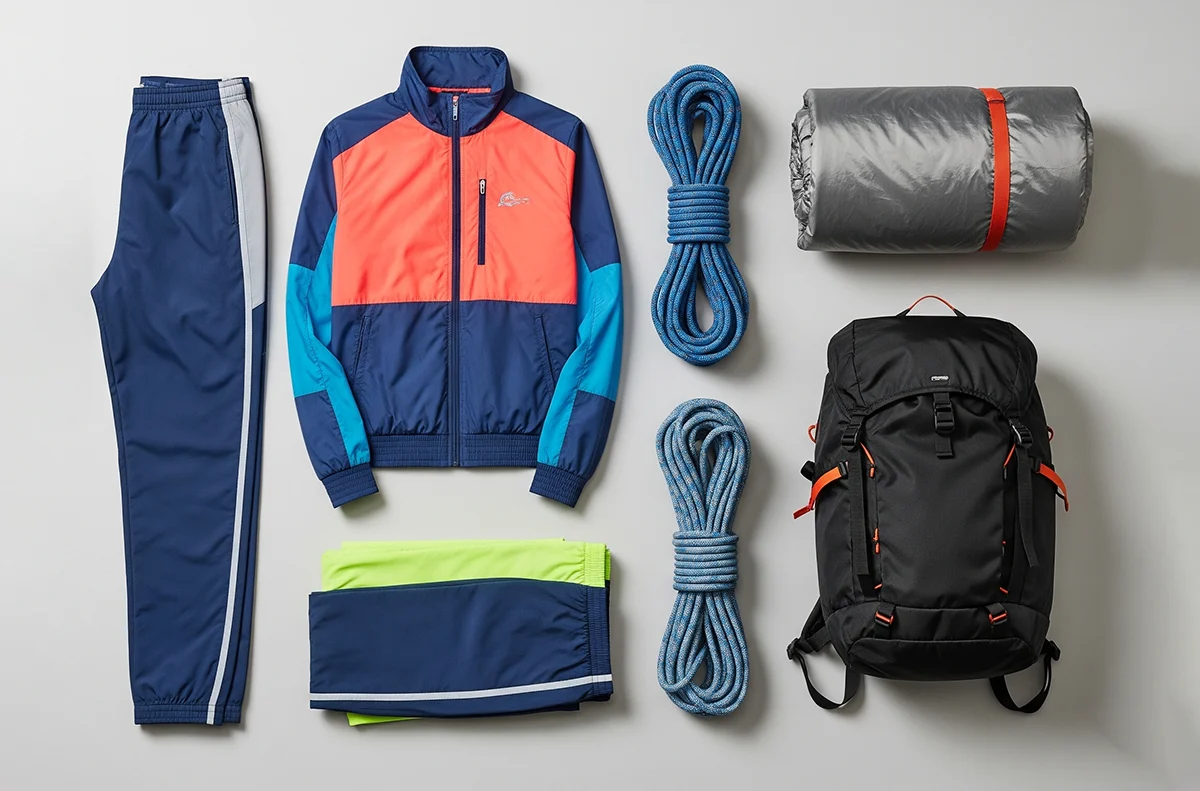
Materials Performance Comparison serves as the core evaluation for PLA fiber against polyester. PLA, derived from renewable resources like corn starch, offers a biodegradable alternative to petroleum-based polyester (PET).
Eco-Superiority
Renewable corn starch origins vs. petroleum-based PET. Fully biodegradable under industrial conditions.
Mechanical Parity
Tensile strength (3.2–5.0 cN/dtex) aligns closely with polyester for standard apparel needs.
Moisture Mastery
Superior wicking behavior and 93% elastic recovery ensure dry comfort and shape retention.
Technical Specifications Comparison
| Property | PLA Fiber (Typical) | Polyester (PET) (Typical) | Comparison Notes |
|---|---|---|---|
| Density (g/cm³) | 1.24 – 1.27 | 1.38 | PLA results in lighter fabrics |
| Melting Point (°C) | 170 – 178 | 250 – 260 | PLA softens more readily at heat |
| Glass Transition (Tg) | 55 – 65°C | 70 – 80°C | PLA restricts high-heat uses |
| Tensile Strength (cN/dtex) | 3.2 – 5.0 | 4.5 – 5.5 | Values align for standard use |
| Elastic Recovery Rate | 93% (@5% strain) | 65% (@5% strain) | PLA shows significantly better recovery |
| Moisture Regain (%) | 0.4 – 0.6 | 0.4 | Essentially equivalent |
| UV Resistance | Stronger | Adequate | PLA maintains integrity longer |
| Dyeability | Below 110–120°C | Above 130°C | PLA requires cooler conditions |
Mechanical & Physical Synergy
Mechanical properties show considerable overlap. While polyester is the industry benchmark for strength, PLA's 93% elastic recovery contributes to improved wrinkle resistance and shape retention.
PLA’s lower density produces fabrics that feel lighter. Its silk-like luster and improved drape create a premium skin-contact experience compared to the firmer hand-feel of traditional synthetics.
Ready to Transition to Sustainable Fibers?
Browse the article "The Future is Bio-Circular: How PLA Fiber Redefines Low-Carbon Textiles" to discover how PLA matches the performance of polyester while offering complete biodegradability.
Read the full article.Thermal Considerations
Thermal stability remains the primary limitation. However, industry approaches like stereocomplex PLA or nucleating agents are now raising the effective glass transition temperature above 80°C.
Functional Advantages
PLA demonstrates stronger UV resistance and a higher limiting oxygen index (flame retardancy), making it a safer profile for home textiles and apparel.
Strategic Blending
Blends with cotton, modal, or wool help address thermal limitations while expanding the technical viability of biodegradable garments.
Summary & Verdict
PLA matches polyester closely in ambient-temperature applications like T-shirts, activewear, and home furnishings. It offers distinct advantages in moisture management, comfort, and safety. As heat-resistant formulations evolve, PLA is rapidly becoming the technically viable standard for circular textile economies.