Addressing food spoilage challenges with renewable materials and natural agents. Reduce waste, extend freshness, and support global environmental standards. Food spoilage affects retailers, caterers, and distributors by causing significant waste and financial losses. Produce like strawberries can wilt in days, while meats oxidize quickly, leading to returns and reduced profits.
Starch-based active packaging provides an effective, eco-friendly alternative that extends freshness and supports sustainable practices.
Reduction in spoilage losses
Shelf life for proteins
Core Technology: Starch Blends
Sourced from renewable crops like corn or potatoes, our thermoplastic starch (TPS) creates a versatile, antimicrobial barrier.
Base Matrix
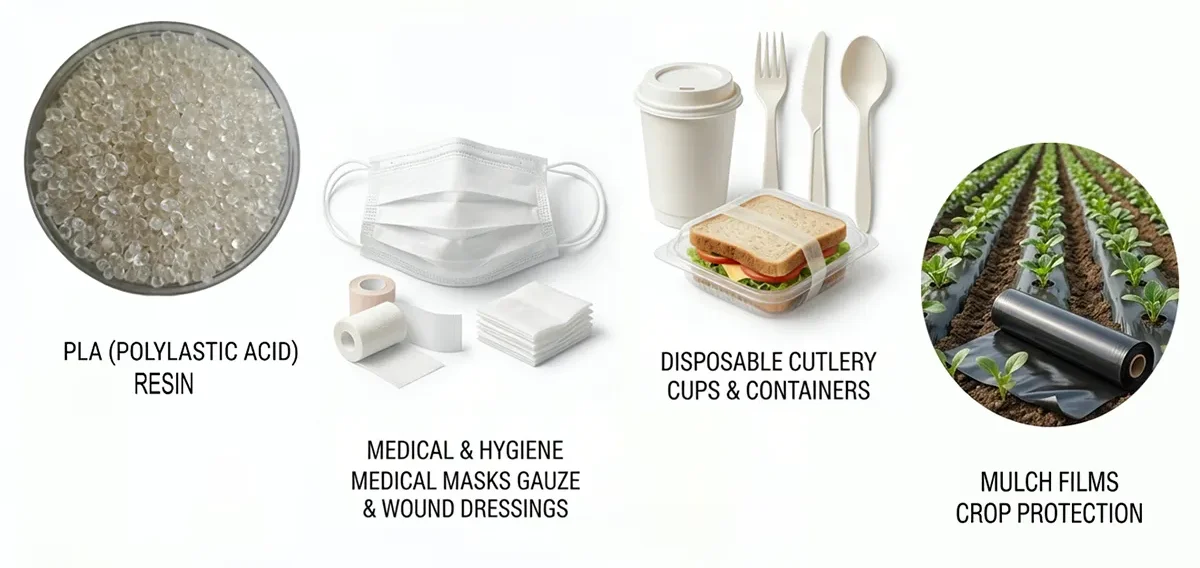
TPS blended with PLA for durability and PBAT for pliability, creating a versatile biodegradable film.
Natural Agents
Infused with cinnamon essential oil, grape seed, and clove extracts to combat bacteria and oxidation.
Active Defense
Gradual release of compounds to inhibit E. coli and S. aureus without artificial additives.
In-Depth Technical Review
“Starch-Based Composites: Innovations in Blending with PLA, PBAT, and Natural Fibers”
Demonstrated Shelf-Life Improvements
| Food Category | Standard Shelf Life | Active Packaging | Improvement |
|---|---|---|---|
| Meats (Beef/Chicken) | 7 Days | 14 Days | +100% |
| Fresh Berries/Strawberries | 3-5 Days | 8-15 Days | +5-10 Days |
| Cherry Tomatoes | 10 Days | 15-20 Days | +50% |
| Processed (Peanut Butter) | 180 Days | 300+ Days | Extended Stability |
Typical results show a 20–50% drop in spoilage losses across all supply chain stages.
Cinnamon-Infused Protection
A study on fresh produce packaging utilized a TPS/PLA/PBAT film with cinnamon oil to preserve grapes. The results showed a full additional week of freshness compared to standard wraps. This helped suppliers cut waste and meet demands for natural preservation.
Seamless Integration
Transitioning to sustainable packaging shouldn't be complex. Starch's affordability lowers formulation costs by 20–40% versus synthetic options. Our materials work seamlessly with existing equipment for blown films or extrusion.
Accelerate Your Green Packaging Strategy
Whether you are a packaging manufacturer, caterer, or retailer, our team provides custom formulations and samples to help you achieve your sustainability goals.
Diverse Application Needs
Meat & Cheese
Antimicrobial wraps for high-moisture safety.
Catering Services
Active bags to maintain quality during delivery.
Supermarkets
Extend berry and fruit display times significantly.
Consumer Trust
Clear "Compostable" labeling for eco-brands.
Global Sustainability Standards
Our materials achieve full biodegradability, allowing brands to promote "plastic-free" attributes while navigating complex international regulations.
Compliance Benefits
Align your product line with the EU's single-use plastics rules and China's restriction policies. This compliance helps navigate regulations while building customer trust through verifiable eco-friendly attributes.
Embracing Sustainable Innovation
Starch-based active packaging empowers businesses to reduce waste, extend product life, and advance sustainability. It represents a practical step toward greener operations for the modern world.Together, we can enhance freshness and environmental care.
Related Posts
PHA for Yogurt Cups:Current Status and Solutions
Current Status PHA (polyhydroxyalkanoates) is a fully biodegradable polyester family with good biocompatibility, oxygen barrier properties, and food contact safety. These characteristics make it suitable for food packaging, including yogurt

PLA vs PHA: Choosing the Right Bioplastic for Sustainable Products
PLA and PHA are frequently grouped together under the label of “bioplastics,” yet treating them as interchangeable resins continues to cause costly mistakes in real manufacturing environments. Differences in melt

PHA Marine Degradable Bioplastic: The Ultimate Solution for Ocean Pollution
The global marine ecosystem faces an estimated 11 million metric tons of plastic waste entering oceans annually (UNEP, 2025). Unlike conventional petroleum-based plastics that persist for centuries, Polyhydroxyalkanoates (PHAs) offer

PLA vs PLLA: A Panoramic Guide to Bioplastics
The global transition toward sustainability demands materials that effectively mitigate the environmental impact of petrochemical polymers. Polylactic Acid (PLA) and its stereoisomer, Poly-L-Lactic Acid (PLLA), stand at the forefront of