

Polycarbonate (PC) is a cornerstone of modern engineering materials, renowned for its unrivaled impact resistance, thermal stability, and optical clarity. This high-performance thermoplastic excels where others fail, making it a critical component across diverse industries, from automotive and electronics to medical devices. In additive manufacturing, PC filament represents the pinnacle of performance, delivering parts with exceptional mechanical properties.
This guide explores the complete journey of this remarkable material, starting at its origin as high-quality resin granules and following its transformation through extrusion into 3D printing filament. We will delve into every stage, from the fundamental properties of the raw material to practical printing tips that ensure outstanding results, providing a comprehensive overview of the entire process.
Introduction to Polycarbonate Filament
At its core, polycarbonate (PC) is an engineering-grade thermoplastic resin celebrated for its unique combination of extreme impact resistance, thermal stability, and optical clarity. This industrial-grade material, the same used in bulletproof glass and automotive headlights, brings its robust properties to the world of additive manufacturing.
As a 3D printing filament, PC offers performance that distinguishes it from standard materials like PLA or ABS. Its high glass transition temperature (Tg) of approximately 150°C allows it to maintain structural integrity in high-heat environments where other plastics would deform or melt. This exceptional thermal resistance, combined with its impressive tensile strength, makes it a prime choice for functional prototypes, durable fixtures, and end-use parts designed for demanding applications.
However, harnessing these advantages requires a deep understanding of the material’s nature. PC is notoriously hygroscopic, meaning it readily absorbs moisture from the air, which can compromise print quality and part strength. It also demands high printing temperatures and a heated build chamber to mitigate its tendency to warp. These characteristics underscore the importance of using high-quality raw materials and following precise printing protocols to unlock PC’s full potential.

Advantages
- Exceptional Impact Strength
- Superior Thermal Resistance with an HDT of up to 150°C
- Excellent Durability and Tensile Strength
- Natural Transparency
- Good Electrical Insulation
- High Ductility and Flexibility
Limitations
- Requires High Printing Temperatures
- Highly Hygroscopic (Absorbs Moisture)
- Prone to Warping
- Tendency to Ooze from the Nozzle
- Higher Cost than Basic Filaments
- Requires a Controlled, Enclosed Environment
Manufacturing Process: From Granules to Filament
Understanding how polycarbonate filament is manufactured provides valuable insight into its properties and printing behavior. The journey from raw polycarbonate granules to finished filament involves several critical steps that directly impact print quality.
Raw Material Preparation
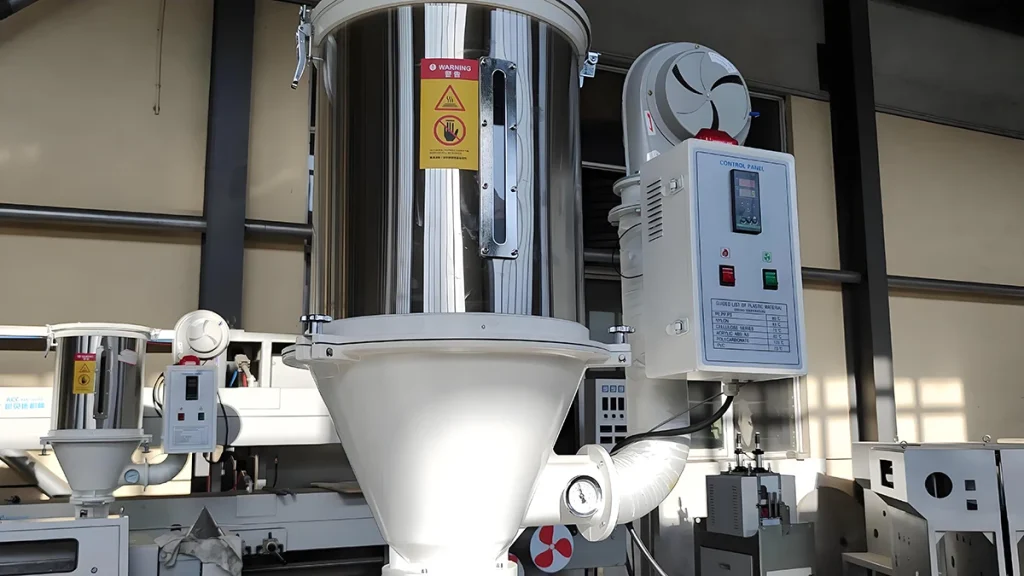
The process begins by thoroughly drying high-grade polycarbonate pellets. Manufacturers dry the resin at approximately 120°C for 4-6 hours to remove all moisture. This critical step prevents polymer degradation and ensures a strong, high-quality filament.
Extrusion Process
Dried granules are melted in an extruder at a precise temperature of 280°C to 310°C. The molten plastic is then forced through a die to form a continuous filament strand. Maintaining stable temperature and pressure is vital for molecular integrity and a consistent diameter.
Cooling and Diameter Control
The filament passes through a cooling system and is precisely measured by laser. This ensures the filament meets industry standards like 1.75mm or 2.85mm with a minimal variance, typically ±0.05mm, guaranteeing consistent printing performance.
Many manufacturers also add specific additives during extrusion to enhance performance. These can include impact modifiers, flow enhancers, or compounds that reduce the material’s natural hygroscopicity, leading to PC Blend formulations that are more user-friendly.
Key Properties of Polycarbonate Filament
Polycarbonate is defined by a unique blend of exceptional mechanical, thermal, and optical properties. This combination makes it a superior material for functional prototypes and end-use parts. For engineers and designers, this makes PC a critical choice for applications where performance cannot be compromised. The following sections will detail the specific properties that distinguish PC from other filaments.
Mechanical Properties
PC’s unrivaled impact resistance makes it the go-to choice for parts that need to withstand physical stress. Unlike brittle materials, polycarbonate can flex and absorb energy without fracturing, a rare and invaluable combination of strength and ductility in the world of 3D printing filaments.
Thermal Properties
With a high Heat Deflection Temperature (HDT) of 140-150°C and a Glass Transition Temperature (Tg) of 147°C, PC maintains its structural integrity at temperatures that would cause other filaments like PLA or ABS to deform. This makes it ideal for components in high-heat environments, such as automotive parts and electronics housings.
Optical Properties
Pure polycarbonate is naturally transparent, a property that is transferred to the extruded filament. While the 3D printing process can introduce some light diffusion, specialized formulations can produce prints with enhanced clarity, making PC suitable for lighting components and transparent visual prototypes.
Comparison with Other Filaments
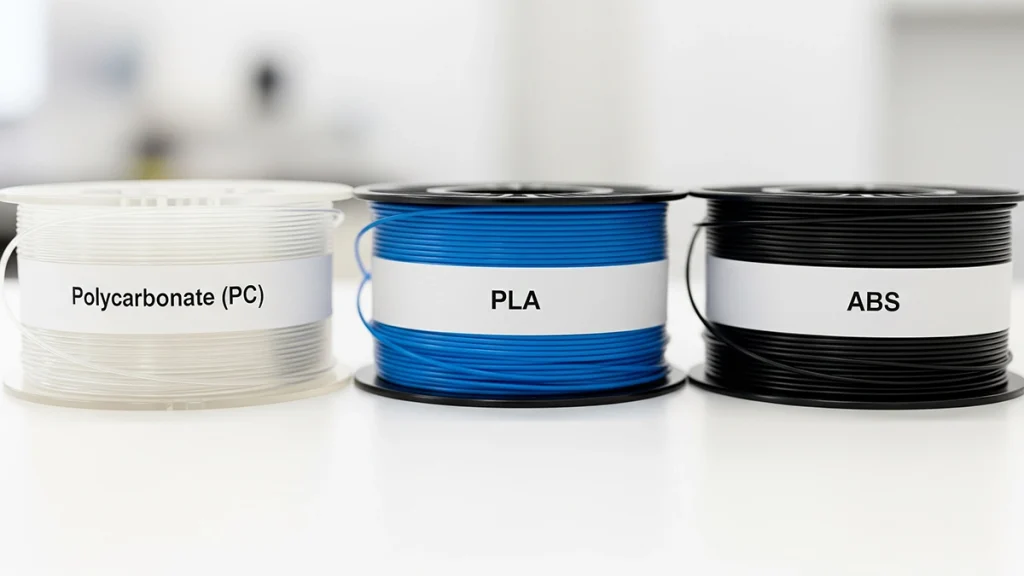
To highlight PC’s position in the material landscape, here’s how it stacks up against other popular filaments. This comparison helps in identifying the best material for specific project requirements.
Polycarbonate (PC)
- Highest impact resistance
- Superior heat resistance (150°C)
- Excellent tensile strength
- Naturally transparent
- Difficult to print (prone to warping and moisture issues)
- Requires high temperatures (260-310°C)
- Higher cost ($35-85 per kg)
PLA
- Easy to print (beginner-friendly)
- Low temperature requirements (180-220°C)
- Minimal warping
- Biodegradable
- Poor heat resistance (55°C)
- Limited impact resistance
- Affordable ($20-30 per kg)
- Good impact resistance
- Moderate heat resistance (105°C)
- Post-processing with acetone possible
- UV resistant
- Prone to warping
- Strong odor when printing
- Moderate cost ($25-35 per kg)
ABS
PC vs. PETG: Strength vs. Printability
While polycarbonate offers superior strength and heat resistance, PETG provides a more balanced solution. It prints at lower temperatures (230-250°C), is less prone to warping, and is less hygroscopic than PC, offering a solid middle ground for applications that need good impact resistance without PC’s printing challenges.
PC vs. Nylon: Different Strength Profiles
Both PC and nylon are high-performance engineering thermoplastics. Nylon excels in flexibility, wear resistance, and fatigue resistance, making it ideal for gears and moving parts. In contrast, PC is superior in rigidity, impact strength, and optical clarity, making it better for static, load-bearing, or clear components.
Ready to Elevate Your PC Filament Production?
High-quality polycarbonate granules ensure consistent filament strength, clarity, and printability. Our ISO-certified, high-purity granules provide the foundation for producing high-performance 3D printing filaments that meet industry demands.
Hardware Requirements and Best Practices for Printing
Successfully printing with polycarbonate depends not only on the user’s skills but also on the quality of the filament itself. A high-quality filament, made from properly dried, virgin PC granules, is easier to print and yields stronger parts.

Essential Hardware Requirements
Hotend Requirements
- All-metal hotend (without a PTFE lining)
- Temperature capability of 280-310°C
- Hardened steel nozzle to resist wear
- Nozzle diameter of 0.4mm or larger
Build Surface Requirements
- Heated bed capable of 110-120°C
- PEI sheet or textured surface
- Glue stick as a separation layer
Printer Features
- Fully enclosed build chamber
- Direct-drive extruder preferred
- Rigid frame to minimize vibration
- Filament dryer or storage solution
The Critical Role of Proper Drying
Polycarbonate is exceptionally hygroscopic, meaning it readily absorbs moisture from the air. This is a challenge for both filament manufacturers and end-users. Even a small amount of moisture can lead to polymer degradation during printing, resulting in poor layer adhesion, bubbling, and weak, brittle parts. This highlights why starting with properly dried granules is the most critical step in the entire filament production process. For end-users, it’s essential to store filament in an airtight, moisture-free container and dry it before each use.
Optimal Print Settings
| Setting | Recommended Value | Notes |
| Nozzle Temperature | 275-310°C | Start at the lower end and increase for better layer adhesion. |
| Bed Temperature | 110-120°C | Use 115°C for the first layer to ensure a strong bond. |
| Print Speed | 30-40 mm/s | Slower speeds (15-20 mm/s) are vital for the first layer. |
| Cooling Fan | 0-25% | Use minimal or no cooling to prevent layer separation. |
| Layer Height | 0.2-0.3mm | Thicker layers promote better adhesion and strength. |
| Retraction | 1-2mm (direct drive) | Adjust speed to 40-50mm/s to reduce stringing. |
Diverse Applications of Polycarbonate Filament
Polycarbonate’s unique combination of properties makes it suitable for a wide range of applications where standard filaments would fail. Understanding these applications can help you determine if polycarbonate is the right choice for your specific project needs.
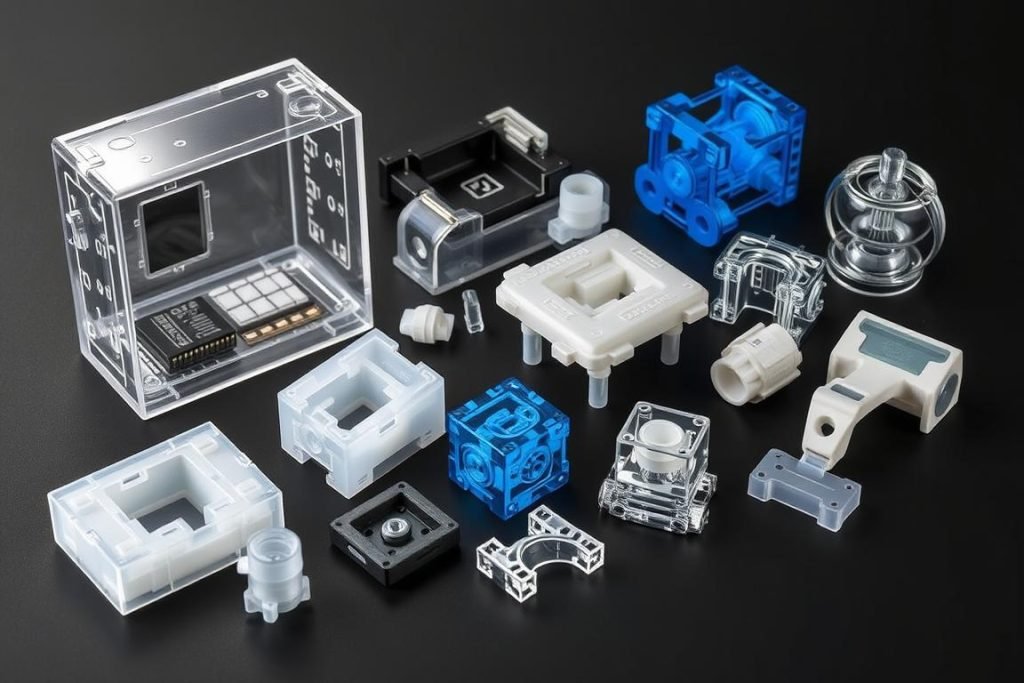
High-Performance Engineering
- Functional prototypes
- Jigs and fixtures
- Tooling components
- Mechanical parts
Automotive & Aerospace
- Under-hood parts
- Electrical housings
- Mounting brackets
- Prototypin
Consumer & Medical
- Transparent enclosures
- Lighting components
- Medical device prototypes
- Durable consumer goods
Case Study: Automotive Application
A leading automotive parts supplier adopted 3D printed polycarbonate for their assembly jigs and fixtures, replacing traditional machined aluminum. This strategic shift resulted in a 60% reduction in production time and a 75% cut in costs. The high heat resistance of the polycarbonate parts allowed them to perform reliably in a hot factory environment where PLA fixtures had previously deformed, proving that the right material choice can lead to a significant competitive advantage.
Explore Specialized Polycarbonate Blends
To meet the evolving demands of the 3D printing market, we provide a range of specialized PC-ABS granules. This blend combines the best properties of both materials, offering you the essential foundation to produce filaments with superior strength and significantly improved printability.
Tips for Success and Common Pitfalls
Even with the right equipment, printing with polycarbonate can be challenging. These difficulties stem from the material’s inherent properties, such as its high thermal expansion and sensitivity to moisture. By understanding and addressing these core issues, you can master the process and achieve professional-grade results.
Preventing Moisture Issues
Polycarbonate is exceptionally hygroscopic, and its ability to absorb moisture is a key challenge in both filament production and end-use. The moisture content of the raw granules directly affects the quality of the final filament. For users, it’s essential to store filament in an airtight container with desiccant. For best results, dry polycarbonate filament at 70-80°C for 4-6 hours before printing using a dedicated filament dryer.
Minimizing Warping
Warping is one of the most common issues with PC printing, driven by its high thermal expansion. The best way to combat this is by using a fully enclosed printer to maintain a consistent ambient temperature. For parts with small footprints, a brim of 5-10mm can significantly improve bed adhesion. For larger prints, reducing infill density to 15-20% can help minimize internal stresses that lead to warping.
Improving Layer Adhesion
Poor layer adhesion can result in weak prints that delaminate under stress. Ensure your nozzle temperature is sufficient (275-310°C) and print at slower speeds to allow for proper melting and bonding between layers. It’s also critical to minimize cooling fan usage, as rapid cooling prevents layers from properly fusing. For critical parts, increasing extrusion width to 120% of your nozzle diameter can create wider, stronger bonds.
Reducing Stringing and Oozing
Polycarbonate tends to ooze from the nozzle during travel moves. To reduce this, optimize retraction settings by increasing both distance and speed. Enabling “coasting” in your slicer can also help by reducing pressure in the nozzle at the end of an extrusion path. Finding the lowest possible printing temperature that still provides good layer adhesion through a temperature tower can also minimize oozing.
Important Safety Note: Always ensure proper ventilation when printing polycarbonate. While not as toxic as some materials, printing at high temperatures can release ultrafine particles and volatile organic compounds (VOCs). An enclosure with proper filtration is recommended for regular use.
Getting Started: The Right Raw Materials and Resources
For manufacturers looking to enter the high-performance filament market, the journey begins with selecting the right raw materials. Choosing the right resin grade is more than just a first step; it’s the fundamental decision that will define your product’s performance and market position. By understanding the unique properties of different polycarbonate grades, you can develop a product that stands out from the competition.
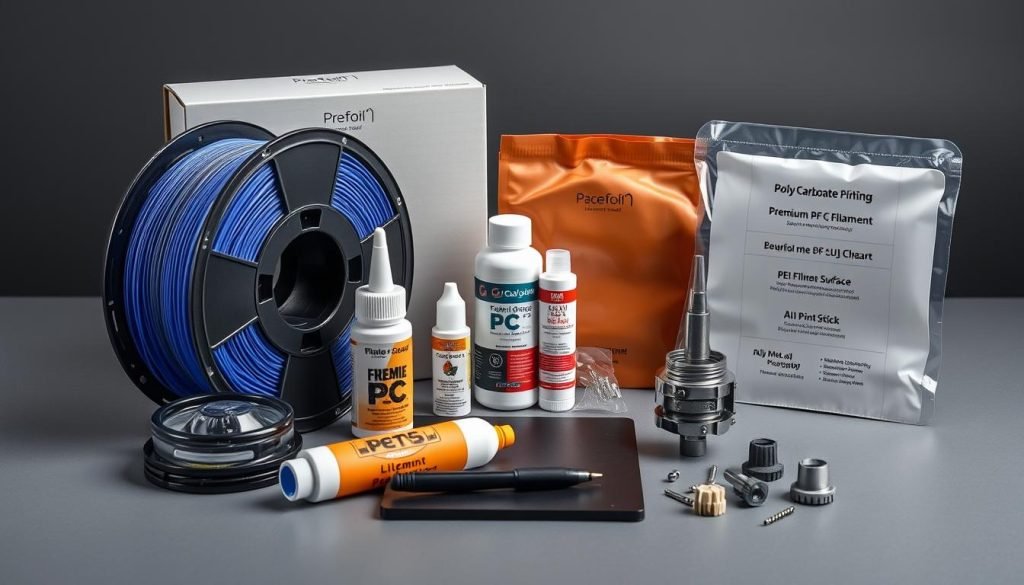
Recommended Polycarbonate Grades
For General Purpose Filaments
Start with our standard, high-purity PC granules. They provide the core strength, heat resistance, and optical clarity that define the material.
For Improved Printability
To create a filament that’s easier for users to print, consider our specialized PC-ABS granules. This blend combines PC’s toughness with ABS’s renowned printability, making it ideal for a wider range of desktop 3D printers.
For Enhanced Strength
For manufacturers targeting high-demand structural applications, we can provide PC-CF (Carbon Fiber Reinforced) grades that offer enhanced rigidity, dimensional stability, and superior strength, directly from the source.
Essential Resources
Beyond the raw material, success in the PC filament market also depends on a deep understanding of the manufacturing process and end-use application.
- Material Data Sheets: Always consult a detailed technical data sheet for your granules. This information is critical for setting the correct extrusion temperatures and achieving consistent filament quality.
- Market Insights: Understanding the specific needs of industries like automotive, aerospace, and medical will help you develop targeted products and position your filament effectively.
Is polycarbonate filament toxic to print?
Polycarbonate is considered relatively safe. However, like all plastics, printing at high temperatures can release ultrafine particles and volatile organic compounds (VOCs). The level of emissions is directly related to the purity of the raw resin. Always ensure proper ventilation or use an enclosure with a filter, especially for extended print jobs, to minimize exposure.
Is polycarbonate better than PLA?
Polycarbonate is not “better” than PLA, but it is a higher-performance material for specific applications. It is significantly stronger and more heat-resistant than PLA, with a heat deflection temperature of around 150°C compared to PLA’s 55°C. PLA is a good choice for decorative items, low-stress prototypes, and for beginners due to its ease of use and low cost. Polycarbonate, on the other hand, is engineered for functional parts that require exceptional durability, thermal stability, and mechanical strength.
Which is stronger, PETG or polycarbonate?
Polycarbonate is stronger than PETG in most mechanical properties, particularly in impact resistance and heat resistance. While PETG offers a good balance of strength and printability, its heat deflection temperature is around 70°C, making it unsuitable for applications where polycarbonate excels. For parts that need to withstand high stress or high temperatures, polycarbonate provides a clear advantage.
Conclusion
Polycarbonate stands at the pinnacle of 3D printing materials, defined by its exceptional mechanical properties and heat resistance. Yet, as this guide has shown, the true value of PC filament starts long before it reaches a 3D printer—it begins with the quality of its raw resin granules.
By understanding the journey from granule to filament, manufacturers can appreciate why starting with high-quality, properly handled raw material is the most critical factor for success. This foundation ensures the filament’s integrity, printability, and final part performance.
The right material is not just a component; it is a competitive advantage. Partnering with a trusted supplier who provides premium PC granules is the key to unlocking the full potential of this engineering-grade material and producing a filament that stands out in a demanding market.
Ready to Build a Better Filament?
The quality of a filament is a direct reflection of its raw materials. By partnering with us, you gain access to a reliable supply of premium polycarbonate granules and the expertise to help you produce a filament that stands out in the market.

