

In a global marketplace where efficiency, reliability, and sustainability are paramount, polypropylene (PP) bags have emerged as an indispensable packaging solution. These bags are the backbone of supply chains across various industries, from transporting bulk agricultural goods and construction materials to providing eco-friendly retail options. Their exceptional durability, lightweight construction, and adaptability make them a preferred choice for businesses looking to protect their products and optimize logistics.
But what separates a standard PP bag from a truly high-performance one? It all begins with the raw material. This guide is designed specifically for manufacturers and businesses like yours, offering a comprehensive roadmap to premium PP bag production. We’ll take you beyond the basics, detailing the critical steps from selecting the right polymer granule to implementing advanced weaving and finishing processes. Let’s explore how to craft superior durability and deliver packaging solutions that not only meet but exceed industry standards.
Understanding Polypropylene (PP) Granules
Polypropylene (PP) is a versatile thermoplastic polymer, a cornerstone of modern packaging. Its unique molecular structure, represented as [−CH2−CH(CH3)−]n, gives it a unique combination of properties that make it an ideal material for bag manufacturing.

- Exceptional Durability: With a Young’s modulus of 1300–1800 N/mm², PP offers a powerful blend of toughness, flexibility, and fatigue resistance, essential for bags that endure rigorous handling.
- Lightweight & Cost-Effective: PP is the lightest commodity plastic, with a density of just 0.895–0.93 g/cm³. This translates to more bags per kilogram of material, significantly reducing both transport costs and environmental impact.
- Thermal and Chemical Stability: Its high melting point (130–171°C) and resistance to fats, organic solvents, and non-oxidizing acids ensure that PP bags remain stable and reliable in diverse environments.
- Safety & Compliance: PP is non-toxic and approved for food-grade and pharmaceutical applications, making it a safe choice for a wide range of products.
From Propylene to Resin: A Focus on Granule Quality
The journey from crude oil to a usable polymer is a complex one, but the outcome—the quality of the final granule—is what matters most to manufacturers. Propylene, sourced from refining or natural gas, is polymerized using advanced catalysts like Ziegler-Natta or metallocene. These precise industrial processes—including gas-phase, bulk, and slurry polymerization—are meticulously controlled to produce a highly consistent resin.
The final resin is then extruded into uniform granules. This step is critical: consistent granule size, shape, and purity are fundamental for seamless processing in subsequent bag manufacturing stages, minimizing waste and ensuring a uniform end product.
Tailoring Performance: Why PP Granules are the Ultimate Choice
PP granules provide manufacturers with a remarkable ability to customize bag performance. The key to this customization lies in three fundamental properties:
- Melt Flow Index (MFI): MFI measures how easily the molten polymer flows. For woven PP tapes, an MFI of 2–5 g/10 min provides the optimal balance of processability and high tensile strength. For non-woven filaments, an MFI of 20–40 g/10 min is preferred for smooth extrusion.
- Density: The inherently low density of PP allows manufacturers to produce lightweight bags that maintain exceptional strength, a key factor in reducing shipping weight and costs.
- Additives: Granules can be enhanced with specialized additives to meet specific requirements. UV stabilizers protect bags from degradation under sunlight, anti-slip agents improve handling and stacking, and color masterbatches offer limitless customization for branding and aesthetics.
By understanding and controlling these core properties, manufacturers can select the exact PP granule formulation needed to create durable, high-performance bags tailored to any application.
The Manufacturing Process: From Granules to Bags
The transformation of PP granules into a finished bag is a precise and sophisticated process, with the quality of the raw material directly impacting the end product’s strength and reliability.

Shaping the Material: Extrusion
The first step is extrusion. High-quality, consistent granules are melted and shaped. For woven bags, this melt is formed into thin tapes, which are stretched to align the polymer molecules and boost their tensile strength. For non-woven bags, the melt is extruded into continuous filaments. The uniformity of our granules is essential for this step, ensuring a defect-free material ready for the next stage.
Building the Fabric: Weaving vs Spunbond
The newly formed tapes and filaments are then crafted into fabric. Woven bags are made by interlacing tapes on looms, creating a robust, high-strength fabric. Non-woven bags are created by bonding filaments together, resulting in a soft, porous material ideal for specific applications. In both cases, the integrity of the polymer from our granules is what gives the final fabric its core strength and functionality.
Customizing and Finishing
The final stages involve customizing the fabric to meet specific needs. This includes lamination with PP or BOPP film for added protection and a superior surface for printing. The fabric is then precisely cut, sewn, and finished with features like valves or gussets. The high-quality finish and vibrant printing that businesses demand are only possible when the base material is of the highest standard.
Matching the Right PP Granule to Every Bag Type
The ultimate performance of a PP bag is directly linked to the specific grade of granules used. Choosing the right material for the right application is critical for crafting a durable and cost-effective product. A bag’s strength, clarity, and resistance to environmental factors are all predetermined by the quality and properties of the raw polymer. This is why selecting the correct granule is the foundational step for achieving a superior final product that meets your clients’ demanding specifications.

Woven PP Bags: Built for Strength
| The Application | The Granule |
| Engineered for heavy-duty applications like grains, cement, and animal feed. These bags offer superior strength and tear resistance thanks to their interwoven structure, providing a high strength-to-weight ratio. | Success in weaving demands a low Melt Flow Index (MFI), typically in the range of 2–4 g/10 min. This low MFI ensures the extruded tapes possess the high molecular weight and tensile strength needed to withstand heavy loads (up to 500–700 MPa). |
Non-Woven PP Bags: The Versatile Solution
| The Application | The Granule |
| Characterized by a soft, lightweight feel and cost-effective production, these are perfect for promotional totes, shopping bags, and disposable packaging. | These bags require a higher MFI (20–40 g/10 min) for fine, continuous filament spinning. Purity and consistency are key for uniform fiber bonding and a smooth fabric finish. |
Laminated & BOPP Bags: Combining Function with Form
| The Application | The Granule |
| These bags combine high durability with premium aesthetics. The addition of a film layer provides enhanced water resistance and a perfect surface for high-resolution graphics, making them ideal for retail and branded products. | The key here is a granule that ensures excellent adhesion and film clarity. Consistent density and specialized additives are crucial for a flawless lamination bond and a perfect surface for printing. |
Why PP Bags & What They Can Do
Polypropylene (PP) bags are more than just a packaging solution; they are a strategic asset that provides a significant competitive advantage. The quality of the raw material is the foundation of these benefits. A bag’s performance—its tensile strength, durability, and print clarity—is directly determined by the integrity of the polymer granules used. By starting with a superior foundation, manufacturers can ensure their finished products not only meet but exceed demanding industry standards for reliability and sustainability.
The Advantages That Define Quality
- Exceptional Durability & Strength: Engineered to withstand heavy loads and rough handling, PP bags provide a high strength-to-weight ratio.
- Superior Protection: Natural resistance to water and chemicals ensures contents remain safe and uncontaminated.
- Cost-Effective & Sustainable: An affordable choice that’s durable enough for reuse and fully recyclable, helping to reduce long-term costs and waste.
- Printability & Brandability: A smooth surface for vibrant, high-resolution graphics, turning every bag into a powerful branding opportunity.
- UV Resistance: With the right additives, PP bags can withstand sun exposure, making them ideal for outdoor storage and tough environments.
Applications That Prove Their Versatility
The versatility of PP bags allows them to serve as a cornerstone of packaging in a wide range of industries, showcasing how the right material can meet diverse market demands.
Agriculture
Essential for bulk goods like grains, seeds, animal feed, and fertilizers. PP bags’ breathable nature prevents spoilage, and their durability ensures safe transport from farm to market.
Construction
In this demanding sector, PP bags reliably package sand, cement, gravel, and minerals. Their tear resistance and ability to withstand outdoor exposure (with UV protection) make them an essential part of the supply chain.
Food Industry
Meeting strict hygiene standards, PP bags are used for packaging sugar, flour, rice, and pet food. They provide a safe, non-toxic, and hygienic barrier that protects food quality and freshness.
Retail & Consumer Goods
From branded shopping bags and promotional totes to packaging for textiles, PP bags offer a lightweight, customizable, and durable solution that enhances both product protection and brand image.
The Critical Decision: Sourcing Your Raw Material
The success of your PP bag manufacturing business hinges on one pivotal choice: the quality of your raw materials. The right PP granule supplier is more than just a vendor; they are a strategic partner in your production process. Their expertise and the integrity of their products directly impact your final bags’ performance, from their tensile strength to their visual appeal. Sourcing from a reliable partner ensures your bags consistently meet and exceed the demanding standards of your clients.
How Do I Choose the Right PP Granules for My Production Line?
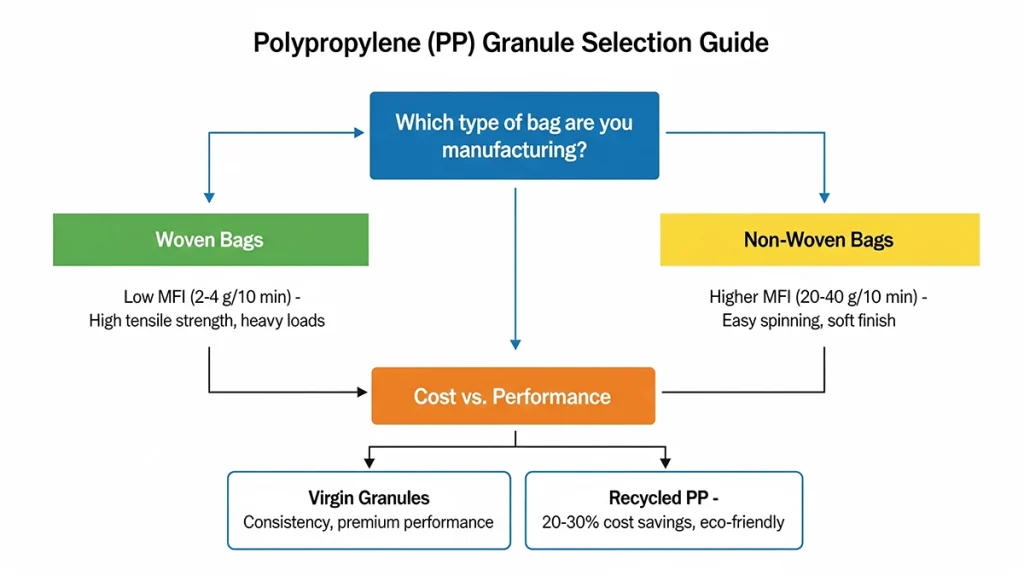
Choosing the right granule isn’t a one-size-fits-all solution; it’s about precision.
- For Woven Bags: You need a low MFI (2–4 g/10 min) to ensure your tapes have the tensile strength to carry heavy loads.
- For Non-Woven Bags: A higher MFI (20–40 g/10 min) is essential for the easy spinning of fine, flexible filaments.
- For Cost vs Performance: While virgin granules offer peak consistency, recycled PP (rPP) can save you 20–30% on costs. We help you find the ideal balance for your specific needs.
What Should I Look for in a PP Granule Supplier?
Your supplier should be a partner, not just a vendor. Look for these key attributes:
- Unwavering Quality: Demand certifications like ISO and REACH as proof of consistent standards.
- Technical Support: A true partner offers expertise to help you troubleshoot and optimize your processes.
- Reliable Supply Chain: Your production line can’t stop. A great supplier guarantees on-time delivery and a stable inventory.
- Relevant Certifications: Ensure they provide FDA compliance for food-grade applications and have strong sustainability credentials for rPP(Recycled Polypropylene).
Don’t leave your product’s performance to chance. Partner with us to unlock the full potential of your manufacturing. Reach out to our specialists today to discover how our premium polypropylene granules and expert technical support can help you craft durable, high-performance bags that distinguish themselves.
The Future is Green: Sustainability in the Polypropylene Industry
The demand for sustainable packaging is rapidly reshaping the polypropylene (PP) industry. As a raw material supplier, understanding these trends is essential for guiding your customers toward a greener, more responsible future. This market shift isn’t just a trend; it’s a global imperative that presents both challenges and significant growth opportunities for manufacturers. By embracing advanced materials and circular solutions, companies can reduce their environmental footprint while building a stronger, more resilient brand.
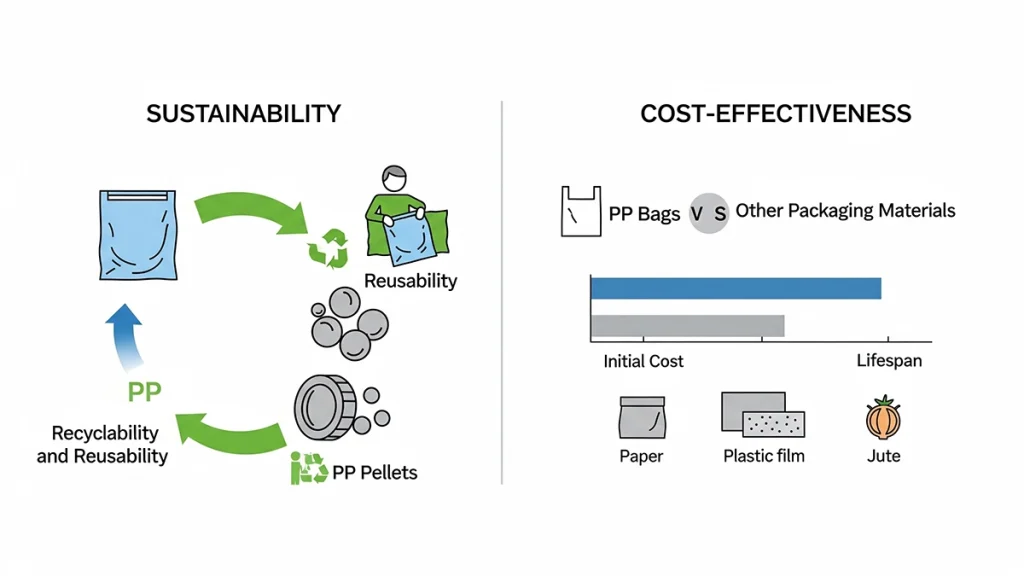
The Inherent Recyclability of PP Bags
Polypropylene is an inherently sustainable material due to its high recyclability. PP bags can be easily collected, sorted, and reprocessed into new granules, creating a closed-loop system that drastically reduces landfill waste. The recycling process allows the material to maintain its key mechanical properties, ensuring recycled granules are a viable and valuable resource for manufacturing new products.
The Rise of Recycled PP (rPP)
The market for recycled PP (rPP) is a testament to the industry’s shift toward sustainability, with a projected Compound Annual Growth Rate (CAGR) of 6.7% through 2030. This growth is fueled by advancements in recycling technologies. rPP is an excellent option for manufacturers seeking to reduce costs and environmental impact, particularly for non-load-bearing bag components. By strategically incorporating rPP, manufacturers can balance cost-efficiency with eco-friendliness without compromising on performance where it matters most.
Innovations in Bio-based & Circular PP
The next wave of sustainability is driven by bio-based PP, sourced from renewable materials. This market is expanding rapidly, with a projected growth of 26.5% CAGR. This virgin-equivalent material offers a way to reduce reliance on fossil fuels. Additionally, the concept of a circular PP economy focuses on designing bags for longevity and easy recycling, minimizing the need for new materials. These cutting-edge resins can be blended with rPP to create a hybrid material that combines high performance with maximum sustainability.
Conclusion
From heavy-duty agricultural sacks to vibrant retail totes, polypropylene bags deliver on their promise of durability, versatility, and sustainability. They are a modern packaging staple, engineered to meet the precise and demanding needs of clients across every industry.
The ultimate quality of these solutions, however, begins not on the production line, but with a single, foundational decision: your choice of raw materials. High-quality PP granules are the final, critical link that ensures efficient production, superior bag performance, and lasting customer satisfaction.
Don’t leave your product’s performance to chance. Partner with us to unlock the full potential of your manufacturing. Contact our specialists today to discover how our premium polypropylene granules and expert technical support can help you craft durable, high-performance bags that truly stand out.
Email:jerry@salesplastics.com
Phone:+8618657312116
FAQs
A:Polypropylene (PP) is a thermoplastic polymer made from propylene monomer. In bags, PP is used for its excellent properties, including a high strength-to-weight ratio, durability, and resistance to chemicals. These qualities make PP bags a reliable solution for transporting goods.
A:Yes, PP bags are considered safe for food contact by regulatory bodies like the FDA. The material is non-toxic and non-staining, providing a clean and hygienic barrier to protect food and other sensitive products from external contaminants.
A:While highly versatile, PP bags can be sensitive to UV light, which may cause degradation over prolonged outdoor exposure. This issue, however, can be easily solved by incorporating specific UV stabilizer additives into the PP granules during production, ensuring the bags maintain their integrity and strength in any environment.
A:PP bags generally offer greater strength and a higher melting point than common plastic bags like those made from polyethylene (PE). Their superior tensile strength makes them ideal for heavy-duty applications, while their durability allows for multiple reuses, reducing waste.
A:The Harmonized System (HS) code for polypropylene bags is generally 6305.33. This code is used for customs and trade purposes, specifically for sacks and bags made of polypropylene strips.