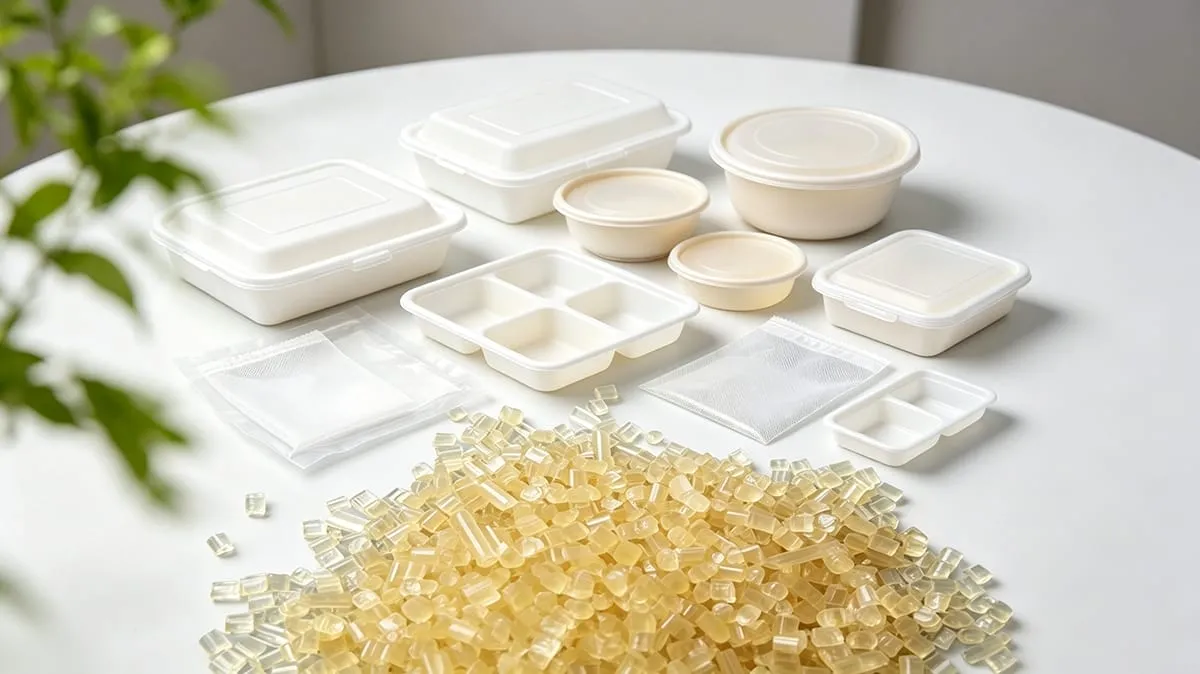
Most eco-friendly resins force manufacturers into a compromise—either high performance with high cost, or low cost with unstable mechanical properties.Thermoplastic Starch (TPS) introduces a different approach. By modifying renewable starch-based polymers, this bio-based material provides a cost-efficient and scalable alternative to conventional plastics used in food-contact and flexible packaging applications.
For manufacturers transitioning from PP or PE, TPS offers a practical pathway toward compliance-driven and circular packaging systems without requiring major process changes. This guide explains how TPS is engineered, where it performs best, and why it is increasingly used in industrial food packaging.
Why Choose TPS for Food Contact Materials?
Thermoplastic Starch (TPS) is no longer viewed as a niche biodegradable material. It is now widely adopted as a scalable solution for food-contact packaging that must meet both regulatory compliance and industrial production requirements.
International Compostability Standards
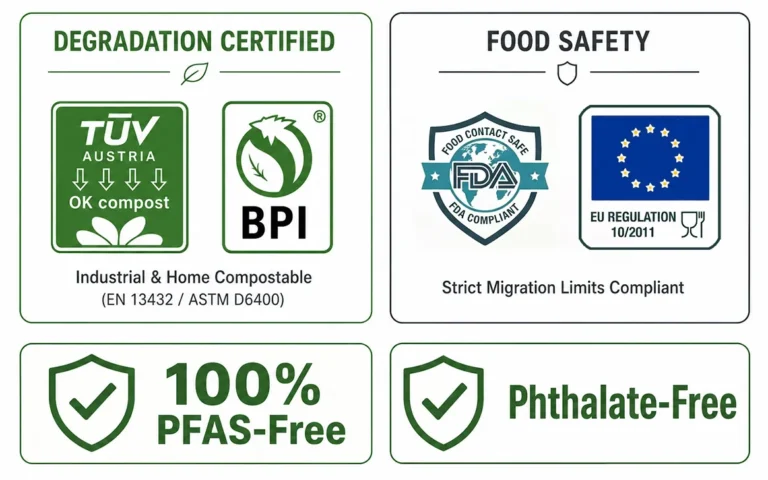
- EN 13432 & ASTM D6400: Industrial compostability certification framework
- TÜV OK Compost / BPI: Verified biodegradation performance under controlled conditions
Food Safety Compliance
- FDA & EU Regulation 10/2011: Compliance with strict food migration limits
- PFAS & Phthalate-Free: Free from regulated harmful substances
Quality & Traceability
- ISO 9001:2015 certified production system
- Batch COA: Moisture content and mechanical properties verified per batch
💡 These certifications ensure TPS can be used confidently in regulated food packaging markets without additional formulation risk.
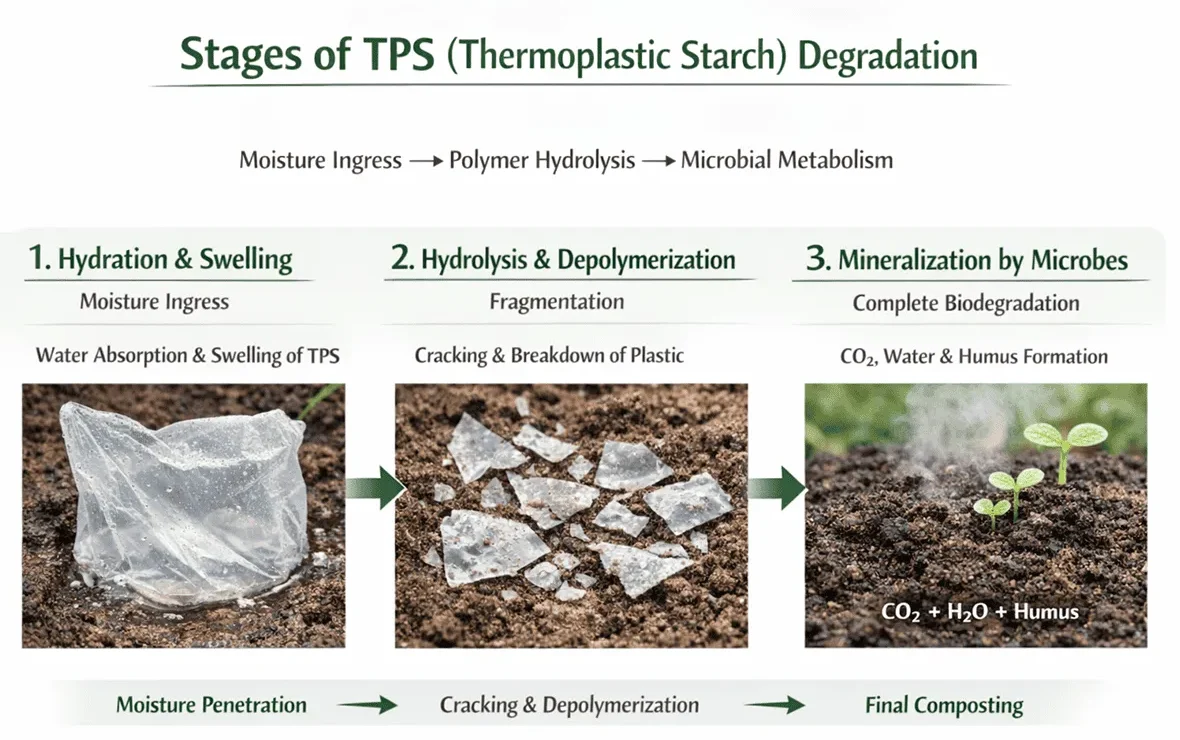
Technical Specifications & Performance (For Packaging Engineers)
Thermoplastic Starch (TPS) is engineered to bridge the performance gap between flexible polyolefins and rigid bioplastics. Through blending and modification technologies, these starch-based compounds can be adapted for processes such as film extrusion, thermoforming, and flexible food-contact packaging production.
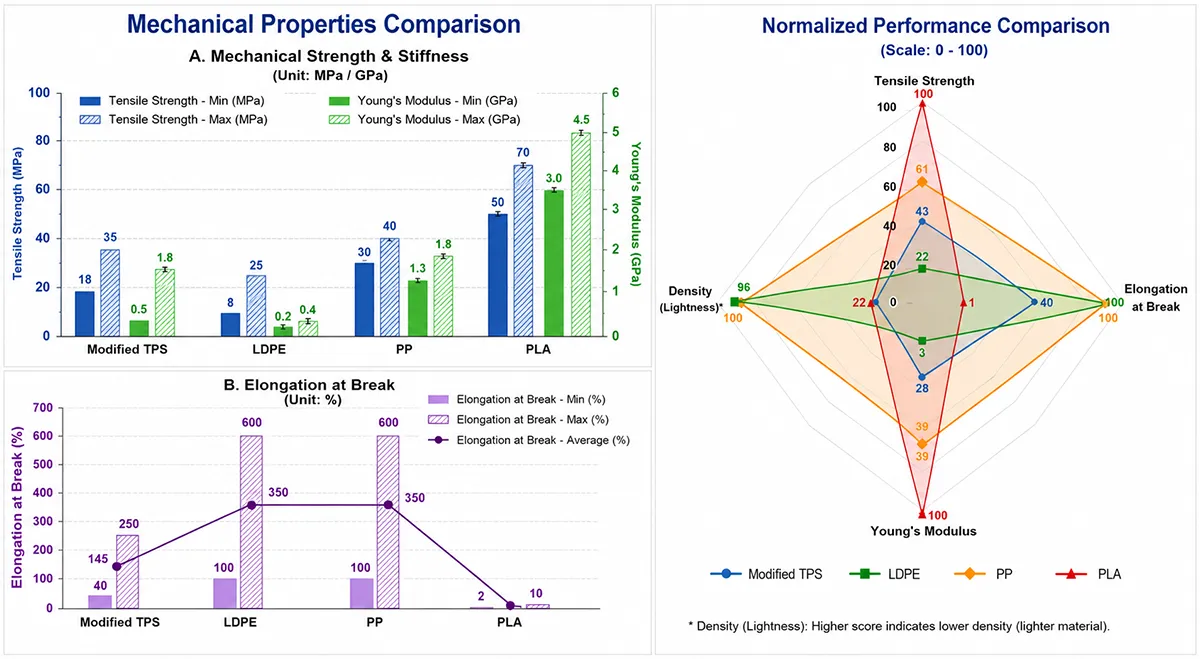
Mechanical Performance Comparison
Modified TPS demonstrates significantly improved mechanical properties compared to native starch materials, which are typically brittle and unsuitable for industrial processing.
| Property | Modified TPS | LDPE | PP | PLA |
| Tensile Strength (MPa) | 18 – 35 | 8 – 25 | 30 – 40 | 50 – 70 |
| Elongation at Break (%) | 40 – 250 | 100 – 600 | 100 – 600 | 2 – 10 |
| Young’s Modulus (GPa) | 0.5 – 1.8 | 0.2 – 0.4 | 1.3 – 1.8 | 3.0 – 4.5 |
| Density (g/cm³) | 1.25 – 1.35 | 0.92 | 0.90 | 1.25 |
From a material selection perspective, TPS occupies a mid-performance zone between flexible polyethylene materials and rigid bioplastics like PLA.
Thermal Processing Window
These starch-based formulations are designed for compatibility with existing plastic processing systems, including extrusion and thermoforming.
These properties allow TPS to be integrated into existing PP/PE production lines with minimal equipment modification.
Barrier Performance & Oxygen Transmission Characteristics
Pure starch-based materials are naturally sensitive to moisture exposure. For this reason, polymer blending technologies are commonly used to improve oxygen transmission rate (OTR) performance and water vapor resistance in starch-based packaging materials. However, modified TPS formulations significantly improve barrier performance through blending strategies.
| Material | O2 Permeability (Dry) | WVTR (90% RH) | Best Use Case |
| Neat TPS | < 5 | 1000+ | Dry food wraps |
| TPS-PLA Blend | 15 – 60 | 180 – 450 | Cutlery, Trays, Containers |
| PP / LDPE | 150+ | 5 – 15 | Long-shelf-life liquids |
Need Technical Consultation for Your Specific Application?
Our materials engineers provide complimentary technical consultation to help you select the optimal TPS formulation. We’ll analyze your packaging requirements, processing capabilities, and performance targets to recommend the best solution.
Applications in the Food Industry
Theory meets practicality in industrial production. Thermoplastic Starch (TPS) is not only a sustainable material concept but also a high-performance resin widely used in food packaging applications where compostability, cost efficiency, and regulatory compliance are essential.
Dry Foods & Bakery Applications
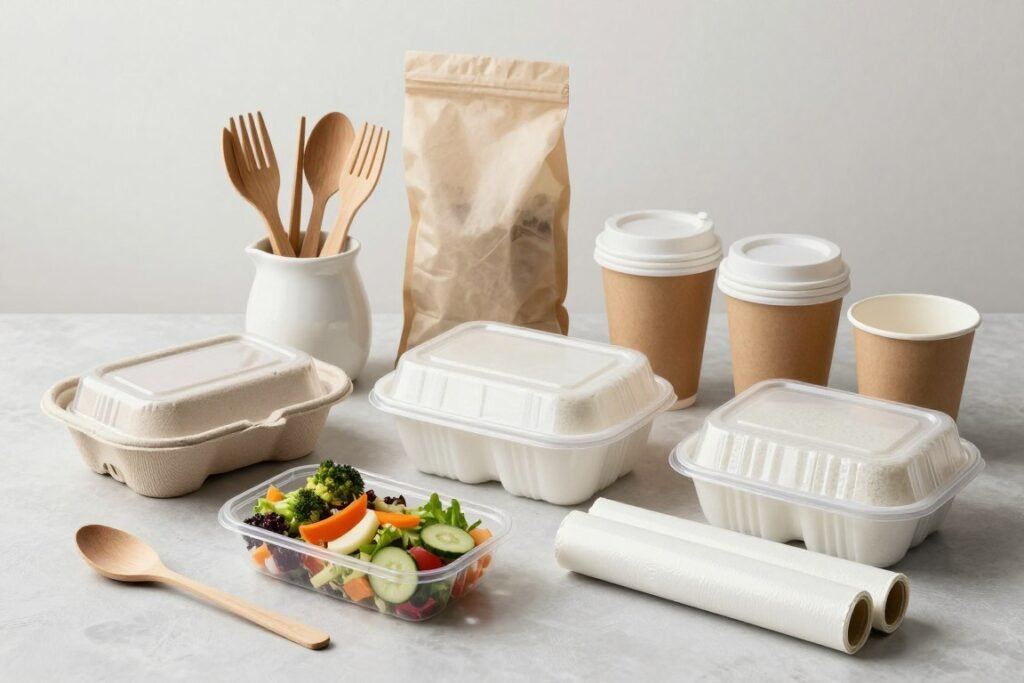
TPS is particularly suitable for low-moisture environments where barrier demands are moderate.
- Bakery & Bread: TPS films provide controlled moisture vapor transmission, preventing mold growth while maintaining crust texture.
- Pasta & Grains: High-clarity TPS window bags allow product visibility while maintaining the “artisan” brand image.
- Coffee & Tea: Fully compostable single-serve pods and over-wraps that align with premium eco-branding.
Fresh Produce Packaging
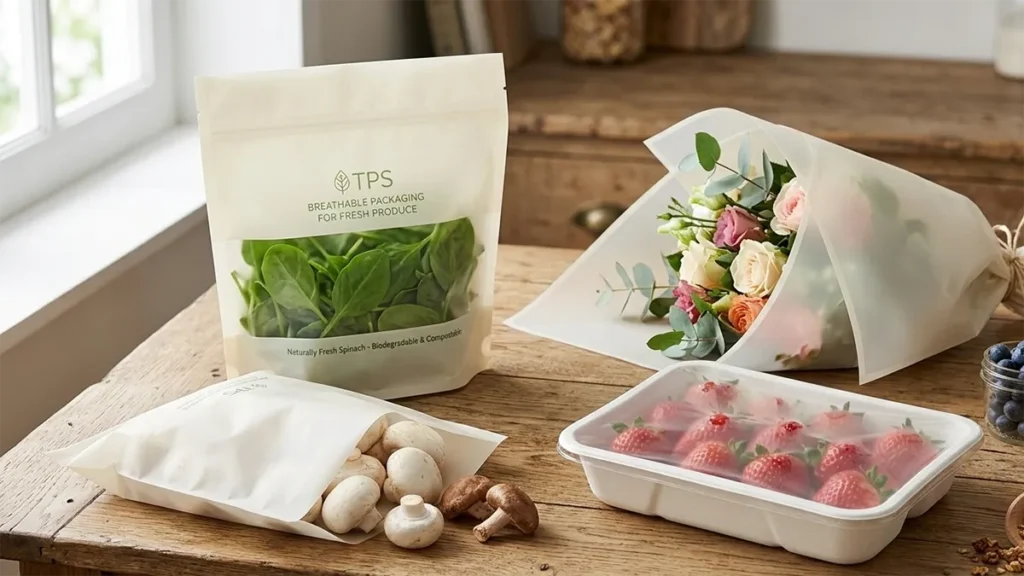
Fresh produce requires breathable packaging materials to extend shelf life and reduce condensation.
- Leafy Greens: Rigid TPS clamshells prevent bruising and eliminate static buildup.
- Mushrooms: Our films prevent the condensation common in PE packaging, extending shelf life significantly.
- Mesh Bags: High-strength TPS mesh for onions, potatoes, and carrots—durable enough for weight-bearing, yet 100% compostable.
Foodservice Applications
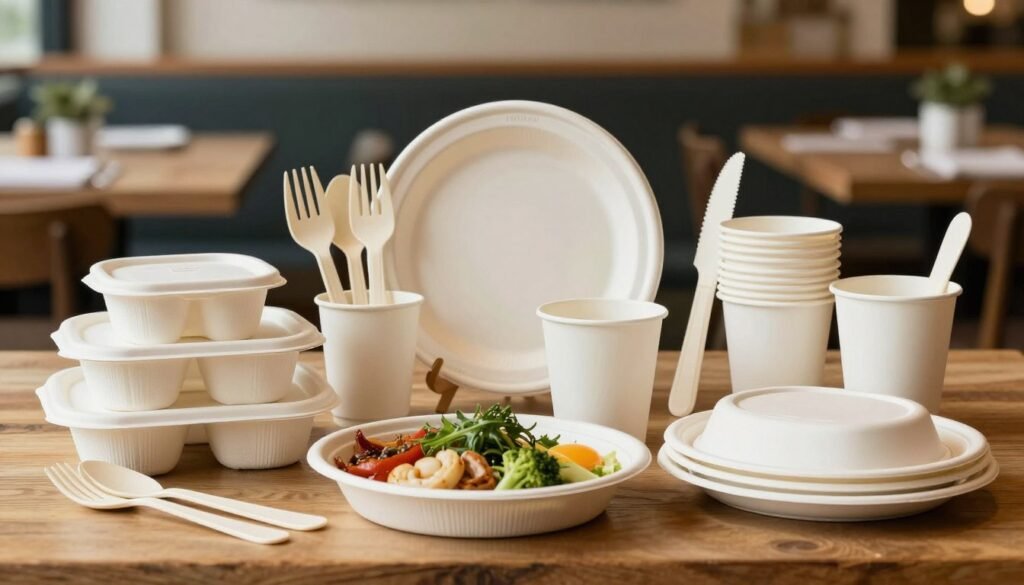
Global restrictions on single-use plastics have accelerated adoption of TPS in disposable packaging.
- Precision Cutlery: High-stiffness TPS spoons, forks, and knives that perform like Polystyrene (PS).
- Thermoformed Containers: Clamshells and salad bowls that maintain structural integrity during transport.
- Cold-Drink Solutions: Rigid cups and lids for smoothies and iced coffee.
Dairy & Refrigerated Applications
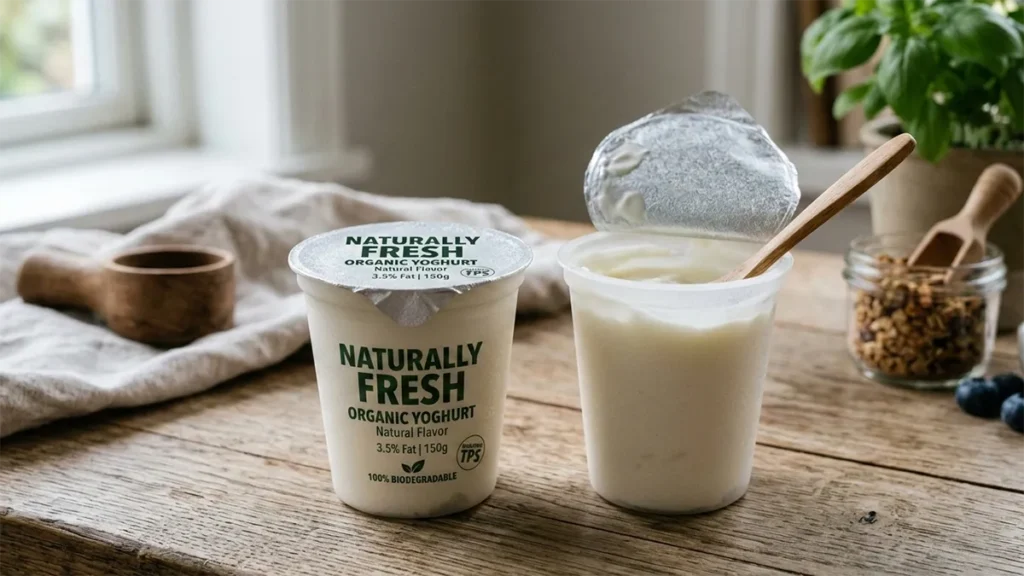
To overcome the challenges of cold storage, we offer Specific Grades (TPS+PLA/PBS Blends) designed for high-humidity environments.
- Yogurt & Cream Cups: Deep-draw thermoforming with excellent impact resistance at low temperatures.
- Cheese Wraps: Specialized flow-wrap films with enhanced oxygen barriers for hard cheeses.
Technical Tip: For refrigerated applications, we recommend our Low-Glycerol Grades to minimize moisture sensitivity.
Looking for Superior Barrier Performance?
While TPS-blends offer excellent cost-efficiency for standard cooling, certain high-end dairy applications require extreme oxygen barriers and sub-zero resilience. Discover how PHA (Polyhydroxyalkanoates) is setting new standards for premium yogurt cup durability. Read our Technical Guide: PHA for Yogurt Cups – Current Status and Solutions
Cost-Efficiency: The Competitive Edge of TPS
Thermoplastic Starch (TPS) offers one of the most competitive price points among commercial bioplastics. It is designed to reduce the cost barrier associated with transitioning to sustainable packaging materials.
TPS is typically 30–50% more affordable than PLA, making it suitable for large-scale single-use packaging applications.Unlike petroleum-based resins such as PP or PE, TPS pricing is less affected by oil market fluctuations due to its agricultural feedstock base.
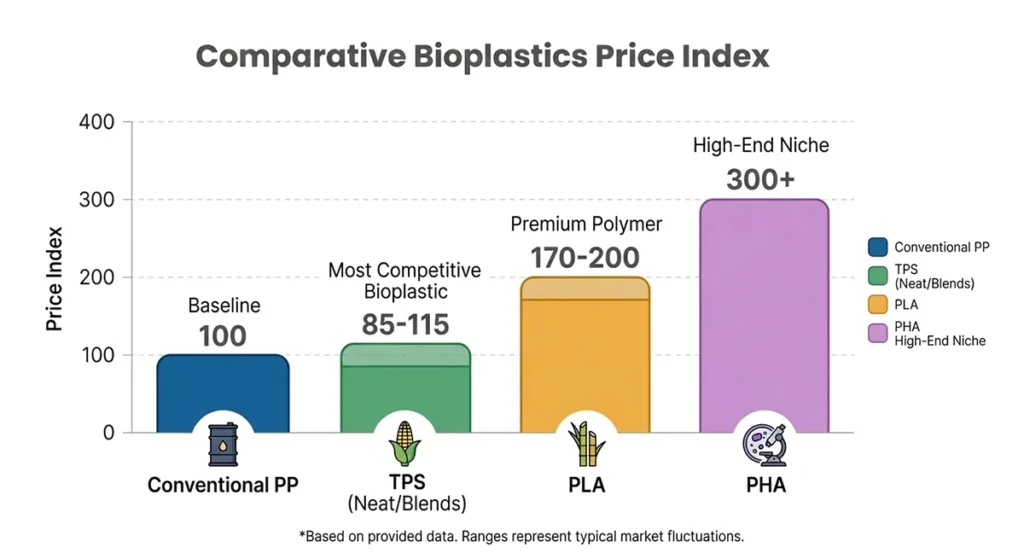
Competitive Raw Material Pricing
Derived from renewable agricultural feedstocks such as cassava, TPS benefits from more stable long-term raw material pricing compared with petroleum-based plastics.
- The “Cost Leader” among Bioplastics: TPS is consistently 30–50% more affordable than PLA, making it the only viable option for high-volume single-use items.
- Advantage: Our strategic sourcing of local tapioca starch eliminates import duties and minimizes logistics costs, providing you with a stable, year-round pricing structure.
| Material Type | Price Index (PP = 100) | Regulatory Impact | Supply Stability |
| TPS (Neat/Blends) | 85 – 115 | Exempt from Plastic Taxes | High (Local Sourcing) |
| Conventional PP | 100 | High (Increasing Taxes) | Moderate (Oil Dependent) |
| PLA | 170 – 200 | Exempt | Moderate |
| PHA | 300+ | Exempt | Low (Limited Capacity) |
Manufacturing Compatibility & Energy Efficiency
TPS is designed for direct integration into existing PP and PE processing systems, requiring minimal or no equipment modification.
Lower processing temperatures compared to conventional plastics help reduce overall energy consumption and improve production efficiency.
- Compatible with injection molding processes
- Suitable for extrusion and thermoforming applications
- Lower processing temperature than PP enables energy savings
Total Cost of Ownership (TCO) Benefits
Beyond raw material cost, TPS provides system-level savings through reduced energy use, waste management efficiency, and regulatory compliance advantages.
These factors contribute to a lower total cost of ownership across the full production lifecycle.
- Reduced energy consumption during processing
- Lower industrial waste disposal costs
- Avoidance of emerging plastic taxation in multiple regions
Scalable Pricing Structure
TPS is available through flexible supply models designed to support different production scales and long-term manufacturing strategies.
This ensures cost stability from early-stage trials to full commercial deployment.
- Trial Phase: Small batch evaluation for R&D validation
- Commercial Phase: Volume-based pricing with stable supply
- Strategic Partnership: Long-term contracts with optimized cost structure
Overcoming Challenges: The "Water & Strength" Problem
A transparent supplier is a reliable partner. At SALESPLASTICS, we acknowledge that native starch is naturally hydrophilic. However, through advanced molecular engineering and strategic blending, we have transformed this “weakness” into a controllable performance variable.
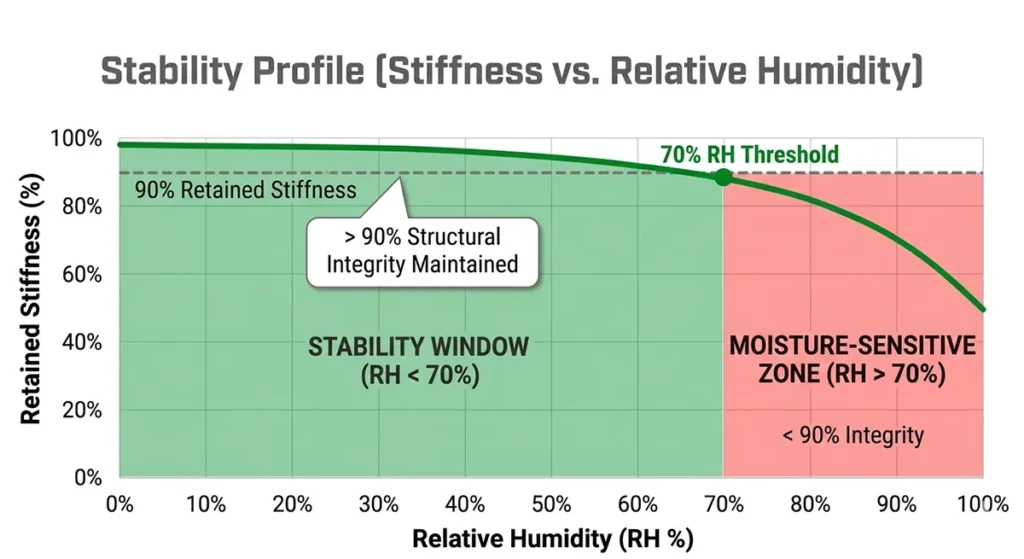
Understanding the Moisture Factor
Starch molecules interact with environmental humidity, which can affect mechanical stiffness.
- The Stability Window: Our engineered TPS maintains 90%+ of its structural integrity at relative humidity (RH) levels below 70%—ideal for the majority of global retail and ambient storage environments.
- Predictable Performance: We provide detailed stress-strain data across various humidity profiles, ensuring your packaging design accounts for real-world distribution.
Our Triple-Shield Strategy for Durability
We don’t just sell raw starch; we provide fortified formulations that utilize three primary stabilization technologies:
- A. Chemical Modification (Acetylation & Cross-linking): We modify the starch hydroxyl groups to reduce water affinity, ensuring the material remains crisp and strong even in tropical climates.
- B. High-Performance Blending (TPS + PLA/PBAT): By alloying TPS with hydrophobic biopolyesters, we create a “sea-island” morphology. The PLA/PBAT acts as a protective shield, blocking moisture while the TPS provides cost-efficiency.
- C. Nano-Reinforcement: For high-end applications, we incorporate bio-based nano-fillers that create a “tortuous path” for gas and water molecules, drastically improving the oxygen barrier.
| Solution Level | Technology Applied | Ideal Application |
| Standard | Plasticized TPS | Dry food bags, short-term wraps |
| Advanced | TPS-PLA Alloy | Cutlery, rigid trays, coffee pods |
| Premium | Coated / Nano-filled | Long-shelf-life snacks, refrigerated dairy |
Sustainable Production and Circular Economy Integration
True sustainability in the food packaging sector is defined by more than just eco-labels—it is measured by supply chain resilience and production cost-efficiency. Our TPS resin is engineered to provide a stable, high-performance alternative to volatile petroleum-based plastics.
Sustainable Feedstock
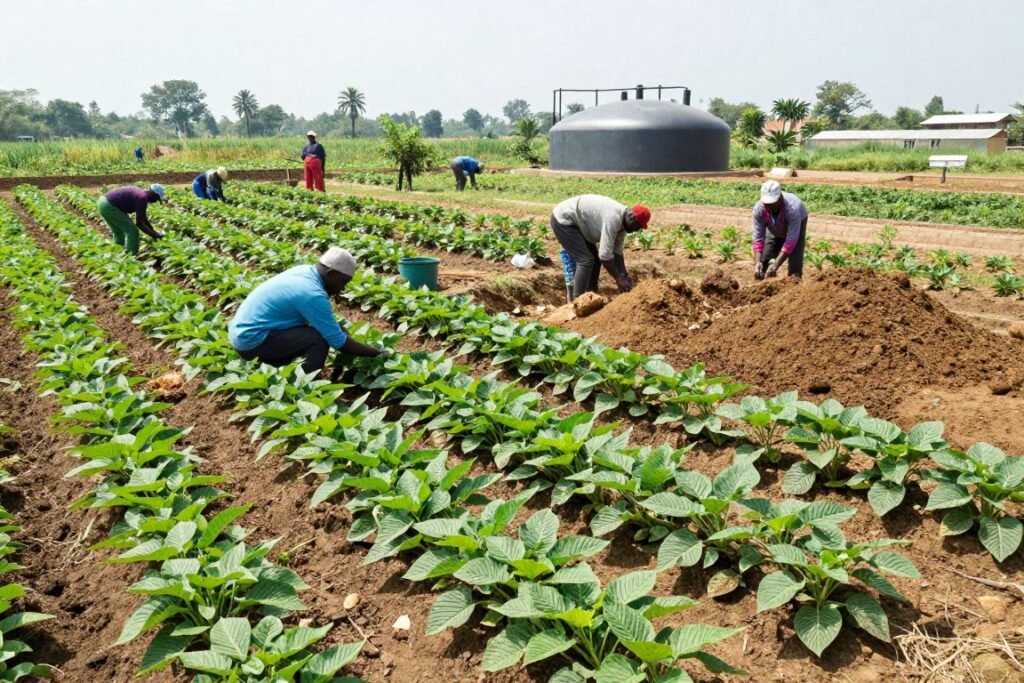
Unlike PLA or corn-based biopolymers that often face “food-vs-fuel” ethical dilemmas and price volatility, our TPS utilizes industrial-grade cassava (tapioca).
- Non-Food Competition: Our tapioca is grown on marginal lands unsuitable for intensive food crops, eliminating “food-vs-fuel” ethical concerns.
- Low Water Footprint: Cassava is naturally drought-tolerant, requiring significantly less irrigation than corn (for PLA) or sugarcane.
- Zero Deforestation: Sourced from long-established agricultural zones, our feedstock involves no clearing of natural ecosystems or rainforests.
Carbon Footprint: A Decisive Climate Advantage
TPS acts as a carbon sink. Through photosynthesis, the source plants capture atmospheric CO₂, which is then stored within the polymer structure of your packaging.
| Material Type | Carbon Footprint (kg CO2-eq/kg) | Net Climate Impact |
| TPS (Renewable Energy) | 0.8 – 1.4 | Lowest |
| PLA (Corn-based) | 1.4 – 2.3 | Moderate |
| Conventional LDPE | 2.3 – 3.5 | High (Fossil-based) |
Energy Efficiency: Our processing temperatures are 20–40°C lower than traditional plastics, directly reducing the “Scope 2” emissions of your manufacturing facility.
Partner with SALESPLASTICS: Technical Support & Supply Capabilities
Transitioning to bio-based packaging is a strategic journey. At SALESPLASTICS, we move beyond being a resin vendor—we act as your dedicated technical partner. From the first trial run to full-scale global distribution, our goal is to ensure your transition to TPS is seamless, profitable, and risk-free.
Technical Mastery at Your Service
Don’t let processing curves slow you down. Our engineering team brings decades of biopolymer expertise to your production floor.
Technical Services We Provide
- Custom Formulations: We don’t believe in “one size fits all.” We tailor starch types and plasticizer ratios to your specific machinery.
- On-Site & Remote Optimization: Whether you need a technician in your factory in Bangkok or a video consultation in Europe, we resolve processing issues within 24 hours.
- Full Lab Validation: We provide in-house mechanical testing, barrier analysis, and shelf-life simulation to de-risk your investment before you launch.
Agile Supply Chain & Advantage
Strategically based in the heart of global tapioca production, we offer logistical and financial benefits that competitors can’t match:
- Global Express Sampling: Get your 5kg – 25kg trial batches shipped within 3 business days.
- Flexible Volume: From 1-ton initial runs for SMEs to 100-ton recurring contracts for global brands.
- Price Stability: Our local feedstock integration insulates you from the volatility of international petroleum and shipping markets.
Technical Support & Material Selection Consultation
For manufacturers evaluating Thermoplastic Starch (TPS), understanding formulation behavior and processing conditions is essential for stable production performance.
Our technical team can assist with:
- Material selection based on application requirements
- Processing parameter recommendations for existing equipment
- Regulatory compliance clarification for target markets
get in touch
Email: jerry@salesplastics.com
Business Hours
- Monday – Friday: 9:00 AM – 6:00 PM (ICT)
- Saturday & Sunday: Closed
- Technical support available 24/7 for urgent issues
Quick Response Commitment
We respond to all inquiries within 24 hours during business days. Urgent technical issues receive immediate attention. Sample requests ship within 3-5 business days. Quote requests receive response within 48 hours.
Conclusion
Thermoplastic Starch (TPS) has become an increasingly important material in the development of compostable and bio-based food packaging systems. By combining renewable feedstocks with compatibility across conventional plastic processing methods, TPS provides manufacturers with a scalable alternative to fossil-based packaging materials.
Compared with traditional plastics such as PP and PE, TPS supports reduced dependence on petroleum-based resources while maintaining practical processing efficiency. At the same time, its lower cost profile relative to materials such as PLA and PHA makes it more accessible for large-scale disposable packaging applications.
Although TPS is not intended for every packaging scenario, it performs effectively in applications requiring a balance between compostability, cost control, and industrial scalability. As global regulations continue to accelerate the transition toward circular packaging systems, starch-based polymers are expected to play an increasingly important role in sustainable packaging supply chains.