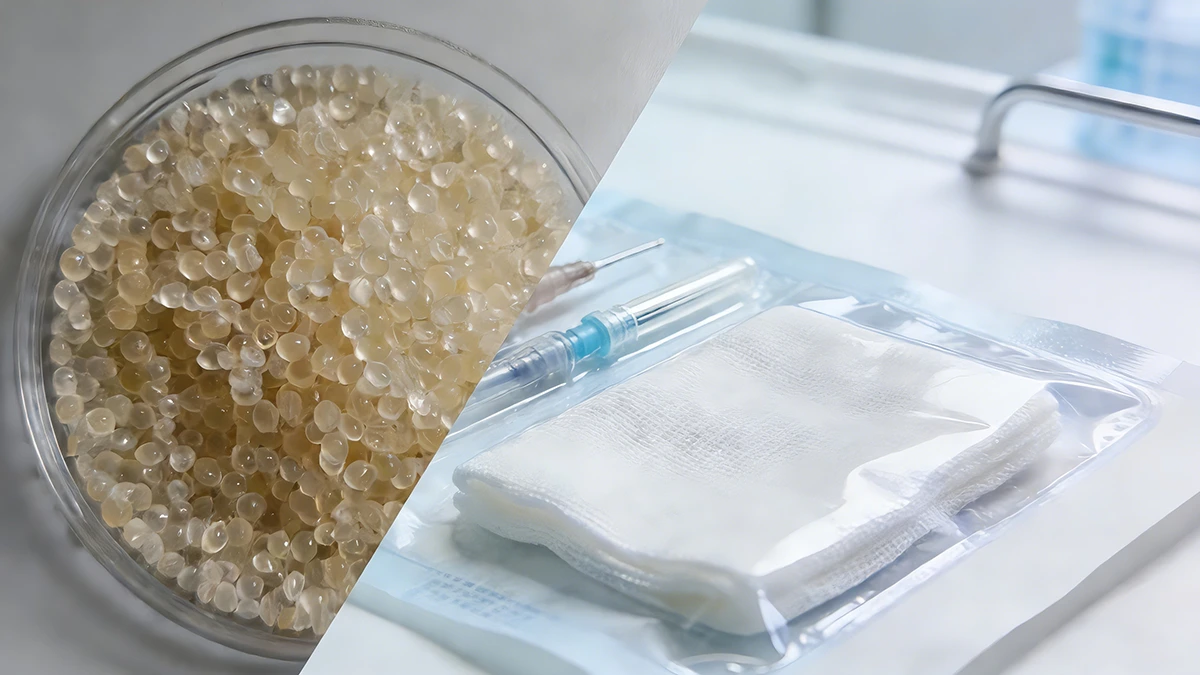
Polyoxymethylene (POM), or acetal, is a high-performance engineering thermoplastic widely utilized for its exceptional stiffness, low coefficient of friction, and inherent dimensional stability. Among its industrial grades, POM M90 is frequently specified due to its advantageous melt flow rate (MFR) / toughness equilibrium, positioning it as a robust solution for medium-duty, high-precision applications in sectors such as automotive, electronics, and medical device manufacturing.
Fundamental Material Characteristics
Understanding M90’s performance begins with its intrinsic physical makeup, governed by its structure and its response to heat and processing forces.
Crystalline Structure and Morphology
POM M90 is a semi-crystalline polymer, typically exhibiting crystallinity levels between 60% and 80%. This morphology is the primary source of its mechanical strength. Utilizing techniques such as Differential Scanning Calorimetry (DSC) and X-ray diffraction, it has been demonstrated that introducing trace amounts of nucleating agents (e.g., specific talc compounds) can refine the crystalline structure. This refinement results in a smaller, more homogeneous crystallite size, which is proven to enhance the material’s overall stiffness by 10–15% without compromising critical impact performance—a key factor for designers of thin-walled components.
Thermal Performance and Process Flow
Beyond its solid-state structure, M90’s behavior under heat and flow dictates its utility and moldability in production environments.
The material exhibits a melting range of 165–175℃ and a load-bearing capacity evidenced by a Heat Deflection Temperature (HDT) of 90–110℃ at 1.8 MPa. Its low thermal expansion coefficient (8–10 x 10⁻⁵ K⁻¹) is critical for maintaining high tolerances in varying operational environments. Regarding processing, M90 delivers a Melt Volume Rate (MVR) of 8–12 cm³/10 min at 190℃. This controlled flow ensures efficient filling of intricate mold cavities while yielding components with superior strength compared to faster-flowing, less viscous grades.
For a detailed guide on utilizing M90’s high-flow capability for thin-wall precision molding and specific chemical resistance data, please refer to our deep dive on 《POM M90: High-Flow, Alkali-Resistant Precision Engineering Plastic》.
Strategic Modification for Enhanced Performance
While M90’s core properties are strong, targeted modification is often necessary to meet highly specialized application demands, particularly concerning impact, wear, and fire resistance.
Impact Toughening
Standard M90 exhibits a notched impact strength of 6–8 kJ/㎡. For applications requiring superior resistance to brittle failure, compounding with 10–20% polyolefin elastomer (POE) introduces micro-scale rubbery domains. Scanning Electron Microscopy (SEM) validates that this uniform dispersion can elevate impact strength to 20–40 kJ/㎡, significantly extending the material’s use into rugged environments.
Mechanical Reinforcement and Tribology
- The incorporation of 10–30% glass fiber is a standard method to achieve tensile strength exceeding 120 MPa and increase flexural modulus up to 10 GPa.
- For dynamic parts like gear trains, adding 2–5% Molybdenum Disulfide (MoS₂) significantly reduces the coefficient of friction to 0.1–0.2, promoting quieter and longer-lasting operation.
Fire Safety
To address flammability (UL-94 HB rated), the integration of 15–25% intumescent flame retardant systems (e.g., based on APP/PER/Melamine) allows M90 to achieve a UL-94 V-0 classification. This mechanism generates a protective char layer upon heating, minimizing heat release and smoke density, making it suitable for enclosed electronics.
Durability and Future Trajectory
Even after modification, the long-term reliability of M90 hinges on its resistance to environmental factors and the industry’s ability to address sustainability.
The primary degradation mechanism for POM at elevated temperatures (120–140℃) is thermal-oxidative unzipping, leading to formaldehyde evolution and a 30–50% loss in mechanical strength after extended exposure. Analysis via FTIR spectroscopy detects the onset of degradation by monitoring the carbonyl group at 1720 cm⁻¹. Effective stabilization relies on the precise formulation of hindered phenol antioxidants, which are proven to retain over 80% of the material’s original strength, ensuring prolonged service life under thermal load.
POM M90 is strategically preferred in critical components such as fuel system clips and complex actuation mechanisms due to its reliable performance. While chemical recycling (depolymerization back to monomers) is technologically complex, it is advancing. Furthermore, the material’s sustainable profile is improving through the development of bio-derived modifiers and the increasing availability of compounds utilizing certified recycled content (e.g., 30% post-consumer material). These efforts align M90 with the growing demand for durable, high-performance materials that also meet evolving environmental standards.